


Enterprise Application Testing
Get in Touch
New Lead: Testing as a Service
Testing as a Service Landing Page Form, connected with the Mailchimp.
"*" indicates required fields
Studies show that around 50% of enterprise applications fail to meet performance expectations, and 70% of businesses face issues like slow performance, security flaws, or bugs. These problems can lead to major disruptions, loss of revenue, and a damaged reputation.
In today’s digital world, businesses rely on software to run efficiently. Enterprise applications need to handle large amounts of data, work across different platforms, and provide smooth user experiences. If they fail, the impact on your business can be significant.
The solution? Enterprise application testing. By testing your applications thoroughly, you can catch performance, security, and functionality issues before they affect your business. Tools like enterprise test automation, cross-browser testing, and enterprise software testing tools help ensure your applications are fast, secure, and scalable, keeping your business running smoothly and efficiently.
Secure Your Application Now—Request a Free Consultation
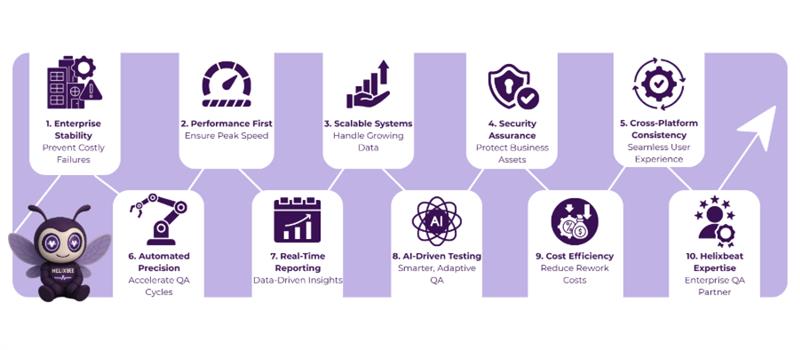
Why Enterprise Application Testing is Critical for Large-Scale Systems
For large organizations, enterprise applications are the backbone of daily operations. A single issue in these systems can lead to significant business disruptions. Ensuring these applications are thoroughly tested is crucial for maintaining smooth operations, security, and user satisfaction.
- Scalability: Enterprise applications must handle growing amounts of data and traffic without crashing. Enterprise application testing ensures they scale properly as your business expands.
- Performance: Applications need to perform efficiently, even under heavy load. Enterprise app testing helps identify performance bottlenecks, ensuring the system remains responsive under all conditions.
- Security: With sensitive data being handled, security is paramount. Enterprise test automation plays a key role in running frequent security checks and detecting vulnerabilities early.
- Cross-Platform Compatibility: Enterprise applications are often used across multiple devices and browsers. Cross-browser testing for enterprise ensures a consistent and seamless experience for users, no matter what platform they are using.
- Cost Savings: Catching issues early with enterprise software testing tools can reduce the risk of expensive fixes and downtime later.
By prioritizing enterprise application testing, you safeguard your business from disruptions, improve performance, and enhance user trust.
DIfferent Types of Enterprise Application Testing
When it comes to enterprise application testing, different types of tests are conducted to ensure the software meets all performance, security, and usability standards. Each type of testing serves a unique purpose and plays a vital role in delivering high-quality enterprise solutions. Here are some key types of enterprise application testing:
1. Functional Testing
This involves testing the application’s functionality against the specified requirements. It ensures that all features and functions of the application work as expected, such as user login, data entry, and reporting. This is a critical step in enterprise app testing.
2. Performance Testing
Performance testing ensures that the enterprise application can handle a large number of users, data, and transactions without slowing down or crashing. This is particularly important for applications that support mission-critical business functions.
3. Security Testing
Security testing helps identify vulnerabilities and ensures that the application complies with security standards and regulations. It is crucial for protecting sensitive business and customer data from breaches and cyber-attacks. Enterprise test automation tools are often used for running repetitive security tests.
4. Cross-Browser Testing
Since enterprise applications are often accessed through different browsers, cross-browser testing for enterprise ensures that the application delivers a consistent user experience across various browsers like Chrome, Firefox, Safari, and Edge.
5. Usability Testing
This testing type evaluates how user-friendly the application is. Usability testing identifies any pain points or difficulties users may face while interacting with the application.
6. Regression Testing
Whenever new features are added or bugs are fixed, enterprise application testing is performed again to ensure the changes haven’t affected existing functionality.
By utilizing a mix of these testing types, businesses can ensure their enterprise applications are robust, secure, and optimized for performance.
How Enterprise Test Automation Transforms QA
1. Accelerates Releases with CI/CD-Driven Automation
Enterprise QA teams today integrate tools like Selenium, TestNG, Jenkins, and GitLab CI/CD to automate regression, smoke, and sanity testing. This allows every code push to trigger automated validation across environments – enabling faster, error-free releases.
Businesses adopting these pipelines cut release times by up to 40%, helping them maintain speed without losing quality.
2. Expands Test Coverage Across Platforms and Devices
With tools like Appium, Cypress, and Playwright, enterprises can test web, mobile, and hybrid applications simultaneously. These frameworks automate complex user scenarios and device-level tests, ensuring seamless functionality across browsers, OS versions, and screen sizes.
This level of coverage is nearly impossible with manual testing alone.
3. Enhances Accuracy with AI-Driven Testing
Modern enterprise automation leverages AI and ML-based tools such as Testim, Mabl, and Applitools that use self-healing locators and visual validation. This means your tests adapt automatically to UI changes, reducing maintenance time and false failures.
Result: more stable test suites and reliable results, even in fast-evolving applications.
4. Optimizes Performance and Load Testing
Enterprise QA goes beyond functionality; performance testing with JMeter, Gatling, BlazeMeter, and LoadRunner ensures your apps perform under real-world load conditions.
Automated performance scripts help identify bottlenecks early, benchmark API response times, and maintain scalability for thousands of concurrent users — essential for enterprise-grade reliability.
5. Strengthens Collaboration and Real-Time Reporting
Tools like Allure, TestRail, Jira, and Azure DevOps connect developers, testers, and product teams in real time. Combined with cloud-based platforms like BrowserStack or Sauce Labs, your teams can test globally and access detailed dashboards for instant insights.
This leads to data-driven QA decisions, better transparency, and faster issue resolution.
In short, enterprise test automation transforms quality assurance from a manual checkpoint into a continuous, data-driven process.
Need Fast Testing? Get in Touch with Us.
5 Best Enterprise Software Testing Tools
Here are five of the best enterprise software testing tools that help streamline testing processes and ensure high-quality software:
1. Selenium
A popular tool for enterprise application testing, Selenium automates web application testing across browsers and integrates with multiple programming languages like Java and Python, making it perfect for cross-browser testing for enterprise.
2. QTest
QTest offers agile project management and testing features for both manual and automated testing. It’s ideal for enterprise test automation, managing test cases, and generating detailed reports.
3. TestComplete
This tool supports automated testing for desktop, web, and mobile apps. Its advanced scripting and CI/CD integrations make it a top choice for enterprise app testing.
4. Jenkins
A widely used open-source automation server, Jenkins integrates with testing tools to automate enterprise application testing and continuous testing, ensuring code changes don’t introduce issues.
5. Apache JMeter
Best for performance testing, JMeter helps evaluate how enterprise applications handle heavy traffic and large data sets, ideal for enterprise test automation focused on scalability.
These tools enhance the testing process, ensuring efficiency, performance, and security across enterprise applications.
Best Practices in Enterprise Application Testing
To make sure your enterprise application performs optimally, following best practices in testing is essential. These practices help identify potential issues early, enhance security, and improve user satisfaction.
- Start Early: Begin testing in the early stages of development to catch issues before they escalate.
- Automate Repetitive Tests: Use enterprise test automation to streamline repetitive tasks, saving time and reducing human errors.
- Test Across Platforms: Ensure your application works seamlessly on various devices and browsers through cross-browser testing for enterprise.
- Focus on Security: Prioritize security testing to protect sensitive data and comply with regulations.
- Perform Regression Testing: Regularly test the application after updates to ensure no new issues arise.
By following these best practices, you can ensure that your enterprise applications are robust, secure, and perform well across all environments.
Why Helixbeat is Best Choice for enterprise application testing
Helixbeat is the perfect partner for enterprise application testing, offering expert services to make sure your software works smoothly, securely, and across all platforms. Our team uses the best enterprise software testing tools and enterprise test automation to speed up the testing process and deliver high-quality results.
We know how complex enterprise systems can be, which is why we customize our testing to meet your specific needs. From cross-browser testing for enterprise to security checks, Helixbeat ensures your applications are ready to perform at their best, helping you run your business with confidence. Book a free consultation call with us.
FAQs
1. What is Enterprise Application Testing and Why is it Important?
Enterprise application testing ensures that large-scale software applications function correctly, securely, and efficiently across various environments. It helps businesses identify bugs, performance issues, and security risks early in the development process, ensuring high-quality software.
2. How Does Enterprise Test Automation Benefit My Business?
Enterprise test automation accelerates the testing process by automating repetitive tasks, which saves time and reduces human errors. This helps deliver reliable software faster and ensures consistency in the testing process, especially for large-scale applications.
3. What is Cross-Browser Testing for Enterprise Applications?
Cross-browser testing for enterprise ensures that your application works seamlessly across multiple web browsers, like Chrome, Firefox, and Safari. This is essential for providing a consistent user experience to your customers, regardless of the browser they use.
4. What Tools are Used for Enterprise App Testing?
Enterprise software testing tools like Selenium, QTest, and TestComplete are commonly used for enterprise app testing. These tools help automate the testing process, perform performance checks, and ensure security compliance across various devices and platforms.
5. How Can Helixbeat Help with Enterprise Application Testing?
Helixbeat offers comprehensive enterprise application testing services, including enterprise test automation and cross-browser testing for enterprise. We use advanced enterprise software testing tools to ensure your applications are secure, scalable, and perform well across all platforms.