


Restaurant ordering System
Get Started with a Free Demo
New Lead: Ravzora
Synergy Landing Page Form, connected with the Mailchimp.
"*" indicates required fields
Over 65% of restaurants face order delays and mistakes due to manual order taking. During rush hours, misplaced notes and misheard instructions often lead to wrong orders and frustrated customers. A restaurant ordering system solves this by automating the entire process, from taking orders to sending them directly to the kitchen, ensuring accuracy and faster service.
Enter RavZora, the ultimate restaurant management software solution designed to tackle these very issues. With RavZora, restaurant owners can seamlessly integrate front-end and back-end operations, reduce errors, and improve overall efficiency. Whether you’re managing reservations, orders, or inventory, RavZora simplifies it all—helping you focus on what matters most: delivering an exceptional dining experience.
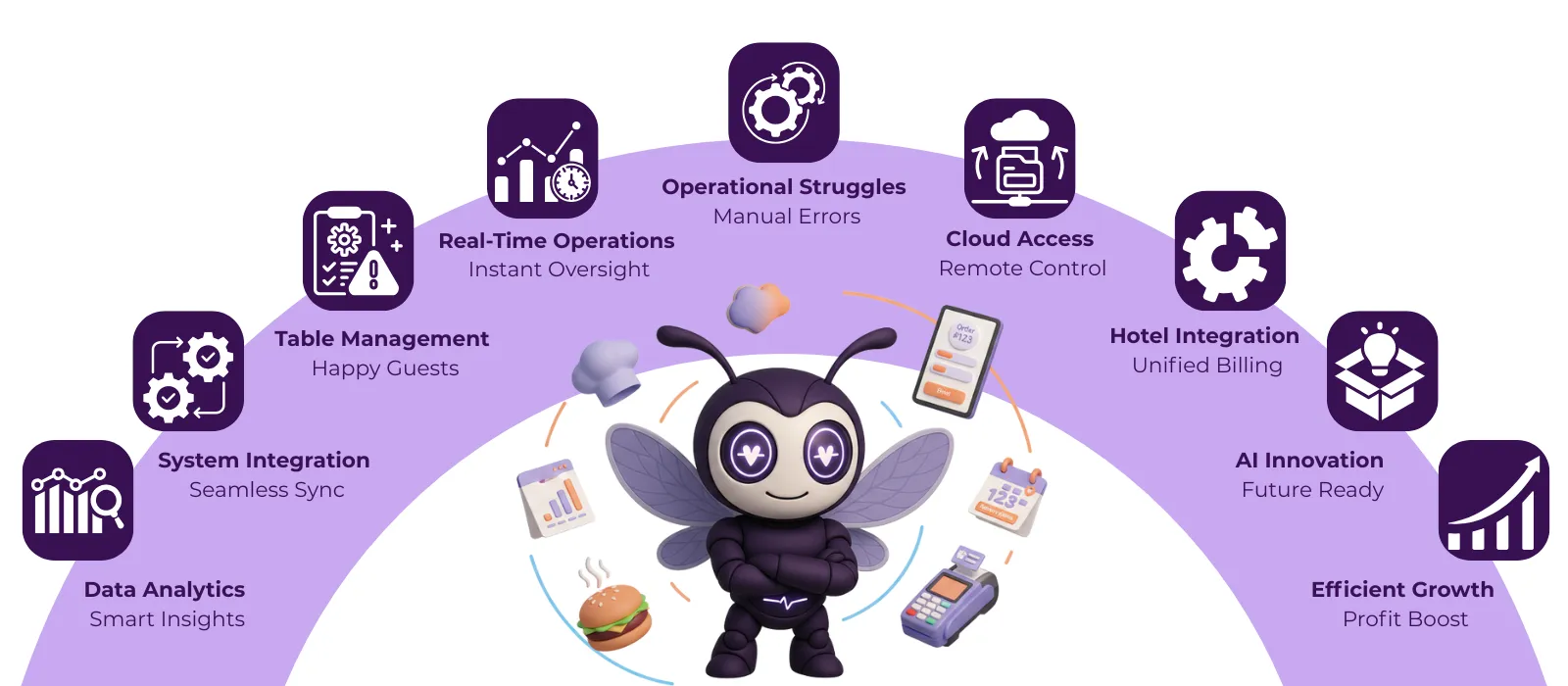
Why Manual Order Taking is Difficult for Restaurants
In the current dining environment, relying solely on handwritten tickets or verbal notes is no longer efficient. That’s why many restaurants are switching to a digital ordering system for restaurants to streamline communication, improve accuracy, and keep operations consistent across every table and counter.
Manual Order Taking vs Digital Ordering System in Restaurant
A restaurant ordering system has completely changed how restaurants manage and deliver orders. Unlike manual methods that depend on handwritten notes and verbal communication, digital systems bring structure, speed, and accuracy to every process.
| Aspect | Manual Order Taking | Digital Ordering System in Restaurant |
| Order Accuracy | Prone to human errors such as missed modifiers or incorrect quantities, especially during rush hours. | Orders are automatically synced to the kitchen display, ensuring 99% accuracy with zero miscommunication. |
| Speed of Service | Waitstaff must manually write and pass orders to the kitchen, causing delays and longer wait times. | Orders are transmitted instantly, reducing ticket time by up to 40% and increasing table turnover. |
| Data Tracking | No digital record of order history or peak-time trends; analysis requires manual effort. | Provides real-time sales and performance analytics, helping managers make data-driven decisions. |
| Customer Experience | Limited personalization and higher chances of errors can affect customer satisfaction and loyalty. | Enables faster service, digital receipts, and customized recommendations for returning customers. |
| Scalability & Multi-Branch Management | Difficult to maintain order consistency across outlets; depends heavily on staff coordination. | Centralized dashboard allows easy monitoring and control across multiple restaurant locations. |
In short, adopting a restaurant ordering system streamlines operations, reduces human error, and enhances customer satisfaction, making it a must-have for every modern restaurant.
How Digital Restaurant Order Taking Overcomes These Challenges
A restaurant ordering system helps overcome the everyday challenges of manual order taking by automating and simplifying how restaurants manage orders, communication, and service flow. Here’s how it makes a difference:
1. Instant Order Transfer
2. Centralized Dashboard
3. Smart Notifications
4. Data Insights
5. AI-Powered Predictions
By integrating these capabilities, a restaurant ordering system not only fixes operational bottlenecks but also creates a faster, more reliable experience for both staff and customers.
Pros and Cons of Digital Ordering Systems for Restaurants
A digital ordering system for restaurants has become the backbone of modern food service, helping businesses move away from error-prone manual operations. While it brings major advantages in speed and accuracy, it also has certain limitations that restaurant owners should consider.
Pros of Digital Ordering System for Restaurants
- Higher Accuracy: Reduces order mistakes by syncing data directly between staff and kitchen, improving the overall dining experience.
- Faster Service: Minimizes waiting time as orders are transmitted instantly, boosting table turnover and daily revenue.
- Real-Time Insights: Tracks best-selling dishes, peak hours, and performance metrics to help management make data-driven decisions.
- Customer Convenience: Supports online and kiosk-based orders, giving flexibility and a smoother experience through app restaurant ordering systems.
Cons of Digital Ordering Systems for Restaurants
- Initial Setup Cost: Requires software investment, devices, and staff training, which may feel heavy initially.
- Internet Dependency: Connectivity issues can slow down the system or delay real-time order updates.
- Learning Curve: Staff may need time to get comfortable using the digital platform effectively.
- Maintenance Needs: Regular software updates and technical support are necessary for long-term performance.
Overall, the best restaurant ordering system offers far more benefits than drawbacks, helping restaurants improve accuracy, speed, and profits while building a stronger digital foundation for growth.
Why Restaurant Owners Prefer RavZora Digital Ordering System
Restaurant owners today are shifting towards smarter solutions that improve speed, accuracy, and customer satisfaction, and that’s where RavZora’s digital ordering system stands out. Designed with an intuitive food ordering system website design, it helps restaurants manage dine-in, takeaway, and delivery orders seamlessly in one place.
Here’s why restaurant owners prefer RavZora:
1. Unified Dashboard
2. Custom Website Integration
3. Smart Kitchen Coordination
4. Analytics-Driven Insights
5. Customer-Friendly Experience
With RavZora, restaurants don’t just automate order taking; they create a faster, smarter, and more connected dining experience that boosts both efficiency and profits.
How RavZora Increases Profit to Your Restaurants in Less Than Three Months
Statistics Related to the Restaurant Ordering System
- 73% of diners prefer placing orders digitally rather than waiting for a server, proving that speed and convenience drive satisfaction.
- Restaurants using a digital ordering system see a 25–30% improvement in order accuracy and faster service times.
- Businesses that adopt an online restaurant ordering system record up to a 40% rise in repeat customers due to smoother operations and better service.
These numbers clearly show that shifting to an app restaurant ordering system is not just a trend; it’s a smart move to increase efficiency, accuracy, and profit.
Final Words
Frequently Ask Questions
1. What is an AI restaurant ordering system?
2. How is an app restaurant ordering system different from a website system?
An app restaurant ordering system offers mobile-based access for customers and staff, while a food ordering system website design focuses on browser-friendly, responsive interfaces. Many restaurants use both together.
3. Why is a digital ordering system for restaurant operations better than manual order taking?
4. Can small restaurants afford the best restaurant ordering system?
Yes, scalable pricing and cloud-based models make the best restaurant ordering system affordable even for small or single-outlet businesses.
5. How does an online restaurant ordering system improve customer experience?
An online restaurant ordering system allows customers to browse menus, place orders, and make payments easily from their devices—reducing waiting time and improving satisfaction.