


Custom enterprise software
Get in Touch
New Lead: Product Development Services
"*" indicates required fields
According to a recent Gartner report (2024), more than 78% of large companies lose productivity because their systems don’t talk to each other. When a business grows, using many different software tools often creates confusion — data gets duplicated, teams work in silos, and daily tasks take longer than they should.
This problem is common for enterprises that rely on off-the-shelf software. These ready-made tools may work well for small companies, but they usually fail to handle complex operations or multiple departments. The result? Miscommunication, delays, and higher costs.
The solution is custom enterprise software — a system built exactly around your company’s needs. It connects all departments, automates manual tasks, and gives clear visibility into operations. With custom enterprise software development, businesses can reduce errors, speed up decisions, and manage growth smoothly.
What is Custom Enterprise Software?
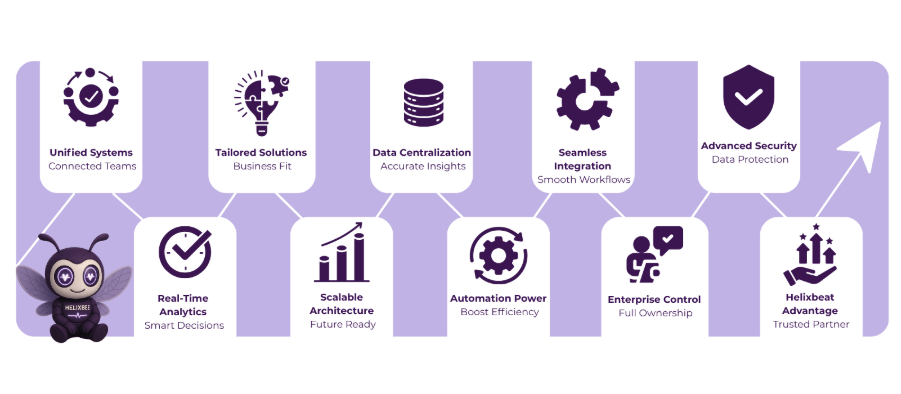
Custom enterprise software is a tailor-made solution designed specifically for a company’s unique processes, goals, and challenges. Unlike ready-made or off-the-shelf tools, it’s built from the ground up to match how your business actually works. This type of software brings all departments like HR, finance, operations, and sales under one connected system. It helps automate tasks, improve teamwork, and reduce errors.
With custom enterprise software development, businesses gain full control over features, integrations, and scalability, ensuring the system grows along with the organization. In short, custom enterprise software development services provide the flexibility and performance that generic tools can’t, helping enterprises work efficiently and stay competitive.
Core Components of Custom Enterprise Application Development
Building powerful business software starts with understanding the key elements that make it secure, scalable, and efficient — here are the core components of custom enterprise application development.
Centralized Data Management
A strong enterprise application starts with a unified database. It brings together data from multiple departments like HR, finance, and operations—so everyone works with accurate, real-time information.
Seamless System Integration
Custom enterprise software development ensures that your new application connects smoothly with existing tools such as CRMs, ERPs, and accounting systems, creating a single, efficient workflow.
Scalable Architecture
Built using modern frameworks and cloud technology, custom enterprise software can easily handle growing users, data, and business operations without slowing down performance.
Advanced Security Controls
Security is a core part of custom enterprise application development. Features like user authentication, data encryption, and access control protect sensitive company information.
Real-Time Analytics and Reporting
Smart dashboards and analytics tools help decision-makers track performance, monitor KPIs, and identify trends. With custom enterprise software development services, enterprises gain insights that lead to faster, data-driven decisions.
Together, these core components make custom enterprise software a powerful, secure, and scalable solution that adapts to your organization’s needs and drives long-term growth.
Step-by-Step Custom Enterprise Software Development Process
Building powerful software takes careful planning and teamwork. Here’s how a custom enterprise application development company typically delivers success in seven key steps:
- Requirement Analysis & Planning
The journey begins with understanding business needs, challenges, and user goals. This helps define the scope and objectives of the custom enterprise software clearly before development starts.
- System Design & Architecture
Experts plan how the software will function including workflows, integrations, and security layers. A solid design ensures the custom enterprise software development process runs smoothly and meets performance goals.
- UI/UX Prototyping
Designers create user-friendly screens and experiences that reflect how employees will interact with the system. This stage ensures the software is simple, intuitive, and efficient.
- Development & Integration
Developers start coding the core modules, connecting databases, APIs, and third-party tools. This is where custom software development for enterprise turns business logic into real functionality.
- Testing & Quality Assurance
Each module goes through functional, performance, and security testing to ensure reliability. Quality assurance is a must in custom enterprise application development to prevent issues before deployment.
- Deployment & Training
Once tested, the software is deployed in phases. Teams receive training and documentation to adapt easily to the new system and start using it effectively.
- Maintenance & Ongoing Support
After launch, continuous improvements are made through custom enterprise software development services — including updates, bug fixes, and performance tuning to keep the system future-ready.
In short, this seven-step process ensures your custom enterprise software is reliable, secure, and perfectly aligned with your organization’s long-term goals
Let Helixbeat design the perfect enterprise solution customized to your business goals.
Advantages of Custom Enterprise Software Development
Choosing custom enterprise software development gives businesses the freedom to create tools that truly fit their needs and goals. Unlike generic software, it’s designed around how your organization actually works, offering long-term efficiency and control.
Key advantages include:
- Tailored Functionality: Every feature is built to match your specific workflows, ensuring a perfect operational fit.
- Seamless Integration: Easily connects with existing systems like CRMs, ERPs, and accounting tools, reducing data silos.
- Scalability & Flexibility: The software grows with your business and adapts to new requirements without performance issues.
- Enhanced Security: With custom architecture and user permissions, you maintain better control over sensitive enterprise data.
In the end, investing in custom enterprise software development services means building a smarter, more connected, and future-ready business ecosystem.
Key Features of Effective Custom Enterprise Software Solutions
- Modular and Scalable Architecture
A well-designed custom enterprise software is built on a modular structure, allowing you to add, remove, or upgrade features easily as your business evolves. This scalability ensures the system stays relevant for years without major overhauls.
- Seamless System Integration
Integration is at the heart of custom enterprise software development. The software connects smoothly with CRMs, ERPs, HRMS, and other enterprise tools, enabling data to flow freely across departments for better decision-making.
- Advanced Security and Compliance
Data security is non-negotiable for large organizations. Custom enterprise application development includes multi-level authentication, encryption, and compliance with industry standards, ensuring business data stays protected at all times.
- Real-Time Analytics and Reporting
Strong custom software development for enterprise includes built-in dashboards and data visualization tools that offer real-time insights, helping leaders track KPIs, identify trends, and make data-driven decisions quickly.
- User-Friendly Interface and Accessibility
An effective enterprise solution is easy to use and accessible from multiple devices. Through intuitive design and mobile responsiveness, custom enterprise software development services make complex operations simple and accessible for every user.
Together, these features make custom enterprise software a complete, dependable, and intelligent solution built for growth and performance.
Partner with Helixbeat to turn your enterprise challenges into smart software solutions.
ROI Analysis: Custom vs. Off-the-Shelf Software
Criteria | Off-the-Shelf Software | Custom Enterprise Software |
Initial Cost | Lower upfront cost but recurring license fees | Higher one-time cost, no recurring licenses |
Customization | Limited flexibility; fixed features | Fully customizable to business workflows |
Integration | May not integrate with all existing systems | Seamlessly integrates with CRMs, ERPs, and other tools |
Scalability | Restricted; may require switching tools later | Easily scalable as business grows |
Ownership | Vendor-owned; limited control | 100% ownership and control of codebase |
Security | Shared security protocols; risk of breaches | Built with enterprise-level security and data privacy |
Long-Term Cost | Adds up over time due to renewals and upgrades | Lower total cost of ownership in the long run |
Support & Maintenance | Dependent on vendor’s roadmap and policies | Dedicated support from your development partner |
Performance Optimization | Generalized for all users | Optimized for your enterprise’s specific operations |
ROI (3–5 Years) | Moderate ROI with limitations in flexibility | Higher ROI through efficiency, automation, and scalability |
Future Trends in Custom Enterprise Software Development
- AI-Powered Automation and Predictive Intelligence
Artificial Intelligence (AI) is reshaping how businesses operate. In the future, custom enterprise software will rely heavily on AI and machine learning to automate repetitive tasks, predict customer needs, and optimize workflows. Through intelligent data analysis, enterprises can make smarter decisions faster — a major leap for modern custom software development for enterprise.
- Cloud-Native and Cross-Platform Solutions
As remote work and global operations expand, cloud-based systems are becoming essential. Future-ready custom enterprise software development will focus on creating cloud-native, cross-platform solutions that allow teams to access tools securely from anywhere. This shift improves flexibility, reduces maintenance, and supports real-time collaboration across departments.
- Low-Code Development and Seamless Integrations
Speed and adaptability will drive the next generation of custom enterprise application development. Low-code and no-code frameworks will make it easier for non-technical teams to configure modules, while developers focus on complex integrations. Combined with scalable APIs and microservices, custom enterprise software development services will deliver faster rollouts and continuous innovation.
In short, the future of enterprise software is intelligent, connected, and adaptive — designed to keep organizations competitive in a fast-changing digital world.
Final Words
Nowadays, every growing business needs software that fits the way it works. Custom enterprise software helps connect departments, automate daily tasks, and improve decision-making. It also gives companies better control, stronger security, and the flexibility to grow without limits — something ready-made tools can’t offer.
At Helixbeat, we create custom enterprise software development services designed around your business needs. Our team builds easy-to-use, secure, and scalable solutions that help your company run smarter and faster. With Helixbeat as your trusted custom enterprise application development company, you get more than just software — you get a long-term technology partner focused on helping your business succeed.
FAQs
1. What is custom enterprise software, and why do businesses need it?
Custom enterprise software is a tailor-made solution built specifically for a company’s unique needs and workflows. Businesses need it to connect departments, automate processes, and handle complex operations more efficiently than off-the-shelf tools.
2. How long does custom enterprise software development usually take?
The duration of custom enterprise software development depends on the project’s size, features, and integrations. On average, it can take 3–9 months from planning to deployment, depending on how detailed and scalable the solution needs to be.
3. What are the benefits of custom software development for enterprise companies?
Custom software development for enterprise provides flexibility, seamless integration, and enhanced data security. It helps organizations streamline workflows, eliminate manual errors, and scale smoothly as business demands grow.