


Automated Functional Testing
Get in Touch
New Lead: Testing as a Service
Testing as a Service Landing Page Form, connected with the Mailchimp.
"*" indicates required fields
Many teams struggle to release software on time because manual testing takes too long and misses hidden issues. Running the same test cases again and again not only delays updates but also increases the risk of human error. As your app grows, keeping up with quality checks becomes harder and more time-consuming.
This is where automated functional testing helps. It runs tests faster, covers more features, and gives more reliable results. Whether it’s a web app or automated functional testing for mobile applications, automation keeps your product stable through every update. With Helixbeat’s functional automation testing services, you can speed up testing, cut down errors, and launch with confidence.
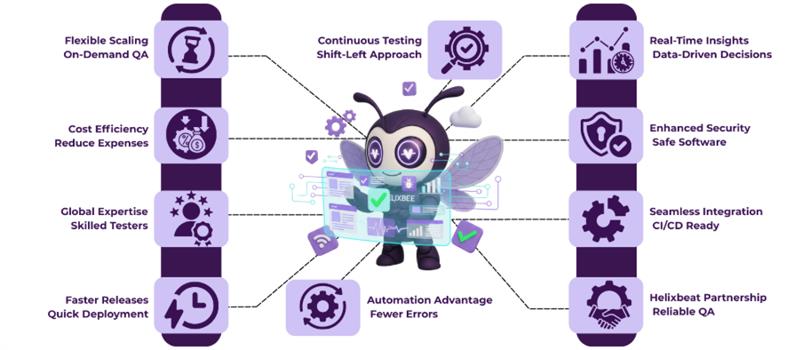
Short Note on Automated Functional Testing?
Automated functional testing is the process of using software tools to automatically check whether an application’s features work as expected. Instead of running test cases manually, automation scripts execute each function like logging in, submitting forms, or processing data—to verify results quickly and accurately.
This approach saves time, reduces human error, and makes it easier to test across multiple platforms and devices. By integrating with CI/CD pipelines, automated functional testing helps teams maintain quality at every stage of development, ensuring faster and more reliable software releases.
3 Main Reasons Manual Functional Testing Isn’t Enough Anymore
Manual testing once played a vital role in quality assurance, but with modern agile development and continuous deployment practices, it’s no longer sufficient on its own. Here’s why many teams are now shifting toward automated functional testing for sustainable scalability and precision.
1. Limited Scalability in Continuous Integration Environments
Manual testing cannot keep up with the pace of modern CI/CD pipelines. Every code update demands immediate feedback, but manual execution delays this process. With automated functional testing, regression suites run instantly after each commit, delivering faster feedback and preventing late-stage defects.
Automation also supports parallel execution, making large-scale testing feasible across browsers and environments — something manual methods can’t efficiently achieve.
2. Inconsistent Coverage and Lack of Traceability Without Automation
Without automation, maintaining consistent test coverage across modules and releases is challenging. Manual efforts often miss edge cases or fail to document traceability between tests and requirements.
By introducing functional automation testing services, QA teams gain reusable scripts, version control, and automated reporting that link every test to its feature, ensuring complete visibility and compliance throughout the lifecycle.
3. High Maintenance Effort and Dependency on Human Input
Manual functional testing relies heavily on human repetition, which leads to fatigue, variability, and slow turnaround times. Every minor UI or API change forces testers to restart validation.
Through automated functional testing frameworks, teams can apply modular and data-driven scripts that adapt to evolving code with minimal intervention. This shift not only improves efficiency but also allows QA experts to focus on exploratory, risk-based analysis, where human insight adds real value.
In short, manual testing struggles to match the speed, consistency, and intelligence that today’s dynamic software environments demand. Automated functional testing bridges that gap, combining reliability with scalability for modern product delivery.
What are the Benefits of Automated Functional Testing
Automated functional testing delivers far more than just speed — it builds consistency, scalability, and intelligence into the QA process. Below are four key benefits that highlight why teams rely on functional automation testing services for long-term efficiency.
1. Continuous and Cross-Platform Validation
With automated functional testing, regression suites run automatically after every build. For teams managing multiple environments, automated functional testing for mobile applications ensures seamless performance across Android, iOS, and web platforms.
2. Broader and Faster Test Coverage
By automating functional tests using Selenium, teams can execute hundreds of test cases in parallel across browsers and APIs. This approach increases coverage while reducing execution time by up to 70%.
3. Reusable and Scalable Frameworks
Automation frameworks use modular scripting, allowing easy reuse across projects. Expert functional automation testing services help maintain these scripts efficiently, even as the application evolves.
4. Actionable Reporting and Root Cause Insights
Automation tools generate detailed logs, screenshots, and analytics for faster defect detection. This makes automated functional testing smarter allowing data-driven QA and reliable product releases.
In short, integrating automated functional testing into your QA strategy transforms quality assurance from a manual task into a continuous, intelligent process: essential for modern web and mobile development.
How Automated Functional Testing Makes Mobile App Experience Smoother
1. Works Smoothly on Every Device and Platform
Mobile apps need to perform well on different phones, screen sizes, and operating systems. With automated functional testing for mobile applications, the same test scripts can run on Android and iOS devices at once. This helps catch issues like layout errors or crashes early, ensuring users get a smooth experience no matter which device they use.
2. Faster Updates and Fewer Errors
Every time a new app version or feature is released, testing takes time. By adding automated functional testing to CI/CD pipelines, tests run automatically with each build. This means bugs are found earlier, releases happen faster, and users get stable updates without interruptions.
3. Real-User Scenarios Made Easy to Test
Automation tools like Appium and Selenium let teams test how an app behaves in real life like handling poor internet, screen swipes, or background activity. By automating functional tests using Selenium and other frameworks, developers can make sure the app performs well in every situation, leading to a better and smoother mobile experience.
5 Best Automated Testing Tools for Testers
When choosing tools for automated functional testing, testers should pick ones that balance robustness, ease of use, cross-platform support, and integration capabilities. Below are some of the most compelling tools in 2025 — each with unique strengths:
1. Selenium
A widely adopted open-source framework for browser automation. With WebDriver, it supports multiple languages (Java, Python, C#, etc.) and allows distributed testing via Selenium Grid. It’s a staple for web-based automated functional testing.
2. Appium
Built for automated functional testing for mobile applications, Appium enables cross-platform testing (Android & iOS) using common WebDriver APIs. It supports hybrid, native, and web mobile apps.
3. Playwright
A newer end-to-end testing framework that also automates browser behavior across Chromium, Firefox, and WebKit. It includes features like auto-waiting, built-in tracing, and seamless parallel execution.
4. Katalon Studio
An all-in-one automation platform combining UI, API, and mobile testing capabilities. It helps simplify the adoption of functional automation testing services via built-in reports, CI/CD integration, and low-code features.
5. UFT One
A commercial tool (formerly QTP) that supports keyword-driven and script-based testing across desktop, web, mobile, and enterprise apps. Good for organizations needing centralized test management.
6. Squish
Designed for GUI and cross-platform testing, Squish supports multiple languages (Python, JavaScript, Ruby) and works across desktop, mobile, and embedded systems.
Each of these tools helps testers implement automated functional testing in different contexts from browser-based web apps to mobile and cross-platform environments. The best choice depends on your technology stack, team skills, and integration needs.
Role of Artificial Intelligence in Automated Functional Testing
Artificial Intelligence has become a crucial part of automated functional testing, helping QA teams move from repetitive validation to intelligent, self-learning automation. By combining machine learning and predictive analytics, AI makes testing faster, smarter, and far more adaptive to change.
1. AI-Powered Test Case Generation and Optimization
- Instead of relying on static, manually written test scripts, AI tools can automatically analyze application logs, user flows, and defect patterns to create optimized test cases.
- Machine learning algorithms identify which features are most likely to fail and prioritize them in each test cycle. This intelligent targeting improves test coverage while reducing execution time, making automated functional testing more precise and risk-aware.
2. Self-Healing Test Scripts and Intelligent Maintenance
- Frequent UI or code updates often break traditional test scripts. AI solves this with self-healing automation, where the system automatically detects changes in element locators, APIs, or workflows and updates them without manual input.
- This minimizes maintenance efforts and keeps functional automation testing services stable and reliable during continuous development.
3. Predictive Analytics and Smart Defect Detection
- AI-driven analytics help QA teams go beyond test execution by learning from historical data. These systems identify recurring issues, predict high-risk areas, and even suggest root causes through NLP-powered log analysis.
- As a result, teams can act before problems reach production, strengthening both speed and quality.
In short, Artificial Intelligence makes automated functional testing not just faster but also adaptive – turning QA into a proactive, data-driven process that continuously improves with every build.
Why Choose Helixbeat for Automated Functional Testing
Choosing Helixbeat for automated functional testing means getting a team that focuses on both technology and results. We build automation frameworks that fit your product perfectly — whether it’s a website, software, or mobile application. Using tools like Selenium and AI-powered analytics, we help you test faster, find bugs earlier, and keep every release stable and reliable.
At Helixbeat, we make testing simple, smart, and effective. Our functional automation testing services reduce manual work, speed up delivery, and improve overall software quality. With flexible plans and expert support, we help your business launch better products, faster and give your users a smooth, error-free experience every time. Contact us now.
FAQs
1. What types of projects benefit the most from automated functional testing?
Projects with frequent updates, large test suites, or complex user workflows benefit the most from automated functional testing, as it saves time and improves consistency across builds.
2. How does automated functional testing for mobile applications improve app stability?
Automated functional testing for mobile applications allows QA teams to test across different devices, screen sizes, and OS versions, helping detect crashes or performance issues before release.
3. Why do teams prefer automating functional tests using Selenium?
Teams prefer automating functional tests using Selenium because it supports multiple programming languages, integrates easily with CI/CD tools, and enables cross-browser testing for web apps.
4. Can functional automation testing services reduce manual QA costs?
Yes, functional automation testing services significantly reduce long-term QA costs by automating repetitive tasks, minimizing human errors, and improving overall test efficiency.
5. How long does it take to set up automated functional testing in a new project?
The setup time depends on the application’s complexity, but with the right tools and expertise, automated functional testing frameworks can be implemented within a few weeks to start delivering measurable results.