


Custom Software Development Company
Get in Touch
New Lead: Product Development Services
"*" indicates required fields
Complete Guide on Custom Software Development for 2025
Did you know that around 65% of companies worldwide are planning to spend more on custom software development services in 2025? That’s because most businesses have realized one big problem — off-the-shelf software rarely fits their exact needs. It might get the job done for a while, but as the business grows, these ready-made tools often limit flexibility, cause data issues, and fail to connect smoothly with other systems.
That’s where a custom software development company makes all the difference. Instead of adjusting your work to fit a generic tool, custom-built software adapts to your processes. It’s more secure, scalable, and designed around how your business actually operates.
Many businesses today prefer to outsource custom software development because it saves time, cuts costs, and gives access to global talent. Whether it’s a custom healthcare software development company building hospital management systems or a team creating enterprise-level tools, the goal is the same; to help businesses run smarter and faster.
If you’re looking for the best custom software development companies in 2025, this guide will walk you through everything — from what custom software is to how it’s built, why it matters, and how it can transform your business.
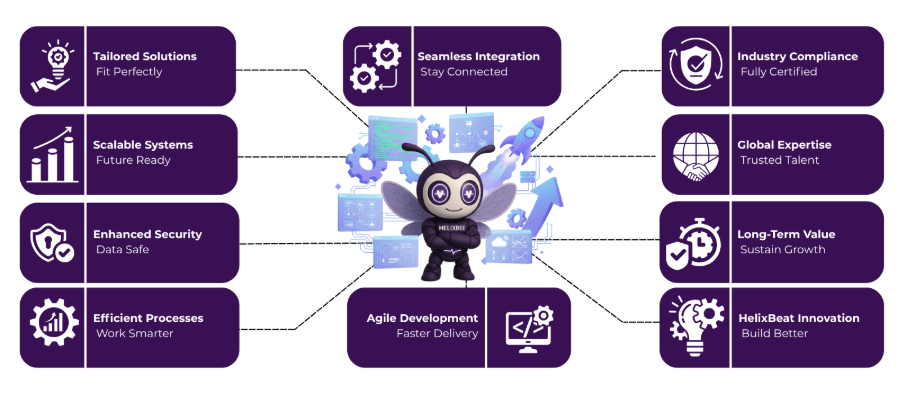
Short Note on Custom Software Development
A custom software development company creates software designed specifically for a business’s unique needs rather than offering one-size-fits-all solutions. These tailored applications help companies improve efficiency, automate processes, and gain a competitive edge. From internal management tools to customer-facing platforms, custom software development services focus on solving real business problems. Whether a startup or enterprise, many organizations now outsource custom software development to experts who can deliver scalable, secure, and user-friendly solutions that align perfectly with their goals.
Why Businesses Choose Custom Software Development Services Over Off-the-Shelf Solutions
Choosing the right software can make or break how smoothly your business runs. That’s why many companies today prefer custom-built solutions over ready-made tools.
Customized to Business Needs
Every business operates differently, and that’s why custom software development services are preferred over ready-made tools. Off-the-shelf solutions often come with unnecessary features or lack the ones you really need.
Custom-built software, on the other hand, is designed specifically for your workflow, goals, and customer base. It fits perfectly into your daily operations without forcing you to adjust your process.
Better Scalability and Flexibility
When a company grows, its software should grow with it. With custom software, you can easily add new modules, users, or features as your business evolves. Off-the-shelf tools usually limit this kind of flexibility.
Partnering with a custom software development company means your product is built with future expansion in mind — no need to start from scratch later.
Stronger Security and Integration
One of the biggest reasons businesses outsource custom software development is data protection. Custom software can include industry-specific security layers and compliance checks — something generic tools often lack.
It also integrates smoothly with your existing systems, reducing errors and boosting efficiency. That’s why many enterprises today prefer working with the best custom software development companies to get a solution that’s both safe and seamless.
In short, custom software gives businesses control, scalability, and security — three things every growing company needs to stay ahead in 2025.
Different Types of Custom Software Development
Here are the main types of custom software development that businesses invest in today:
- Enterprise Software Development
Designed for large organizations to manage internal operations such as HR, finance, logistics, and project tracking. It helps teams work together efficiently with centralized data access. - Web Application Development
Focuses on building browser-based applications that can be accessed from anywhere. These are ideal for e-commerce, CRMs, and business management tools. - Mobile App Development
Customized for smartphones and tablets, mobile apps help businesses connect directly with users through Android and iOS platforms, improving accessibility and engagement. - Custom Healthcare Software Development
Built by a custom healthcare software development company, these solutions include EHR systems, telemedicine platforms, and patient management software designed to improve care delivery and data accuracy. - AI and Machine Learning Solutions
These projects use intelligent algorithms for automation, predictive analytics, and real-time decision-making — ideal for manufacturing, finance, and logistics. - Cloud-Based Software Development
Enables data storage, sharing, and collaboration through secure cloud platforms, supporting remote access and business continuity. - E-commerce Software Development
Custom platforms designed for online stores to manage products, payments, and customer experiences with complete flexibility and scalability. - SaaS Product Development
A growing trend among the best custom software development companies, SaaS models allow businesses to offer software as a subscription, reducing upfront costs and maintenance efforts.
Each of these types can be developed in-house or through custom software development outsourcing, depending on the project size, timeline, and budget.
The Process Involved in Custom Software Development
Developing custom software requires a structured and strategic approach. Below are the seven key steps that top custom software development companies follow to build secure, scalable, and high-performance applications.
Requirement Analysis & Discovery
This is the foundation of every project. The development team collaborates with stakeholders to understand business goals, challenges, and user expectations. Tools like JIRA, Notion, or Confluence are used to document system requirements, user personas, and KPIs.
This phase may also involve feasibility studies and technology stack evaluations to determine the best approach, whether it’s .NET, Java, Python, or Node.js.
System Architecture & Design
Once the requirements are clear, the architects create a system blueprint defining the software’s structure, data flow, and integrations. This step includes database schema design, API planning, and UI/UX wireframing using tools like Figma or Adobe XD.
The architecture is chosen based on scalability needs – for instance, microservices for complex enterprise systems or monolithic designs for simpler applications.
Front-End and Back-End Development
This is where the actual coding begins. Front-end developers work on the user interface using frameworks like React, Angular, or Vue.js, ensuring responsive design and smooth interactivity.
Simultaneously, back-end developers build the server-side logic using technologies such as Node.js, Django, Spring Boot, or Laravel. APIs are developed for communication between the front end, back end, and third-party services.
Database and Cloud Integration
A robust database layer is essential for performance and security. Developers configure databases such as PostgreSQL, MySQL, or MongoDB, depending on data complexity and scaling needs.
In most modern applications, cloud platforms like AWS, Azure, or Google Cloud are integrated to enable scalability, automated backups, and CI/CD deployment pipelines.
Testing and Quality Assurance (QA)
Before deployment, the software goes through multiple layers of testing — unit testing, integration testing, performance testing, and security audits. Automation tools like Selenium, JUnit, or Postman are often used to ensure consistent results.
QA teams validate functionality, performance under load, and data protection compliance (GDPR, HIPAA, etc.).
Deployment & Implementation
After successful QA approval, the system is deployed to a staging environment for final checks and then released to production. DevOps engineers use tools like Docker, Kubernetes, Jenkins, and GitHub Actions to automate deployment, improve scalability, and maintain version control. Proper rollback and backup plans are also set in case of unexpected issues.
Maintenance, Monitoring & Continuous Improvement
Post-launch, developers track performance metrics and user feedback through APM tools like Datadog, New Relic, or Prometheus. Regular updates, security patches, and feature enhancements are rolled out under Agile or DevOps methodologies.
This ongoing phase ensures the software remains optimized, secure, and aligned with changing business goals.
Top custom software development companies follow these seven stages meticulously to deliver stable, future-ready solutions. Whether you outsource custom software development or build in-house, understanding this process helps ensure transparency, quality, and long-term ROI.
Outcome of Custom Software Development
Here’s what businesses typically achieve after investing in custom software development:
- Higher Efficiency and Automation
Custom-built software eliminates repetitive manual work by automating workflows. Businesses often see up to a 60% improvement in productivity, allowing teams to focus on core tasks rather than routine operations. - Seamless System Integration
Unlike off-the-shelf software, custom solutions easily integrate with your existing tools such as CRMs, ERPs, or payment gateways — creating a single, connected ecosystem that improves data accuracy and reduces operational silos. - Enhanced Security and Compliance
A reliable custom software development company builds with your industry’s standards in mind, whether it’s HIPAA for healthcare or GDPR for data privacy. This results in a secure and compliant environment tailored to your business model. - Scalability and Long-Term Value
As your business grows, your software can scale too. Features, users, or new technologies can be added without performance drops — something most pre-built systems can’t handle efficiently. - Improved Customer Experience
Custom software helps you deliver personalized experiences, faster response times, and better usability. Whether it’s a custom healthcare software development company improving patient interaction or an enterprise app simplifying workflows, user satisfaction always increases.
In short, partnering with the best custom software development companies leads to measurable business growth, stronger security, and lasting competitive advantage.
What are the Business Needs Custom Software Development Services
Here are four key business needs that custom software development services help address in a practical and result-oriented way:
- Complex Workflow Automation Across Departments
Many enterprises face challenges due to disconnected tools across HR, finance, operations, and customer service. Custom software helps unify these workflows under one platform, automating approvals, reports, and task tracking in real time.
For example, a logistics company can use a custom solution to automate delivery tracking, inventory updates, and invoicing from one dashboard.
- Data-Driven Decision Making
Businesses depend on accurate data, but scattered systems often make analysis difficult. A custom software development company can build centralized dashboards that pull information from multiple sources, providing real-time analytics for smarter decisions.
This is especially valuable in industries like manufacturing, retail, and healthcare, where timing and insights directly affect outcomes.
- Compliance and Industry-Specific Standards
Industries such as healthcare, banking, and e-commerce must follow strict compliance frameworks like HIPAA, PCI DSS, or GDPR.
Custom software development services create systems that include audit trails, encryption, and secure access controls to meet these standards while protecting sensitive data.
- Integration with Legacy and Modern Systems
Many organizations still rely on older software that does not integrate with modern platforms. Through custom software development outsourcing, businesses can develop connectors and APIs that allow legacy systems to communicate with new technologies.
This keeps operations running smoothly without completely replacing existing systems.
In short, the best custom software development companies focus on solving real challenges like scalability, compliance, and system integration to help businesses grow efficiently and securely.
Why Helixbeat is the Top Custom Software Development Services In USA
At HelixBeat, we don’t just create software — we build solutions that make your business stronger and smarter. As a trusted custom software development company in USA, we design software that fits your exact needs instead of forcing you to adjust to generic tools.
Our experts work closely with you to understand your challenges and then build applications that boost productivity, improve workflows, and help your team get things done faster.
Whether you need enterprise software, mobile apps, or custom healthcare software development, we’ve got you covered from start to finish. With our hands-on approach, transparent communication, and quick delivery, HelixBeat has become one of the best custom software development companies businesses rely on to bring their ideas to life.
FAQs
1. How long does it take to develop custom software?
The timeline depends on the project’s size and complexity. A basic custom solution might take 3–4 months, while large enterprise systems can take 6–12 months. At HelixBeat, we use an agile approach, so you start seeing working modules early while we continue refining the product.
2. Is custom software development more expensive than ready-made tools?
Initially, yes, but it’s a smarter investment long term. Ready-made tools often come with recurring fees, unused features, and limits on customization. Custom software is a one-time investment built exactly for your needs, which saves money and boosts efficiency over time.
3. Can I update or expand my custom software later?
Absolutely. One of the main advantages of custom software is flexibility. You can easily add new features, modules, or integrations as your business grows. HelixBeat’s development framework is designed to support long-term scalability.
4. What industries benefit most from custom software development?
Almost every industry can benefit, but it’s especially powerful in healthcare, logistics, retail, and finance. These sectors often need secure, scalable, and process-specific solutions — something a custom software development company like HelixBeat can deliver with precision.