


Electronic Patient Record: The Foundation of Modern Healthcare Digitalization
Practice electronic medical records (EMR) have become the standard documentation and patient-management system for private practices, group clinics, and specialty offices across the United States. Unlike hospital-grade enterprise systems, practice electronic medical records are designed specifically for outpatient settings with 1–100 providers. They focus on scheduling, charting, e-prescribing, billing, and patient engagement while remaining affordable and relatively easy to implement.
What Is an Electronic Patient Record?
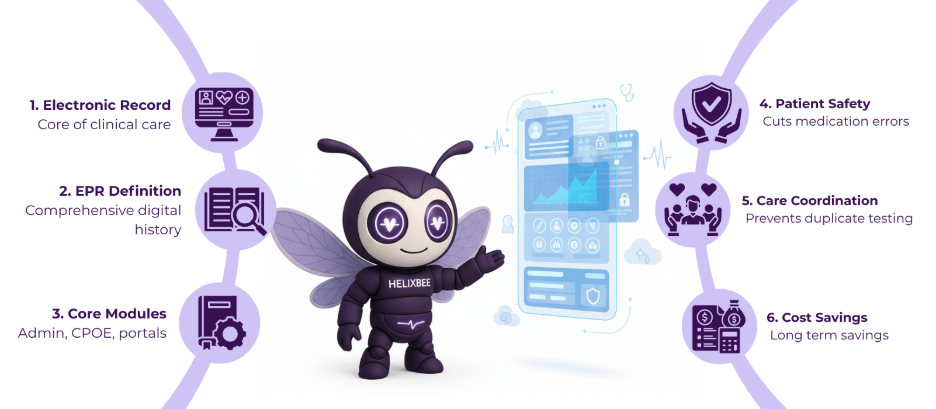
An electronic patient record is a digital version of a patient’s complete medical history maintained by healthcare organizations. It contains demographic data, diagnoses, medications, treatment plans, immunization dates, allergies, radiology images, laboratory results, and vital signs. Unlike paper records limited to one location, a properly implemented electronic patient record system allows authorized clinicians to access this information instantly from multiple sites.
Core Components of an Electronic Patient Record System
A mature electronic patient record system typically includes the following modules:
- Patient Administration – registration, scheduling, and admission/discharge/transfer functions
- Clinical Documentation – progress notes, nursing assessments, and structured templates
- Computerized Provider Order Entry (CPOE) – electronic ordering of medications, labs, and imaging
- Pharmacy and Medication Management – e-prescribing and reconciliation tools
- Laboratory and Radiology Integration – bidirectional interfaces with diagnostic departments
- Decision Support – drug-allergy checks, drug-drug interaction alerts, and evidence-based guidelines
- Billing and Coding – automated charge capture and ICD-10/CPT assignment
- Patient Portal – secure messaging and access to personal health data
Modern platforms increasingly incorporate telehealth integration, artificial-intelligence-assisted documentation, and genomic data repositories.
Key Benefits Supported by Evidence
Improved Patient Safety
Studies consistently demonstrate that electronic patient record systems reduce medication errors. A meta-analysis, McDowell et al. 2014 pooled 16 studies on CPOE in acute-care hospitals. It showed CPOE was associated with a 53% reduction in preventable ADEs (pooled risk ratio 0.47, 95% CI 0.31–0.71) when compared with paper-based orders.
Better Care Coordination
When patients receive treatment from multiple specialists, the electronic patient record prevents duplication of tests and contradictory treatments. The US Department of Veterans Affairs, operating one of the oldest and most successful systems (VistA), reports lower 30-day readmission rates for certain conditions like COPD.
Cost Reduction Over Time
Although upfront implementation costs can be substantial (some studies cite around US $32,000–$33,000 per physician in ambulatory settings), long-term savings often come from reduced paperwork, fewer duplicated tests, and more efficient coding and billing. A 2003 cost-benefit study estimated a net benefit of around US $86,400 per provider over five years in primary-care practices.
Population Health and Research
De-identified data from electronic patient records support public health monitoring and clinical research. During the COVID-19 pandemic, countries with strong digital health infrastructures used their national health databases to track infection trends, identify high-risk groups, and evaluate vaccine performance.
For example, Israel’s national health funds provided near–real-time data that helped assess vaccine effectiveness; Denmark’s national health registries supported population-level studies on transmission and outcomes; and South Korea relied on integrated digital systems combining testing data, contact tracing information, and health records to monitor outbreaks and guide public health decisions.
Role of FHIR in Modern Electronic Patient Record Systems
Fast Healthcare Interoperability Resources (FHIR, pronounced “fire”) has emerged as the most important interoperability standard in the history of the electronic patient record.
Before FHIR, exchanging information between different electronic patient record systems relied on older standards such as HL7 v2, CDA, or proprietary interfaces. These approaches were complex, expensive, and often resulted in incomplete or poorly structured data. FHIR changes the paradigm by combining modern web technologies (RESTful APIs, JSON/XML payloads, OAuth2 security) with healthcare-specific resources, making data exchange as straightforward as interactions on the public internet.
AERIS: Streamlining Electronic Patient Records Through FHIR
AERIS, by Helixbeat, acts as a translator for your patient records, using standards like HL7 and FHIR to tie all your data into one neat, unified system. This approach simplifies electronic health record integration by automating data mapping and validation.
Ready to cut delays by 50%, double your ROI, and empower your team with instant access to critical data? Let’s dive into why AERIS is the solution you’ve been waiting for.
Why AERIS is Your Key to Healthcare Innovation?
At Helixbeat, we know your challenges: fragmented systems, delayed data, and rising costs. AERIS is here to change that, offering a personalized, scalable, and secure platform that fits your unique needs. Whether you’re a small clinic or a sprawling hospital network, AERIS delivers measurable results that elevate patient outcomes and boost your bottom line.
- 20+ Years of Expertise: Our team brings decades of healthcare IT experience to ensure AERIS works for you.
- 50+ IT Professionals: A dedicated crew powers AERIS, delivering unmatched support and innovation.
- 1,000+ Customers: Join a thriving community of healthcare leaders already transforming with AERIS.
- 10,000+ Projects Completed: Proven success across countless integrations and workflows.
- 95% Returning Customers: Our clients trust AERIS to deliver, time and time again.
Providers adopting AERIS report faster diagnoses, lower costs, and improved outcomes, positioning it as the go-to tool for future-proof HIE.
The AERIS Advantage: Numbers That Speak for Themselves
Metric | Without AERIS | With AERIS | Your Benefit |
Data Exchange Delays | Frequent bottlenecks | Reduced by 50%
| Faster care in emergencies |
Return on Investment | Slow, costly overhauls | 100% faster ROI | Grow without breaking the bank |
Operational Costs | High redundancies | Cut by 30% | Save thousands annually |
Error Rates | Up to 20% manual errors | Slashed by 90% | Precision for better patient outcomes |
Your Benefits, Amplified
- 50% Fewer Delays: Real-time data means critical information is always at your fingertips, turning hours into seconds.
- 100% Faster ROI: Plug-and-play integration maximizes your investment without expensive system replacements.
- 30% Cost Savings, 90% Fewer Errors: Automation eliminates waste, saving resources and ensuring accuracy.
How AERIS Works: Your 3-Step Path to Success?
- Connect Seamlessly: Integrate AERIS effortlessly into your existing systems, from legacy EMRs to modern platforms.
- Share Securely: Activate real-time data exchange with HIPAA-compliant encryption. Watch your teams and partners collaborate effortlessly.
- Optimize and Grow: Because AERIS evolves with your organization, it’s set up to help you succeed for the long haul.
What Users Say About AERIS
Dr. Sarah L.
Hospital Administrator
John T.
Telemedicine Provider
Emily P.
Healthcare Executive
FAQs
1. How do electronic patient records improve patient safety?
EPR systems reduce medication errors, provide clinical decision support, and allow clinicians to track allergies and drug interactions more accurately than paper records.
2. What are the main components of an EPR system?
Key components include patient administration, clinical documentation, CPOE, pharmacy management, lab and radiology integration, decision support, billing and coding, and patient portals.
3. How do EPRs support care coordination?
By making patient records accessible across different departments and specialists, EPRs prevent duplicate tests, contradictory treatments, and communication gaps in care delivery.
4. Who canbenefitfrom using a platform like AERIS?
Small clinics, large hospital networks, and healthcare organizations seeking faster data access, reduced errors, lower operational costs, and improved patient outcomes can benefit from AERIS integration.
Final Thoughts
From improving patient safety and care coordination to supporting population health research, EPR systems form the backbone of modern healthcare digitalization. Advances like FHIR and platforms such as AERIS by Helixbeat demonstrate how seamless data exchange can reduce delays, lower operational costs, and improve outcomes for both providers and patients. By integrating comprehensive, real-time records into daily workflows, healthcare organizations can focus on delivering better care, optimizing efficiency, and staying adaptable in an ever-evolving medical landscape.