


Complete Guide on Restaurant Inventory Management System
Get Started with a Free Demo
New Keyword Page
New Keyword Page
"*" indicates required fields
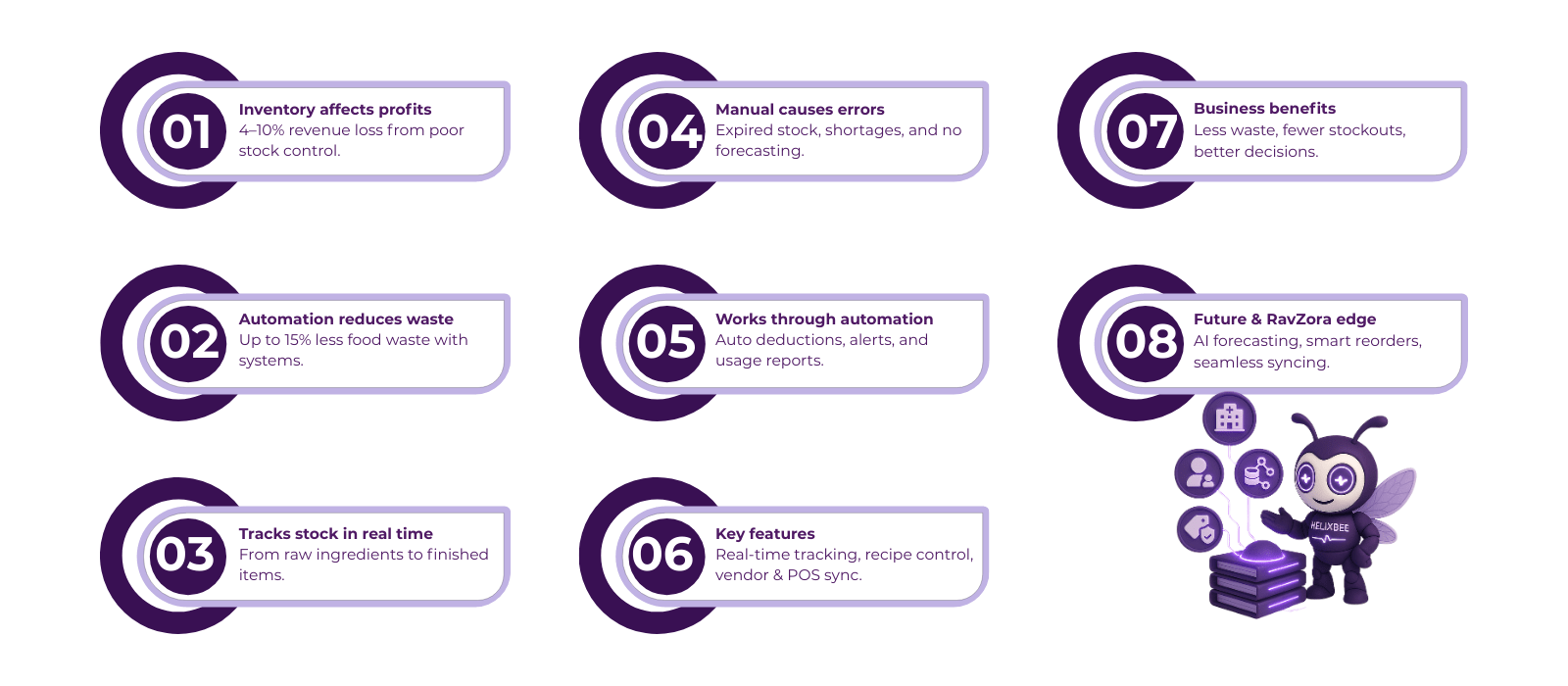
Running a restaurant is not just about taste and service; it’s also about control. Inventory is one of the biggest profit leak points in the food business. Studies show that 4–10% of restaurant revenue is lost due to poor inventory management, mainly from over-ordering, spoilage, and pilferage. Yet, many restaurants still rely on spreadsheets, notebooks, or manual stock checks.
According to industry data, restaurants that use automated inventory systems reduce food waste by up to 15% within the first few months. Even a small inventory mistake like overstocking raw materials or missing reorder alerts directly impacts margins.
This is where a restaurant inventory management system becomes essential. It helps restaurant owners track stock in real time, reduce human errors, and make data-driven purchasing decisions. In this guide, you’ll learn more about the restaurant inventory management system, how it works, and its benefits.
What is a Restaurant Inventory Management System?
A restaurant inventory management system is a digital solution that helps restaurant owners track, manage, and control their stock in real time – from raw ingredients to finished items. Instead of relying on manual stock counts or spreadsheets, the system automatically records inventory movement, monitors usage, and shows exactly what is available, what’s running low, and what needs to be reordered.
By connecting inventory with sales and purchase data, a restaurant inventory management system reduces food waste, prevents stockouts, and improves cost control. It gives restaurant owners clear visibility into their inventory, helps forecast demand accurately, and ensures smoother day-to-day operations while protecting profit margins.
Why Restaurant Owners Struggle With Inventory Management
Managing inventory is one of the toughest operational challenges for restaurant owners, especially when systems are manual and data is scattered.
1. Over-purchasing and expired stock
Without using an inventory software for restaurants, owners often estimate purchase quantities based on guesswork. This results in over-purchasing, unused ingredients, and frequent expiries that increase food costs.
2. Running out of fast-moving items
When inventory isn’t tracked in real time, high-demand items run out unexpectedly during peak hours. This results in lost sales, delayed orders, and unhappy customers.
3. Lack of real-time stock visibility
Many restaurants still operate without inventory management restaurant software, making it difficult to know the exact stock position at any moment. This lack of visibility forces owners to make decisions without real-time data.
4. Human errors and staff dependency
Manual inventory tracking depends heavily on staff accuracy, which often leads to missed entries and calculation errors. Using the best restaurant inventory management software reduces dependency on individuals and ensures consistent, error-free tracking.
5. No data for demand forecasting
Without structured reports from a proper inventory management restaurant software, restaurants lack historical usage data. This makes demand forecasting unreliable and increases the risk of both overstocking and understocking.
In short, without a structured inventory system in place, restaurants operate reactively instead of proactively- putting profits, efficiency, and customer experience at constant risk.
How a Restaurant Inventory Management System Works
A restaurant inventory management system brings structure and visibility to what is otherwise a complex and error-prone process.
Step 1: Stock Entry and Ingredient Setup
All raw materials, ingredients, and items are added into the system with unit measurements and cost details. This creates a clear starting point for tracking inventory accurately.
Step 2: Real-Time Stock Tracking
As items are received, used, or adjusted, the system updates stock levels automatically. Restaurant owners get real-time visibility into what’s available and what’s running low.
Step 3: Automatic Stock Deduction Through Sales
When an order is placed, ingredients are deducted based on predefined recipes. This links sales directly with inventory and eliminates manual calculations.
Step 4: Low-Stock Alerts and Reorder Management
The system triggers alerts when inventory reaches minimum levels. This helps restaurants reorder on time and avoid stockouts during peak hours.
Step 5: Reports, Insights, and Forecasting
Detailed reports show usage trends, wastage, and purchase patterns. These insights help restaurant owners forecast demand, control costs, and make smarter inventory decisions.
By automating each of these steps, a restaurant inventory management system transforms inventory control from a daily struggle into a predictable, data-driven process.
5 Features That Every Restaurant Inventory Management System Should Have
Choosing the right features is critical because your inventory system directly impacts food cost, operations, and profitability.
1. Real-time inventory tracking
A restaurant inventory management system should provide real-time visibility into stock levels across all items. This helps restaurant owners prevent stockouts, over-ordering, and last-minute inventory issues.
2. Ingredient-level stock control
Using inventory software for restaurants, owners can track inventory at the ingredient level instead of rough estimates. This improves portion control, reduces wastage, and keeps food costs under control.
3. Vendor & purchase order management
A well-built restaurant inventory system allows restaurants to manage vendors, pricing, and purchase orders in one place. This simplifies procurement and ensures consistent supply without manual follow-ups.
4. Waste & spoilage tracking
With inventory management restaurant software, restaurants can record wastage, spoilage, and expired stock accurately. This data helps identify loss patterns and take corrective action to protect margins.
5. POS integration
The best restaurant inventory management software integrates seamlessly with POS systems to update inventory automatically after every sale. This ensures accurate stock deduction and reliable inventory data at all times.
When integrated with a restaurant reservation booking system, these inventory features help restaurants forecast demand more accurately and avoid overstocking or shortages.
Benefits of Using a Restaurant Inventory Management System
One of the biggest benefits is reduced food waste and lower food costs. Industry studies show that restaurants using automated inventory systems can reduce food waste by up to 15%, as ingredient-level tracking helps avoid over-purchasing and identify wastage early. This directly improves profit margins and ensures better use of raw materials.
Another key advantage is better stock availability and smoother operations. Real-time visibility prevents sudden stockouts of fast-moving items, especially during peak hours. This means fewer order delays, consistent menu availability, and improved customer satisfaction.
Finally, it enables data-driven decision-making and future planning. Detailed reports on usage, trends, and vendor performance help restaurant owners forecast demand accurately, optimize purchasing, and scale operations with confidence.
Manual Inventory vs Restaurant Inventory Management System
Aspect | Manual Inventory Management | Restaurant Inventory Management System |
Stock Tracking | Stock is tracked using notebooks or spreadsheets, often updated only once a day. | Real-time tracking shows accurate stock levels at any moment. |
Accuracy & Errors | High chances of human errors, missed entries, and incorrect calculations. | Automated updates minimize errors and ensure consistent inventory accuracy. |
Food Waste Control | Difficult to track expired or wasted items, leading to higher food loss. | Ingredient-level tracking helps identify waste early and reduce spoilage. |
Time & Effort | Requires frequent manual stock counts and staff involvement. | Saves time by automating stock updates and reducing staff dependency. |
Decision Making | No historical data for forecasting or purchase planning. | Data-driven reports help forecast demand and optimize purchasing decisions. |
Future of Restaurant Inventory Management in 2026
As technology grows, inventory management is becoming smarter, faster, and more predictive for restaurants.
AI-driven demand forecasting:
- A modern restaurant inventory management system will use AI to analyze sales trends, seasonality, and consumption patterns.
- This allows inventory software for restaurants to forecast demand accurately and reduce overstocking and food waste.
Automation and smart reordering
- Advanced inventory management restaurant software will automate reordering by triggering purchase orders when stock reaches predefined levels.
- This ensures uninterrupted operations and makes the restaurant inventory system more efficient and reliable.
Deeper integration across systems
- The best restaurant inventory management software will offer seamless integration with POS, accounting, and supplier platforms.
- This connected ecosystem helps restaurants manage inventory, costs, and procurement from a single, centralized system.
In 2026, restaurants that adopt these smart inventory technologies will operate with better cost control, higher efficiency, and a stronger competitive edge.
Why RavZora is the Best Restaurant Inventory Management System
RavZora is designed to make inventory management simple, clear, and stress-free for restaurant owners. It gives real-time visibility into stock levels, so you always know what items are available and what needs to be reordered. This helps reduce food waste, avoid last-minute stock shortages, and keep daily operations running smoothly.
One of RavZora’s biggest strengths is how well it connects everything together. Sales, inventory, and purchase data are automatically synced, so there’s no need for manual updates or double entry. This makes RavZora a reliable restaurant inventory management system that saves time, reduces errors, and allows staff to focus more on service instead of paperwork.
RavZora also provides easy-to-understand reports on food usage, wastage, and costs. These insights help restaurant owners make better buying decisions and control expenses. Overall, RavZora turns inventory from a daily headache into a well-organized system that supports growth, efficiency, and better profits.
Frequently Ask Questions
1. Why is health information exchange important in healthcare?
It improves care coordination, reduces duplicate tests, minimizes errors, and helps providers make timely, data-driven decisions across different healthcare settings.
2. What are the main models of health information exchange?
3. Which standards guide health information exchange?
Standards like FHIR and HL7 define consistent data formats, making it easier for EHRs, HIEs, and other healthcare platforms to exchange information.
4. What are the benefits of using health information exchange?
HIE improves care coordination, reduces healthcare costs, supports population health management, enhances research, and increases operational efficiency.
5. How does AERIS enhance healthcare information exchange?
AERIS leverages FHIR standards, connects legacy systems, automates workflows, reduces manual errors, and provides real-time access to patient records and lab results.
1. How does a restaurant inventory management system improve profitability?
By tracking usage patterns and controlling over-purchasing, the system helps reduce unnecessary spending and protects profit margins without increasing menu prices.
2. Do restaurant owners need technical knowledge to use inventory software?
No, most inventory software for restaurants is built with simple dashboards and requires minimal training for staff and managers.
3. Can a restaurant inventory system handle multiple outlets?
Yes, advanced systems can manage inventory across multiple locations from a single dashboard, making it easier to monitor stock centrally.
4. What kind of reports does inventory management restaurant software provide?
It provides reports on stock consumption, wastage trends, purchase history, and supplier performance to support better planning.
5. Is cloud-based restaurant inventory management software secure?
Yes, cloud-based systems use secure servers and regular backups to protect inventory data and ensure reliable access anytime.