


Healthcare Value Based Reimbursement: Transforming Payments in Modern Healthcare
Get Started with a Free Demo
New Keyword Page
New Keyword Page
"*" indicates required fields
The healthcare industry in the United States is evolving rapidly, with providers and payers increasingly shifting from traditional fee-for-service models to outcome-focused systems. At the forefront of this transformation is healthcare value-based reimbursement, a model designed to improve patient outcomes, reduce unnecessary costs, and incentivize high-quality care.
For healthcare providers navigating the complex landscape of billing and reimbursement, understanding and implementing healthcare value-based reimbursement strategies is critical. PayNova offers solutions that simplify these processes, helping providers manage claims efficiently while maintaining compliance and optimizing revenue.
What is Healthcare Value-Based Reimbursement?
Healthcare value-based reimbursement (VBR) is a payment model that rewards healthcare providers based on the quality, efficiency, and outcomes of the care they deliver, rather than the volume of services rendered. Unlike traditional fee-for-service models, which reimburse providers for each procedure or visit, value-based reimbursement prioritizes patient outcomes, cost-effectiveness, and preventive care.
The goal of healthcare value-based reimbursement is to create a system where providers are incentivized to deliver high-quality care, reduce unnecessary procedures, and ensure patient satisfaction. This shift encourages a focus on long-term health improvements, patient engagement, and population health management.
Streamline Your Value-Based Payments Today” – Start optimizing patient outcomes and revenue with PayNova’s secure, automated reimbursement solutions.
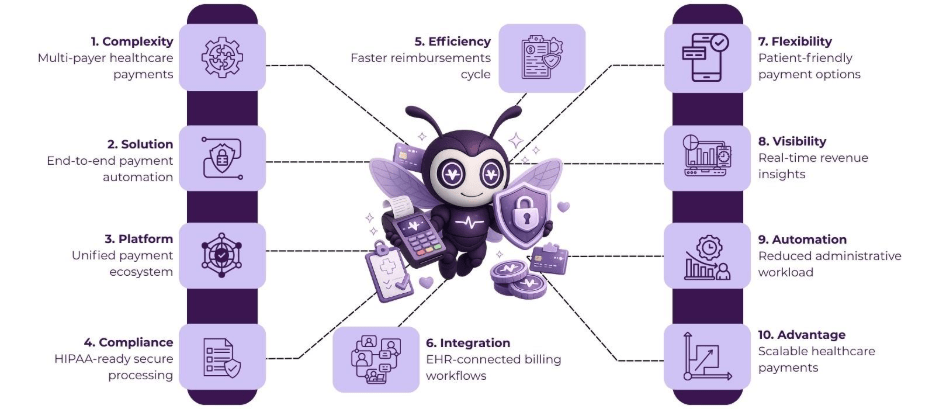
Modern payment solutions for healthcare typically include:
- Insurance and patient payment management, covering co-pays, deductibles, and out-of-pocket expenses
- Integrated healthcare payment processing that connects with EHR and Practice Management Systems
- Secure healthcare merchant services compliant with HIPAA and PCI-DSS regulations
- Patient-friendly health payment solutions, including digital payments, payment plans, and recurring billing
- Centralized healthcare payment platforms that provide real-time visibility into revenue and cash flow
By replacing manual, fragmented billing processes, payment solutions for healthcare help providers reduce administrative overhead, minimize errors, accelerate reimbursements, and improve the overall patient financial experience.
Key Features of Healthcare Value-Based Reimbursement
- Outcome-Oriented Payments
Providers receive compensation based on measurable health outcomes, such as improved chronic disease management, reduced hospital readmissions, and patient satisfaction metrics. - Cost Efficiency
By focusing on preventive care and efficient treatment protocols, healthcare value-based reimbursement models reduce overall healthcare costs while ensuring high-quality care. - Patient-Centered Approach
Value-based models encourage providers to engage patients actively in their care plans, improving adherence to treatment, preventive screenings, and follow-ups. - Integration with Technology
Advanced EHRs, analytics platforms, and payment gateways like PayNova facilitate accurate tracking of outcomes and streamlined billing under value-based reimbursement in healthcare systems.
Understanding Value-Based Reimbursement Models in Healthcare
There are several common value-based reimbursement models in healthcare that providers and payers adopt:
- Pay-for-Performance (P4P)
In this model, providers receive financial incentives for meeting specific performance metrics, such as vaccination rates, chronic disease management, or patient satisfaction scores. - Bundled Payments
Providers are reimbursed a fixed amount for all services related to a particular treatment or condition over a defined period. This encourages care coordination and cost efficiency while improving patient outcomes. - Accountable Care Organizations (ACOs)
ACOs are groups of providers working together to deliver coordinated care for a patient population. Providers share savings achieved through efficient, high-quality care. - Shared Savings Programs
Providers who reduce healthcare costs while maintaining or improving quality outcomes share in the savings with payers.
These value-based reimbursement models in healthcare are designed to align financial incentives with the goals of patient-centered care, quality improvement, and cost reduction.
Request a Demo and Simplify Billing” – See how PayNova integrates with your EHR and automates claims for faster, accurate value-based reimbursement.
Why Healthcare Value-Based Reimbursement Matters
The shift to healthcare value-based reimbursement is not just a financial change—it reflects a broader transformation in how care is delivered and measured. Some of the critical benefits include:
- Improved Patient Outcomes: Providers focus on preventive care and chronic disease management, leading to healthier populations.
- Cost Reduction: By eliminating unnecessary procedures and hospital readmissions, value-based reimbursement in healthcare reduces overall costs for both payers and patients.
- Enhanced Provider Accountability: Providers are incentivized to maintain quality standards, improve patient engagement, and optimize care delivery.
- Streamlined Administrative Processes: Advanced platforms and tools, including PayNova, enable efficient claims management and real-time reporting under healthcare reimbursement models.
Examples of Healthcare Value-Based Reimbursement in Practice
To illustrate the effectiveness of healthcare value-based reimbursement, consider these real-world examples:
- Managing Chronic Diseases
A primary care network implements a value-based reimbursement model in healthcare to manage diabetes patients. Providers receive incentives for achieving target HbA1c levels, reducing complications, and avoiding hospital admissions. The network tracks outcomes using electronic health records integrated with PayNova, streamlining billing and reporting. - Hospital Readmission Reduction
A hospital uses a bundled payment system for joint replacement surgeries. Instead of charging per service, the hospital receives a fixed payment covering pre-operative, operative, and post-operative care. Providers are motivated to coordinate care efficiently, reduce readmissions, and ensure patient satisfaction—key objectives of reimbursement model healthcare strategies. - Accountable Care Organization Initiatives
An ACO comprising multiple primary care physicians and specialists participates in shared savings programs. By focusing on preventive screenings, patient education, and coordinated care, the ACO achieves cost savings while maintaining high-quality care, demonstrating the practical impact of value-based reimbursement in healthcare.
Implementing Healthcare Value-Based Reimbursement Successfully
Transitioning to healthcare value-based reimbursement requires careful planning, technology adoption, and workflow adjustments. Providers can follow these key steps:
- Invest in Technology
Leveraging electronic health records, predictive analytics, and payment platforms like PayNova ensures accurate data collection, reporting, and claims management under value-based reimbursement in healthcare. - Track Performance Metrics
Providers should establish clear metrics for patient outcomes, preventive care adherence, and satisfaction to measure success under healthcare reimbursement models. - Engage Patients
Patient education, digital communication tools, and convenient payment options enhance engagement and adherence to treatment plans, improving overall outcomes. - Coordinate Care Across Providers
Integrated care teams, including specialists, primary care physicians, and ancillary services, ensure continuity of care and reduce redundant or unnecessary services. - Monitor and Adjust Strategies
Providers must continuously monitor outcomes, financial performance, and patient satisfaction to optimize their value-based reimbursement models in healthcare programs.
Designed for Complex Healthcare Billing Structures
Healthcare billing involves far more than simple transactions. Providers must manage insurance reimbursements, secondary coverage, patient balances, and out-of-network payments—all within strict regulatory frameworks.
PayNova’s healthcare payment solutions integrate seamlessly with EHR and Practice Management Systems, automatically pulling accurate patient and insurance data. This integration reduces claim errors, improves reimbursement timelines, and minimizes denials.
With intelligent automation, PayNova delivers payment solutions for healthcare that adapt to even the most complex billing environments.
Challenges in Healthcare Value-Based Reimbursement
While healthcare value-based reimbursement offers significant benefits, providers face challenges, including:
- Complex Billing and Coding: Accurately capturing quality metrics and linking them to reimbursements can be challenging.
- Data Management: Collecting, analyzing, and reporting outcome data requires advanced systems and expertise.
- Provider Adaptation: Transitioning from fee-for-service to outcome-based payments may require cultural and operational shifts.
- Patient Compliance: Achieving desired outcomes depends on patient engagement, which can vary significantly.
PayNova simplifies these challenges by automating claims, integrating with EHRs, and providing real-time analytics, ensuring that providers can focus on patient care rather than administrative hurdles.
Why Choose PayNova for Value-Based Reimbursement in Healthcare
PayNova offers a comprehensive solution to help healthcare providers thrive under healthcare value-based reimbursement systems:
- Seamless Integration with EHR and PMS: Automates billing, tracks co-pays and deductibles, and handles insurance claims efficiently.
- Real-Time Analytics: Provides insights into patient outcomes, revenue cycles, and performance metrics.
- Flexible Payment Options: Supports multiple payment methods and recurring billing for patients.
- HIPAA & PCI-DSS Compliance: Ensures secure handling of patient data and financial transactions.
- Fraud Detection & Error Reduction: Minimizes risks associated with manual claims and unauthorized access.
With PayNova, healthcare providers can maximize efficiency, maintain compliance, and improve both patient satisfaction and financial performance under value-based reimbursement in healthcare systems.
Get Started with PayNova Now” – Transform your healthcare reimbursement model and improve cash flow, compliance, and patient satisfaction.
Conclusion
The U.S. healthcare landscape is increasingly shifting towards healthcare value-based reimbursement to improve outcomes, reduce costs, and incentivize high-quality care. By adopting value-based reimbursement models in healthcare, providers can deliver better patient experiences, enhance operational efficiency, and achieve financial sustainability.
PayNova empowers healthcare providers to navigate this transition smoothly, offering robust payment solutions that integrate with existing systems, streamline billing, ensure compliance, and enhance patient satisfaction.
Adopting healthcare value-based reimbursement is no longer optional—it’s a strategic necessity. With the right tools, providers can focus on delivering quality care while ensuring financial stability and operational excellence.
Frequently Ask Questions
1. Why is health information exchange important in healthcare?
It improves care coordination, reduces duplicate tests, minimizes errors, and helps providers make timely, data-driven decisions across different healthcare settings.
2. What are the main models of health information exchange?
3. Which standards guide health information exchange?
Standards like FHIR and HL7 define consistent data formats, making it easier for EHRs, HIEs, and other healthcare platforms to exchange information.
4. What are the benefits of using health information exchange?
HIE improves care coordination, reduces healthcare costs, supports population health management, enhances research, and increases operational efficiency.
5. How does AERIS enhance healthcare information exchange?
AERIS leverages FHIR standards, connects legacy systems, automates workflows, reduces manual errors, and provides real-time access to patient records and lab results.
1. What is healthcare value-based reimbursement?
Healthcare value-based reimbursement is a payment model that rewards providers for quality care and positive patient outcomes rather than service volume.
2. How does PayNova support value-based reimbursement models in healthcare?
PayNova automates claims, integrates with EHR/PMS systems, tracks outcomes, and simplifies billing to ensure smooth value-based reimbursement processes.
3. What are the main types of value-based reimbursement in healthcare?
Common models include Pay-for-Performance, Bundled Payments, Accountable Care Organizations (ACOs), and Shared Savings Programs.
4. Can PayNova handle multiple insurance and patient payments?
Yes. PayNova consolidates payments from insurance companies, patients, and third-party payers, offering multiple payment methods and automated plans.
5. How does PayNova ensure compliance with healthcare regulations?
PayNova is fully HIPAA and PCI-DSS compliant, securely encrypting all patient and payment data while minimizing fraud and administrative errors.