


Why Custom Healthcare Software Is Important in the Modern Era
Get Started with a Free Demo
New Lead: Product Development Services
"*" indicates required fields
Did you know that over 80% of healthcare organizations struggle with managing patient data across multiple systems? According to a recent Deloitte report, hospitals lose nearly $125 billion every year due to inefficiencies caused by outdated software and disconnected digital tools. These challenges not only affect patient care but also put a strain on doctors, nurses, and administrators who rely on accurate information every second.
This is where custom healthcare software makes a difference. Instead of using generic platforms that don’t fit their unique workflows, hospitals and clinics are now adopting custom healthcare software solutions tailored to their exact needs. From automating patient records and billing to supporting telemedicine and real-time analytics, these systems make healthcare faster, safer, and more efficient.
In simple terms, custom healthcare software development services give medical organizations the power to work smarter — improving accuracy, saving time, and offering better care to every patient.
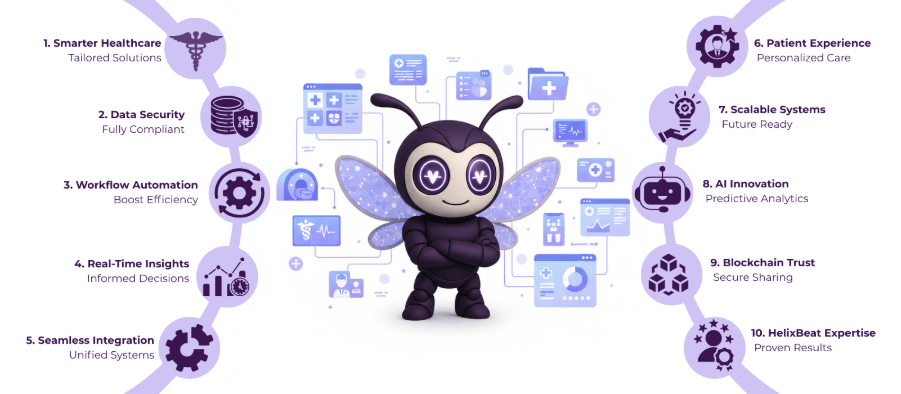
What is Custom Healthcare Software?
Custom healthcare software refers to digital applications specifically designed to meet the unique needs of healthcare organizations such as hospitals, clinics, laboratories, and telemedicine providers. Unlike ready-made software, it’s built from the ground up to match an organization’s workflows, patient management systems, and compliance requirements.
These solutions — developed through custom healthcare software development services — can include electronic health records (EHR), hospital management systems, patient portals, medical billing tools, and mobile health apps. The goal of custom software development for healthcare is to streamline operations, improve data accuracy, and enhance patient experiences through tailored features and integrations that standard software cannot offer.
Difference Between Ready-Made and Custom Software Development for Healthcare
Factor | Ready-Made Healthcare Software | Custom Software Development for Healthcare |
1. Flexibility | Offers around 20–30% customization with preset modules that may not fit every hospital’s workflow. | Provides 100% flexibility, allowing hospitals to design modules for appointments, billing, or patient tracking exactly as needed. |
2. Integration | Nearly 60% of healthcare providers face issues integrating ready-made tools with existing systems. | Designed for seamless integration with EHRs, lab systems, and IoT devices — improving interoperability by up to 45%. |
3. Data Security | Generic tools often meet only basic compliance, putting sensitive data at risk. | Built with HIPAA, HL7, and GDPR standards, offering enterprise-grade security and reducing breach risks by up to 70%. |
4. Scalability | Upgrading or expanding systems can cost 30–40% more due to rigid architecture. | Custom platforms are scalable by design, allowing new modules or users to be added with minimal cost increase. |
5. Long-Term Value | Lower upfront cost but 25–35% higher maintenance expenses over time. | Slightly higher initial investment but delivers 40–50% better ROI through reduced errors and improved operational efficiency. |
Statistics Related to Future Trends in the Healthcare Industry
The healthcare industry is rapidly evolving, and technology now plays a vital role in improving patient care, data management, and operational efficiency. As medical institutions move toward digital transformation, the demand for custom healthcare software is growing faster than ever.
- AI-Driven Healthcare Growth: The global AI in healthcare market is projected to reach $208 billion by 2030, with diagnostic accuracy improving by 40% through custom AI-powered medical software and predictive analytics.
- Rising Demand for Digital Health Platforms: Around 78% of healthcare organizations plan to invest in custom healthcare software development services by 2026 to support telemedicine, virtual consultations, and remote monitoring systems.
- Data-Driven Decision Making: By 2027, nearly 90% of hospitals are expected to adopt custom healthcare software solutions with real-time analytics and interoperability features, enabling faster, evidence-based clinical decisions.
These statistics clearly show that custom medical software development services are shaping the future of healthcare — making systems smarter, more connected, and more patient-focused than ever before.
Top Reasons Why Custom Healthcare Software Is Important in the Modern Era
In modern healthcare system, every second counts — from diagnosing patients to managing hospital operations. To keep up with rising patient demands, strict compliance rules, and digital transformation, healthcare providers are turning to custom healthcare software for efficient, secure, and scalable solutions.
1. Streamlined Operations Through Workflow Automation
Manual operations and outdated tools often slow down healthcare processes. Custom healthcare software automates critical administrative and clinical tasks to boost efficiency.
- Automates patient registration, appointment scheduling, and billing.
- Enables real-time data updates and role-based access control.
- Reduces human errors and improves staff productivity.
- Increases operational efficiency by 35–40%, as reported by healthcare IT studies.
- Allows healthcare staff to focus more on patient care rather than paperwork.
2. Enhanced Data Security and Regulatory Compliance
Protecting patient data is a top priority, especially with rising cyber threats. Custom healthcare software development services ensure that every solution is built for compliance and safety.
- Incorporates end-to-end encryption and multi-factor authentication.
- Supports HIPAA, HL7, and GDPR compliance standards.
- Uses audit trails to track access and prevent data misuse.
- Integrates FHIR (Fast Healthcare Interoperability Resources) for secure data exchange.
- Minimizes the risk of breaches and maintains patient confidentiality.
3. Real-Time Analytics and Better Clinical Decision-Making
Data-driven decision-making is revolutionizing modern healthcare. Custom healthcare software solutions empower doctors with actionable insights.
- Integrates AI and machine learning for predictive analytics.
- Helps identify disease risks early and recommend preventive treatments.
- Includes EHR modules that improve diagnosis accuracy by up to 25%.
- Reduces hospital readmissions by 15–20% through personalized care.
- Provides real-time dashboards for faster and more informed medical decisions.
4. Seamless Integration with Medical Devices and Systems
Hospitals use various digital systems and devices that must communicate effectively. Custom software development for healthcare bridges these gaps through smooth integration.
- Connects EHR, PACS, and LIS systems into a unified platform.
- Uses custom APIs to synchronize data between departments.
- Enables IoT-based wearables and diagnostic tools to share data instantly.
- Improves coordination among healthcare teams.
- Reduces treatment delays with real-time access to patient data.
5. Scalability and Long-Term ROI for Healthcare Organizations
As hospitals expand, their software must adapt without performance issues. Custom medical software development services build flexible systems ready for growth.
- Designed with cloud-based and modular architecture for easy scaling.
- Supports multiple branches, departments, and larger patient databases.
- Allows integration of AI, telehealth, and analytics as new modules.
- Reduces long-term costs through lower maintenance and upgrade needs.
- Delivers a 40–50% higher ROI over five years due to improved efficiency and patient satisfaction.
In short, custom healthcare software empowers medical organizations to operate faster, safer, and smarter — setting the foundation for a more connected and patient-focused future.
How Custom Healthcare Software Solutions Benefits Patients and Providers
As healthcare becomes more patient-centered and technology-driven, both patients and providers are looking for smarter ways to connect and manage care efficiently. That’s where custom healthcare software solutions come in — bridging the gap between people, data, and medical systems.
1. Better Experience and Convenience for Patients
Custom healthcare software makes it easier for patients to manage their health and stay connected with their providers.
- Patients can book appointments online, view prescriptions, and access medical records anytime.
- Integrated telemedicine and mobile apps allow remote consultations, saving travel time and hospital visits.
- AI-based chatbots and virtual health assistants provide instant support for basic health queries.
- Smart notifications remind patients about medicine schedules and follow-up visits.
- Overall, it creates a personalized, seamless experience that boosts patient engagement and satisfaction.
2. Improved Efficiency and Accuracy for Healthcare Providers
For doctors, nurses, and administrators, custom healthcare software solutions simplify daily workflows and reduce manual errors.
- Centralized dashboards give real-time access to patient data, lab reports, and imaging results.
- Automated documentation and billing save time and minimize data-entry mistakes.
- Integration with EHR systems and diagnostic tools helps providers make accurate, faster decisions.
- Predictive analytics help identify high-risk patients and plan preventive care.
- Studies show custom healthcare tools can cut administrative workload by up to 40%.
3. Strengthened Communication and Collaboration Across the Care Network
Healthcare is a team effort, and custom software development for healthcare improves coordination between departments, doctors, and patients.
- Enables secure messaging and data sharing between specialists, labs, and pharmacies.
- Supports multi-location access, allowing teams to collaborate from anywhere.
- Cloud-based systems maintain synchronized records, reducing duplication or loss of information.
- Patients, doctors, and insurance providers can all view updates in real time, enhancing transparency.
- This connectivity leads to faster treatment decisions, fewer delays, and higher overall care quality.
Together, these features make custom healthcare software solutions a bridge between patients and providers — improving communication, enhancing efficiency, and delivering truly connected healthcare experiences.
Custom Healthcare Software Helps Organizations to Grow
As hospitals and clinics expand, managing operations, patient engagement, and compliance becomes more complex. Custom healthcare software plays a key role in helping organizations scale efficiently while maintaining quality care and operational accuracy.
Here’s how it supports growth:
1. Centralized Data Management
- Integrates all patient, financial, and operational data into one secure platform.
- Reduces duplication and manual errors by up to 45%, improving workflow transparency.
2. Improved Operational Efficiency
- Automates repetitive administrative tasks such as scheduling, billing, and reporting.
- Streamlines inter-department coordination, saving 30–40% of staff time.
3. Scalable Infrastructure
- Built using cloud-native architecture that supports growth across multiple branches or networks.
- Easily integrates new modules like AI analytics or telemedicine without major downtime.
4. Data-Driven Decision Support
- Uses real-time dashboards and predictive analytics to identify trends, resource needs, and performance gaps.
- Helps management make faster, evidence-based decisions that drive growth and profitability.
5. Enhanced Patient Retention and Brand Reputation
- Improves patient satisfaction through seamless digital touchpoints and personalized care.
- Consistent quality experiences boost brand credibility, attracting more patients and partnerships.
In essence, custom healthcare software development services empower healthcare organizations to operate smarter, scale faster, and sustain long-term growth in an increasingly digital healthcare landscape.
New Updates in Custom Healthcare Software
The healthcare industry is evolving faster than ever, and custom healthcare software continues to adapt with cutting-edge innovations that make care more intelligent, connected, and efficient. Here are some of the latest updates shaping its future:
1. AI-Powered Predictive Analytics and Diagnostics
Artificial intelligence is now deeply embedded in custom medical software development services, helping providers predict health risks before they become critical.
- AI algorithms analyze EHR data to detect early signs of chronic conditions.
- Predictive models forecast patient admissions and treatment outcomes.
- This technology improves diagnostic accuracy by up to 40%, leading to faster, data-backed decisions.
2. Blockchain for Secure and Transparent Data Sharing
Data security remains a top concern in healthcare, and blockchain integration is transforming how patient records are shared.
- Creates tamper-proof, decentralized ledgers for medical data exchange.
- Ensures patient consent management and eliminates unauthorized access.
- Reduces data breaches by over 60%, strengthening trust between patients and providers.
3. Cloud-Based and IoT-Enabled Patient Monitoring
Modern custom healthcare software solutions are now leveraging cloud computing and IoT (Internet of Things) to enable real-time monitoring.
- IoT devices such as smartwatches and health sensors continuously transmit patient vitals.
- Cloud platforms provide 24/7 access to data for doctors and caregivers.
- Remote monitoring systems have cut hospital readmissions by 20–25%, improving both patient outcomes and operational efficiency.
With these innovations, custom software development for healthcare is no longer just about automation — it’s about building intelligent, secure, and patient-centered ecosystems that define the future of healthcare.
Why Helixbeat is the Best Choice for Custom Healthcare Software Development Services
At HelixBeat, we specialize in creating custom healthcare software development services that are tailored to fit every organization’s workflow — from clinics to telehealth startups. Our solutions are built with precision, scalability, and compliance in mind, helping healthcare providers streamline operations and deliver better patient outcomes.
We combine deep healthcare domain expertise with advanced technologies like AI, cloud computing, IoT, and data analytics to create secure and future-ready platforms.
Key Benefits of Choosing HelixBeat:
- 100% HIPAA and GDPR-compliant architecture for maximum data security.
- Custom-built EHR, telehealth, and patient management systems designed for your workflow.
- Cloud-native platforms with modular features for easy scalability.
- Integration with medical devices, third-party APIs, and IoT tools for real-time data access.
- Dedicated support and maintenance team to keep systems updated and optimized.
With HelixBeat’s expertise, healthcare organizations gain more than just software; they gain a trusted technology partner committed to improving efficiency, security, and patient satisfaction across every level of care.
Frequently Ask Questions
1. Why is health information exchange important in healthcare?
It improves care coordination, reduces duplicate tests, minimizes errors, and helps providers make timely, data-driven decisions across different healthcare settings.
2. What are the main models of health information exchange?
3. Which standards guide health information exchange?
Standards like FHIR and HL7 define consistent data formats, making it easier for EHRs, HIEs, and other healthcare platforms to exchange information.
4. What are the benefits of using health information exchange?
HIE improves care coordination, reduces healthcare costs, supports population health management, enhances research, and increases operational efficiency.
5. How does AERIS enhance healthcare information exchange?
AERIS leverages FHIR standards, connects legacy systems, automates workflows, reduces manual errors, and provides real-time access to patient records and lab results.
1. How does custom healthcare software improve hospital profitability?
By automating workflows, reducing manual errors, and optimizing resource allocation, custom healthcare software helps hospitals save time and money — ultimately improving ROI through better efficiency and patient retention.
2. Can custom healthcare software integrate with legacy systems?
Yes, modern solutions are designed to integrate seamlessly with older hospital systems, databases, and third-party tools using APIs and data migration frameworks without disrupting daily operations.
3. What technologies are used to build advanced healthcare applications?
Most custom healthcare software solutions are developed using AI, cloud platforms, IoT devices, data analytics tools, and secure frameworks that support compliance with healthcare standards.
4. How long does it take to build a custom healthcare software system?
The development timeline varies based on project complexity but typically ranges from 3 to 9 months, including analysis, design, development, and testing phases.
5. What makes HelixBeat different from other healthcare software developers?
HelixBeat stands out for its domain-specific expertise, end-to-end customization, and strict compliance with data protection laws, ensuring every healthcare organization receives a solution built precisely for its operational and clinical needs.