


Detailed Guide on Real Estate Software Development
Get Started with a Free Demo
New Lead: Product Development Services
"*" indicates required fields
Have you ever wondered why managing properties, clients, and paperwork in real estate feels like a never-ending juggle?
From handling property listings and tracking leads to managing payments and legal documents — most real estate businesses still rely on spreadsheets, phone calls, and manual follow-ups. This often leads to missed leads, delayed deals, and frustrated clients.
As the property market becomes more digital, these traditional methods simply can’t keep up. Buyers expect real-time updates, agents need faster workflows, and property managers want complete visibility over rentals and sales — all in one place.
That’s where real estate software development comes in. A well-built system can automate day-to-day operations, manage listings, handle transactions, and even predict market trends using AI.
Whether you run a real estate agency, a property management company, or a construction firm, the right software helps you save time, cut costs, and deliver better experiences for every stakeholder.
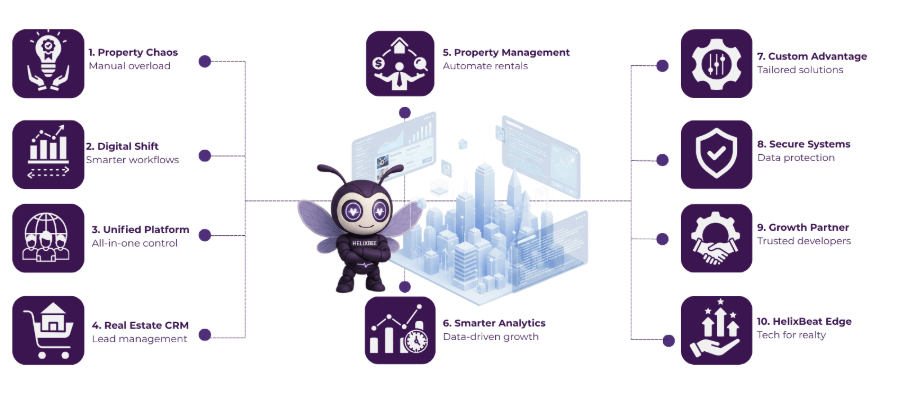
Understanding the Real Estate Ecosystem Before You Build
Before developing custom real estate software, it’s important to understand how the real estate world really works. The industry connects many people like property owners, buyers, tenants, agents, builders, and investors – each with different goals.
For example, an agent needs a simple way to manage listings and follow up with leads, while a property manager needs tools for rent tracking and maintenance updates. When you know how these roles interact, it becomes easier to design software that makes their work simpler and more connected.
In the custom software development for the real estate industry, understanding these workflows is the key to success. Software that truly helps should bring all these roles together in one place, making it easy for agents to close deals, developers to monitor projects, and clients to get updates in real time.
A well-built system becomes more than just a tool; it becomes the backbone of smooth property operations and better customer experiences.
What are the Different Types of Real Estate Software
Real estate businesses come in many forms – agencies, developers, property managers, and investors and each needs a software solution that fits their unique operations. Here are five main types of custom real estate software that help make property management, sales, and development more efficient.
1. Property Management Software
This is one of the best real estate development software options for property owners and managers.
It helps handle rental listings, maintenance requests, rent payments, and tenant data from a single dashboard. Automating these everyday tasks saves time and reduces human error.
2. Real Estate CRM Software
A CRM designed for the real estate industry helps agents and brokers manage leads, track conversations, and close deals faster.
This kind of custom software development for the real estate industry keeps all client details in one place and improves communication between buyers and sellers.
3. Real Estate Marketplace Platforms
These online platforms and mobile apps allow buyers, sellers, and renters to connect. They feature listings, property photos, pricing, and map filters, making it easy for users to find the right property.
Many of today’s best software for real estate developers include marketplace features to boost visibility and sales.
4. Commercial Real Estate Development Software
This software focuses on large-scale building projects, helping developers manage timelines, budgets, and contractors efficiently.
It’s ideal for firms handling multiple construction projects, as it tracks progress and provides accurate cost projections: a must-have tool for commercial real estate development software users.
5. Accounting Software for Real Estate Developers
Financial management is crucial in property development. Accounting software for real estate developers helps track expenses, prepare reports, and analyze profits. It reduces manual paperwork and gives a clear picture of each project’s financial health, helping businesses stay profitable and organized.
Whether you’re a small agency or a large developer, choosing the right type of custom real estate software can completely change how your business operates — making it faster, smarter, and more customer-friendly than ever before.
What are the Advantages of Custom Real Estate Software Development
Building custom real estate software gives your business flexibility, control, and long-term growth opportunities that ready-made tools can’t match. Here are five key advantages that make custom software development for the real estate industry a smart investment:
1. Fits Your Business Workflow Perfectly
Every real estate company works differently — from how it handles leads to how it tracks property listings. Custom software is built around your specific processes, not the other way around. This means you get a system that truly supports your daily operations without forcing you to adapt to generic templates.
2. Scales Easily as Your Business Grows
As your real estate portfolio expands, your software can grow with it. You can add new features like virtual tours, advanced analytics, or project management tools whenever needed. This flexibility makes custom real estate software a future-ready solution that saves you from constant replacements.
3. Strengthens Data Security and Privacy
With custom software development for the real estate industry, your data stays protected under your control. You can set access levels, encrypt sensitive information, and meet compliance standards, ensuring client and property data remains secure from unauthorized access.
4. Boosts Efficiency and Reduces Manual Work
Automating tasks like rent tracking, lead follow-ups, or payment reminders helps your team focus on important goals instead of repetitive work. This increases accuracy, speeds up decision-making, and improves the overall client experience.
5. Gives You a Competitive Edge
When your business runs on tailored technology, it naturally stands out. From personalized dashboards to AI-based recommendations and seamless integrations, custom real estate software helps you deliver better service and faster results than competitors still relying on outdated tools.
In short, custom real estate software development helps real estate businesses work smarter, grow faster, and stay competitive in today’s digital market.
Cost of Real Estate Software Development
Type of Software / Feature Set | Description | Estimated Cost (USD) | Development Time (Approx.) |
Basic Real Estate Management System | Includes property listings, user logins, and basic admin dashboard. Ideal for small agencies. | $8,000 – $15,000 | 2 – 3 months |
Custom Real Estate CRM Software | Manages leads, client details, deal tracking, and communication tools for agents. | $15,000 – $25,000 | 3 – 4 months |
Commercial Real Estate Development Software | Handles construction tracking, budgeting, vendor management, and project timelines. | $25,000 – $45,000 | 4 – 6 months |
Accounting Software for Real Estate Developers | Includes expense tracking, automated reports, tax calculation, and profit analysis. | $12,000 – $20,000 | 2 – 3 months |
Real Estate Marketplace Platform / Mobile App | Property listings with photos, maps, filters, payment gateway, and chat integration. | $30,000 – $60,000 | 5 – 7 months |
Advanced Custom Real Estate Software (All-in-One Solution) | Combines CRM, accounting, analytics, and AI-powered dashboards for large enterprises. | $50,000 – $100,000+ | 6 – 9 months |
Tip: The total cost can vary depending on design quality, cloud hosting, and whether you hire an in-house team or outsource to a custom software development company.
Case Study: How Custom Real Estate Software Changed One Company’s Growth
Let’s take the example of Zillow, one of the most recognized names in the real estate industry. When Zillow first launched, it was mainly a listing platform connecting buyers and sellers. However, as user traffic crossed 200 million monthly visitors, handling property data, listings, and customer interactions became increasingly complex.
To improve scalability and personalization, Zillow invested heavily in custom real estate software development powered by AI and machine learning. This helped them automate property value estimations through their “Zestimate” feature — which now processes over 100 million property valuations daily using real-time market data.
This transformation not only streamlined Zillow’s operations but also boosted engagement and trust. By integrating AI-driven recommendations, cloud scalability, and predictive pricing models, Zillow reported a 35% increase in user retention and a 20% faster deal-closing rate for agents on its platform.
Their success story shows how custom software development for the real estate industry can help companies scale faster, make smarter decisions, and deliver better customer experiences — turning technology into a long-term business advantage.
How to Choose the Right Tech Partner for Your Real Estate Project
Finding the right team for custom real estate software development can make or break your project. The right partner not only builds the software but also understands your business goals and helps you scale in the long run.
- Look for a custom software development company that has experience in the real estate industry and understands how property management, CRM, and accounting systems work together.
- Check their past projects, client reviews, and success stories to see if they’ve delivered best real estate development software for similar businesses.
- Make sure they use modern technologies like cloud, AI, and mobile-friendly designs, essential for commercial real estate development software today.
- Ask about post-launch support and regular updates to keep your software secure and future-ready.
- Compare pricing and timelines carefully; cheaper options often lead to poor quality or limited scalability.
Choosing a trusted tech partner helps you get a custom real estate software solution that’s reliable, easy to use, and built to grow with your business; giving you a strong digital foundation for years to come.
Why Leading Real Estate Owners Choose Helixbeat Software Development Service
Top real estate owners trust HelixBeat’s custom real estate software development because we understand how the industry truly works. From property listings to accounting and analytics — our solutions are built to handle the entire real estate cycle in one platform.
We don’t just create software; we create systems that simplify daily operations, reduce manual work, and help businesses make data-driven decisions faster.
At HelixBeat, every project is customized for real results. Whether it’s commercial real estate development software or a custom CRM for agencies, we focus on scalability, automation, and seamless user experience.
Simply put, we help real estate businesses move from paperwork to performance, with technology designed for growth. Book a free consultation with us.
Frequently Ask Questions
1. Why is health information exchange important in healthcare?
It improves care coordination, reduces duplicate tests, minimizes errors, and helps providers make timely, data-driven decisions across different healthcare settings.
2. What are the main models of health information exchange?
3. Which standards guide health information exchange?
Standards like FHIR and HL7 define consistent data formats, making it easier for EHRs, HIEs, and other healthcare platforms to exchange information.
4. What are the benefits of using health information exchange?
HIE improves care coordination, reduces healthcare costs, supports population health management, enhances research, and increases operational efficiency.
5. How does AERIS enhance healthcare information exchange?
AERIS leverages FHIR standards, connects legacy systems, automates workflows, reduces manual errors, and provides real-time access to patient records and lab results.
1. How long does it take to build custom real estate software?
The development time usually ranges from 3 to 6 months, depending on the software’s size, features, and integrations required.
2. Can I integrate my existing tools like CRM or accounting systems with new real estate software?
Yes, custom-built solutions can easily integrate with your current CRM, ERP, or accounting tools to ensure smooth data flow and better efficiency.
3. Is custom real estate software suitable for small agencies too?
Absolutely. Even small real estate businesses benefit from automation, better lead tracking, and organized property data through scalable software solutions.
4. How much does it cost to maintain real estate software after launch?
Maintenance typically costs around 15–20% of the total development budget annually and includes updates, security checks, and technical support.
5. What makes HelixBeat different from other software development companies?
HelixBeat focuses on real-world results. We design software tailored to each client’s workflow, using AI, cloud, and automation to help real estate businesses grow faster.