

custom software development agency
Get Started with a Free Demo
New Keyword Page
New Keyword Page
"*" indicates required fields
What are the Key Strategies Followed by Custom Software Development Agencies
Are you struggling to find software that perfectly fits your business needs? Many companies rely on off-the-shelf solutions, only to discover that they fall short—limited functionality, poor integration, and slow adaptation to changing business processes can cost time and money.
This is where a custom software development agency comes in. By creating tailored solutions, a professional agency can transform your workflows, enhance efficiency, and give you a competitive edge.
Whether it’s building a robust custom CRM, developing a seamless custom mobile application, or designing a complete enterprise system, a trusted custom application development agency provides solutions that off-the-shelf software simply can’t match. With the right agency, your business doesn’t just adapt – it grows.
Reason To Consider Custom Software Development Agency
Many businesses struggle with generic software that doesn’t fit their unique needs. Off-the-shelf solutions often come with limitations, poor integration, and features that don’t align with specific workflows. Hiring a custom software development agency allows you to get software designed specifically for your business, improving efficiency and helping your team work smarter.
A professional agency doesn’t just build software – they understand your goals, analyze your processes, and create solutions that grow with your business. Whether it’s a custom CRM, a mobile app, or a complete enterprise system, a trusted custom application development agency can deliver tools that solve real problems and support long-term success.
Key Strategies Followed by Custom Software Development Agencies
A custom software development agency doesn’t just write code—they follow structured strategies to deliver solutions that are scalable, secure, and aligned with business goals. Here are the key strategies they follow:
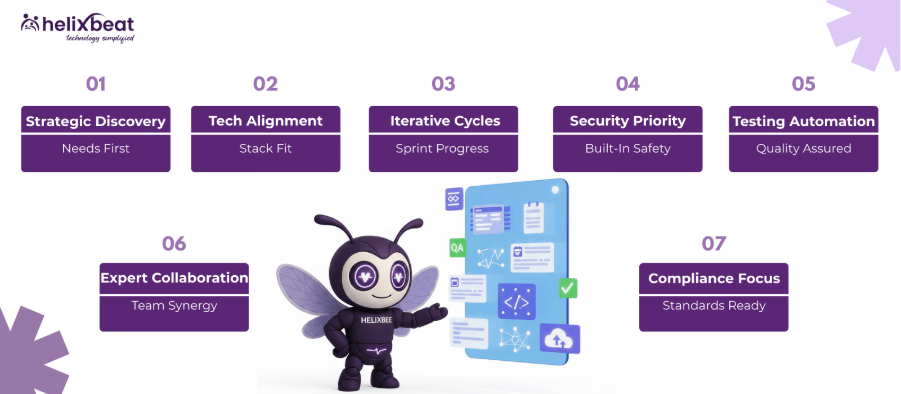
1. In-Depth Requirement Gathering and Analysis
Successful software starts with a thorough understanding of business requirements. Agencies conduct workshops, stakeholder interviews, and workflow analysis to map out business needs.
They document functional and non-functional requirements, define system architecture, and identify integration points with existing software. This ensures that the final product matches the exact business goals.
2.Choosing the Right Technology Stack
Selecting the appropriate technology stack is critical for performance, scalability, and maintainability. A custom application development agency evaluates options like:
- Backend frameworks: Node.js, Django, Spring Boot
- Frontend frameworks: React, Angular, Vue.js
- Mobile platforms: Flutter, React Native, Swift, Kotlin
- Database solutions: MySQL, PostgreSQL, MongoDB, Firebase
The stack is chosen based on factors such as application type, expected user load, security requirements, and future scalability.
3. Agile and Iterative Development
Top agencies follow agile methodologies like Scrum or Kanban, breaking projects into sprints. This allows:
- Faster development cycles
- Continuous client feedback
- Early identification and resolution of issues
A custom mobile application development agency leverages agile practices to release MVPs (Minimum Viable Products) quickly, validate them with users, and then scale functionality iteratively.
4. Emphasis on Security and Compliance
Security is integrated from day one. Agencies conduct threat modeling, implement encryption protocols, and follow secure coding practices. They ensure compliance with standards like GDPR, HIPAA, or ISO 27001 where necessary.
For custom CRM solutions, this means safeguarding sensitive customer data while enabling secure access controls and audit trails.
5. Automated Testing and Continuous Integration
Agencies implement automated testing frameworks – unit tests, integration tests, and end-to-end tests; to maintain high code quality.
Continuous Integration (CI) and Continuous Deployment (CD) pipelines (e.g., using Jenkins, GitLab CI/CD, or GitHub Actions) are set up to automate builds, run tests, and deploy updates efficiently, reducing human error and speeding up delivery.
6. Post-Deployment Monitoring and Support
Launching software is just the beginning. Agencies use monitoring tools like New Relic, Datadog, or ELK Stack to track performance, detect anomalies, and optimize the system.
Regular updates, patch management, and feature enhancements keep the software secure and relevant. This is especially important for software development agency in India serving fast-growing businesses with dynamic needs.
Advantages Of Hiring a Custom Software Development Agency
When it comes to building software that truly fits your business, hiring a custom software development agency can make all the difference. Their technical expertise and structured approach help businesses achieve faster, safer, and more scalable solutions.
- Access to Specialized Technical Expertise
Agencies bring experts in backend, frontend, mobile, database, and cloud technologies. Their experience with frameworks like React, Angular, Node.js, Flutter, and Kotlin ensures your solution is robust, scalable, and built using best practices.
- Faster Time-to-Market with Agile Development
Using agile methodologies, agencies deliver Minimum Viable Products (MVPs) quickly, iterate based on feedback, and deploy updates frequently. This reduces development cycles while maintaining high code quality.
- Advanced Security and Compliance Implementation
Professional agencies integrate security at every stage – threat modeling, encryption, secure APIs, and access control. They also ensure compliance with GDPR, HIPAA, or industry-specific standards, which is crucial for custom CRM and enterprise software.
- Scalable and Future-Proof Solutions
Custom software built by agencies can handle growing user loads and expanding features. Proper architecture design, modular coding, and cloud integration ensure your software remains adaptable to business growth.
- Post-Deployment Support and Continuous Optimization
Agencies provide monitoring, bug fixes, and performance optimization using tools like ELK Stack, New Relic, or Datadog. They offer continuous enhancements for custom mobile application development, keeping software aligned with evolving business needs.
Hiring a custom software development agency is not just a choice, it’s an investment in a solution that evolves with your business and delivers measurable value over time.
5 Things to Consider Before Hiring a Custom Software Development Agency
Choosing the right custom software development agency is crucial for project success. Here are key factors to consider:
- Technical Expertise: Check their experience with relevant technologies – Node.js, Django, React, Angular, Flutter, Kotlin, and industry-specific solutions like custom CRM or enterprise apps.
- Portfolio and Case Studies: Review past projects, especially custom mobile application development and custom application development, to gauge their ability to handle complex solutions.
- Development Approach: Agile methodologies like Scrum or Kanban enable faster delivery and iterative improvements. Ask about project management tools like Jira or Trello.
- Security and Compliance: Make sure they follow secure coding, encryption, and standards like GDPR or HIPAA, especially for sensitive data systems.
- Post-Deployment Support: Check if they offer monitoring, bug fixes, performance optimization, and feature updates using tools like Datadog or New Relic.
Selecting a reliable custom software development agency ensures your software is secure, scalable, and aligned with your business goals.
Why Helixbeat is the Best Software Development Agency in India
At Helixbeat, we don’t just build software – we understand your business first. Our team listens, analyses your challenges, and designs solutions that actually solve problems instead of adding new ones.
Whether you need a custom CRM, a mobile app, or a fully integrated business system, we bring together the right technology, the right people, and the right approach to build software that fits your goals perfectly.
What makes Helixbeat stand out is our commitment to long-term success. We follow modern development practices, focus on clean and scalable code, and stay involved even after launch with continuous support and improvements. Helixbeat isn’t just a software development agency in India; it’s a team that grows with you.
New Trends in Custom CRM
Custom CRM systems are evolving faster than ever, bringing smarter and more connected features to modern businesses.
- AI-powered insights that help businesses predict customer behaviour and personalise interactions.
- Automation features that reduce manual tasks and streamline lead management.
- Omni-channel integration that connects email, WhatsApp, calls, and social platforms in one dashboard.
- Cloud-based, modular CRM systems that scale easily as the business grows.
These trends show how custom CRM solutions are becoming essential for businesses that want deeper customer relationships and faster growth.
Final Words
Investing in a custom software development agency is no longer optional—it’s a strategic decision for businesses that want software tailored to their unique needs. From custom CRM to mobile and web applications, the right agency helps you save time, reduce costs, and scale efficiently while keeping security and performance top of mind.
At Helixbeat, we combine technical expertise with a deep understanding of business goals to deliver solutions that truly make a difference. Partner with us for your next project, and experience how a dedicated software development agency in India can transform your ideas into reliable, high-performing software that grows with your business.
Frequently Ask Questions
1. Why is health information exchange important in healthcare?
It improves care coordination, reduces duplicate tests, minimizes errors, and helps providers make timely, data-driven decisions across different healthcare settings.
2. What are the main models of health information exchange?
3. Which standards guide health information exchange?
Standards like FHIR and HL7 define consistent data formats, making it easier for EHRs, HIEs, and other healthcare platforms to exchange information.
4. What are the benefits of using health information exchange?
HIE improves care coordination, reduces healthcare costs, supports population health management, enhances research, and increases operational efficiency.
5. How does AERIS enhance healthcare information exchange?
AERIS leverages FHIR standards, connects legacy systems, automates workflows, reduces manual errors, and provides real-time access to patient records and lab results.
1. How can Helixbeat ensure my software stays future-ready?
We use modern technologies like AI, cloud-native systems, microservices, and low-code platforms, which allow your software to adapt and scale as your business grows. This future-proof approach prevents your solution from becoming obsolete quickly.
2. Can I make changes to the software after it’s deployed?
Yes. Helixbeat follows an agile development process, allowing for iterative improvements and updates even after launch. Your feedback can be implemented quickly, ensuring the software evolves alongside your business needs.
3. What industries can benefit from Helixbeat custom software services?
Our solutions are versatile, serving industries like healthcare, finance, logistics, e-commerce, and manufacturing. Any business that needs scalable, secure, and tailored software can leverage our services for improved efficiency.
4. How does Helixbeat handle data security and compliance?
We follow strict security protocols and are SOC 2 Type 2 and HIPAA-compliant. This ensures your data is protected, and your software meets industry regulations, giving you peace of mind in sensitive industries.
5. How quickly can I expect to see ROI from custom software?
By automating workflows, reducing manual effort, and streamlining operations, Helixbeat’s custom solutions can deliver measurable results in months. Many clients report faster processes, reduced errors, and higher productivity within the first quarter after implementation.