


Digital Product Development
Get Started with a Free Demo
New Lead: Product Development Services
"*" indicates required fields
Are you looking to create a digital product that truly makes an impact? Whether it’s a mobile app, a website, or an innovative tech solution, digital product development is the key to turning your idea into something valuable. But with so many options out there, how do you make sure your product is the right fit for your audience?
Digital product development is a step-by-step process that involves everything from research and design to building and improving your product after launch. It might seem overwhelming, but by understanding the digital product development lifecycle and working with the right experts, you can make the process much easier and more effective.
What do you mean by Digital Product Development?
Digital product development refers to the process of creating, designing, and deploying digital products, such as software applications, websites, or digital platforms, that meet user needs and solve specific problems. It involves a combination of strategy, design, technology, and testing to deliver a functional, user-friendly product. The goal is to ensure that the product aligns with market demands, is scalable, and provides a seamless user experience.
Purpose of Digital Product Development
Digital product development plays a crucial role in driving business success by creating solutions that not only meet market demands but also pave the way for growth and innovation.
1. Fueling Business Growth
Digital product development helps businesses grow by creating products that meet market demands and drive revenue. By focusing on user needs and innovation, companies can develop scalable products that provide a competitive edge in today’s fast-paced market.
2. Improving Customer Experience
A key goal of digital product development is to create products that enhance the customer experience. By using technologies like AI and cloud computing, businesses can build products that are easy to use, personalized, and responsive, increasing customer satisfaction and loyalty.
3. Boosting Efficiency and Scalability
Digital product development also aims to improve internal processes. With agile development, businesses can quickly adjust and scale their products, optimizing operations and ensuring they can grow efficiently as demand increases.
In today’s competitive landscape, embracing digital product development is essential for businesses looking to stay ahead, offering better products and improved efficiency while meeting evolving customer expectations.
What are the Ways to a Develop Digital Product
There are several ways to develop a digital product, each with its own set of benefits and challenges. Choosing the right approach depends on factors like budget, timeline, and the complexity of the product.
1. In-House Development
In-house development involves creating a dedicated team within your organization, including developers, designers, and project managers. This approach provides full control over the digital product development lifecycle, ensuring the product aligns with your company’s goals and vision. However, it requires significant resources, time, and expertise to build a high-performing team.
2. Outsourcing to Development Agencies
Outsourcing is a popular option for companies that need specialized skills without building an entire in-house team. By partnering with experienced digital product development companies, businesses can leverage external expertise, access cutting-edge technologies, and reduce costs. This method is often chosen for projects with a defined scope or when companies need to quickly scale development efforts.
3. Hybrid Approach
A hybrid approach combines the best of both worlds. Companies can maintain core functions in-house while outsourcing specific tasks such as development, testing, or UI/UX design to external experts. This approach offers flexibility, allowing businesses to manage their internal resources effectively while benefiting from external expertise in areas like advanced digital product development and technology integration.
Ultimately, the best way to develop a digital product depends on your company’s unique needs, resources, and goals.
Why Choosing a Digital Product Development Company is the Best Choice
Choosing a digital product development company offers businesses access to specialized expertise and streamlined development processes. These companies bring years of experience in building innovative products, using the latest technologies and best practices. By partnering with an established agency, businesses can focus on their core operations while leaving the complexities of product design and development to the experts.
Benefits of Choosing a Digital Product Development Company:
- Expertise and Innovation: Access to skilled professionals who stay updated with the latest trends and technologies.
- Faster Time-to-Market: A well-established development process ensures quicker delivery without compromising quality.
- Cost Efficiency: Reduces the need for hiring and training an in-house team, saving on long-term expenses.
- Scalability: Ability to scale the product as needed, with resources ready to accommodate changing requirements.
According to industry research, approximately 59% of startups now turn to outsourced digital product development services to scale faster and overcome internal resource constraints. Meanwhile, the global engineering R&D outsourcing market is projected to reach US $812.7 billion by 2029.
A prime example is Lenskart, which benefited from partnering with a digital product development company to rapidly scale its e-commerce platform and improve its customer experience, helping it become one of India’s largest eyewear brands.
3 Best Digital Product Development Companies in India
When looking to create a successful digital product, choosing the right development partner is crucial. Here are three of the best digital product development companies in India that stand out for their expertise, services, and impact.
1. Helixbeat
Year Founded: 2014
Key Services: Helixbeat specializes in digital product development, offering full-cycle services from ideation to post-launch support. They focus on agile digital product development, integrating advanced technologies like AI and cloud computing to create scalable solutions for industries like healthcare, finance, and retail.
Why It Stands Out: With its strong track record in building robust, user-centric digital products, Helixbeat stands out as a leading digital product development company that helps businesses transform through technology-driven solutions.
2. Radixweb
Year Founded: 2000
Key Services: Radixweb offers expertise in digital product development, focusing on software product engineering, SaaS solutions, and cloud-native applications. They emphasize advanced digital product development with a focus on AI, data-driven solutions, and automation to deliver high-impact products.
Why It Stands Out: With over 25 years of experience, Radixweb has successfully launched hundreds of products, making them a trusted partner for enterprises seeking scalable and innovative digital product development solutions.
3. Citrusbug Technolabs
Year Founded: 2013
Key Services: Citrusbug Technolabs excels in agile digital product development, offering services in mobile app development, custom software solutions, and cloud platforms. They focus on creating products that are flexible, scalable, and tailored to client needs, all while using the latest technologies.
Why It Stands Out: With a focus on agile digital product development, Citrusbug is a great choice for startups and SMEs seeking cost-effective, high-quality digital solutions that evolve with market demands.
These companies provide a wide range of services within digital product development, making them ideal partners for businesses looking to innovate and scale effectively.
How Artificial Intelligence Supports Digital Product Development
Artificial Intelligence (AI) is redefining how we approach digital product development by embedding data‑driven decision‑making and automation deep into the process. For example, predictive analytics can assess user behaviour and market trends long before development begins, helping teams align their ideas with real demand and reduce costly pivots. In fact, the global market for AI in product development is expected to grow at a CAGR of 38.1%.
On the execution side, AI tools accelerate workflows and enhance quality: generative design systems can prototype multiple UI/UX iterations in minutes, while code‑generation models automate routine tasks and free up developers to focus on strategic innovation. For example, 23 % of firms already say they’re using AI in new product development—up from 13 % a year earlier.
By weaving AI into your digital product development strategy, you can shorten development cycles, reduce risk, and deliver products that are smarter, faster, and better aligned with user needs.
Final Thoughts
In the competitive tech environment, having the right strategy for digital product development is essential for staying competitive. By using AI, agile methods, and focusing on user needs, businesses can build products that stand out.
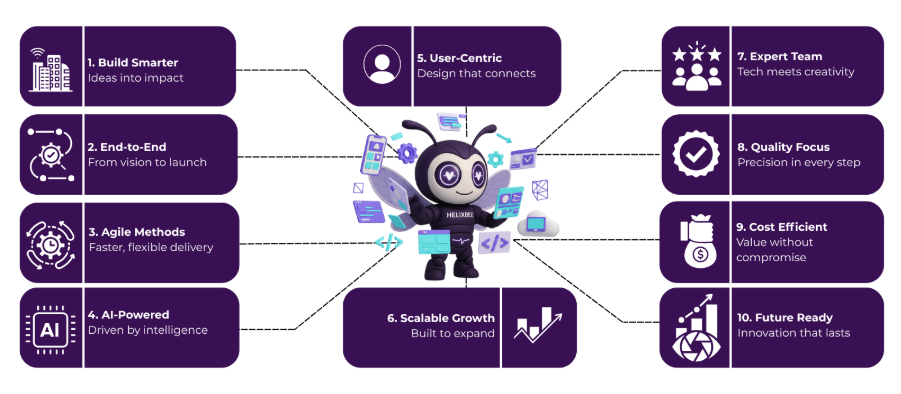
At Helixbeat, we offer end-to-end digital product development solutions that help bring your ideas to life and ensure your product keeps up with the latest technology. Let us help you create a product that delivers great results and meets your goals.
Frequently Ask Questions
1. Why is health information exchange important in healthcare?
It improves care coordination, reduces duplicate tests, minimizes errors, and helps providers make timely, data-driven decisions across different healthcare settings.
2. What are the main models of health information exchange?
3. Which standards guide health information exchange?
Standards like FHIR and HL7 define consistent data formats, making it easier for EHRs, HIEs, and other healthcare platforms to exchange information.
4. What are the benefits of using health information exchange?
HIE improves care coordination, reduces healthcare costs, supports population health management, enhances research, and increases operational efficiency.
5. How does AERIS enhance healthcare information exchange?
AERIS leverages FHIR standards, connects legacy systems, automates workflows, reduces manual errors, and provides real-time access to patient records and lab results.
1. How do I know if my idea is ready for digital product development?
Your idea is ready for development when it addresses a clear market need, has a defined target audience, and offers a solution that stands out from competitors. A proof of concept or prototype can help validate your idea before moving to full-scale development.
2. What skills are required for digital product development?
Digital product development requires a diverse set of skills, including software engineering, UX/UI design, project management, quality assurance, and marketing. Collaboration between technical and creative teams is key to successful product creation.
3. What’s the difference between MVP and full product development?
An MVP (Minimum Viable Product) is a simplified version of your product with just enough features to meet the needs of early users. Full product development involves building a more complete product with all features and optimizations based on user feedback and market demand.
4. How do you prioritize features in digital product development?
Features are typically prioritized based on user feedback, business goals, and technical feasibility. The goal is to build features that provide the highest value to users and the business, ensuring a balance between functionality, cost, and time to market.
5. What are the benefits of outsourcing digital product development?
Outsourcing digital product development allows businesses to tap into specialized expertise, reduce costs, and scale development efforts quickly. It can also free up internal resources for other strategic initiatives while ensuring a faster time to market.