


How EHR Data Integration is Streamlining Healthcare Systems
What Is EHR Data Integration?
EHR data integration refers to the process of connecting electronic health record systems with other healthcare applications, databases, and devices to enable seamless data flow. This practice allows patient information to move between hospitals, clinics, labs, pharmacies, and telehealth platforms without manual re-entry.
At its core, EHR data integration aims to eliminate data silos. Therefore, healthcare providers adopt APIs, HL7 messages, and cloud-based solutions like AERIS to connect legacy systems with new digital tools. The result: real-time access to lab results, imaging reports, medication histories, and social determinants of health data.
Why EHR Data Integration Matters in 2026
Healthcare delivery has shifted toward value-based care models. As a result, payers and regulators demand accurate, complete patient data to measure outcomes and control costs. EHR data integration supports this transition by providing a longitudinal view of patient journeys.
For example, imagine a diabetic patient visiting multiple specialists. Without EHR data integration, each provider enters the same allergies, medications, and family history separately. With proper integration, the endocrinologist instantly views the primary care physician’s notes, the podiatrist’s wound measurements, and the lab’s latest HbA1c results.
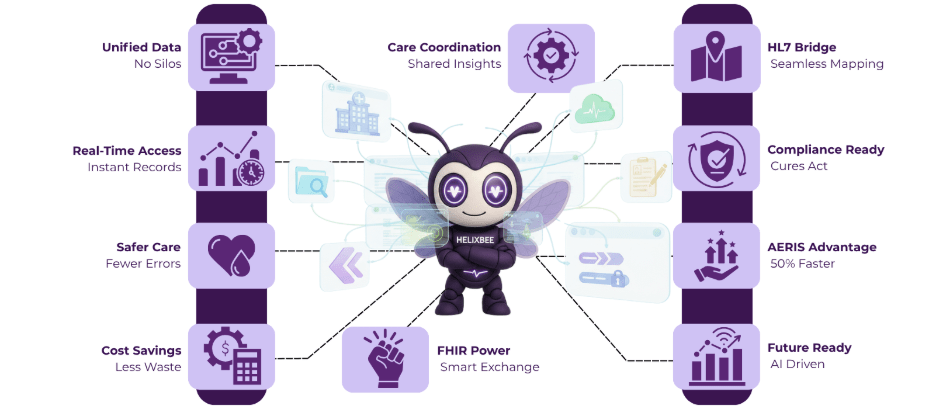
Key Benefits of EHR Data Integration
1. Improved Patient Safety
EHR data integration flags drug interactions across prescribing systems.
A 2024 article (“Medication Safety and Health Equity With EHR‑Integrated Digital Technologies”) mentions that EHR‑integrated tools have shown reductions in adverse drug events, especially via real‑time alerts and decision support.
2. Cost Reduction
When radiology results go straight into the referring doctor’s EHR, duplicate imaging drops by 30%. Additionally, administrative staff spend 40% less time on data entry and phone calls chasing records.
3. Enhanced Care Coordination
Population health platforms pull data from multiple EHRs to identify high-risk patients. As a result, care managers receive automated alerts when diabetic patients miss appointments or show rising glucose trends.
4. Regulatory Compliance
The 21st Century Cures Act mandates information sharing. EHR data integration helps organizations meet TEFCA requirements without building custom point-to-point connections.
Core Components of EHR Data Integration
Successful EHR data integration requires four technical layers:
|
Component |
Function |
|
Data Sources |
EHRs, lab systems, imaging, wearables |
|
Integration Engine |
Cloud platforms like AERIS |
|
Standards Layer |
HL7 v2, FHIR, CDA, DICOM |
|
Security Layer |
OAuth 2.0, encryption, audit logs |
The Role of Interoperability in EHR Data Integration
Interoperability defines how well systems exchange and interpret shared data. The healthcare industry recognizes three levels:
- Foundational – Basic connectivity (VPNs, secure email)
- Structural – Uniform data formats (HL7 messages)
- Semantic – Shared meaning (SNOMED CT codes, LOINC identifiers)
EHR data integration achieves semantic interoperability when a blood pressure reading recorded in one system appears identically in another, complete with context, units, and timestamps.
How FHIR Powers Modern EHR Data Integration
Fast Healthcare Interoperability Resources (FHIR, pronounced “fire”) represents the latest standard from HL7. FHIR uses RESTful APIs and JSON/XML payloads—familiar formats for web developers.
FHIR Resources in Action
- Patient resource – Demographic data
- Observation resource – Vitals, lab values
- MedicationRequest – Prescriptions
- Encounter – Office visits, hospitalizations
AERIS: Streamlining Electronic Health Record Systems Through FHIR
AERIS, by Helixbeat, acts as a translator for your EHR, using standards like HL7 and FHIR to tie all your data into one neat, unified system. This approach simplifies electronic health record integration by automating data mapping and validation.
Ready to cut delays by 50%, double your ROI, and empower your team with instant access to critical data? Let’s dive into why AERIS is the solution you’ve been waiting for.
Why AERIS is Your Key to Healthcare Innovation
At Helixbeat, we know your challenges: fragmented systems, delayed data, and rising costs. AERIS is here to change that, offering a personalized, scalable, and secure platform that fits your unique needs. Whether you’re a small clinic or a sprawling hospital network, AERIS delivers measurable results that elevate patient outcomes and boost your bottom line.
- 20+ Years of Expertise: Our team brings decades of healthcare IT experience to ensure AERIS works for you.
- 50+ IT Professionals: A dedicated crew powers AERIS, delivering unmatched support and innovation.
- 1,000+ Customers: Join a thriving community of healthcare leaders already transforming with AERIS.
- 10,000+ Projects Completed: Proven success across countless integrations and workflows.
- 95% Returning Customers: Our clients trust AERIS to deliver, time and time again.
Providers adopting AERIS report faster diagnoses, lower costs, and improved outcomes, positioning it as the go-to tool for future-proof HIE.
The AERIS Advantage: Numbers That Speak for Themselves
|
Metric |
Without AERIS |
With AERIS |
Your Benefit |
|
Data Exchange Delays |
Frequent bottlenecks |
Reduced by 50%
|
Faster care in emergencies |
|
Return on Investment |
Slow, costly overhauls |
100% faster ROI |
Grow without breaking the bank |
|
Operational Costs |
High redundancies |
Cut by 30% |
Save thousands annually |
|
Error Rates |
Up to 20% manual errors |
Slashed by 90% |
Precision for better patient outcomes |
Your Benefits, Amplified :
- 50% Fewer Delays: Real-time data means critical information is always at your fingertips, turning hours into seconds.
- 100% Faster ROI: Plug-and-play integration maximizes your investment without expensive system replacements.
- 30% Cost Savings, 90% Fewer Errors: Automation eliminates waste, saving resources and ensuring accuracy.
How AERIS Works: Your 3-Step Path to Success
- Connect Seamlessly: Integrate AERIS effortlessly into your existing systems, from legacy EHRs to modern platforms.
- Share Securely: Activate real-time data exchange with HIPAA-compliant encryption. Watch your teams and partners collaborate effortlessly.
- Optimize and Grow: Because AERIS evolves with your organization, it’s set up to help you succeed for the long haul.
What Users Say About AERIS
Dr. Sarah L.
Hospital Administrator
John T.
Telemedicine Provider
Emily P.
Healthcare Executive
Common Questions About Healthcare Data Exchange with AERIS
1.Why is EHR data integration important for healthcare providers?
It allows providers to access complete patient information in real time, improving care coordination, patient safety, and operational efficiency.
2. What technologies support EHR data integration?
APIs, HL7 messaging, FHIR standards, and cloud-based platforms like AERIS are commonly used to link legacy and modern systems.
3. How does EHR data integration improve patient safety?
Integrated systems flag potential drug interactions and alert providers to clinical risks, reducing adverse events and errors.
4. What cost benefits does EHR data integration offer?
It reduces duplicate tests, lowers administrative workload, and cuts operational costs by streamlining workflows.
5. How does AERIS simplify EHR data integration?
AERIS acts as a translator for EHRs, automating data mapping and validation while connecting disparate systems using HL7 and FHIR standards.
Final Thoughts
EHR data integration has evolved from a technical nice-to-have into a clinical necessity. Healthcare organizations that master interoperability through standards like FHIR position themselves for success in value-based care. Patients receive safer, faster treatment; providers work with complete information; and payers see lower costs.
Ready to transform your EHR systems? Discover how AERIS by Helixbeat streamlines FHIR-based integration, reduces delays, and empowers your healthcare teams with real-time data access.