


Electronic Medical Records
Keeping track of patient information can be really hard for clinics and hospitals. Paper records, scattered files, and slow access to important data can cause mistakes, delays, and extra work for staff. This makes it tough to give patients the care they need on time.
Electronic medical records (EMRs) solve this problem by storing all patient information digitally. An EMR system lets doctors and nurses access accurate data instantly, saves time on paperwork, and helps teams work together better. Solutions like AERIS make it even easier by letting healthcare providers share information quickly and securely, so clinics run smoothly and patients get better care.
What Is an Electronic Medical Record (EMR)?
An electronic medical record (EMR) is a digital version of a patient’s medical history. It includes information like past illnesses, lab results, medications, allergies, and doctor notes – all stored in one secure place. Unlike paper records, EMRs are easy to update, search, and share with the care team.
Using an EMR system helps doctors and nurses access accurate patient information instantly. This reduces mistakes, speeds up decision-making, and ensures that patients get the right care at the right time. With everything stored digitally, clinics and hospitals can run more efficiently while keeping patient data safe.
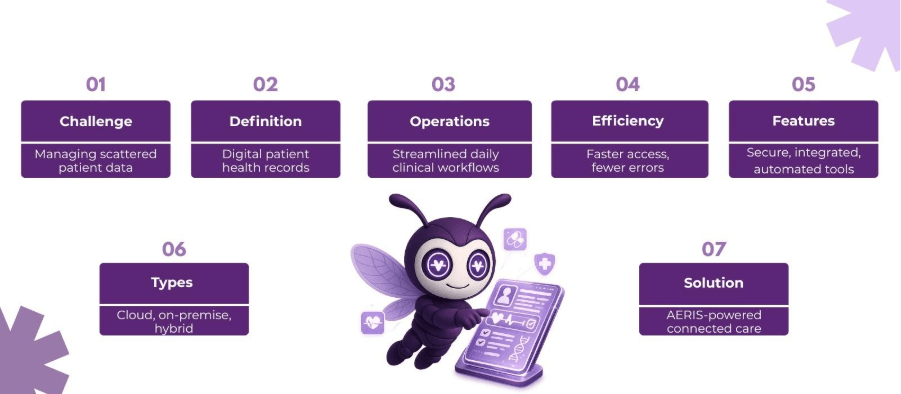
How an EMR System Transforms Daily Clinical Operations
An EMR system changes the way clinics and hospitals handle daily tasks. By keeping all patient information in one place, it helps staff work faster, reduces errors, and makes sure patients receive the right care at the right time. From check-ins to lab results, every step becomes smoother and more organized.
Benefits of an EMR system in daily operations:
- Faster patient check-ins: Quickly access patient history without paperwork delays.
- Accurate record-keeping: Reduce mistakes caused by missing or incorrect data.
- Better care coordination: Doctors, nurses, and staff can see the same up-to-date information.
- Automated alerts: Reminders for medication, follow-ups, or abnormal test results.
- Simplified billing and insurance: Faster processing with fewer errors.
- Real-time reporting: Track patient progress and clinic performance easily.
By integrating an EMR system into daily operations, healthcare teams can focus more on patients and less on paperwork, making care faster, safer, and more efficient.
Important Features to Look for in an EMR System
Choosing the right electronic medical record is essential for running a clinic or hospital smoothly. The right EMR system not only stores patient data but also improves efficiency, reduces errors, and supports better patient care.
1. Patient Data Management
A strong electronic medical record program should allow clinics to store and access all patient information in one place. This includes medical history, lab results, medications, and allergies. Organized data ensures doctors can provide accurate and timely care.
2. Appointment Scheduling and Workflow
Look for an EMR system that manages appointments efficiently. Automated scheduling, reminders for patients, and smooth coordination between staff can reduce wait times and prevent missed appointments, improving overall clinic workflow.
3. Lab and Diagnostic Integration
The ability to connect with labs and diagnostic tools is important. An electronic medical record program that integrates test results directly into patient records saves time, reduces errors, and ensures doctors have all the information they need at a glance.
4. Billing and Insurance Support
Managing billing and insurance can be complex. A good EMR system automates invoicing, insurance claims, and payment tracking, reducing administrative work and minimizing errors. This helps clinics maintain financial accuracy and transparency.
5. Security and Compliance
Patient data safety is critical. Look for features like encryption, secure logins, and compliance with healthcare regulations. An electronic medical record program must protect sensitive information while allowing authorized staff easy access when needed.
Choosing the right types of electronic medical record systems ensures your clinic or hospital can work efficiently, keep patient information safe, and deliver better care every day.
Types of Electronic Medical Record Systems
Not all electronic medical record programs are the same. Choosing the right EMR system depends on your clinic’s size, specialty, and workflow. Understanding the types of electronic medical record systems can help you make the best decision.
1. Cloud-Based EMR Systems
Cloud-based EMRs store patient data on secure online servers. This allows healthcare providers to access information anytime, anywhere, from multiple devices. These systems are easy to scale and require less IT infrastructure, making them ideal for small and medium-sized clinics.
2. On-Premise EMR Systems
On-premise EMR systems store data locally on the clinic’s own servers. They offer more control over security and customization but may require higher upfront costs and dedicated IT support. These systems are often preferred by larger hospitals or facilities with specific data policies.
3. Specialty-Specific EMR Systems
Some electronic medical record programs are designed for specific medical fields, like pediatrics, cardiology, or dentistry. These systems include templates, workflows, and tools tailored to that specialty, helping clinicians work more efficiently.
4. Hybrid EMR Systems
Hybrid EMR systems combine features of cloud-based and on-premise systems. They offer flexibility, allowing some data to be stored locally while other information is accessible online. This type is useful for clinics transitioning from traditional records to fully digital systems.
Selecting the right types of electronic medical record systems ensures your staff can access accurate patient information quickly, improve care coordination, and keep operations running smoothly.
Why Healthcare Providers Choose AERIS
Healthcare providers often struggle with slow access to patient information, scattered electronic medical record systems, and poor communication between departments. That’s why many clinics and hospitals choose AERIS. It connects your existing EMR system and other healthcare software, making it easier and faster to share patient data safely.
Why providers prefer AERIS:
- Easy integration: Works with your current systems without major changes.
- Real-time collaboration: Doctors, labs, pharmacies, and insurers can share information instantly.
- Accurate data: Reduces mistakes by automating workflows.
- Scalable: Grows as your clinic or hospital grows.
- Secure: Keeps patient data safe with strong encryption and compliance features.
With AERIS, healthcare teams get the right information at the right time. This means fewer delays, better coordination, and faster, safer patient care.
Want to see how AERIS can transform your clinic? Request a free demo now and experience smarter healthcare data management.
What Users Say About AERIS
Dr. Sarah L.
Hospital Administrator
John T.
Telemedicine Provider
Emily P.
Healthcare Executive
Frequently Asked Questions
- What is the difference between an EMR and an EHR?
An EMR (Electronic Medical Record) is a digital version of a patient’s chart used within a single clinic or hospital. An EHR (Electronic Health Record) is designed to be shared across multiple healthcare facilities, allowing for broader care coordination.
- Can AERIS work with my existing EMR system?
Yes. AERIS is designed to integrate seamlessly with most EMR systems and other healthcare software, allowing smooth data exchange without disrupting your current workflows.
- How does using an EMR system improve patient safety?
EMR systems reduce manual errors, ensure accurate record-keeping, and provide automated alerts for medications, allergies, or abnormal lab results. This helps clinicians make safer, faster decisions for their patients.
- Areelectronic medical record programs secure?
Yes. Modern EMR programs and platforms like AERIS use encryption, secure logins, and compliance measures to protect sensitive patient data from unauthorized access.
- What factors should I consider when choosing an EMR system?
Key factors include ease of use, integration capabilities, support for your specialty, security and compliance, and the ability to scale as your clinic or hospital grows.