


FHIR Data Management: Optimizing Healthcare Interoperability
FHIR data management is now a key framework for handling electronic health information, especially with how fast healthcare technology is changing. Developed by HL7, Fast Healthcare Interoperability Resources (FHIR) provides a standardized approach to data exchange that supports seamless integration across systems. Here, we’ll explore the intricacies of FHIR data management, highlighting its components, implementation strategies, and practical applications.
What is FHIR Data Management
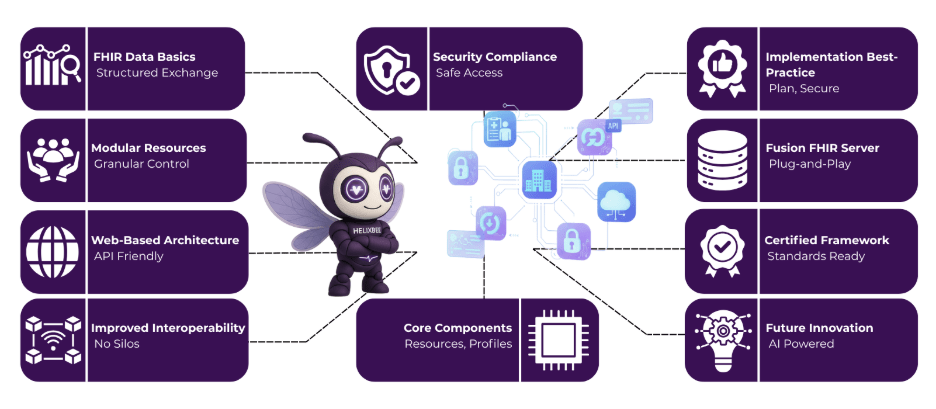
FHIR data management involves the structured storage, retrieval, and sharing of health records using modular resources. These resources are separate pieces of information—like patients, observations, or medications—which gives you very precise control over the data. With FHIR, data becomes accessible and machine-readable.
The primary advantage of FHIR data management lies in its web-based architecture, drawing from modern APIs and formats like JSON or XML. This design simplifies development compared to older standards like HL7 v2 or v3, making it developer-friendly. As healthcare shifts toward digital ecosystems, effective FHIR data management becomes indispensable for providers, payers, and researchers alike.
The Importance of FHIR Data Management in Healthcare
Effective FHIR data management addresses longstanding issues in healthcare interoperability. Traditionally, siloed systems led to fragmented patient records, complicating care coordination. FHIR mitigates this by standardizing data formats and exchange methods.
One key benefit involves regulatory compliance and data security. FHIR incorporates policies for data exchange, including authentication and audit logging. As a result, organizations can implement role-based access control, which limits data visibility to authorized users.
FHIR data management also enhances efficiency in clinical workflows. By enabling just-in-time data transformation, non-FHIR sources convert to FHIR formats as needed. This reduces redundancy and supports rapid queries, such as retrieving a patient’s medication history during an encounter.
Moreover, FHIR facilitates innovation in healthcare applications. Projects like SMART on FHIR add granular permissions, enhancing security for apps.
In summary, FHIR data management drives value through interoperability, efficiency, and security, positioning it as a cornerstone for modern healthcare systems.
Key Components of FHIR Data Management
FHIR data management relies on three main components: resources, profiles, and implementation guides. Resources form the foundational units, each with defined elements and data types.
Profiles constrain resources to fit specific use cases, such as binding to terminologies like SNOMED CT. This customization enables organizations to adapt FHIR without losing interoperability.
Data storage in FHIR data management often uses native formats like JSON, mapped to databases for indexing. Servers handle persistence, supporting SQL or NoSQL backends.
Search capabilities represent another important aspect, with parameters for filtering resources efficiently. Similarly, bundles aggregate multiple resources for batch operations and optimize data transfers.
Overall, these components create a robust ecosystem for FHIR data management, supporting diverse healthcare needs.
The 21st Century Cures Act requires all certified hospital electronic health record systems to expose patient data through standardized, read-only FHIR APIs at no cost to patients or their authorized applications. Specific rules include:
- USCDI v3 (and now v4) data elements are accessible via FHIR resources such as Patient, Observation, Condition, MedicationRequest, and Encounter.
- Bulk FHIR export capability for entire patient populations (required for hospitals since 2023).
- Support for SMART-on-FHIR authentication so third-party apps can connect using OAuth 2.0 and OpenID Connect.
Best Practices for Implementing FHIR Data Management
Implementing FHIR data management requires careful planning. Start by assessing current systems and identifying data sources for conversion.
- Use facades or adapters for legacy integration, layering FHIR over existing databases without full migration.
- Adopt security measures like OAuth2 and TLS for all endpoints. Maintain audit logs to track access and changes.
- Leverage capability statements to document FHIR server features, making it easier for client integration.
- For scalability, implement caching and sharding strategies. Regularly validate resources against profiles to maintain data quality.
- Training teams on FHIR concepts accelerates adoption, while collaborating with vendors experienced in FHIR implementations streamlines the process.
The Role of FUSION FHIR Server in Data Management
A FHIR server acts as the central repository for storing and managing FHIR resources. It exposes RESTful APIs for interactions, enabling clients to perform operations on data.
Built on FHIR, FUSION leverages RESTful APIs for plug-and-play integration, enabling seamless connectivity with legacy systems, modern EHRs, and emerging tools like wearable devices and telehealth platforms. This isn’t just compliance, it’s acceleration.
FUSION goes deeper by embedding critical medical coding systems like SNOMED CT, LOINC, and ICD-10 directly into its architecture. This built-in intelligence maintains data consistency and accuracy, transforming raw information into actionable insights ready for clinical decisions, regulatory reporting, and advanced analytics. No more wrestling with mismatched formats or manual mappings: FUSION handles the heavy lifting!
Organizations using FUSION report up to 70% faster data sharing, slashing referral delays by 60% and reducing redundant tests by 25%. That’s not hype; it’s a measurable impact, with providers saving $1,000–$2,000 per patient annually through streamlined claims and operations.
How FUSION Ignites Data-Driven Innovation
The true magic of healthcare FHIR lies in its potential to fuel innovation, and FUSION amplifies this like no other. As a reliable engine for standardized data flows, it powers downstream applications that were once out of reach.
Take chronic disease management, for example. By integrating real-time data from wearables and EHRs, FUSION enables continuous monitoring and proactive interventions, potentially cutting hospital readmissions and optimizing therapies. Or, imagine a telehealth consultation that’s instantly better because the doctor has the patient’s full history right there. FUSION makes that happen, giving virtual care a huge boost in quality and making patients much happier.
Certified Excellence
FUSION is officially certified by the Drummond Group for FHIR-based interoperability, validating its conformance with healthcare data exchange standards HL7, FHIR, and SMART on FHIR. This certification demonstrates that FUSION meets industry-recognized benchmarks for secure, standardized data exchange — giving you the confidence to integrate seamlessly across systems.
What This Means for You
In a complex healthcare ecosystem, FUSION simplifies connectivity and safeguards data integrity. With enterprise-grade uptime (99.99%) and secure authentication powered by OAuth2 and encrypted endpoints, it supports trusted, real-time collaboration between hospitals, labs, and payers.
Whether you’re mapping USCDI elements for regulatory reporting or automating data flows for public-health initiatives, FUSION keeps you compliant with current interoperability frameworks and ready for future mandates.
What Users Say About AERIS
Dr. Sarah L.
Hospital Administrator
John T.
Telemedicine Provider
Emily P.
Healthcare Executive
FAQs
1. What are the main components of FHIR data management?
The key components include resources (individual data elements), profiles (customized constraints for specific use cases), and implementation guides that help structure data and workflows.
2. How does FHIR improve clinical workflow efficiency?
FHIR allows just-in-time transformation of non-FHIR data into FHIR format, reducing redundancy and enabling quick access to patient histories, lab results, and medications.
3. What role does a FHIR server play in data management?
A FHIR server stores and manages resources while providing RESTful APIs for secure access, updates, and batch operations. It acts as the central hub for healthcare data integration.
4. How does the FUSION FHIR server enhance healthcare operations?
FUSION integrates coding systems like SNOMED CT, LOINC, and ICD-10, enabling consistent, accurate data and faster sharing across EHRs, telehealth platforms, and legacy systems.
Final Thoughts
Looking ahead, FHIR data management will integrate more with AI and machine learning for predictive analytics. Similarly, enhanced profiles for emerging areas like genomics promise broader applications.
Since regulatory pushes, such as those in the US, have accelerated FHIR adoption for value-based care, cloud-native FHIR servers like FUSION will dominate, offering elasticity for global health initiatives.
So why settle for fragmented data when you can command a connected future? Contact Helixbeat today to schedule a demo to learn more about FUSION!