
Hire CMS Developers
Get Started with a Free Demo
New Lead: IT Staff Augmentation
IT Staff Augmentation Landing Page Form, connected with the Mailchimp.
"*" indicates required fields
Looking to hire CMS developers to create a powerful website? Helixbeat offers expert CMS development services, focusing on Craft CMS, backend solutions, and custom CMS technologies. Our team of skilled developers specializes in building dynamic, scalable, and secure websites that align with your business needs.
Whether you’re looking to hire remote CMS developers or hire CMS developers backend for advanced website functionality, we provide comprehensive solutions to take your web presence to the next level.
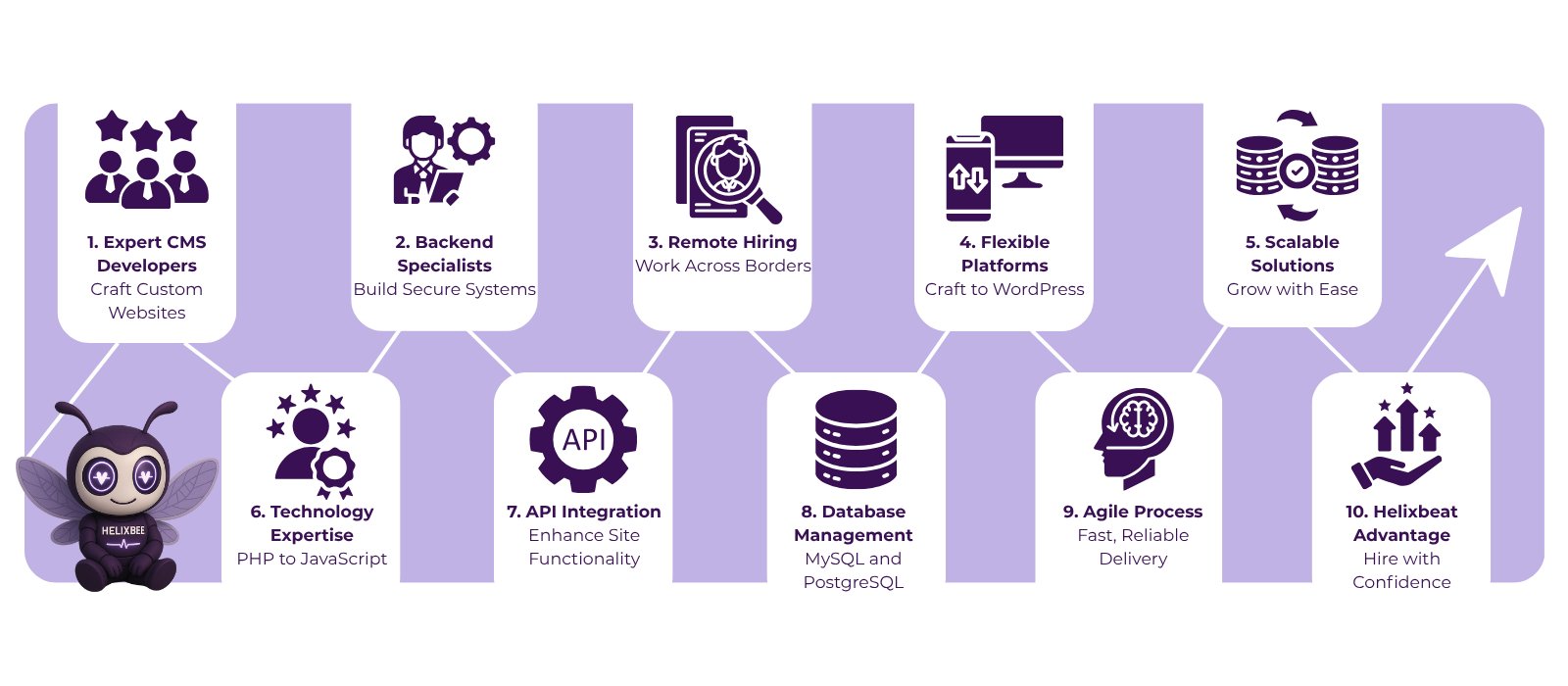
Why Hire CMS Developers for Your Project
When you choose to hire CMS developers, you’re making a strategic decision to streamline your website’s content management. CMS developers help build robust systems like Craft CMS, enabling you to manage and update content efficiently without requiring constant developer intervention.
Key Reasons to Hire CMS Developers:
- Custom Solutions: Tailored websites to meet specific business needs.
- User-Friendly CMS: Enables you to manage website content with minimal effort.
- Advanced Backend Development: Implement custom backend features that ensure optimal website performance.
- Security: CMS developers implement the latest security features to safeguard your site.
- Scalability: Developers design CMS platforms that grow with your business needs.
Benefits of Hiring Remote CMS Developers with Helixbeat
Here’s why hiring remote developers from Helixbeat can be the right choice for your CMS project:
Key Benefits of Hiring Remote CMS Developers with Helixbeat:
- Cost-Effective: Remote developers from Helixbeat provide high-quality services at a fraction of the cost compared to in-house developers or developers from the West.
- Global Talent Pool: Access to a vast pool of skilled CMS developers with expertise in platforms like Craft CMS and WordPress.
- Time Zone Advantage: Remote development teams can work around the clock, offering faster project turnaround times.
- Scalable Teams: Remote teams are flexible and can scale based on your project requirements.
- Cultural Compatibility: With increasing global collaboration, remote developers understand diverse markets, making them highly adaptable.
Technologies CMS Developers Use to Build Websites
When you hire CMS developers, they utilize a variety of cutting-edge technologies to ensure your website is scalable, secure, and high-performing. Here are the key technologies developers use to build websites:
Craft CMS
- Craft CMS is a highly flexible content management system known for its robust customization options.
- It allows developers to build tailor-made websites that perfectly align with a business’s unique needs.
- Unlike other CMS platforms, Craft CMS empowers developers to create custom content structures, making it ideal for projects that require specific functionality or a more personalized user experience.
- Its developer-friendly interface and flexible templating system provide complete control over content management, which is essential for businesses that need a solution that scales with their growth and changing requirements.
PHP
- PHP is a core technology in backend CMS development and plays a crucial role in building dynamic, secure websites.
- It is a server-side scripting language designed specifically for web development. PHP powers many CMS platforms, including WordPress, Joomla, and Craft CMS.
- It allows developers to create interactive and dynamic pages that respond to user input in real time.
- Its integration with databases enables seamless content management and retrieval, making it a vital component for developing secure, feature-rich websites that can handle high traffic and complex functionalities.
JavaScript (Node.js, React)
- JavaScript, along with frameworks like Node.js and React, is used to build highly interactive and dynamic websites. Node.js is a server-side JavaScript environment that allows developers to build fast, scalable backend services, making it ideal for real-time applications.
- React, on the other hand, is a popular frontend JavaScript library used to create smooth, responsive user interfaces. Both technologies enhance the user experience by enabling interactive features such as dynamic page rendering, instant updates, and seamless navigation, ensuring that your website performs well across all devices and browsers.
MySQL/PostgreSQL
- MySQL and PostgreSQL are two of the most popular relational database management systems (RDBMS) used in web development.
- They are essential for storing and efficiently managing large volumes of website data, including user profiles, content, and transaction records.
- MySQL is known for its speed and reliability, making it a common choice for high-traffic websites. PostgreSQL, on the other hand, is recognized for its advanced features, like support for complex queries and large datasets.
RESTful APIs
- RESTful APIs (Representational State Transfer APIs) are integral to modern CMS development, enabling seamless communication between different software systems.
- APIs allow your CMS to integrate with third-party services such as payment gateways, social media platforms, analytics tools, and more.
- By using RESTful APIs, developers can expand the functionality of their CMS without having to reinvent the wheel, making it possible to add new features like live chat support, email marketing automation, or data analytics.
Step-by-Step Guide to Hiring CMS Developers
Hiring CMS developers involves several key steps to ensure you select the right talent for your project. Here’s a detailed and straightforward guide to hiring CMS developers effectively:
1. Define Your Requirements
- Identify the CMS Platform: Decide whether you need a specific CMS like Craft CMS, WordPress, or Drupal, based on your business needs.
- Feature Specifications: List the features and functionalities you want in the CMS. For example, do you need custom templates, user roles, or content workflow management?
- Scalability Needs: Consider the future growth of your website. Choose a CMS that can scale as your business expands.
- Backend and Frontend Requirements: Clearly define whether you need backend development (e.g., database management, API integrations) or a specific focus on frontend design and user experience.
2. Evaluate Experience and Expertise
- Platform Expertise: Ensure the developers have a proven track record working with your chosen CMS platform (e.g., Craft CMS).
- Portfolio Review: Review their portfolio for previous CMS projects. Check if their work aligns with the quality and functionality you’re aiming for.
- Case Studies: Ask for detailed case studies to understand how the developer has solved problems and delivered value in previous projects.
- Client Testimonials: Look for positive reviews or client feedback to assess the developer’s reputation and credibility.
3. Check for Remote Work Experience
- Remote Development Expertise: If you plan to hire remote CMS developers, ensure they have experience working in remote environments. Ask about their familiarity with remote project management tools and communication practices.
- Communication Skills: Effective communication is key in remote collaborations. Assess how clearly they communicate via email, video calls, or messaging platforms.
- Time Zone Compatibility: Check if they can work across different time zones or adapt to your preferred working hours. Remote developers should be flexible and responsive despite time differences.
4. Conduct Interviews
- Technical Assessment: During the interview, assess their proficiency with Craft CMS or the specific platform you’re using. Ask about their experience with coding languages (e.g., PHP, JavaScript, SQL).
- Problem-Solving Abilities: Evaluate their problem-solving approach. Discuss a real-world problem and ask them how they would approach solving it using CMS tools and development practices.
- CMS Understanding: Test their understanding of CMS architecture and its components, such as content management workflows, database structure, and API integrations.
5. Discuss Pricing and Timelines
- Project Scope Agreement: Clearly outline the scope of the project. What features are needed, and what are the project milestones?
- Budget and Cost Transparency: Discuss the overall project budget and ensure the developer’s rates align with your financial expectations. Get a clear breakdown of costs for design, development, testing, and ongoing maintenance.
- Timeline Agreement: Reach an agreement on a project timeline. Understand how long it will take to complete various stages (e.g., design, development, testing). Make sure there are built-in buffers for unforeseen delays.
6. Ongoing Support and Maintenance
- Post-Launch Support: Confirm that the CMS developers offer post-launch support to address any bugs, issues, or updates that might arise.
- Maintenance Plan: Check if they provide ongoing website maintenance services, such as updates, security patches, or feature enhancements.
- Long-Term Relationship: Discuss whether they will be available for future upgrades and improvements, ensuring your CMS website remains up-to-date and optimized for growth.
The Big Picture
Ready to hire CMS developers and take your website to the next level? Helixbeat provides a comprehensive solution for businesses looking to hire top-notch Craft CMS developers, remote CMS developers, and backend experts. Whether you’re looking to build a custom website, integrate robust CMS systems, or ensure seamless content management, our team is ready to help.
Frequently Ask Questions
1. Why is health information exchange important in healthcare?
It improves care coordination, reduces duplicate tests, minimizes errors, and helps providers make timely, data-driven decisions across different healthcare settings.
2. What are the main models of health information exchange?
3. Which standards guide health information exchange?
Standards like FHIR and HL7 define consistent data formats, making it easier for EHRs, HIEs, and other healthcare platforms to exchange information.
4. What are the benefits of using health information exchange?
HIE improves care coordination, reduces healthcare costs, supports population health management, enhances research, and increases operational efficiency.
5. How does AERIS enhance healthcare information exchange?
AERIS leverages FHIR standards, connects legacy systems, automates workflows, reduces manual errors, and provides real-time access to patient records and lab results.
1. What is Craft CMS and why should I choose it for my website?
Craft CMS is a flexible and powerful content management system that allows for custom content modeling and high performance. If you’re looking to hire Craft CMS developers in India, you can leverage the full potential of this platform, ensuring a highly customized and efficient solution for your website.
2. How can I hire CMS developers for backend development?
To hire CMS developers backend, look for developers experienced in server-side technologies such as PHP, MySQL, and API integrations.
3. Why is remote CMS development a good option for my business?
When you hire remote CMS developers, you gain access to a global talent pool while enjoying cost-effective solutions and faster turnaround times.
4. Can CMS developers help me build a custom website for my business?
Yes, when you hire CMS developers to build a website, they can design and implement custom features, themes, and functionality tailored to your business needs.
5. What technologies do CMS developers use to build and maintain websites?
CMS developers use a variety of CMS technologies to build websites, including Craft CMS, WordPress, and Drupal.