


How to Outsource Software Product DevelopmentWithout Losing Control or Quality
Get Started with a Free Demo
New Keyword Page
New Keyword Page
"*" indicates required fields
Outsourcing software product development can feel like a gamble. You might worry about losing control over your project, missing deadlines, or ending up with a product that doesn’t meet your standards. These fears are real—and they stop many founders from taking the leap, even when outsourcing could save time, reduce costs, and bring in expert talent.
You can still maintain full control and ensure high quality. By following a structured approach, choosing the right software product development outsourcing partner, and setting clear expectations, you can achieve top-notch results without the usual headaches. This guide will show you exactly how to outsource software product development the smart way.
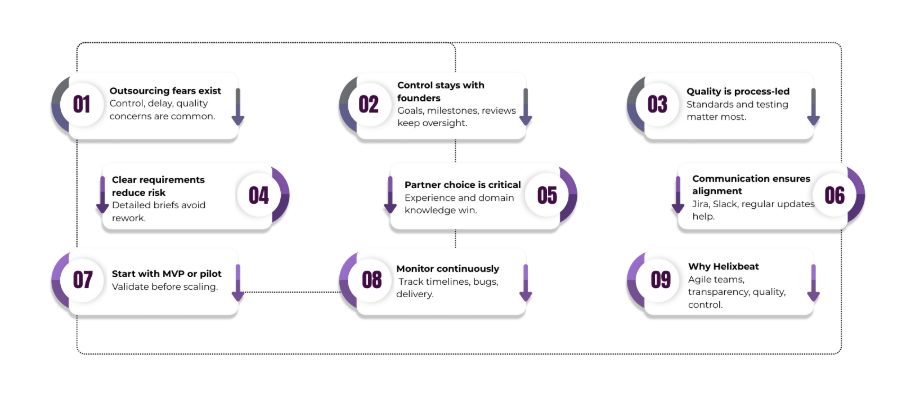
Why Founders Fear Outsourcing (And Why Those Fears Are Outdated)
Many founders hesitate to outsource software product development because they fear losing control over timelines, quality, or the product vision. In fact, a recent survey found that 65% of startup founders worry about miscommunication and delays when working with external teams. There’s also concern about security and intellectual property, making it tempting to keep development entirely in-house.
These fears, however, are largely outdated. Modern project management tools, transparent workflows, and trusted product development outsourcing companies make it easier than ever to stay fully in control. Studies show that companies that outsource effectively can accelerate product delivery by up to 40% without compromising quality, proving that outsourcing is no longer a risk – it’s a strategic advantage.
Common Myths About Outsource Software Product Development
Outsourcing software product development can seem risky, especially with all the stories and assumptions floating around. But many of these fears are based on myths, not facts.
- Myth: Outsourcing Always Means Lower Quality
Many founders think outsourced work is always lower quality than in-house development.That’s not true. Good outsourcing partners follow strict quality checks and testing. The final product depends on the partner’s skills and processes, not where they are located. - Myth: Communication Problems Are Inevitable
People worry that working with a remote team will cause misunderstandings or delays. With tools like Slack, Zoom, and project management software, teams can stay connected and work together smoothly. Regular updates and clear instructions solve most communication issues. - Myth: Outsourcing is Only About Saving Money
Some think outsourcing is just a way to cut costs. While it can save money, it also gives access to skilled experts, helps teams scale quickly, and speeds up product development. Many companies use outsourcing to improve quality and innovate faster.
By understanding the truth behind these myths, founders can make smarter decisions and confidently explore software product development outsourcing without fear.
How to Outsource Software Product Development – 5 Step-by-Step Process
Outsourcing software product development doesn’t have to feel risky. By following a structured process, you can stay in control, maintain quality, and get your product built efficiently. Here’s a step-by-step guide:
1. Define Your Product Goals and Requirements Clearly
Start by creating a detailed product brief. Include your goals, target audience, features, and technical requirements. The clearer you are upfront, the fewer misunderstandings will happen later. Use visual aids like wireframes or flowcharts to make your vision easier to understand. This step also helps in estimating budgets and timelines accurately.
2. Choose the Right Product Development Outsourcing Companies
Not all outsourcing partners are the same. Look for companies with proven experience in your industry, strong technical expertise, and a portfolio of successful projects. Check client reviews and ask for references. The right partner will align with your product vision, culture, and communication style, reducing the chances of delays or quality issues.
3. Set Up Transparent Project Management and Communication
Establish clear communication channels and reporting structures. Tools like Jira, Trello, Asana, or Slack help track tasks, timelines, and issues in real time. Schedule regular check-ins, demo reviews, and milestone updates. Transparency ensures you always know the status of your project and can make timely decisions without micromanaging.
4. Start with a Pilot or MVP
Before handing over the full project, consider starting with a Minimum Viable Product (MVP) or a small pilot phase. This allows you to test the team’s skills, processes, and communication. It’s easier to make adjustments early rather than after a large-scale development has started. An MVP also gives real feedback from users and stakeholders to refine the product.
5. Monitor, Review, and Optimize Continuously
Even with the best partner, continuous monitoring is crucial. Track key metrics like development speed, bug rates, and adherence to timelines. Provide feedback promptly and adjust processes as needed. A proactive approach ensures that your product maintains high quality and aligns with your expectations throughout development.
Following these five steps will help you outsource software product development efficiently, keeping control in your hands while leveraging the expertise of experienced partners.
Common Mistakes That Make Outsourcing Fail (And How to Avoid Them)
Outsourcing software product development can be highly effective, but only if you avoid common pitfalls. Here are the four mistakes founders often make and how to prevent them:
1. Not Defining Project Requirements Clearly
Mistake: Vague or incomplete requirements lead to confusion, delays, and misaligned expectations.
How to Avoid: Create a detailed project brief including product features, technical specifications, target audience, and success metrics. Use visuals like wireframes, diagrams, or user flows to ensure the outsourcing team fully understands your vision.
2. Choosing the Wrong Partner
Mistake: Selecting a partner solely based on cost or without checking experience can result in poor quality or missed deadlines.
How to Avoid: Research product development outsourcing companies thoroughly. Review their portfolios, ask for client references, and evaluate their expertise in your industry. Choose a partner who aligns with your goals and culture.
3. Poor Communication and Management
Mistake: Irregular updates, unclear responsibilities, and lack of collaboration create misunderstandings and slow progress.
How to Avoid: Set up clear communication channels and regular check-ins. Use project management tools like Jira, Trello, or Asana to track progress. Establish who is responsible for what and make reporting consistent and transparent.
4. Ignoring Early Testing or Pilot Phases
Mistake: Jumping straight into full-scale development without testing workflows or processes can lead to costly mistakes. How to Avoid: Start with an MVP or pilot phase. This helps you test the team’s efficiency, identify potential issues, and gather early feedback before scaling up. Continuous monitoring ensures that quality and timelines are maintained throughout development.
By avoiding these mistakes, you can make software product development outsourcing smooth, efficient, and high-quality.
Why Choose Us?
When it comes to outsourcing software product development, Helixbeat stands out as a trusted partner for founders who want full control without compromising on quality. Our experienced teams follow agile processes, maintain transparent communication, and deliver solutions tailored to your vision. We act as an extension of your company, so you stay involved every step of the way.
With Helixbeat, you gain access to skilled developers, innovative strategies, and proven expertise across industries. From MVPs to full-scale products, we ensure timely delivery, high-quality output, and a smooth outsourcing experience – helping your product succeed while you focus on growing your business.
Frequently Ask Questions
1. Why is health information exchange important in healthcare?
It improves care coordination, reduces duplicate tests, minimizes errors, and helps providers make timely, data-driven decisions across different healthcare settings.
2. What are the main models of health information exchange?
3. Which standards guide health information exchange?
Standards like FHIR and HL7 define consistent data formats, making it easier for EHRs, HIEs, and other healthcare platforms to exchange information.
4. What are the benefits of using health information exchange?
HIE improves care coordination, reduces healthcare costs, supports population health management, enhances research, and increases operational efficiency.
5. How does AERIS enhance healthcare information exchange?
AERIS leverages FHIR standards, connects legacy systems, automates workflows, reduces manual errors, and provides real-time access to patient records and lab results.
1. How do I ensure my product vision is followed when outsourcing?
By clearly documenting your requirements, using visual aids like wireframes, and maintaining regular communication with your outsourcing partner, you can ensure your vision is accurately executed.
2. Can I scale my team quickly with outsourcing?
Yes. Software product development outsourcing allows you to expand or reduce your team as needed, giving flexibility to handle peak workloads or new project phases without long-term hiring.
3. How do I choose the right outsourcing company?
Look for a partner with a proven track record, relevant industry experience, and transparent communication processes. Checking client reviews, portfolios, and case studies helps make an informed decision.
4. What measures protect my intellectual property when outsourcing?
Reputable outsourcing companies sign NDAs and follow strict security protocols. You can also implement access controls, code repositories, and regular audits to safeguard your IP.
5. Is outsourcing only cost-effective, or does it offer other benefits?
Beyond cost savings, outsourcing provides access to specialized skills, faster time-to-market, expert guidance, and the ability to focus internal teams on core business priorities.