


Pos For Restaurant Software
Get Started with a Free Demo
New Keyword Page
New Keyword Page
"*" indicates required fields
Why Restaurants Are Replacing Traditional POS with Intelligent, Data-Driven Systems in 2026
In a busy kitchen, decisions happen fast – what to prep, what to push, what to stop. But here’s the catch: many restaurants lose a noticeable chunk of their revenue every month simply due to poor inventory tracking and slow decision-making.
Still, a lot of them rely on traditional POS systems that only print bills and generate end-of-day reports. By the time you realize a dish isn’t moving or an ingredient is running out, it’s already too late.
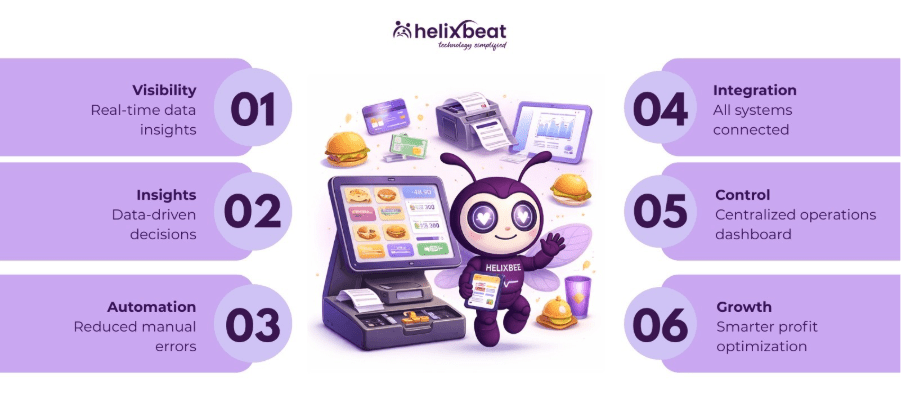
That’s why restaurants in 2026 are moving to intelligent, data-driven POS systems that work more like a control panel than a billing machine. These systems show what’s selling right now, alert you before stock runs low, and even help you decide what to promote during peak hours.
Let’s see in detail why restaurants are replacing traditional POS with Modern systems in 2026.
The Core Problem with Traditional POS Systems
1. No Real-Time Visibility - You’re Always Late to React
In a fast-moving restaurant environment, relying on outdated pos for restaurant software can slow you down. Traditional systems only provide end-of-day summaries, not real-time insights.
So during peak hours, you don’t know:
- Which dishes are selling fast
- What items are underperforming
- When stock is about to run out
By the time you check reports, the opportunity is already gone. This is where the best restaurant pos software stands out – by giving live data that helps you act instantly, not later
2. Limited to Billing - No Actionable Insights
Most traditional restaurant billing software is built only for transactions. It records orders and prints bills, but stops there.
It doesn’t help you understand:
- Why certain items aren’t selling
- Which time slots generate maximum revenue
- What your customers actually prefer
Even though you’re using a pos software for restaurant, the data remains unused. In 2026, restaurants need systems that turn data into decisions, not just reports.
3. Heavy Manual Work Slows Down Operations
With traditional systems, a lot of work still depends on manual effort. From updating menus to tracking inventory, everything requires constant staff involvement.
This leads to:
- Errors during busy hours
- Delays in order processing
- Inventory mismatches
Instead of simplifying operations, outdated pos for restaurant software adds more pressure on your team. Modern solutions, often part of the best restaurant management software, automate these tasks to keep your kitchen and floor running smoothly.
4. Poor Integration with Modern Restaurant Needs
Today’s restaurants operate across multiple channels – dine-in, takeaway, and online delivery. But traditional pos software for restaurant struggles to connect with these systems.
Common challenges include:
- No seamless integration with delivery platforms
- Difficulty syncing with CRM or accounting tools
- Limited support for multi-location management
As a result, you end up juggling multiple tools instead of managing everything from one place. This is why many restaurants are upgrading to the best restaurant pos software that offers complete integration and control.
Traditional pos for restaurant software helps you manage bills, but modern systems help you manage your entire restaurant.
What “Intelligent, Data-Driven POS” Actually Means in 2026
In 2026, POS for restaurant software is evolving from a simple transaction tool into a powerful system that drives operations, insights, and growth.
1. AI-Powered Insights That Turn Data into Decisions
In 2026, pos for restaurant software is no longer just about recording orders – it’s about understanding them. Intelligent POS systems use AI to analyze sales patterns, customer behavior, and demand trends in real time.
Instead of guessing, you can now:
- Identify best-selling and low-performing dishes instantly
- Predict demand during peak hours
- Get suggestions on pricing and menu optimization
This is what separates basic tools from the best restaurant pos software: they don’t just show data, they tell you what to do next.
2. Real-Time Control Over Every Restaurant Operation
Modern pos software for restaurant acts like a live control panel for your business. Whether it’s dine-in, takeaway, or online orders, everything is tracked in one place – instantly.
With real-time visibility, you can:
- Monitor sales as they happen
- Track inventory without manual checks
- Manage multiple outlets from a single dashboard
Unlike traditional restaurant billing software, which only works after the sale, intelligent POS helps you stay in control during operations.
3. Fully Connected System for Seamless Management
An intelligent POS is not a standalone tool; it’s part of a complete ecosystem. The best restaurant management software integrates POS with delivery platforms, CRM, accounting, and inventory systems.
This means:
- Orders from Swiggy/Zomato sync automatically
- Customer data is stored and used for personalized offers
- Reports, billing, and inventory are all connected
With this level of integration, your pos for restaurant software becomes the central system that runs your entire restaurant, not just the billing counter.
In 2026, intelligent POS is not just software; it’s the brain behind smarter, faster, and more profitable restaurant decisions.
The Real Challenges of Moving to Modern POS for Restaurant Software (And How to Solve Them)
1. Staff Resistance & Learning Curve
Switching to a new pos for restaurant software often feels overwhelming for staff, especially during busy service hours. Servers, cashiers, and kitchen staff are already used to the old system, and any change can slow down operations initially.
How to solve it:
- Choose the best restaurant pos software with a simple, user-friendly interface
- Provide short, practical training sessions (not long theory)
- Start with a trial run during non-peak hours
The goal is to make the system feel like a support tool, not an extra burden.
2. Data Migration & System Setup Issues
Moving from traditional restaurant billing software to a modern system means transferring menus, pricing, inventory data, and customer details. If not handled properly, it can lead to errors, missing data, or operational delays.
How to solve it:
- Plan the migration step-by-step instead of rushing
- Clean your existing data before transferring
- Work with providers of best restaurant management software that offer onboarding and setup support
A smooth setup ensures your new pos software for restaurant starts strong from day one.
3. Cost Concerns & ROI Uncertainty
Many restaurant owners hesitate because modern pos for restaurant software may seem expensive compared to traditional systems. The real concern isn’t just cost, it’s whether the investment will actually pay off.
How to solve it:
- Focus on long-term value, not just upfront cost
- Look for features like automation, analytics, and integration
- Start with scalable plans from the best restaurant pos software providers
In most cases, reduced errors, better inventory control, and smarter decisions quickly justify the investment.
What Makes RavZora the Best Restaurant POS in India
RavZora stands out as a powerful pos for restaurant software built for real operations, not just billing. It connects orders, kitchen, inventory, and payments into one smooth workflow, helping restaurants reduce errors and serve faster.
Unlike traditional restaurant billing software, it gives real-time visibility so you can make quick decisions.
- Real-time sales & inventory tracking
- Smart kitchen & order management
- Seamless delivery platform integration
- Cloud-based & multi-location ready
- Easy to use with quick setup
As one of the best restaurant pos software options in India, RavZora combines data, automation, and integrations to simplify management.
It fits perfectly into a complete best restaurant management software ecosystem, making it easy to scale and manage multiple outlets.
Frequently Ask Questions
1. Why is health information exchange important in healthcare?
It improves care coordination, reduces duplicate tests, minimizes errors, and helps providers make timely, data-driven decisions across different healthcare settings.
2. What are the main models of health information exchange?
3. Which standards guide health information exchange?
Standards like FHIR and HL7 define consistent data formats, making it easier for EHRs, HIEs, and other healthcare platforms to exchange information.
4. What are the benefits of using health information exchange?
HIE improves care coordination, reduces healthcare costs, supports population health management, enhances research, and increases operational efficiency.
5. How does AERIS enhance healthcare information exchange?
AERIS leverages FHIR standards, connects legacy systems, automates workflows, reduces manual errors, and provides real-time access to patient records and lab results.
1. Why are restaurants replacing traditional POS systems in 2026?
Restaurants are switching because traditional systems lack real-time insights, automation, and integration, while modern POS helps in faster decision-making and better efficiency.
2. What features should the best restaurant POS software have?
The best restaurant POS software should include real-time analytics, cloud access, inventory management, integrations, and an easy-to-use interface.
3. Is upgrading to modern POS for restaurant software worth the cost?
Yes, modern POS reduces errors, improves efficiency, and increases profitability, making it a valuable long-term investment for restaurants.