


How to Develop a Mobile App for Retail Shops in 2026: A Complete Step-by-Step Guide
Are you a retail shop owner wondering how to reach more customers and increase sales in 2026? A mobile app could give your retail business a competitive edge. With shoppers increasingly using smartphones to browse, compare, and buy products, having a dedicated app helps you stay connected and competitive.
But building the right app isn’t as simple as hiring a developer. You need a clear plan, smart design, and the right guidance to make an app that customers love and actually use. This is where product development consultants come in, where they help turn your ideas into a successful retail app step by step.
In this guide, we’ll walk you through everything you need to know to develop a mobile app for your retail shop in 2026.
What is a Mobile App for Retail Shops?
A mobile app for retail shops is a digital platform that lets your customers browse products, place orders, and interact with your store directly from their smartphones. Beyond just shopping, it can offer personalized recommendations, loyalty rewards, and real-time updates on stock or promotions. With the guidance of a product design consultant, your retail app can become a powerful tool to improve customer experience and drive sales.
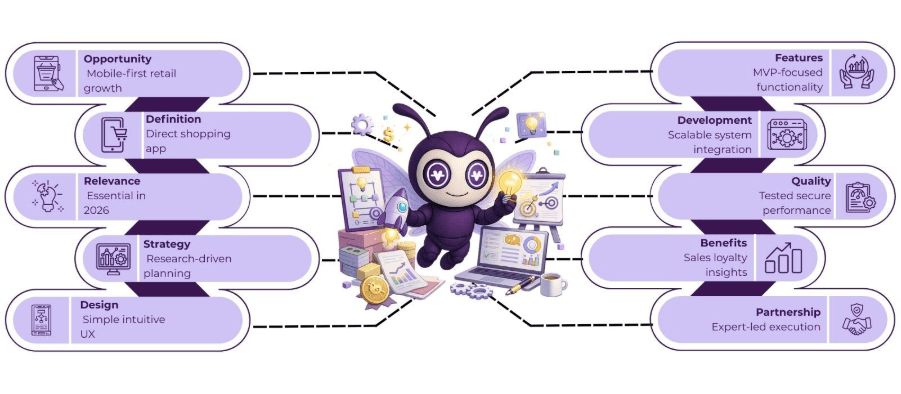
Why Retail Shops Need a Mobile App in 2026?
In 2026, having a mobile app isn’t just an option for retail shops—it’s becoming essential to stay competitive and connected with your customers.
- Meet Customers Where They Are– Most shoppers now browse and buy products directly from their smartphones. A mobile app ensures your store is always just a tap away, making it easier for customers to shop anytime, anywhere.
- IncreaseSales and Customer Loyalty– Mobile apps allow you to offer personalized recommendations, discounts, and loyalty rewards. This keeps customers coming back and increases repeat purchases, giving your retail business a clear edge over competitors.
- Stay Ahead with Smart Insights– With an app, you can track user behavior, preferences, and buying patterns in real time. Partnering with product development consulting companies helps you turn this data into actionable strategies to grow your business efficiently.
Investing in a mobile app with guidance from experienced product development consultants ensures your retail shop is ready to meet the demands of 2026 and beyond.
Step–by- Step Process to Develop a Mobile App for Retail Shops in 2026
Developing a successful retail mobile app in 2026 requires a clear plan, smart design, and expert guidance. As specialists in mobile app development, we recommend following these six steps:
Step 1: Research & Strategy
Start by understanding your target customers, their shopping habits, and competitors’ apps. Collaborate with a new product development consultant to define your app’s goals, target audience, and unique value proposition. A strong strategy ensures your app addresses real customer needs.
Step 2: UX/UI Design & Planning
Work with a skilled product design consultant to create intuitive wireframes and a seamless user experience. Focus on simple navigation, attractive visuals, and features that enhance shopping convenience. Planning your app flow at this stage saves time and reduces development errors.
Step 3: Feature Prioritization & Tech Stack Selection
Decide which features are essential for your Minimum Viable Product (MVP), like product catalog, search, payments, and loyalty programs. Choose the right technology stack that supports scalability, performance, and future upgrades with guidance from product development consulting firms.
Step 4: Development & Integration
Begin agile development of your app, integrating essential tools like inventory management, POS systems, CRM, and payment gateways. Experienced product development consulting companies ensure smooth system integration and maintain coding standards for stability and speed.
Step 5: Testing & Quality Assurance
Thoroughly test your app for performance, security, and user experience across devices. Identify bugs, fix issues, and ensure compliance with app store policies. QA with professional support ensures your app is reliable and user-friendly.
Step 6: Launch & Continuous Improvement
Deploy your app to app stores and promote it to your audience. Use analytics to track customer behavior, engagement, and sales trends. Ongoing support from product development consultants ensures timely updates, new feature rollouts, and continuous improvement to keep your app competitive.
Key Features Every Retail Mobile App Must Have in 2026
To make your retail mobile app effective and engaging, here are five must-have features:
- Easy Browsing & Search – Allow customers to quickly find products with simple navigation, filters, and search options.
- Secure & Fast Checkout – Offer multiple payment options and a smooth, secure checkout experience to reduce cart abandonment.
- Personalized Recommendations – Suggest products based on customer preferences and purchase history, enhancing engagement and sales.
- Loyalty Programs & Discounts – Integrate rewards, offers, and loyalty points to encourage repeat purchases and build customer loyalty.
- Real-Time Notifications – Keep customers updated about new arrivals, discounts, or order status through push notifications, ensuring they stay connected.
These features, when designed with help from a product design consultant or product development consulting firms, ensure your retail app stands out and drives results in 2026.
Advantages of Mobile App Development for Retailers
Developing a mobile app for your retail shop in 2026 goes beyond just being online—it can transform how your business operates and interacts with customers:
- Increase In-Store & Online Sales Together – Apps allow customers to check product availability in real time, reserve items for pickup, or order online, seamlessly linking physical and digital sales.
- Personalized Shopping Experiences – With features like AI-driven product recommendations and personalized offers, customers feel valued and are more likely to make repeat purchases.
- Instant Customer Engagement – Push notifications, flash sales, and exclusive app-only offers help drive immediate traffic and purchases.
- Data-Driven Inventory & Marketing Decisions – Analyze app usage, popular products, and buying patterns to stock smarter and run targeted campaigns, reducing waste and increasing ROI.
- Stronger Brand Loyalty & Retention – Loyalty programs, rewards, and easy reordering keep customers returning, turning occasional buyers into brand advocates.
With guidance from expert product development consultants, your app can deliver all these advantages while avoiding common pitfalls, making it a real business growth tool in 2026.
Challenges Faced in Retail Mobile App Development (And How to Overcome Them)
Even with a great idea, building a retail mobile app comes with challenges. Here are the most common hurdles and how to overcome them:
- Poor User Experience (UX) Leading to App Abandonment
Many retail apps fail because navigation is confusing, search is slow, or the checkout process is complicated.
How to Overcome: Collaborate with a skilled product design consultant to create an intuitive interface, smooth navigation, and fast-loading screens. Conduct user testing early to identify friction points and refine the design. - Integration Issues with Existing Systems
Integrating your app with inventory, POS, CRM, and payment systems can be complex, often leading to errors or delays.
How to Overcome: Partner with experienced product development consulting companies that specialize in retail solutions. They ensure seamless integration, real-time stock updates, and smooth payment processing. - Security & Data Privacy Concerns
Retail apps handle sensitive customer data, including payment details, addresses, and personal preferences. Any breach can damage trust and brand reputation.
How to Overcome: Implement strong encryption, secure authentication, and regular security audits. Working with product development consultants ensures your app complies with data protection regulations while keeping customer information safe.
By addressing these challenges upfront with expert guidance, your retail app can deliver a seamless, secure, and engaging experience that drives customer loyalty and sales.
Why Choose Us as Your Retail Mobile App Development Consultant
If you want a mobile app that actually helps your retail shop grow, you need more than just developers—you need experts who understand both retail and technology.
At Helixbeat, we guide you to a clear roadmap, smart design, and a reliable app that your customers will love.
Here’s why working with us makes a difference for you:
- End-to-End Support – We guide you through every step, from planning to launch, so you don’t have to worry about technical details.
- Retail-Specific Solutions – Your app will handle real-world retail needs like inventory, POS, loyalty programs, and more.
- Expert Team – You’ll work with experienced product design consultants and product development consulting firms who know what works for retail apps.
- Ongoing Growth – We provide continuous updates and insights so your app stays competitive and keeps driving sales.
With our help, your app won’t just exist—it will become a tool that attracts more customers, boosts sales, and strengthens your brand in 2026.
What Users Say About AERIS
Dr. Sarah L.
Hospital Administrator
John T.
Telemedicine Provider
Emily P.
Healthcare Executive
FAQs
- How much does it typically cost to develop a retail mobile app in 2026?
The cost depends on app complexity, features, platform (iOS, Android, or both), and design requirements. Partnering withproduct development consultants helps you get an accurate estimate and avoid hidden costs. - How long does it take to launch a retail mobile app?
A well-planned app can take anywhere from 3 to 6 months for an MVP, depending on features and integrations. Working with experiencedproduct development consulting companies ensures faster development without compromising quality. - Can my existing POS or inventory system be integrated with the app?
Yes! Most modern retail apps cansync with POS, CRM, and inventory systems. Expert product design consultants make sure the integration is seamless for smooth operations. - Will my retail app work for both online and in-store customers?
Absolutely. A well-designed app allows customers to shop online, reserve products for pickup, or check in-store stock in real time, bridging the gap between physical and digital shopping. - How do I keep my retail app updated and secure?
Regular updates, security audits, and feature enhancements are essential. Collaborating withproduct development consultants ensures your app stays safe, compliant, and relevant to your customers’ needs.