


×

Restaurant Accounting Software

Get Started with a Free Demo

New Lead: Ravzora

Synergy Landing Page Form, connected with the Mailchimp.

"*" indicates required fields
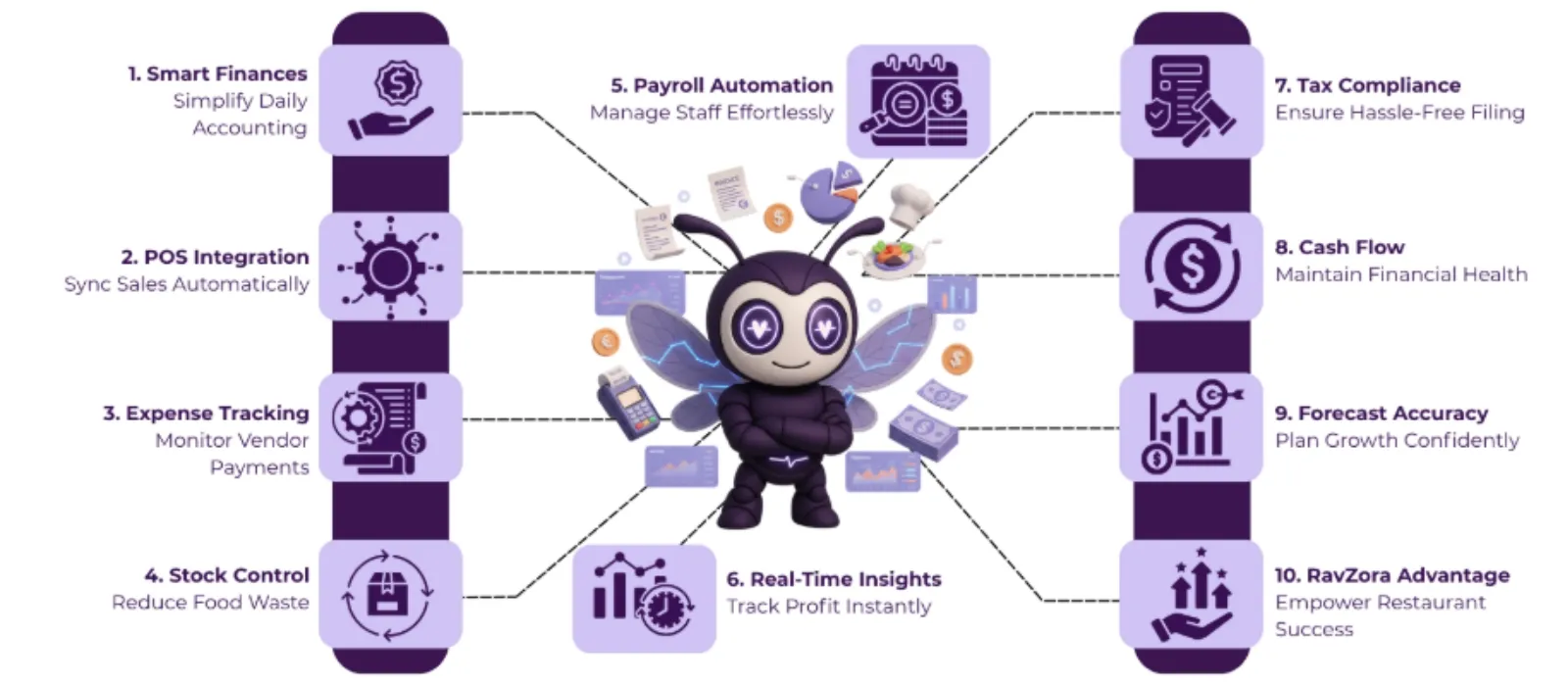
Nearly 75% of restaurants face problems with food waste, missing ingredients, or wrong stock records, especially during busy hours. Most of this happens because they still use manual methods like spreadsheets or handwritten notes to track their stock. These old methods often lead to mistakes, confusion, and extra costs.
When the stock isn’t updated on time, restaurants may run out of important ingredients, overbuy items that go unused, or spend hours fixing mismatched numbers. This not only wastes food but also reduces profits.
That’s where restaurant stock management software helps. It keeps track of every item automatically — what’s in stock, what’s low, and what needs reordering. The system gives restaurant owners a clear view of their inventory in real time, helping them cut waste, control costs, and run their kitchens smoothly.
Untitled design 1

Core Features in Restaurant Accounting Software

According to a recent industry report, nearly 80% of restaurants lose track of their financial performance due to manual bookkeeping and scattered records. With multiple expenses to manage, from ingredient costs and staff salaries to vendor payments, restaurant accounting can quickly turn into chaos.
The main problem is that traditional methods like spreadsheets or manual entries are time-consuming and prone to errors. Even a small mistake in cash flow tracking or daily reconciliation can impact profitability and long-term growth.
That’s where restaurant accounting software makes a real difference. It automates complex financial tasks, tracks every transaction in real-time, and gives owners a clear picture of their business performance, all in one place.
By switching to a digital system, restaurant owners can spend less time on numbers and more time creating exceptional dining experiences, confident that their finances are always under control.

Understand the Common Terms in Restaurant Accounting

Before choosing the best accounting software for restaurants, it’s helpful to understand some basic financial terms that shape how your business operates. These terms form the backbone of how even the best accounting software for a restaurant tracks performance and helps you make data-driven decisions:

1. COGS (Cost of Goods Sold)

This includes all direct costs involved in preparing the food, such as raw ingredients, beverages, and packaging materials. Tracking COGS helps determine the true profit margin on every dish sold.

2. Prime Cost

A combination of COGS and labor expenses, prime cost represents the biggest portion of restaurant spending. Monitoring this closely ensures the restaurant remains profitable even during slow seasons.

3. Gross Profit

The difference between total sales and COGS. It shows how efficiently a restaurant is managing its production and pricing strategies before accounting for other expenses.

4. Operating Expenses

These include rent, utilities, marketing, licenses, and maintenance. Keeping these expenses under control is essential for long-term financial stability.

5. Inventory Turnover Rate

This measures how quickly food and beverage stock are used and replenished. A high turnover rate usually indicates efficient stock management and minimal wastage.

6. Reconciliation

The process of matching daily sales data from POS systems with bank deposits. It helps identify discrepancies and prevent revenue leakage.

7. Cash Flow

The movement of money in and out of the restaurant. Healthy cash flow ensures that bills, salaries, and vendors are paid on time while maintaining smooth day-to-day operations.
Understanding these common terms and automating their tracking with restaurant accounting software empowers restaurant owners to make smarter, faster, and more profitable decisions.

Why Restaurants Needs Accounting Software?

Managing a restaurant isn’t just about great food and customer service — it’s also about keeping tight control over finances. As operations grow, manual accounting becomes inefficient and prone to costly mistakes. That’s where restaurant accounting software comes in, offering accuracy, automation, and real-time insights.

1. Simplifies Complex Financial Management

Running a restaurant involves managing multiple transactions daily — from supplier payments and payroll to online orders and dine-in sales. The best accounting software for restaurants automates all of this, syncing data from your POS system and generating reports instantly.

Instead of juggling spreadsheets, owners can get a single dashboard that tracks revenue, expenses, and profits effortlessly.

2. Improves Profitability and Cost Control

Restaurants operate on thin margins, and even a small pricing or inventory error can reduce profits. The best accounting software for a restaurant helps monitor costs in real-time, track ingredient usage, and prevent overspending.

By having an accurate view of cash flow and expenses, owners can make quick adjustments to menu prices, vendor deals, or staff allocation — directly improving profitability.

3. Ensures Compliance and Saves Time

Tax filing, vendor payments, and staff payroll can take hours when handled manually. Using the best accounting software for small restaurant setups automates these repetitive tasks while ensuring compliance with tax and financial regulations.

It reduces the risk of penalties, eliminates data entry errors, and frees up time for restaurant owners to focus on business growth instead of paperwork.

With restaurant accounting software, managing finances becomes a smooth, transparent process, helping restaurants of all sizes stay organized, profitable, and ready for expansion.

Core Feaatures to look in Restaurant Accounting Software

When selecting the right tool for your restaurant, it’s important to understand which features truly make a difference. The best accounting software for restaurants should not only automate tasks but also simplify your daily financial operations. Here are the top features every restaurant should look for:

1. POS System Integration

Your POS (Point of Sale) system is the heart of your restaurant’s transactions. The best accounting software for a restaurant should seamlessly integrate with your POS to automatically sync daily sales, taxes, and tips.

This reduces manual data entry, ensures accuracy, and provides instant insights into your restaurant’s daily revenue performance.

2. Expense and Vendor Management

Restaurants deal with numerous suppliers, from produce vendors to utility providers. Restaurant accounting software should help track vendor invoices, due payments, and credit terms in one place.

The best accounting software for small restaurant owners automates reminders, organizes bills, and even links expenses to specific menu items for better cost analysis.

3. Inventory and Stock Control

Controlling food waste and optimizing stock is vital for profitability. Look for software that connects accounting with inventory tracking, allowing automatic deduction of stock levels as sales occur.
This feature ensures real-time monitoring and helps reduce unnecessary purchases or ingredient shortages.

4. Payroll and Staff Payment Automation

Payroll management is one of the most time-consuming tasks for restaurant owners. The best accounting software for restaurants includes built-in payroll automation to calculate salaries, tips, and tax deductions accurately.

It also maintains employee records and ensures on-time payments, reducing administrative burden.

5. Financial Reporting and Insights

Having access to clear, real-time financial data can help restaurant owners make smarter decisions. The best accounting software for a restaurant offers easy-to-read dashboards showing profit margins, daily sales, and expense breakdowns.

Customizable reports give owners the ability to track performance trends and plan future growth with confidence.
Choosing software that offers these features ensures that financial management becomes effortless, accurate, and transparent — no matter how small or large your restaurant operation is.

What Are the Challenges Can Be Overcome With Restaurant Accounting Software

Managing a restaurant’s finances manually can lead to confusion, inefficiency, and errors. But, most of these issues can be eliminated with the right restaurant accounting software that brings automation, accuracy, and real-time insights. Here are some of the key challenges it helps overcome:
Here are the top challenges that modern accounting software helps overcome:

1. Manual Entry & Data Inaccuracy

Manual bookkeeping can result in costly errors. Industry data shows that restaurants using online restaurant accounting software reduce accounting errors by up to 75% and save nearly 10 hours per week in reconciliation and reporting.

2. Poor Expense Visibility & Cash Flow Management

Restaurants often struggle to identify where profits are leaking. The best accounting software for restaurants provides automated expense categorization, real-time dashboards, and spend analytics – helping identify wastage and optimize procurement costs.

3. Complicated Tax Compliance

According to a QuickBooks study, small businesses spend an average of 120 hours annually preparing taxes. The best accounting software for a restaurant automates GST/VAT calculations, prepares digital returns, and ensures compliance, saving both time and penalties.

4. Inefficient Inventory & Food Cost Control

Food wastage can consume up to 30% of a restaurant’s total expenses. Modern software integrates accounting with stock management to track ingredient costs, supplier performance, and order cycles, ensuring precise cost and profitability.

5. Limited Financial Forecasting

Many small restaurants operate without a clear understanding of their monthly financial position. With automated reporting and forecasting tools, owners can visualize revenue patterns, predict low seasons, and plan smarter — leading to a 20–25% improvement in cost efficiency, according to Toast’s 2024 Restaurant Insights report.

When implemented strategically, restaurant accounting software doesn’t just automate bookkeeping — it transforms it into a real-time decision-making engine that improves accuracy, reduces waste, and enhances profitability across every outlet.

Statistics Related to Online Restaurant Accounting Software

Here are three key statistics related to the adoption and market size of online restaurant accounting software:
  1. The global restaurant accounting software market was valued at approximately USD 2.5 billion in 2023, and is projected to reach around USD 5.3 billion by 2032, registering a compound annual growth rate (CAGR) of about 9.1%. 
  2. In 2024, the broader restaurant management software market (which includes accounting, inventory, payroll modules) was estimated at USD 5.79 billion, with the cloud deployment segment already accounting for over 54% of that market. 
  3. A survey by the National Restaurant Association found that 73% of restaurant operators increased their technology investments in 2024, indicating strong momentum toward digital tools including online accounting systems. 

If you like, I can pull India-specific or restaurant-size-specific statistics (e.g., for small restaurants) to make the content more relevant to your target audience.

Why Most of the Restaurants Choose RavZora Accounting Software

Running a restaurant is tough, there are so many things to manage: sales, bills, inventory, payments, and reports. RavZora Accounting Software makes it easy by bringing everything together in one place.

It’s not just a regular accounting tool, it’s a complete restaurant management system that helps owners save time, reduce errors, and make smarter financial decisions.

Here’s why most restaurants trust RavZora:

1. All-in-One Platform

Combines sales, billing, inventory, and accounting in one dashboard.

2. Multi-Channel Access

Works for dine-in, takeaway, and online orders across cloud, Android, and iOS.

3. Real-Time Insights

Provides live reports on sales, profits, and expenses for quick decisions.

4. Seamless Integrations

Connects easily with payment gateways and delivery apps.

5. 24/7 Support & Scalability

Offers round-the-clock help and grows with your business.

In short, RavZora Accounting Software gives restaurant owners full control over their finances and daily operations in a simple, connected way, helping them focus more on food and customers, and less on paperwork.

Want to simplify your restaurant finances? Book a free demo with RavZora today and see how effortless accounting can be!

Frequently Ask Questions

1. How does restaurant accounting software help small restaurants?
It automates daily expense tracking, vendor payments, and tax filing, helping small restaurants save time and reduce manual errors.
Yes, RavZora seamlessly connects with most POS systems, automatically syncing daily sales and billing data for accurate financial reports.
Absolutely. RavZora uses encrypted cloud technology to keep all financial, sales, and employee data safe and accessible only to authorized users.
RavZora combines accounting, POS, and inventory management in one system — giving restaurants real-time insights and complete control over operations.
Yes. RavZora is built for scalability, allowing owners to manage multiple outlets, track branch-wise performance, and consolidate reports effortlessly.