


software testing services company
Get Started with a Free Demo
New Keyword Page
New Keyword Page
"*" indicates required fields
Have you ever used an app that kept crashing or didn’t work properly? It’s frustrating, right? Most of the time, the problem isn’t the developers; it’s that the software wasn’t tested well. Bugs and glitches can make users leave and even hurt your business. This is why a software testing services company is so important.
They check every part of your software, fix problems early, and make sure your app runs smoothly. By knowing how software testing works and how testing is done in software companies, you can make sure your product is reliable, fast, and user-friendly.
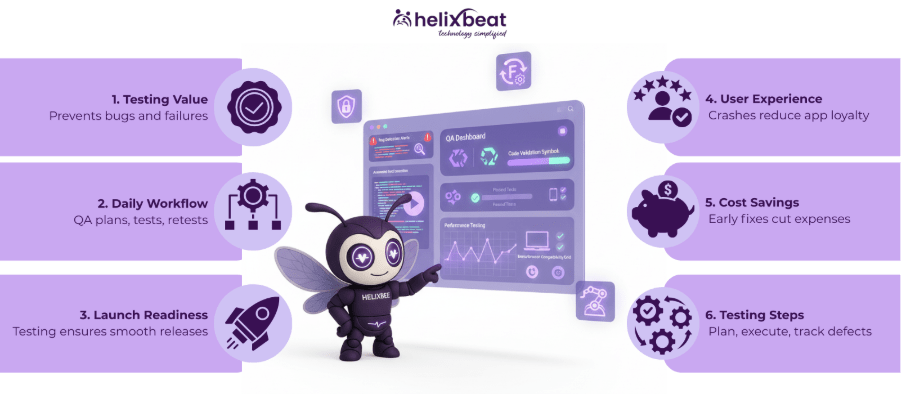
A Day Inside a Software Testing Services Company
A typical day in a software testing services company starts with planning and team discussions. QA teams review the features they need to test, set priorities, and assign tasks. Testers prepare test cases and make sure they understand the product requirements clearly. Communication between developers and testers is key, so everyone knows what to focus on and which areas need extra attention.
Once testing begins, teams run different types of checks, including functional, performance, and usability tests. They carefully record any bugs or issues and work closely with developers to fix them.
Throughout the day, testers monitor progress, retest fixed problems, and make sure the software is stable. This structured approach helps ensure that the final product is reliable, smooth, and ready for users.
Why Quality Testing is Important Before a Product Launch
Launching a product without proper testing can be costly. Studies show that software bugs cost the global economy over $313 billion each year. Even small errors can frustrate users, damage your brand, and lead to lost revenue. That’s why quality testing is a critical step before any product release.
1. Maintain Smooth Functionality
Quality testing checks every feature to make sure it works as expected. From basic operations to complex workflows, thorough testing prevents crashes, errors, and slow performance. A software testing services company with ISO-certified QA processes follows standardized procedures to catch even the tiniest glitches, ensuring your software is reliable.
2. Improves User Experience
A well-tested product is easier to use and more reliable. Research shows that 61% of users are unlikely to return to an app after one crash. Testing also identifies usability issues early, improving user satisfaction before launch.
3. Reduces Costs in the Long Run
Fixing bugs after release can be up to 30 times more expensive than detecting them during testing. Post-launch issues require emergency patches, extra support, and sometimes refunds. Investing in quality testing early saves time, money, and reputation.
4. Builds Confidence in Your Product
A product that passes rigorous testing gives both the development team and stakeholders confidence in its quality. With a software testing services company with ISO-certified QA processes, you can ensure a smooth launch and positive first impressions with users.
By relying on professional QA teams and standardized processes, you reduce risks, deliver a reliable product, and make your launch successful.
Why Quality Testing is Important Before a Product Launch
Before launch, rigorous testing ensures software meets functional, performance, and security standards. A software testing services company with ISO-certified QA processes uses automated regression tests, load testing, and vulnerability scans to catch bugs, performance bottlenecks, and security gaps early. Functional testing verifies features, while performance and security tests ensure reliability under real-world conditions.
Quality testing also prevents integration and deployment issues. By simulating production environments, QA teams identify conflicts between modules, APIs, or third-party systems before release. This reduces post-launch patches, improves system stability, and ensures a smooth user experience.
How Testing Is Done in Software Companies: A Step-by-Step Breakdown
Understanding how testing is done in software companies helps ensure software reliability and smooth performance. Here’s a typical step-by-step process followed by a software testing services company with ISO-certified QA processes:
1. Requirement Analysis & Test Planning
QA teams review product specifications, user stories, and functional requirements to create a detailed test plan. This plan defines test objectives, scope, resources, timelines, and the types of testing needed—functional, regression, performance, or security.
2. Test Case Design & Environment Setup
Testers develop detailed test cases and scenarios based on requirements. They also set up test environments that closely mimic production conditions, including databases, servers, and third-party integrations, ensuring realistic testing results.
3. Test Execution
Test cases are executed manually or through automated testing tools. Functional testing verifies feature behavior, regression testing ensures new changes don’t break existing functionality, and performance testing measures system responsiveness under varying loads.
4. Defect Reporting & Tracking
Any bugs or issues are logged in a defect management system with severity, reproducibility, and steps to replicate. Developers fix the defects, and QA teams retest to confirm resolution. Continuous tracking ensures no critical issues are left unresolved.
5. Final QA Sign-Off & Release Readiness
After all defects are resolved, QA teams perform a final validation, including smoke testing and user acceptance testing (UAT). Only after passing these checks does the product get the QA sign-off, confirming it is stable, secure, and ready for production.
Why the Best Software Testing Companies Invest in People, Not Just Tools
Advanced tools and automation platforms are powerful, but they can only work as well as the people who operate them. The best software testing companies know that human expertise is essential for understanding complex business logic, interpreting edge cases, and spotting issues that automated scripts often miss.
Skilled QA engineers bring analytical thinking, domain knowledge, and experience in handling unpredictable scenarios, qualities that no tool can replicate.
These companies invest in continuous training, certifications, and upskilling programs to keep their teams updated with new testing methodologies, security standards, and emerging technologies. Even with AI-driven testing tools, testers must design test strategies, maintain automation frameworks, and evaluate risks.
This focus on people ensures accurate decision-making, high-quality test coverage, and a more reliable release cycle, especially when working in environments where product performance, security, and compliance must be maintained at the highest standards.
5 Key Lessons from QA Teams: Frequent Testing Errors and How to Prevent Them
Effective software testing services depend on accuracy, consistency, and strong technical practices. QA teams across the industry repeatedly observe similar mistakes that can slow down releases and weaken product stability. Here are five key lessons drawn from real testing environments and advanced QA workflows:
1. Incomplete Test Coverage
Missing edge cases or ignoring critical user paths often leads to unpredictable failures. QA teams resolve this by using requirement traceability matrices (RTMs) to map each requirement to specific test cases, ensuring complete functional coverage.
2. Poorly Written Test Cases
Unclear or inconsistent test cases cause execution errors. Structured templates with defined preconditions, expected results, and peer reviews help maintain precision and prevent misunderstandings during test execution.
3. Ignoring Performance and Load Scenarios
Focusing only on functional checks can mask performance bottlenecks. Tools like JMeter and LoadRunner allow testers to simulate peak loads, identify response delays, and fine-tune system performance before release.
4. Inadequate Bug Prioritization
Treating all bugs equally wastes time and delays critical fixes. Severity-based classifications—Critical, High, Medium, Low—help teams prioritize effectively and ensure stability in release cycles.
5. Failure to Validate Integrations
API failures, broken third-party modules, and inconsistent data flow are common issues. Automated API testing with frameworks like Postman and REST Assured ensures reliable communication between services and detects integration risks early.
Learning from these lessons helps you choose a partner that delivers dependable software testing services, minimizes errors, and strengthens the overall product quality.
Want Your App to Run Smooth? Here’s What to Look for in a QA Partner
Choosing the right QA partner can make all the difference in delivering a stable and reliable app. Here are four key factors to consider:
- Proven Expertise: Look for a software testing services company with a strong track record and experience across multiple industries.
- ISO-Certified QA Processes: Ensure they follow standardized processes to guarantee consistent, high-quality testing.
- Comprehensive Testing Approach: They should cover functional, performance, security, and integration testing to catch all potential issues.
- Clear Reporting & Communication: Transparent reporting, regular updates, and fast feedback loops help you stay informed throughout the testing process.
Partnering with the right QA team ensures your app runs smoothly, meets user expectations, and minimizes post-launch issues.
Wrap-Up
A well-tested product is key to delivering a seamless user experience and maintaining brand trust. By understanding how software testing works and learning how testing is done in software companies, businesses can prevent costly bugs, optimize performance, and ensure smooth releases. Choosing the right QA partner makes all the difference in achieving these goals.
At HelixBeat, our software testing services combine ISO-certified QA processes, skilled professionals, and advanced tools to deliver reliable, high-quality software. From functional and performance testing to security and integration checks, we ensure your product runs flawlessly, giving you confidence in every release.
Frequently Ask Questions
1. Why is health information exchange important in healthcare?
It improves care coordination, reduces duplicate tests, minimizes errors, and helps providers make timely, data-driven decisions across different healthcare settings.
2. What are the main models of health information exchange?
3. Which standards guide health information exchange?
Standards like FHIR and HL7 define consistent data formats, making it easier for EHRs, HIEs, and other healthcare platforms to exchange information.
4. What are the benefits of using health information exchange?
HIE improves care coordination, reduces healthcare costs, supports population health management, enhances research, and increases operational efficiency.
5. How does AERIS enhance healthcare information exchange?
AERIS leverages FHIR standards, connects legacy systems, automates workflows, reduces manual errors, and provides real-time access to patient records and lab results.
1. What are software testing services, and why are they important?
Software testing services involve evaluating an application for bugs, performance issues, and security gaps. They ensure your product runs smoothly, meet user expectations, and minimize post-launch issues.
2. How software testing works in a typical company?
Testing typically follows a structured process: requirement analysis, test case creation, test execution, defect tracking, and final QA sign-off. This step-by-step approach ensures complete coverage and high-quality releases.
3. Why should I choose a software testing services company with ISO-certified QA processes?
ISO-certified QA processes follow standardized, proven methods that guarantee consistent and reliable testing. This reduces risks, ensures compliance, and delivers better software quality.
4. What makes the best software testing companies different?
The best software testing companies combine advanced tools, skilled QA engineers, and comprehensive testing strategies. They focus on both automation and human expertise to detect complex issues and deliver robust software.
5. How can a QA partner help prevent post-launch issues?
A reliable QA partner identifies bugs, integration problems, and performance bottlenecks before release. This proactive testing approach minimizes downtime, reduces maintenance costs, and ensures a smooth user experience.