


Types of EHR Systems: A Complete Guide
Electronic Health Record (EHR) systems have become the backbone of modern healthcare delivery. These digital platforms replace paper charts and provide clini cians, hospitals, and patients with real-time access to medical information. Understanding the different types of EHR systems helps organizations select the solution that matches their size, specialty, budget, and workflow needs.
This guide breaks down the main categories, their features, advantages, and typical use cases.
What Is an EHR System?
An EHR is a digital version of a patient’s complete medical history, maintained by one or more providers over time. Unlike Electronic Medical Records (EMRs), which stay within a single practice, EHRs travel with the patient across organizations, supporting continuity of care, population health management, and regulatory reporting.
The Centers for Medicare & Medicaid Services (CMS) defines certified electronic medical record systems under the Promoting Interoperability Programs. Certification requires compliance with criteria set by the ONC Health IT Certification Program.
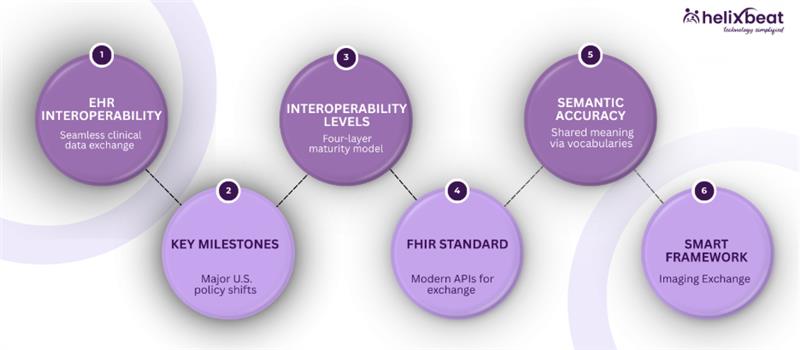
Major Types of EHR Systems
Healthcare IT vendors classify EHRs in several ways. The most practical distinctions fall into four broad categories:
-
Cloud-Based (Web-Based) EHR Systems
Cloud-based EHRs host data and applications on remote servers managed by the vendor. Users access the system through a web browser or mobile app.
Key Characteristics:
- No on-site servers or IT infrastructure required
- The vendor performs automatic updates and backups
- Subscription-based pricing (usually per provider per month)
- Scalable for small practices and large enterprises alike
Best For
Small to mid-sized private practices, startups, and multi-location groups that want low upfront costs and minimal IT overhead.
-
On-Premise(Server-Based) EHR Systems
On-premise systems install the EHR software and database directly on the organization’s own servers and hardware.
Key Characteristics:
- Full control over data and customization
- One-time licensing fee plus annual maintenance
- Requires internal IT staff for maintenance, backups, and upgrades
- Higher initial investment
Best For
Large hospitals, academic medical centers, and government facilities that demand maximum control and have robust IT departments.
-
Specialty-Specific EHR Systems
These platforms design workflows, templates, and terminology for a particular medical specialty rather than taking a one-size-fits-all approach.
Key Advantages:
Pre-built templates reduce documentation time by 30–50% in many cases. Specialty systems include relevant ICD-10 codes, order sets, and device integration specific to the field.
Best For
Single-specialty or multi-specialty groups where generic systems slow down providers.
-
Enterprise vs. Ambulatory EHR Systems
While often overlapping with the categories above, the enterprise vs. ambulatory distinction focuses on scope and setting.
- Enterprise EHRs: Designed for large hospitals, integrated delivery networks (IDNs), and health systems. They handle inpatient, outpatient, emergency, surgery, and ancillary departments under one platform.
- Ambulatory EHRs: Built primarily for outpatient clinics and physician offices. They emphasize scheduling, e-prescribing, patient portals, and billing integration.
Many modern vendors now offer hybrid solutions that span both settings.
FHIR: The Key to Connecting Different Types of EHR Systems
Fast Healthcare Interoperability Resources (FHIR, pronounced “fire”) is an HL7 standard that has become the most important mechanism for exchanging clinical data between otherwise incompatible EHR systems. Released in its first stable version in 2014 and reaching maturity with FHIR R4 (2019) and R5 (2023), it provides a modern, developer-friendly way to move information across the fragmented landscape of cloud-based, on-premise, enterprise, ambulatory, and specialty-specific EHRs.
Why FHIR Matters for EHR Interoperability?
Traditional interfaces relied on older standards such as HL7 v2, CDA, or proprietary APIs, which often required expensive, point-to-point custom development. FHIR solves this by using RESTful web services—the same technology that powers websites and mobile apps—combined with standardized data elements called “resources” (Patient, Observation, Encounter, MedicationRequest, etc.). Each resource is modular, self-contained, and available in JSON or XML format, making it lightweight and easy to implement.
Key advantages that directly address the silos created by different types of EHR systems:
- Consistent data model regardless of vendor
- Granular access: an app can request only the resources it needs (e.g., AllergiesIntolerance or Immunization) instead of an entire patient chart
- Built-in support for mobile apps, patient portals, and third-party tools
- Human-readable and machine-readable formats in the same payload
AERIS: Streamlining Electronic Health Record Systems Through FHIR
AERIS, by Helixbeat, acts as a translator for your EHR, using standards like HL7 and FHIR to tie all your data into one neat, unified system. This approach simplifies electronic health record integration by automating data mapping and validation.
Ready to cut delays by 50%, double your ROI, and empower your team with instant access to critical data? Let’s dive into why AERIS is the solution you’ve been waiting for.
Why AERIS is Your Key to Healthcare Innovation?
At Helixbeat, we know your challenges: fragmented systems, delayed data, and rising costs. AERIS is here to change that, offering a personalized, scalable, and secure platform that fits your unique needs. Whether you’re a small clinic or a sprawling hospital network, AERIS delivers measurable results that elevate patient outcomes and boost your bottom line.
- 20+ Years of Expertise: Our team brings decades of healthcare IT experience to ensure AERIS works for you.
- 50+ IT Professionals: A dedicated crew powers AERIS, delivering unmatched support and innovation.
- 1,000+ Customers: Join a thriving community of healthcare leaders already transforming with AERIS.
- 10,000+ Projects Completed: Proven success across countless integrations and workflows.
- 95% Returning Customers: Our clients trust AERIS to deliver, time and time again.
Providers adopting AERIS report faster diagnoses, lower costs, and improved outcomes, positioning it as the go-to tool for future-proof HIE.
The AERIS Advantage: Numbers That Speak for Themselves
|
Metric |
Without AERIS |
With AERIS |
Your Benefit |
|
Data Exchange Delays |
Frequent bottlenecks |
Reduced by 50%
|
Faster care in emergencies |
|
Return on Investment |
Slow, costly overhauls |
100% faster ROI |
Grow without breaking the bank |
|
Operational Costs |
High redundancies |
Cut by 30% |
Save thousands annually |
|
Error Rates |
Up to 20% manual errors |
Slashed by 90% |
Precision for better patient outcomes |
Your Benefits, Amplified
- 50% Fewer Delays: Real-time data means critical information is always at your fingertips, turning hours into seconds.
- 100% Faster ROI: Plug-and-play integration maximizes your investment without expensive system replacements.
- 30% Cost Savings, 90% Fewer Errors: Automation eliminates waste, saving resources and ensuring accuracy.
How AERIS Works: Your 3-Step Path to Success
- Connect Seamlessly: Integrate AERIS effortlessly into your existing systems, from legacy EMRs to modern platforms.
- Share Securely: Activate real-time data exchange with HIPAA-compliant encryption. Watch your teams and partners collaborate effortlessly.
- Optimize and Grow: Because AERIS evolves with your organization, it’s set up to help you succeed for the long haul.
What Users Say About AERIS
Dr. Sarah L.
Hospital Administrator
John T.
Telemedicine Provider
Emily P.
Healthcare Executive
FAQs
1.What are the main types of EHR systems?
The primary types include cloud-based, on-premise, specialty-specific, and enterprise versus ambulatory EHR systems.
2. What is FHIR and why is it important for EHRs?
FHIR (Fast Healthcare Interoperability Resources) is a standard that allows different EHR systems to exchange clinical data efficiently and securely.
3. How does AERIS improve EHR integration?
AERIS acts as a translator between systems, automating data mapping and validation to reduce delays and errors.
4. What measurable benefits do providers gain from using AERIS?
Providers experience faster diagnoses, lower operational costs, fewer errors, and quicker return on investment.
Final Thoughts
Choosing the right EHR system is no longer just a technical decision—it’s a strategic move that can transform patient care, streamline workflows, and improve operational efficiency. Whether you opt for cloud-based, on-premise, specialty-specific, or enterprise/ambulatory systems, understanding the unique advantages of each type is key to aligning technology with your healthcare goals.
With solutions like AERIS by Helixbeat, integrating disparate systems has never been easier. By enabling seamless, secure, and real-time data exchange, AERIS empowers providers to make faster, more informed decisions while reducing errors and costs.