


Hire Full Stack Developer
Get Started with a Free Demo
New Lead: IT Staff Augmentation
IT Staff Augmentation Landing Page Form, connected with the Mailchimp.
"*" indicates required fields
If you’re looking to hire a full stack developer, you need a versatile and highly skilled professional who can handle both the front-end and back-end aspects of your web development projects. Helixbeat’s staff augmentation services make it easy for businesses to hire dedicated full stack developers who possess the expertise necessary for building efficient, scalable, and secure web applications.
In this article, we’ll walk you through the process of hiring full stack developers, why it’s beneficial for your business, and how Helixbeat can help you find the right talent for your web development projects.
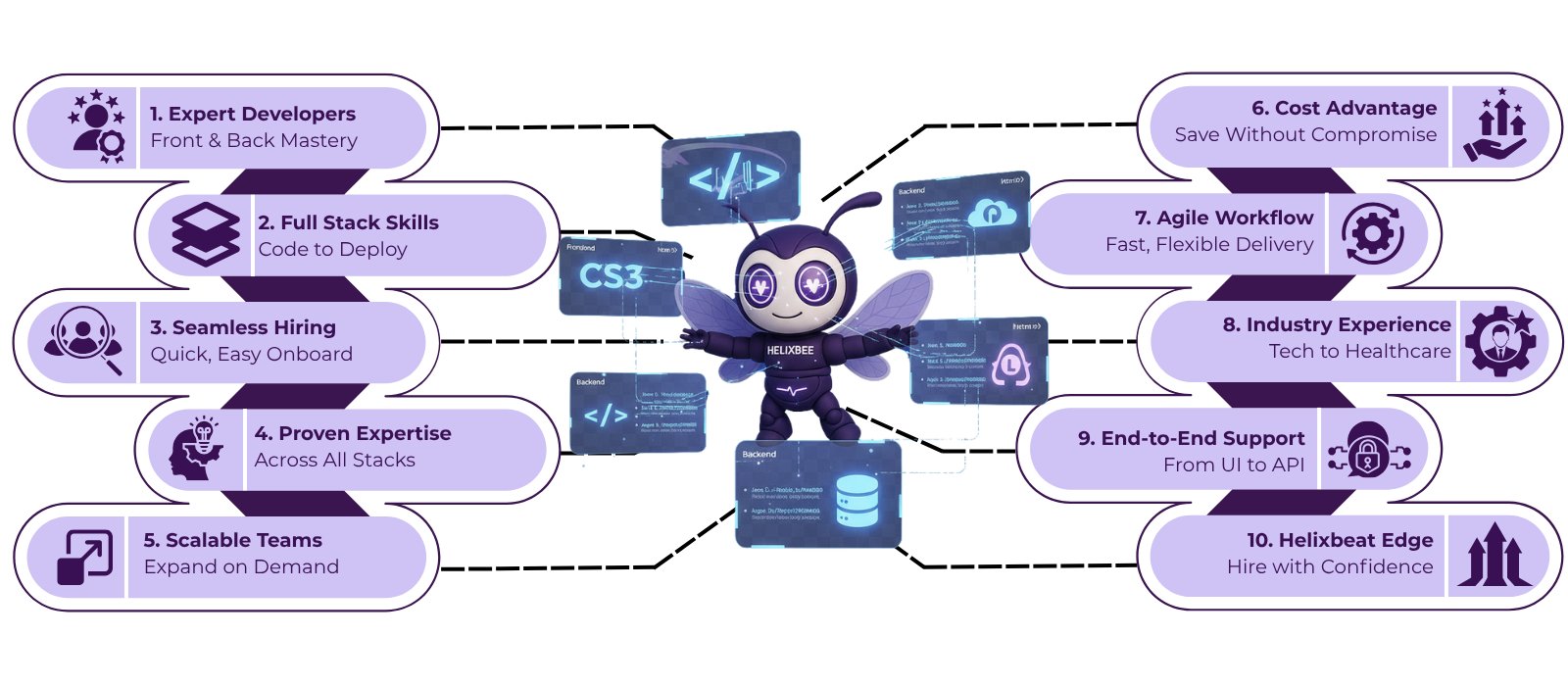
Who is a Full Stack Developer?
A full stack developer is a web developer with expertise in both the front-end and back-end development processes. Full stack developers have the skills to work on the entire technology stack, making them versatile and highly valuable to businesses.
- Front-End Development: Full stack developers use HTML, CSS, and JavaScript, along with frameworks like React, Angular, and Vue.js, to create user-friendly, interactive interfaces.
- Back-End Development: They also work with server-side technologies like PHP, Node.js, Python, Ruby, or Java to build the logic, databases, and infrastructure that power web applications.
- Database Management: Full stack developers manage databases using MySQL, PostgreSQL, MongoDB, and other technologies to store and retrieve data for applications.
How to Get Started with Helixbeat
To hire dedicated full stack developers, follow these simple steps:
- Contact Us: Reach out to Helixbeat to discuss your project and hiring needs.
- Define Requirements: Tell us about your technical needs, timelines, and project scope.
- Select Your Developer: We’ll match you with qualified developers, and you can choose the best fit for your team.
- Start Your Project: Once the developer is integrated into your team, they begin working on your project immediately.
Full Stack Developer Must-Have Skills
When hiring full stack developers, it’s crucial to ensure they possess the right skills to meet your development needs. Here are some essential skills every full stack developer should have:
Full Stack Developers’ Skills | Description |
Front-end Languages | Proficiency in HTML, CSS, and JavaScript, along with frameworks like React, Angular, or Vue.js for building the user interface. |
Back-end Languages | Expertise in PHP, Node.js, Python, Ruby, or Java for developing server-side applications and logic. |
Database Management | Knowledge of SQL and NoSQL databases such as MySQL, PostgreSQL, and MongoDB for efficient data storage and management. |
Version Control Systems | Familiarity with Git and other version control systems to manage and track code changes across the development team. |
API Development & Integration | Skills in developing and integrating RESTful APIs to enable seamless communication between front-end and back-end systems. |
Industries That Benefit from Full Stack Developers
Full stack developers are indispensable across a variety of industries due to their ability to handle both front-end and backend development. Let’s explore how full stack developers bring value to various sectors:
1. E-Commerce
In the e-commerce industry, full stack developers play a crucial role in building and maintaining scalable online platforms that can handle high traffic, extensive inventories, and seamless transactions.
They are responsible for creating:
- User-friendly front-end interfaces: Ensuring that customers have an intuitive shopping experience, from browsing products to checking out.
- Secure payment gateways: Integrating payment systems like PayPal, Stripe, or credit card transactions securely into the backend infrastructure.
- Inventory management systems: Building databases to manage stock levels, order tracking, and product categorization.
- Scalability: Designing systems that can handle an increasing volume of users and transactions as businesses grow.
2. Healthcare
The healthcare industry relies heavily on full stack developers to create secure, backend-compliant medical applications that manage sensitive patient data while ensuring compliance with industry regulations.
Full stack developers in healthcare are tasked with:
- Building patient portals: Developing secure interfaces where patients can access their health records, book appointments, and communicate with healthcare providers.
- Telemedicine solutions: Creating platforms for virtual consultations that allow patients to interact with doctors through video calls and messaging.
- Healthcare data management: Developing backend systems that store, update, and process patient data securely, ensuring compliance with data protection laws.
- Mobile applications: Designed for clients and healthcare professionals, these apps can track health metrics, appointments, and prescriptions in real-time.
3. Finance
In the finance industry, full stack developers are essential for building secure financial applications, such as online banking systems, payment processing platforms, and investment tools. They are involved in:
- Building secure financial platforms: Ensuring that online banking and financial applications are protected from data breaches and fraudulent activities through advanced encryption and security protocols.
- Real-time data processing: Developing systems that handle large amounts of transactional data in real-time, providing customers with instant updates on balances, transactions, and investments.
- Payment processing systems: Creating secure systems for managing online payments, integrating with third-party payment providers, and processing transactions efficiently.
- Investment and portfolio management tools: Building intuitive interfaces that allow users to manage their portfolios, monitor investments, and track financial growth.
4. Education
The education sector is increasingly relying on full stack developers to design and develop e-learning platforms and Learning Management Systems (LMS) that provide engaging, interactive, and scalable learning experiences.
Full stack developers contribute by:
- Building e-learning platforms: Creating user-friendly front-end interfaces for students to access online courses, quizzes, and assignments while maintaining the backend systems that manage user data, content, and progress tracking.
- Developing interactive tools: Integrating features such as live video lectures, discussion boards, and peer-to-peer interaction tools, which enhance student engagement and collaboration.
- LMS integration: Designing robust backend systems for institutions to track student progress, manage course material, and facilitate grading systems.
- Mobile learning apps: Ensuring that students can access learning resources and assignments on mobile devices, which is particularly valuable in remote or hybrid learning environments.
5. Technology (SaaS & Cloud Applications)
The technology sector, especially businesses involved in Software-as-a-Service (SaaS) and cloud applications, benefits significantly from the expertise of full stack developers.
These developers are responsible for:
- Building scalable SaaS products: Designing and developing cloud-based applications that offer subscription-based services to businesses and consumers, from accounting software to project management tools.
- Cloud infrastructure: Ensuring that applications are hosted in the cloud and can scale as the user base grows, while maintaining uptime, security, and performance.
- Multi-platform applications: Developing web applications that can be accessed across various devices and operating systems, offering users a seamless experience no matter where they are.
- APIs for integration: Building robust APIs that allow SaaS applications to integrate with third-party software, expanding functionality, and providing customers with additional services.
What’s Next?
When you choose to hire full stack developers from Helixbeat, you gain access to top-tier talent that can handle every aspect of your web application’s development, from front-end design to back-end functionality. With Helixbeat’s staff augmentation services, you can scale your team quickly, efficiently, and affordably, ensuring that your project is completed on time and to the highest standards.
Frequently Ask Questions
1. Why is health information exchange important in healthcare?
It improves care coordination, reduces duplicate tests, minimizes errors, and helps providers make timely, data-driven decisions across different healthcare settings.
2. What are the main models of health information exchange?
3. Which standards guide health information exchange?
Standards like FHIR and HL7 define consistent data formats, making it easier for EHRs, HIEs, and other healthcare platforms to exchange information.
4. What are the benefits of using health information exchange?
HIE improves care coordination, reduces healthcare costs, supports population health management, enhances research, and increases operational efficiency.
5. How does AERIS enhance healthcare information exchange?
AERIS leverages FHIR standards, connects legacy systems, automates workflows, reduces manual errors, and provides real-time access to patient records and lab results.
1.Why should I hire dedicated full stack developers?
Hiring dedicated full stack developers allows you to benefit from professionals who can manage both front-end and back-end development.
2. What are full stack developers for hire capable of?
Full stack developers for hire are capable of handling the entire web development process, from designing and developing the front-end of a website (UI/UX) to building and managing the back-end server, database, and application logic.
3. What skills should I look for when hiring dedicated full stack developers?
When you hire dedicated full stack developers, you should ensure they have proficiency in key front-end and back-end technologies. Some of the must-have skills for a full stack developer include:
- Front-end languages: HTML, CSS, JavaScript, and frameworks like React, Angular, or Vue.js.
- Back-end languages: PHP, Node.js, Python, Ruby, or Java.
- Database management: Knowledge of SQL and NoSQL databases like MySQL, PostgreSQL, and MongoDB.
4. How can I hire dedicated full stack developers for my project?
To hire dedicated full stack developers, contact a staffing agency like Helixbeat. They will help you match your project requirements with the right developers from their talent pool.
5. What makes Helixbeat a good choice to hire dedicated full stack developers?
Helixbeat specializes in providing dedicated full stack developers with a proven track record in handling both front-end and back-end tasks. We ensure that you get developers who are not only skilled but also work seamlessly with your internal team.
6. How much does it cost to hire full stack developers for hire?
The cost to hire full stack developers for hire depends on the developer’s experience, location, and the complexity of your project. Hiring developers from regions like India through staff augmentation is typically more cost-effective than hiring in-house or freelancers.
7. Can I hire full stack developers for short-term projects?
Yes, with Helixbeat’s staff augmentation services, you can hire dedicated full stack developers for short-term or long-term projects. Whether you need developers for a few weeks or months, we offer flexible contracts that fit your project’s timeline and budget.
8. What is the advantage of hiring dedicated full stack developers over freelancers?
When you hire dedicated full stack developers, you gain consistent, focused expertise that contributes to your project’s long-term success.
9. What are the full stack developer must-have skills for a successful project?
A full stack developer should have skills in both front-end and back-end development, as well as the ability to manage databases and APIs.
Some must-have skills include:
- Front-end technologies like HTML, CSS, and JavaScript.
- Experience with modern JavaScript frameworks such as React or Angular.
- Proficiency in back-end languages such as Node.js, PHP, Ruby, or Java.
- Knowledge of RESTful APIs and database management (e.g., MySQL, MongoDB).
10. How do I evaluate full stack developers for hire?
To evaluate full stack developers for hire, review their technical expertise, work portfolio, and experience with similar projects. Conduct technical interviews and assess their knowledge of front-end and back-end technologies. At Helixbeat, we provide pre-vetted developers, ensuring you have access to highly skilled professionals who can meet your project’s demands.
11. What type of projects can I use dedicated full stack developers for?
Dedicated full stack developers can work on a wide range of projects, including:
- Web applications: From simple websites to complex, data-driven web applications.
- E-commerce platforms: Building scalable online stores with payment gateways, inventory management, and customer management features.
- Content management systems (CMS): Creating and maintaining websites with easy-to-use admin panels.
- Enterprise applications: Building secure, enterprise-grade applications for businesses across industries.
- Mobile apps: Developing progressive web apps (PWAs) that work seamlessly across devices.
12. What benefits do I get by hiring full stack developers from India?
By hiring full stack developers in India, you get access to highly skilled professionals at a fraction of the cost compared to developers in other regions.