


HIE Software: Revolutionizing Healthcare Data Sharing
HIE software, short for Health Information Exchange software, enables the secure and electronic sharing of patient medical data among various healthcare providers, organizations, and even patients themselves. This technology addresses the longstanding issue of fragmented health records by authorizing doctors, nurses, pharmacists, and other professionals to access vital information in real time.
With the growing emphasis on interoperability, understanding HIE software becomes important for providers aiming to streamline operations and deliver high-quality care.
What is HIE Software?
HIE software refers to systems designed for the electronic exchange of health information across different healthcare entities. At its core, it facilitates the movement of clinical data, like medical histories, lab results, medication lists, and imaging reports, between disparate systems like electronic health records (EHRs) and hospital databases. Unlike traditional paper-based methods or siloed digital records, HIE software promotes a connected ecosystem where data flows seamlessly.
HIE software typically integrates with existing EHR systems, acting as a bridge to overcome compatibility issues. It adheres to strict privacy regulations, such as those outlined in the Health Insurance Portability and Accountability Act (HIPAA), to protect sensitive information. By centralizing access, HIE software reduces the need for redundant tests and procedures, ultimately contributing to cost savings and improved efficiency in healthcare settings.
Benefits of Adopting HIE Software
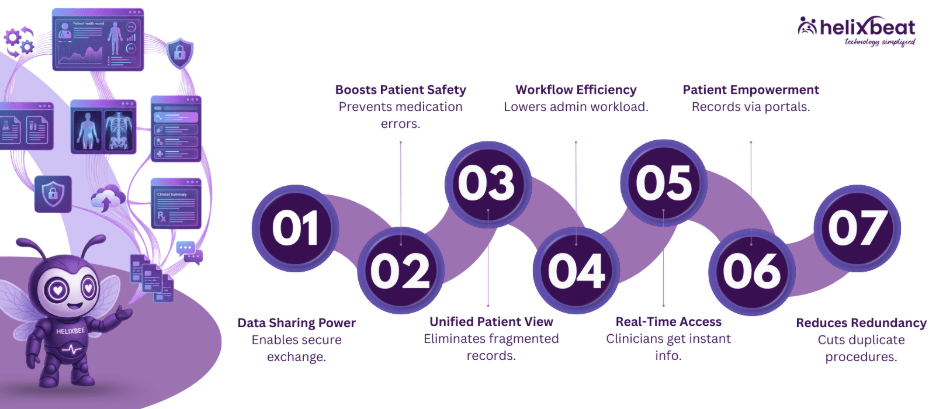
Implementing HIE software brings multiple advantages to healthcare practices. One primary benefit lies in coordinated patient care. By providing a comprehensive view of a patient’s history, providers avoid duplicative treatments and costly mistakes. This leads to fewer repeated procedures, reduced imaging, and lower overall costs.
Patient safety improves significantly, as HIE software helps prevent adverse events like medication errors. With access to complete medical information, clinicians make informed decisions quickly, especially in emergencies. Enhanced productivity emerges as another key gain as administrative burdens decrease when data is readily available.
Besides, empowering patients is a growing benefit too. Through patient portals linked to HIE software, individuals access their records, promoting active participation in health management. Studies indicate that such systems contribute to improved clinical outcomes and reduced healthcare costs by streamlining processes.
Key Standards Supporting HIE Software
To achieve true interoperability, modern HIE software depends on standardized data formats and robust backend infrastructure. Among the most important developments in recent years is the widespread adoption of Fast Healthcare Interoperability Resources (FHIR), combined with the rise of dedicated FHIR servers.
A FHIR server acts as the technical backbone for many contemporary HIE software platforms. It is a specialized repository and API endpoint that stores, indexes, and serves clinical data using the FHIR standard. Leading HIE software vendors and regional health information networks now deploy FHIR servers (either on-premises or cloud-hosted) to power their exchange services. This granular, API-driven approach dramatically reduces data bloat and speeds up clinical workflows.
Unlock Seamless Healthcare Interoperability with FUSION
Imagine a platform that not only meets modern healthcare standards like FHIR but actually pushes your operations forward. That’s FUSION: the FHIR server designed to make interoperability effortless and impactful. Whether you’re a hospital administrator streamlining workflows or a payer optimizing reimbursements, FUSION bridges the gap.
Built on FHIR, it leverages RESTful APIs for plug-and-play integration, enabling seamless connectivity with legacy systems, modern EHRs, and emerging tools like wearable devices and telehealth platforms. This isn’t just compliance, it’s acceleration.
FUSION goes deeper by embedding critical medical coding systems like SNOMED CT, LOINC, and ICD-10 directly into its architecture. This built-in intelligence maintains data consistency and accuracy, transforming raw information into actionable insights ready for clinical decisions, regulatory reporting, and advanced analytics. No more wrestling with mismatched formats or manual mappings: FUSION handles the heavy lifting!
Organizations using FUSION report up to 70% faster data sharing, slashing referral delays by 60% and reducing redundant tests by 25%. That’s not hype; it’s a measurable impact, with providers saving $1,000–$2,000 per patient annually through streamlined claims and operations.
How FUSION Ignites Data-Driven Innovation?
The true magic of healthcare FHIR lies in its potential to fuel innovation, and FUSION amplifies this like no other. As a reliable engine for standardized data flows, it powers downstream applications that were once out of reach.
Take chronic disease management, for example. By integrating real-time data from wearables and EHRs, FUSION enables continuous monitoring and proactive interventions, potentially cutting hospital readmissions and optimizing therapies. Or, imagine a telehealth consultation that’s instantly better because the doctor has the patient’s full history right there. FUSION makes that happen, giving virtual care a huge boost in quality and making patients much happier.
Certified Excellence
FUSION is officially certified by the Drummond Group for FHIR-based interoperability, validating its conformance with healthcare data exchange standards HL7, FHIR, and SMART on FHIR. This certification demonstrates that FUSION meets industry-recognized benchmarks for secure, standardized data exchange — giving you the confidence to integrate seamlessly across systems.
What This Means for You?
In a complex healthcare ecosystem, FUSION simplifies connectivity and safeguards data integrity. With enterprise-grade uptime (99.99%) and secure authentication powered by OAuth2 and encrypted endpoints, it supports trusted, real-time collaboration between hospitals, labs, and payers.
Whether you’re mapping USCDI elements for regulatory reporting or automating data flows for public-health initiatives, FUSION keeps you compliant with current interoperability frameworks and ready for future mandates.
What Users Say About AERIS
Dr. Sarah L.
Hospital Administrator
John T.
Telemedicine Provider
Emily P.
Healthcare Executive
FAQs
1. What is HIE software?
HIE software enables secure electronic exchange of patient health information among hospitals, clinics, labs, and patients, improving data accessibility and care coordination.
2. How does HIE software empower patients?
Patients can access their records through connected portals, enabling them to actively participate in managing their health and track their medical history easily.
3. What is FUSION?
FUSION is a FHIR server that facilitates interoperability, integrates medical coding systems like SNOMED CT and ICD-10, and connects EHRs, telehealth platforms, and wearable devices.
4. Can HIE software reduce healthcare costs?
Yes. By avoiding duplicate tests, streamlining workflows, and improving claims management, HIE software helps healthcare organizations save time and reduce operational costs.
Final Thoughts
Looking ahead, HIE software will incorporate advanced technologies to enhance functionality. Therefore, increased patient involvement through shared records and apps will become standard.
Servers like FUSION take interoperability further by leveraging FHIR standards, embedding critical medical coding systems, and enabling seamless integration with EHRs, telehealth tools, and wearable devices. With measurable benefits like faster data sharing, reduced redundant tests, and cost savings, it’s a strategic tool that drives better outcomes, empowers patients, and fosters innovation across the healthcare ecosystem. Therefore, investing in FUSION prepares healthcare organizations for a future of connected, data-driven care.