


How Restaurant Management Software Simplifies Daily Operations for Restaurant Managers
Get Started with a Free Demo
New Keyword Page
New Keyword Page
"*" indicates required fields
Are you struggling to keep up with the endless tasks of running a restaurant?
From managing staff to handling orders and checking daily sales, restaurant managers deal with constant pressure. Small mistakes like stock shortages, order errors, or delayed reports can quickly affect profits and customer satisfaction.
This is where restaurant management software makes a real difference. Instead of managing everything manually, the software brings all daily operations into one place. A reliable restaurant management system helps managers track inventory in real time, manage staff efficiently, and reduce day-to-day operational stress.
With the right tools in place, restaurant managers can save time, avoid costly errors, and focus more on running a smooth and successful restaurant.
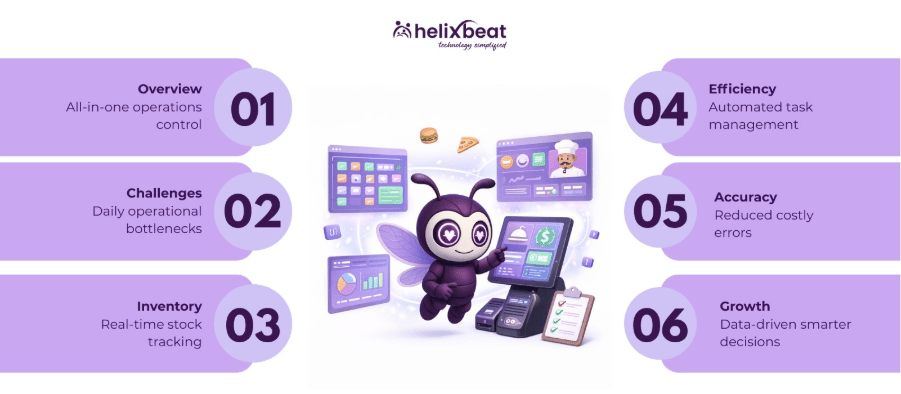
What Is Restaurant Management Software?
Restaurant management software is a digital tool designed to help restaurant managers handle daily operations more efficiently. It brings key tasks like order management, billing, staff scheduling, and reporting into one system, reducing the need for manual work and multiple tools. With everything accessible from a single dashboard, managers can monitor operations in real time and make quicker decisions.
A modern restaurant management system also includes features for restaurant inventory management, helping managers track stock levels, reduce food wastage, and avoid last-minute shortages. By automating routine tasks and providing accurate data, restaurant management software makes it easier to run the restaurant smoothly while maintaining control over costs and performance.
Common Daily Challenges Faced by Restaurant Managers
Running a restaurant day after day means dealing with multiple moving parts, and even small gaps in control can quickly turn into bigger operational problems.
- Running out of key ingredients during peak hours: Stock looks fine on paper, but suddenly the kitchen is out of essentials, causing delays and unhappy customers.
- Spending hours updating inventory and sales manually: End-of-day stock counts and sales entries eat into personal time and still leave room for errors.
- Managing staff shifts and last-minute absences: Adjusting schedules on the fly while keeping service smooth becomes stressful, especially on busy days.
- Mismatch between orders, billing, and kitchen output: Wrong orders, missed items, or billing confusion slow down service and impact customer trust.
- Lack of clear visibility into daily performance: Without real-time data, it’s hard to know what’s selling, what’s wasted, and where money is leaking.
These daily challenges not only increase workload but also highlight the need for a smarter, more reliable way to manage restaurant operations.
How Restaurant Management Software Simplifies Daily Operations
For example: it’s Friday evening, the restaurant is packed, the kitchen is buzzing, orders are flying in, and you’re trying to track stock manually while handling staff calls. Chaos? Not anymore.
A good restaurant management software can turn this stressful scenario into a smooth, organized workflow. Here’s how:
1. Real-Time Inventory Tracking
No more running out of ingredients or overstocking perishables. With integrated restaurant inventory management, the software updates stock levels automatically as orders are placed.
You can see what’s running low, set alerts for reorders, and even track supplier deliveries – all in real time. This prevents wastage and ensures your kitchen never runs into sudden shortages.
2. Streamlined Order Management
From online orders to dine-in requests, a restaurant management system consolidates all orders in one place. Kitchen staff get instant updates, bills are generated automatically, and managers can monitor order progress without constantly checking multiple screens.
The result: faster service, fewer errors, and happier customers.
3. Efficient Staff Scheduling
Handling last-minute shift changes and absenteeism is a constant headache. The software lets managers create, adjust, and share schedules instantly.
Staff can view their shifts through a mobile app, request swaps, or mark availability – reducing miscommunication and keeping operations smooth during peak hours.
4. Simplified Billing and Reporting
End-of-day reconciliation becomes a breeze. The system automatically tracks sales, payments, discounts, and tips. Detailed reports help managers understand revenue trends, identify high-performing menu items, and spot areas of loss.
No more manual calculations, no more errors, and no more stress.
5. Improved Decision-Making with Analytics
Data drives smarter decisions. By analyzing sales, inventory usage, and staff performance, managers can optimize menu items, reduce food wastage, and plan promotions effectively.
Statistics show that restaurants using management software can increase operational efficiency by up to 30%, while cutting inventory losses by around 20%.
How It Saves Time for Restaurant Managers
Imagine trying to count inventory, update sales, and manage staff schedules all at once; it can take hours every day. With restaurant management software, these tasks are automated, giving managers real-time updates on stock, sales, and staff availability at a glance. No more juggling multiple spreadsheets or running back and forth between the kitchen and the office.
By centralizing operations in one restaurant management system, managers can focus on what truly matters – improving service, training staff, or planning new menu items.
Studies show that restaurants using such software save up to 10–15 hours per week on administrative tasks, freeing time for strategic decisions that grow the business.
How It Reduces Operational Errors
Mistakes like wrong orders, missed items, or inaccurate stock counts can disrupt service and hurt profits. Restaurant management software minimizes these errors by automating order processing, tracking inventory in real time, and generating accurate bills.
With a reliable restaurant management system in place, managers can ensure consistency, reduce costly mistakes, and keep both customers and staff satisfied.
Why RavZora is the Best Choice for Restaurant Managers
Choosing the right restaurant management software can make a huge difference in daily operations. Here’s why RavZora stands out:
- All-in-One Restaurant Management System: Manage orders, staff schedules, billing, and restaurant inventory management from a single dashboard. No more juggling multiple tools or spreadsheets.
- Real-Time Inventory Tracking: Prevent stock shortages and reduce food wastage with automated inventory alerts and supplier tracking.
- Faster, Error-Free Operations: Streamlined order processing and billing minimize mistakes, keeping both customers and staff happy.
- Detailed Analytics & Reports: Make smarter decisions with insights on sales trends, popular menu items, and inventory usage.
- User-Friendly & Accessible Anywhere: Cloud-based platform allows managers to monitor operations from the restaurant or on the go.
RavZora isn’t just software; it’s a complete solution for efficient restaurant management, making it the best restaurant inventory management software for modern restaurants.
Frequently Ask Questions
1. Why is health information exchange important in healthcare?
It improves care coordination, reduces duplicate tests, minimizes errors, and helps providers make timely, data-driven decisions across different healthcare settings.
2. What are the main models of health information exchange?
3. Which standards guide health information exchange?
Standards like FHIR and HL7 define consistent data formats, making it easier for EHRs, HIEs, and other healthcare platforms to exchange information.
4. What are the benefits of using health information exchange?
HIE improves care coordination, reduces healthcare costs, supports population health management, enhances research, and increases operational efficiency.
5. How does AERIS enhance healthcare information exchange?
AERIS leverages FHIR standards, connects legacy systems, automates workflows, reduces manual errors, and provides real-time access to patient records and lab results.
1. Can restaurant management software work for small restaurants too?
Absolutely! Modern systems are scalable and can be customized for restaurants of any size, from small cafes to large multi-branch chains. They help even small teams stay organized and reduce manual work.
2. Do I need technical skills to use a restaurant management system?
Not at all. Most software, including RavZora, is designed to be user-friendly with simple dashboards, drag-and-drop menus, and mobile access, so managers and staff can use it without technical training.
3. Can I integrate the software with my existing POS system?
Yes, many restaurant management solutions integrate seamlessly with popular POS systems, payment gateways, and accounting tools, so you don’t have to replace what’s already working in your restaurant.
4. How does it help with managing multiple restaurant locations?
With cloud-based systems, managers can monitor inventory, sales, and staff performance across all branches in real time from a single dashboard, ensuring consistent operations everywhere.
5. Is it possible to track food wastage and optimize costs?
Yes. Advanced restaurant inventory management features provide insights into stock usage, expiry tracking, and purchase patterns, helping managers reduce wastage and optimize costs effectively.