


How Patient Engagement Software Reduces No-Shows and Improves Hospital Revenue (With Real Metrics)
Get Started with a Free Demo
New Keyword Page
New Keyword Page
"*" indicates required fields
Healthcare organizations across the world face a persistent and costly challenge: patient no-shows. Missed appointments disrupt clinical workflows, reduce resource utilization, and directly impact revenue. In high-volume hospitals and clinics, even a small percentage of missed appointments can translate into significant financial losses.
This is where patient engagement software plays a key role. By combining automation, communication, and behavioral insights, it helps healthcare providers reduce no-shows while improving operational efficiency and patient satisfaction.
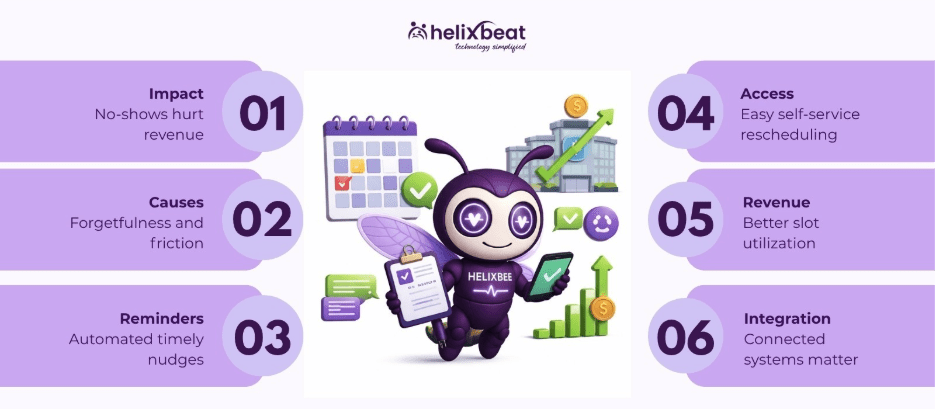
What Is Patient Engagement Software?
Patient engagement software refers to digital platforms designed to actively involve patients in their healthcare journey. These tools typically include:
- Appointment reminders (SMS, email, voice)
- Two-way communication channels
- Online scheduling and rescheduling
- Patient portals and mobile apps
- Automated follow-ups and care reminders
- Digital intake and form submissions
Unlike traditional communication systems, modern patient engagement platforms are integrated with electronic health records (EHRs) and hospital management systems.
The Real Cost of Patient No-Shows
Before understanding the solution, it’s important to quantify the problem.
Key Industry Metrics:
- No-show rates typically range between 15% to 30% globally
- In some outpatient settings, rates can exceed 40%
- Each missed appointment can cost providers $100 to $300 or more, depending on specialty
- Large hospitals can lose millions annually due to no-shows
Operational Impact:
- Idle physician time
- Underutilized infrastructure
- Delayed care delivery
- Increased patient wait times for others
The problem is not just financial; it also affects clinical outcomes. Missed appointments can delay diagnosis and treatment, especially in chronic care management.
Why Patients Miss Appointments (Root Causes)
To understand how patient engagement software solves the issue, we need to examine why patients miss appointments:
- Forgetfulness
The most common reason. Patients simply forget their scheduled visit.
- Scheduling Conflicts
Work, travel, or personal commitments often interfere.
- Lack of Convenience
Difficulty in rescheduling leads patients to skip appointments entirely.
- Communication Gaps
Patients may not receive clear instructions or reminders.
- Financial or Emotional Barriers
Concerns about cost or anxiety about treatment can also contribute.
How Patient Engagement Software Reduces No-Shows
Now let’s look at the practical mechanisms:
Automated Multi-Channel Reminders
Modern patient engagement software sends automated reminders via:
- SMS
- IVR calls
- Mobile app notifications
How It Works:
- Appointment data is pulled from the scheduling system
- Reminders are triggered at predefined intervals (e.g., 7 days, 3 days, 24 hours prior)
- Messages are personalized with the patient’s name, doctor, location, and timing
Real Impact:
- Studies show that appointment reminders alone can reduce no-shows by 20% to 30%
- SMS reminders have particularly high open rates (above 90%)
2. Two-Way Communication & Instant Confirmation
Traditional systems send reminders but don’t allow responses. Patient engagement platforms enable:
- “Reply YES to confirm”
- “Reply NO to cancel or reschedule”
Workflow Advantage:
- Real-time updates to scheduling systems
- Immediate visibility into patient intent
Real Impact:
- Clinics report confirmation rates increasing by 25%-40%
- Early cancellations allow staff to fill vacant slots
3. Easy Rescheduling & Self-Service Portals
One major gap in healthcare systems is friction in rescheduling.
Patient engagement software solves this by enabling:
- Online rescheduling via link or app
- Calendar synchronization
- Real-time availability
Why This Matters:
When rescheduling is difficult, patients are more likely to skip appointments.
Real Impact:
- Facilities using self-service scheduling report up to 50% reduction in last-minute no-shows
- Staff workload for manual scheduling decreases significantly
4. Personalized Patient Communication
Generic messages are less effective. Modern systems personalize communication based on:
- Medical history
- Appointment type
- Patient preferences
Example:
A patient scheduled for a diagnostic test receives:
- Preparation instructions
- Fasting reminders
- Location-specific directions
Real Impact:
- Improved patient confidence
- Reduced cancellations due to confusion
5. Integration with EHR and Workflow Systems
The real power of patient engagement software lies in integration.
System Architecture:
- EHR → Scheduling system → Engagement platform → Communication channels
Benefits:
- Real-time synchronization
- No manual data entry
- Accurate communication
Real Impact:
- Operational efficiency improves significantly
- Staff can focus on patient care rather than coordination
How Patient Engagement Software Improves Hospital Revenue
Reducing no-shows is just one part of the equation. Let’s look at how it directly influences revenue.
Increased Appointment Utilization
Every filled appointment slot contributes to revenue.
Real Metric:
- A 10% reduction in no-shows can increase annual revenue by hundreds of thousands of dollars for mid-sized clinics.
Optimized Resource Allocation
With better predictability:
- Staff scheduling improves
- Equipment usage increases
Financial Impact:
- Reduced idle time
- Higher return on infrastructure investment
Improved Patient Retention
Satisfied patients are more likely to:
- Return for follow-ups
- Recommend the provider
Real Impact:
- Retention improvements of 5% can increase profits by 25%-95% (widely cited across industries, including healthcare services)
Reduced Administrative Costs
Automation replaces manual processes such as:
- Phone call reminders
- Scheduling coordination
Cost Savings:
- Staff productivity increases
- Operational costs decrease
What Healthcare Providers Are Achieving
Here are consolidated, evidence-based outcomes from healthcare systems adopting patient engagement software:
Metric | Improvement Range |
No-show reduction | 20% – 50% |
Appointment confirmation rates | +25% – 40% |
Patient satisfaction scores | +15% – 30% |
Administrative workload reduction | 20% – 40% |
Revenue increase | 5% – 15% (varies by scale) |
These numbers vary depending on implementation quality, patient population, and workflow integration.
How AERIS Contributes to this Process
While patient engagement software plays a key role in reducing no-shows and improving communication, its effectiveness depends heavily on how well it integrates with existing healthcare systems. This is where AERIS comes in.
Why Data Standardization Matters
Healthcare data often exists in multiple formats across systems:
- Legacy HL7 v2 messages
- Proprietary EHR data formats
- Lab systems and imaging platforms
Without a standardized format, patient engagement platforms struggle to:
- Access real-time appointment data
- Trigger accurate reminders
- Personalize communication
This fragmentation can directly impact the ability to reduce no-shows.
How AERIS Revolutionizes Interoperability with FHIR APIs
AERIS by Helixbeat is a game-changing platform designed to transform how you connect, collaborate, and care. Built for healthcare providers, clinics, hospitals, and cross-industry partners like pharmacies and insurers, AERIS harnesses FHIR APIs to break down data silos, streamline operations, and put patient care first.
Why AERIS is Your Key to Healthcare Innovation
At Helixbeat, we know your challenges: fragmented systems, delayed data, and rising costs. AERIS is here to change that, offering a personalized, scalable, and secure platform that fits your unique needs. Whether you’re a small clinic or a sprawling hospital network, AERIS delivers measurable results that elevate patient outcomes and boost your bottom line.
- 20+ Years of Expertise: Our team brings decades of healthcare IT experience to ensure AERIS works for you.
- 50+ IT Professionals: A dedicated crew powers AERIS, delivering unmatched support and innovation.
- 1,000+ Customers: Join a thriving community of healthcare leaders already transforming with AERIS.
- 10,000+ Projects Completed: Proven success across countless integrations and workflows.
- 95% Returning Customers: Our clients trust AERIS to deliver, time and time again.
Final Thoughts
Reducing no-shows is no longer just about sending reminders; it requires a connected, intelligent system that brings together communication, data, and workflow efficiency. Patient engagement software plays a critical role in this transformation by making interactions timely, personalized, and actionable.
However, the real impact happens when engagement tools are backed by strong interoperability. Without seamless data flow between systems, even the most advanced engagement strategies fall short. This is where integration platforms like AERIS add significant value by enabling real-time data exchange through FHIR-based architecture.
Are you ready to simplify your healthcare data exchange?
Frequently Ask Questions
1. Why is health information exchange important in healthcare?
It improves care coordination, reduces duplicate tests, minimizes errors, and helps providers make timely, data-driven decisions across different healthcare settings.
2. What are the main models of health information exchange?
3. Which standards guide health information exchange?
Standards like FHIR and HL7 define consistent data formats, making it easier for EHRs, HIEs, and other healthcare platforms to exchange information.
4. What are the benefits of using health information exchange?
HIE improves care coordination, reduces healthcare costs, supports population health management, enhances research, and increases operational efficiency.
5. How does AERIS enhance healthcare information exchange?
AERIS leverages FHIR standards, connects legacy systems, automates workflows, reduces manual errors, and provides real-time access to patient records and lab results.
1. What is patient engagement software?
It is a digital platform that helps healthcare providers communicate with patients, manage appointments, and improve overall patient involvement in care.
2. How does patient engagement software reduce no-shows?
It uses reminders, two-way communication, and easy rescheduling to address common reasons for missed appointments.
3. What is the average reduction in no-shows?
Healthcare providers typically see a 20% to 50% reduction, depending on implementation.
4. Is patient engagement software expensive?
Costs vary, but the ROI is usually positive due to increased appointment utilization and reduced administrative effort.
5. Does it improve patient satisfaction?
Yes, better communication and convenience lead to higher satisfaction scores.