


Avoid Costly Mistakes: A Strategic Guide to Software Product Development Outsourcing
Get Started with a Free Demo
New Keyword Page
New Keyword Page
"*" indicates required fields
Did you know that 59% of software outsourcing projects fail to meet deadlines or budget targets? Many businesses jump into software product development outsourcing without proper planning, only to face delays, rising costs, and subpar products. The problem isn’t outsourcing itself; it’s choosing the wrong partner or lacking a clear strategy.
The solution is a strategic, informed approach to outsourcing. By selecting the right outsourced product development companies, setting precise requirements, and maintaining transparent communication, businesses can avoid these costly mistakes.
This guide will show you exactly how to outsource software product development effectively, ensuring timely delivery, quality results, and maximum ROI.
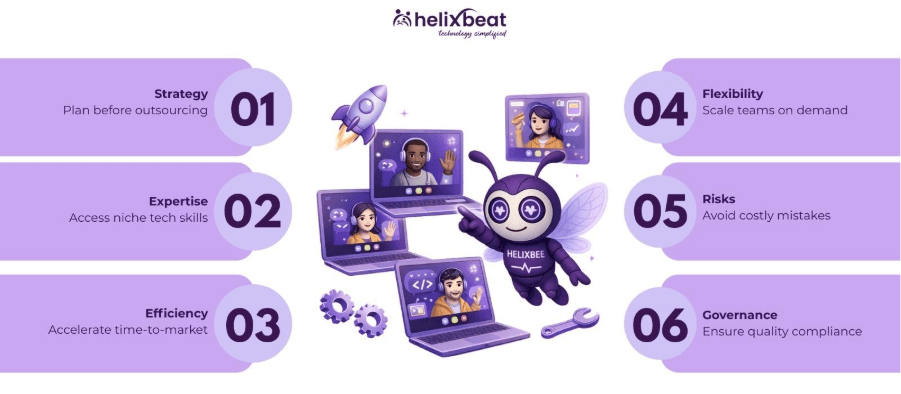
Why Businesses Choose Software Product Development Outsourcing
In today’s competitive market, businesses can no longer rely solely on in-house teams to deliver cutting-edge software products quickly and cost-effectively. Strategic companies are increasingly turning to software product development outsourcing to bridge skill gaps, mitigate risks, and accelerate innovation.
The goal isn’t just cost-saving, it’s leveraging external expertise to gain a competitive advantage and bring products to market faster.
1. Access to Niche Expertise and Emerging Technologies
- Modern software projects often require expertise in AI, blockchain, cloud-native architectures, and other emerging technologies.
- Outsourced product development companies provide specialized teams that have worked on similar projects, ensuring high-quality, scalable solutions.
- Businesses avoid the time and risk of hiring, training, and retaining rare technical talent in-house.
2. Strategic Cost Optimization, Not Just Reduction
- Outsourcing allows companies to align software development costs with project milestones, reducing financial risks.
- Beyond salary savings, it optimizes operational efficiency by leveraging global delivery models.
- Smart businesses treat product development outsourcing as an investment in speed, quality, and scalability—not just a cheaper alternative.
3. Accelerated Time-to-Market Through Agile Delivery
- Experienced outsourcing teams bring mature processes, automated pipelines, and DevOps practices.
- Agile and iterative approaches enable faster prototyping, testing, and product iteration.
- Companies can respond to market feedback quickly, reducing opportunity costs and improving ROI.
4. Flexibility to Scale and Pivot Strategically
- Outsourcing provides modular teams that can expand or contract according to project demands.
- Enterprises can explore new product ideas or features without committing to long-term hires.
- This strategic flexibility is critical for startups and growth-stage companies facing dynamic market conditions.
5. Risk Mitigation and Compliance Assurance
- Experienced outsourcing vendors help navigate regulatory, security, and IP challenges.
- Partnerships with reliable product development outsourcing companies reduce project failure risks while ensuring compliance with global standards.
- Businesses gain operational continuity without overburdening internal teams with compliance overheads.
Key Insight: Choosing to outsource software product development is no longer just a cost-saving tactic, it’s a strategic lever for innovation, scalability, and competitive differentiation. The right outsourced product development company becomes an extension of your business, driving high-quality outcomes faster and smarter.
The Most Costly Mistakes in Software Product Development Outsourcing
Even experienced companies can face major setbacks when outsourcing software product development. Avoiding these mistakes can save time, money, and your product’s reputation. Here are the five most costly errors businesses make:
1. Choosing Vendors Based on Price Alone
- Low-cost outsourcing often comes at the expense of quality, reliability, and expertise.
- Outsourced product development companies may cut corners, leading to code defects, delays, and hidden costs.
- Strategic businesses focus on value, experience, and proven delivery records rather than just hourly rates.
2. Vague or Incomplete Project Requirements
- Ambiguous specifications create scope of creep, misalignment, and rework.
- Failure to define KPIs, deliverables, and milestones can derail timelines.
- Clear, detailed requirements are essential to ensure the product development outsourcing partnership succeeds.
3. Lack of Strong Oversight and Communication
- Minimal engagement leads to misunderstandings, hidden issues, and delayed feedback loops.
- Relying solely on emails or infrequent updates reduces transparency and accountability.
- Regular check-ins, project dashboards, and collaborative tools are critical for strategic oversight.
4. Ignoring Cultural and Time Zone Differences
- Misaligned work culture or communication styles can slow collaboration.
- Time zone gaps without proper planning can delay decision-making.
- Top outsourced product development companies proactively manage these differences to maintain efficiency.
5. Skipping Legal and IP Safeguards
- Not defining IP ownership, NDAs, or data security protocols can lead to legal disputes and potential loss of proprietary technology.
- Overlooking compliance with international standards exposes businesses to regulatory risks.
- A robust legal framework protects both parties and ensures intellectual property remains secure.
These mistakes aren’t just operational; they’re strategic. Businesses that address these risks upfront gain a competitive edge, ensuring outsourced software product development delivers speed, quality, and ROI.
How to Strategically Approach Software Product Development Outsourcing
Outsourcing isn’t just a transactional decision; it’s a strategic move that can accelerate growth, improve quality, and reduce risks if done correctly. A well-planned approach ensures alignment with business goals and maximizes ROI from your software product development outsourcing partnership.
1. Define Clear Business and Technical Objectives
- Start by documenting precise goals, expected outcomes, and success metrics.
- Identify technical requirements, feature priorities, and KPIs upfront.
- Clear objectives prevent scope creep and ensure both your team and the outsourcing partner are aligned from day one.
2. Select the Right Engagement Model
- Decide between fixed-price, dedicated team, or hybrid models depending on project complexity and flexibility needs.
- For evolving projects, dedicated teams provide continuous collaboration, while fixed-price models suit well-defined scopes.
- The right model balances cost efficiency, control, and scalability.
3. Evaluate Vendors Strategically
- Go beyond portfolios – review references, past project outcomes, and domain expertise.
- Assess cultural fit, communication practices, and the vendor’s approach to risk management.
- Trusted product development outsourcing companies act as extensions of your team, not just service providers.
4. Establish Robust Communication and Governance
- Set structured reporting, dashboards, and regular review meetings.
- Define roles, responsibilities, and escalation paths for quick decision-making.
- Transparent communication mitigates risks and ensures early detection of issues.
5. Plan for Quality and Compliance from Day One
- Incorporate testing, security, and compliance protocols into every development stage.
- Ensure intellectual property, data security, and regulatory standards are embedded in contracts.
- Strategic oversight guarantees that outsourced software product development delivers reliable, compliant, and scalable solutions.
Key Takeaway: A strategic approach to outsourcing transforms it from a cost-saving tactic into a competitive advantage. By defining objectives, choosing the right partner and engagement model, and maintaining governance, businesses can unlock speed, quality, and innovation through outsourced software product development.
Cost of Software Product Development Outsourcing in 2026
Type of Outsourcing | Average Hourly Rate (2026) | Typical Project Scope |
Offshore (India, Vietnam, Ukraine) | $25 – $60 | Small to medium software projects, mobile apps, SaaS MVPs |
Nearshore (Eastern Europe, Latin America) | $50 – $100 | Medium to large software projects, web apps, enterprise solutions |
Onshore (US, UK, Germany) | $100 – $200+ | Complex enterprise software, fintech, AI/ML applications |
Specialized Teams for Emerging Tech (AI, Blockchain, AR/VR) | $75 – $150 | High-tech projects requiring niche expertise |
Maintenance & Support | $20 – $80 | Post-launch updates, bug fixes, feature upgrades |
Final Words
As a founder, every decision in software product development can make or break your business. Outsourcing is not just about cutting costs; it’s about gaining speed, expertise, and strategic advantage while staying in control of your product vision. Avoiding common mistakes and choosing the right partner ensures your product meets market expectations without compromising quality or timelines.
With HelixBeat’s software product development outsourcing company, founders get more than just a service provider; they gain a trusted extension of their team.
Our expert developers, transparent processes, and strategic guidance help founders focus on growth and innovation, while we handle the complexities of building a high-quality software product efficiently and reliably.
Frequently Ask Questions
1. Why is health information exchange important in healthcare?
It improves care coordination, reduces duplicate tests, minimizes errors, and helps providers make timely, data-driven decisions across different healthcare settings.
2. What are the main models of health information exchange?
3. Which standards guide health information exchange?
Standards like FHIR and HL7 define consistent data formats, making it easier for EHRs, HIEs, and other healthcare platforms to exchange information.
4. What are the benefits of using health information exchange?
HIE improves care coordination, reduces healthcare costs, supports population health management, enhances research, and increases operational efficiency.
5. How does AERIS enhance healthcare information exchange?
AERIS leverages FHIR standards, connects legacy systems, automates workflows, reduces manual errors, and provides real-time access to patient records and lab results.
1. How do I ensure my outsourced team truly understands my product vision?
Clear documentation, early onboarding sessions, and regular check-ins help align the team with your strategic goals. Using prototypes or visual workflows can also make expectations tangible.
2. What’s the best way to balance cost savings with product quality?
Instead of choosing solely on price, evaluate vendors based on expertise, past success, and communication efficiency. A slightly higher investment often prevents costly rework and delays.
3. Can I scale my outsourced team up or down as my startup evolves?
Yes. Flexible engagement models, like dedicated or hybrid teams, allow founders to scale resources according to project needs without long-term commitments or overhead.