


Types of Software Development Services in 2026: What Businesses Must Understand
Get Started with a Free Demo
New Keyword Page
New Keyword Page
"*" indicates required fields
Businesses today don’t just want software, they want results. But with so many types of software development services available, choosing the right one can be challenging.
In fact, a 2025 survey found that 62% of IT projects fail to meet business expectations due to selecting the wrong development approach. Picking the wrong path can lead to delays, budget overruns, and missed growth opportunities. That’s why understanding the landscape of software development services in 2026 is crucial for every business looking to stay competitive.
From custom software development services to healthcare software development, each service type serves a distinct purpose. Partnering with the right software development services company ensures your investment aligns with your business goals, compliance needs, and scalability requirements.
In this guide, we’ll break down the key services, costs, and trends to help you make an informed decision for your business.
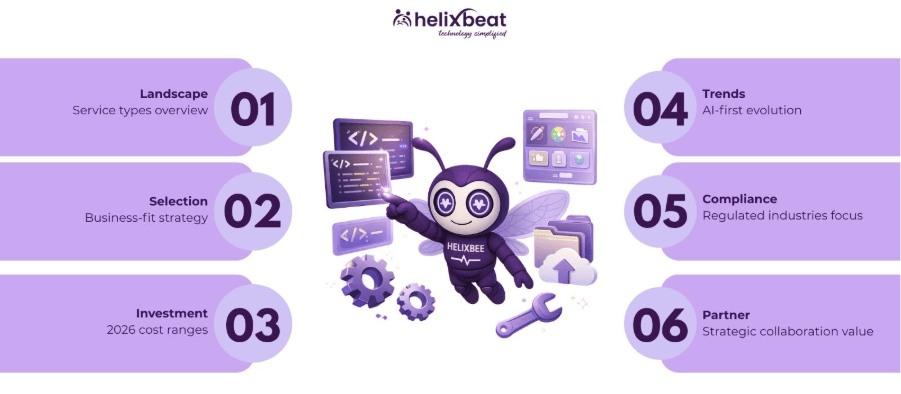
What Type of Software Development Service Does My Business Actually Need?
Choosing the right software development services for your business isn’t just about technology, it’s about strategy. The ideal service depends on your size, industry, goals, and long-term vision. Here’s how you can break it down:
1. Based on Business Size
- Startups: Often need custom software development services to build MVPs or market-ready products quickly and flexibly.
- Mid-sized companies: Benefit from scalable enterprise solutions that integrate multiple systems efficiently.
- Large enterprises: Typically require complex, high-performance software with strict compliance, data security, and integration needs.
2. Based on Industry Needs
- Healthcare: Requires healthcare software development with HIPAA/GDPR compliance, secure patient data handling, and telemedicine features.
- Retail & E-commerce: Focus on mobile apps, POS integrations, and personalized customer experiences.
- Fintech: Needs secure, real-time transaction processing and regulatory adherence.
3. Based on Business Goals
- Automation & Efficiency: Enterprise or workflow-focused software development reduces manual tasks and improves productivity.
- Revenue Growth & Customer Engagement: Custom applications, SaaS platforms, or mobile apps help attract and retain customers.
- Compliance & Risk Management: Specialized services like healthcare software development ensure regulatory standards are met.
4. Based on Technical Complexity
- Simple Requirements: Off-the-shelf or lightly customized software may suffice.
- Moderate Complexity: Custom software development services are ideal for integration with existing systems.
- High Complexity: AI, data-driven, or cloud-native solutions may be necessary for advanced analytics, automation, or scalability.
5. Based on Budget & Timeline
- Limited Budget & Fast Launch: MVPs or low-code solutions can save costs and reduce time-to-market.
- Moderate Budget: Balanced investment in custom software development services ensures scalability without overspending.
- High Budget: Enterprise-grade or fully custom solutions provide maximum flexibility, compliance, and long-term ROI.
How Much Will Software Development Cost in 2026?
Understanding the cost of software development services is essential before committing to a partner. Prices vary widely depending on project complexity, technology stack, compliance needs, and the type of service your business chooses.
Here’s a breakdown to help you plan your budget wisely:
1. Cost Factors That Affect Your Project
- Project Scope & Complexity: Larger projects with multiple integrations or advanced features cost more.
- Technology Stack: Modern technologies like AI, cloud-native, or mobile-first frameworks may increase costs.
- Industry Requirements: Healthcare software development or fintech solutions require compliance and security, adding to the price.
- Team Location & Expertise: Hiring a top-tier software development services company can impact costs based on geographic location and skill levels.
2. Estimated Cost Ranges in 2026
Service Type | Typical Cost Range | Scope & Features |
MVP / Prototype | $25,000 – $60,000 | Core features, basic design, fast launch |
Mid-Scale Platform | $60,000 – $200,000 | Multi-module apps, integration with existing systems, moderate complexity |
Enterprise Solution | $200,000+ | Full-scale custom software, advanced security, high compliance, AI or analytics features |
Healthcare Software Development | $80,000 – $250,000+ | HIPAA/GDPR compliant, patient management, telemedicine features |
SaaS Product Development | $50,000 – $180,000 | Cloud-native, subscription model, scalable architecture |
3. Hidden Costs to Consider
Even after the initial development, several costs can impact your total investment:
- Maintenance & Upgrades: Regular bug fixes, updates, and scaling can add to ongoing expenses.
- Licensing & Third-Party Tools: Subscription fees for frameworks, APIs, or cloud hosting.
- Security & Compliance: Especially critical for healthcare software development or financial solutions.
- Post-Launch Support: Monitoring, training, and system improvements to ensure smooth operations.
Up-Coming Trends That Will Impact Your Decision in 2026
The software landscape is evolving rapidly. To choose the right software development services in 2026, businesses need to account for emerging trends that can impact scalability, cost, and ROI. Understanding these trends ensures your investment stays future-ready and competitive.
1. AI-First Software Development
- Artificial Intelligence and Machine Learning are becoming standard components in custom software development services.
- AI can automate workflows, improve analytics, and enhance user experiences.
- Businesses that ignore AI-driven development risk falling behind competitors leveraging predictive insights and automation.
2. Compliance-Driven Solutions
- Regulations around data privacy, especially in healthcare, finance, and fintech, are tightening.
- Healthcare software development now requires HIPAA, GDPR, and other compliance-by-design frameworks.
- Partnering with a company that integrates compliance from day one avoids costly fines and reputational risks.
3. Low-Code and No-Code Platforms
- Low-code/no-code solutions accelerate development and reduce costs, ideal for MVPs or rapid testing.
- While these platforms are faster, custom software development services are still preferred for complex, scalable solutions.
4. Integration of Generative AI
- Generative AI is transforming app functionality – from content creation to predictive analytics.
- Companies providing types of software development services are now embedding AI models directly into solutions, offering smarter, more adaptive software.
Final Words
Choosing the right software development services in 2026 can determine your business’s growth, efficiency, and competitive edge. A strategic partner helps you focus on results, not just coding.
Why Helixbeat is the ideal partner:
- Offers custom software development services tailored to your business goals.
- Specializes in healthcare software development, ERP/CRM solutions, and cloud-native platforms.
- Follows an agile, customer-focused approach for faster delivery and seamless integration.
- Supports scalable, secure, and future-ready solutions to reduce operational overhead.
Benefits of working with Helixbeat:
- Accelerated time-to-market for digital solutions
- Improved operational efficiency and cost optimization
- Expert guidance in choosing the right types of software development services
- Long-term support, maintenance, and upgrades
Whether you’re building an enterprise platform, a mobile application, or a healthcare-specific solution, Helixbeat helps you transform your vision into software that works.
Frequently Ask Questions
1. Why is health information exchange important in healthcare?
It improves care coordination, reduces duplicate tests, minimizes errors, and helps providers make timely, data-driven decisions across different healthcare settings.
2. What are the main models of health information exchange?
3. Which standards guide health information exchange?
Standards like FHIR and HL7 define consistent data formats, making it easier for EHRs, HIEs, and other healthcare platforms to exchange information.
4. What are the benefits of using health information exchange?
HIE improves care coordination, reduces healthcare costs, supports population health management, enhances research, and increases operational efficiency.
5. How does AERIS enhance healthcare information exchange?
AERIS leverages FHIR standards, connects legacy systems, automates workflows, reduces manual errors, and provides real-time access to patient records and lab results.
1. How long does it typically take to complete a custom software development project?
Project timelines vary based on complexity, technology stack, and integrations. A small MVP can take 6–10 weeks, while enterprise-grade solutions or healthcare software development projects may take 6–12 months. Helixbeat works with clients to create realistic timelines and milestone tracking.
2. Can I upgrade or scale my software after the initial development?
Yes. Modern software built by a reliable software development services company like Helixbeat is designed to be scalable. You can add new features, integrate with other systems, or migrate to cloud-native platforms as your business grows.
3. How do I ensure my software is secure and compliant with regulations?
Security and compliance are integrated from the start. Helixbeat follows industry standards, including HIPAA/GDPR for healthcare projects, and implements robust encryption, authentication, and monitoring to protect your data and maintain regulatory compliance.