


Urgent Care Electronic Medical Records
Urgent care centers move fast, but many still rely on systems that slow them down. Without the right urgent care electronic medical records, staff often deal with scattered patient information, slow charting, long waiting times, and missing medical history. In fact, studies show that over 60% of patients say long wait times are their biggest frustration in urgent care, making quick access to data critical for both care quality and patient satisfaction.
Modern urgent care electronic medical records are built to solve these problems. They help clinics record patient details quickly, access health data in real time, and share information easily through urgent care electronic health records and interoperable electronic health records. The result is faster care, fewer errors, and smoother workflows for both clinicians and patients.
What Are Urgent Care Electronic Medical Records?
Urgent care electronic medical records are digital systems designed specifically for fast-paced, walk-in care settings. Unlike traditional EMRs, they focus on quick patient intake, rapid clinical documentation, and smooth discharge processes. These systems allow clinicians to capture symptoms, diagnoses, prescriptions, and test results in real time, helping them treat more patients efficiently without compromising care quality.
What makes urgent care EMRs different is their ability to support high patient volumes while staying simple to use. With built-in support for urgent care electronic health records and interoperable electronic health records, these systems ensure patient information can be securely shared with hospitals, labs, and primary care providers. This helps urgent care centers deliver timely treatment while maintaining continuity of care beyond the visit.
Common Challenges Faced by Urgent Care Without Using the Right EMR
Without the right EMR, urgent care centers often struggle to keep up with the fast pace of patient visits.
- Long Patient Wait Times – Manual processes and slow systems can delay patient intake, documentation, and discharge, leading to frustrated patients and overworked staff.
- Fragmented Patient Data – Without an integrated system, patient information is often scattered across labs, pharmacies, and previous visits, making it hard for clinicians to get a complete picture quickly.
- Increased Administrative Burden – Staff spend more time on paperwork, coding, and billing, which reduces the time available for patient care and increases the chance of errors.
- Limited Care Coordination – Lack of interoperability with hospitals and primary care providers can result in duplicate tests, delayed referrals, and gaps in patient history, affecting treatment quality.
These challenges highlight why choosing the right urgent care electronic medical records is essential for faster, safer, and more efficient patient care.
How Urgent Care Electronic Medical Records Solve These Challenges
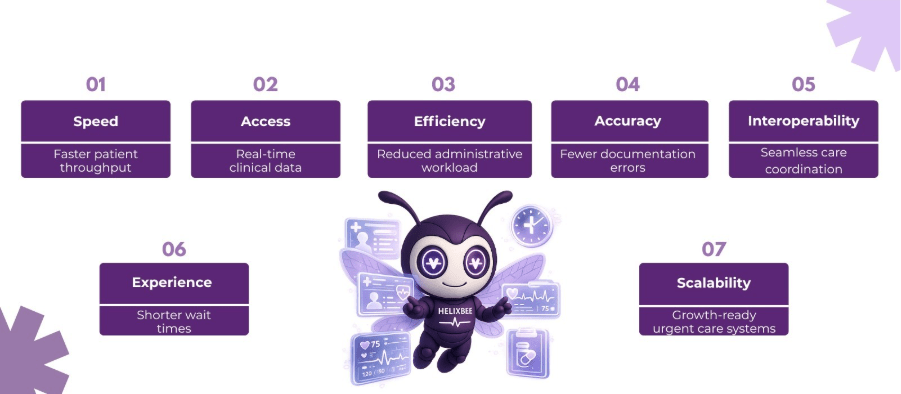
Urgent care electronic medical records are designed to address the common pain points of fast-paced clinics. By providing a centralized platform, they allow clinicians to access patient information instantly, reducing long wait times and improving overall patient flow. Documentation becomes faster and more accurate, helping staff focus on care rather than paperwork.
These systems also integrate urgent care electronic health records, ensuring that patient data from previous visits, labs, or prescriptions is available in one place. With interoperable electronic health records, information can be securely shared with hospitals, pharmacies, and other healthcare providers, improving care coordination and reducing duplicate tests. Overall, urgent care EMRs streamline workflows, minimize administrative burdens, and enable clinicians to deliver timely, high-quality care to every patient.
Urgent Care Electronic Health Records vs Traditional EMRs
Feature | Urgent Care Electronic Health Records | Traditional EMRs |
Purpose | Designed for high-volume, walk-in urgent care visits | Built for scheduled, ongoing patient care |
Speed | Fast documentation and rapid patient intake | Slower, detailed charting suited for long-term care |
Workflow | Visit-based workflows for same-day treatment | Longitudinal workflows tracking patient over time |
Data Access | Quick access to prior visits, labs, and medications | May require extra steps to retrieve historical data |
Interoperability | Supports interoperable electronic health records for seamless data sharing | Often limited in sharing data across different systems |
Efficiency | Reduces administrative burden, streamlines billing | Higher administrative workload and slower billing process |
Ideal For | Walk-in clinics, retail clinics, urgent care centers | Hospitals, specialty clinics, primary care practices |
This table highlights why urgent care electronic health records are better suited for fast-paced care environments compared to traditional EMRs.
The Role of Interoperable Electronic Health Records in Urgent Care
In today’s fast-paced urgent care environment, having quick access to complete patient information is critical for providing safe and efficient care.
- Quick Access to Patient History
Withurgent care electronic health records that are interoperable, clinicians can instantly view a patient’s medications, allergies, lab results, and prior visits – even from other clinics or hospitals. This helps urgent care teams provide timely and accurate treatment for every walk-in patient. - Avoids Duplicate Tests and Procedures
Withoutinteroperable electronic health records, patients may undergo repeated lab tests or imaging. By sharing data seamlessly, urgent care centers save time, reduce costs, and enhance patient safety. - Speeds Up Diagnosis and Treatment
High patient volume in urgent care means decisions need to be made quickly. Usingurgent care electronic health records, clinicians get real-time insights from past visits, enabling faster diagnosis and treatment without compromising quality. - Ensures Smooth Coordination with Other Providers
Many urgent care patientsrequire follow-ups or referrals. Interoperable electronic health records allow seamless data exchange with hospitals, specialists, and pharmacies, ensuring continuity of care and fewer errors during transitions. - Simplifies Compliance and Reporting
Handling multiple payers and regulatory requirements is easier withurgent care electronic health records. Interoperable systems keep patient data organized, secure, and accessible for audits, claims, and reporting.
By leveraging urgent care electronic health records and interoperable electronic health records, urgent care centers can deliver faster, safer, and more coordinated care while improving operational efficiency.
Tips to Choose the Best Modern Urgent Care EMR for Your Clinics
Choosing the right EMR is key to running a smooth and efficient urgent care clinic.
- Speed and Ease of Use – Look for urgent care electronic medical records that allow quick patient intake and simple navigation.
- Interoperability – Make sure interoperable electronic health records for seamless data sharing with hospitals, labs, and pharmacies.
- Urgent Care Features – Choose systems with walk-in scheduling, rapid triage templates, and same-day billing.
- Security and Compliance – Protect patient data with secure storage, audit trails, and regulatory compliance.
By following these tips, your clinic can choose a modern urgent care electronic medical records system that boosts efficiency, improves patient care, and keeps your staff stress-free. For a fast, secure, and connected solution, AERIS streamlines urgent care workflows and delivers real-time patient care.
How AERIS Supports Modern Urgent Care Operations
AERIS by Helixbeat helps urgent care clinics access and share patient information quickly and safely. It connects your clinic’s systems with hospitals, labs, pharmacies, and other EHRs, so doctors always have the latest data to make faster and safer decisions. With support for urgent care electronic medical records and interoperable electronic health records, AERIS reduces delays and ensures smooth communication across care teams.
It also keeps patient data secure with encryption, role-based access, and audit trails, while being flexible enough to grow with your clinic. This means you can handle more patients and expand your services without worrying about system problems.
Key Benefits for Urgent Care Clinics
- Real-Time Data Access: Clinicians can access patient histories, lab results, and medications instantly, reducing decision-making time by up to 40%.
- Seamless Interoperability: Connects with hospitals, labs, and pharmacies using standard protocols, improving care coordination for over 90% of patient referrals.
- Fewer Delays and Errors: Cuts manual work and reduces documentation errors by up to 35%, improving efficiency and patient safety.
- Flexible and Scalable: Supports old and new systems, allowing clinics to handle 50–100% more patient volume without major IT upgrades.
With AERIS, urgent care centers can streamline urgent care electronic medical records workflows, coordinate better with other providers, and deliver faster, safer care. Schedule a free consultation with us now.
What Users Say About AERIS
Dr. Sarah L.
Hospital Administrator
John T.
Telemedicine Provider
Emily P.
Healthcare Executive
Frequently Asked Questions
- What makes urgent care electronic medical records different from regular EMRs?
Urgent care EMRs are designed for fast-paced, walk-in clinics. They prioritize quick patient intake, rapid documentation, and same-day discharge workflows, unlike traditional EMRs that focus on long-term patient care. - How do interoperable electronic health recordsbenefiturgent care clinics?
They allow seamless sharing of patient data with hospitals, labs, pharmacies, and other providers. This improves care coordination, reduces duplicate tests, and ensures clinicians have complete patient histories. - Can AERIS integrate with existing urgent care systems?
Yes. AERIS is built to work with both older and modern EMR/EHR systems using standard protocols like HL7 and FHIR, minimizing downtime and avoiding costly system replacements. - How does an urgent care EMR improve patient wait times?
By enabling real-time access to patient records, automating intake, and streamlining documentation, urgent care EMRs help clinicians make faster decisions, reducing overall wait times significantly. - Is patient data secure in an interoperable EMR system like AERIS?
Absolutely. AERIS uses encryption, role-based access, and audit trails to ensure allurgent care electronic medical records are securely stored and shared, meeting healthcare compliance standards.