

Did you know that over 70% of tech startups report faster time-to-market after outsourcing software product development? Imagine this: your in-house team is stretched thin, deadlines are looming, and the next product release can make or break your quarter. This is where software product development outsourcing can be a game-changer, but only if you navigate it wisely.
Outsourcing isn’t just about saving costs; it’s about unlocking expertise and agility that your internal team might lack. But it’s not without risks: miscommunication, security concerns, and quality issues can derail even the most promising projects.
In this blog, we’ll break down the real risks involved in software product development outsourcing, show how AI can make processes smarter, and share actionable tips to help you choose the right partner.
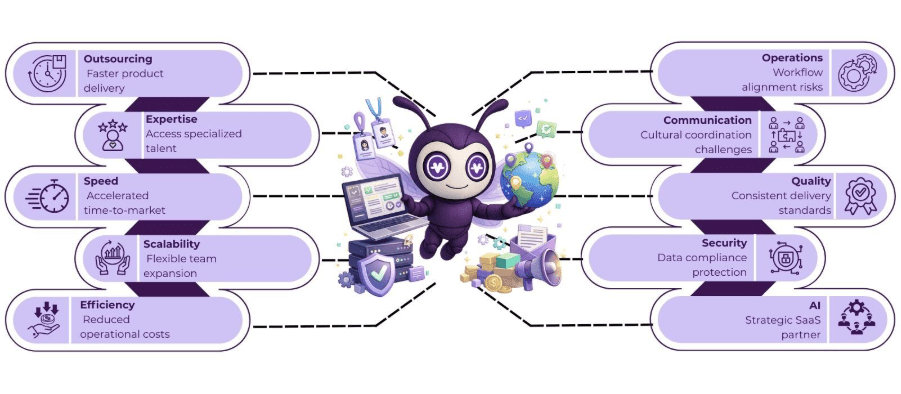
Table of Contents
Why One Need to Consider Software Product Development Outsourcing
Choosing to outsource software product development can feel like a big decision – but for many businesses, it’s the difference between hitting deadlines and struggling to keep up. Here are the key reasons why companies partner with product development outsourcing companies:
- Access to specialized expertise: Working with outsourced product development companies gives you a team of experts who have handled similar products and technologies, without the cost and time of hiring full-time staff.
- Faster time-to-market: By choosing the right partner to outsource software product development, you can launch products quickly and stay ahead of competitors.
- Scalability and flexibility: External teams allow you to scale resources up or down depending on project demands, giving your business agility.
- Cost efficiency: Outsourcing reduces recruitment, infrastructure, and employee costs while delivering high-quality development work.
- Focus on core business: With a trusted product development outsourcing company handling development, your internal team can concentrate on strategy, customer experience, and growth.
For businesses looking to grow smartly, software product development outsourcing isn’t just an option – it’s a strategic advantage that gives you both expertise and efficiency.
Difference Between Software Product Development Outsourcing and In-House Product Development
| Aspect | Software Product Development Outsourcing | In-House Product Development |
| Cost | Typically more cost-effective upfront, as you pay for the services you need without investing in long-term salaries, infrastructure, or training. | Often more expensive due to salaries, benefits, office space, and ongoing operational costs. |
| Talent & Expertise | Access to a diverse pool of specialized talent and technologies from around the world, including niche skills that might be hard to find locally. | Limited to the skills available within your team; hiring specialized talent can be time-consuming and costly. |
| Flexibility & Scalability | Highly flexible; teams can be scaled up or down depending on project requirements, timelines, or market demands. | Less flexible; expanding the team requires hiring, onboarding, and managing additional staff, which takes time. |
| Control & Communication | Project management relies on clear communication and coordination; time zones and cultural differences can pose challenges. | Full control over processes, priorities, and daily collaboration; communication is direct and immediate. |
| Time-to-Market | Can accelerate development if outsourcing partners are experienced and processes are efficient; may face delays due to coordination gaps. | Potentially slower if internal team lacks experience or resources, but aligned priorities ensure consistent focus on product goals. |
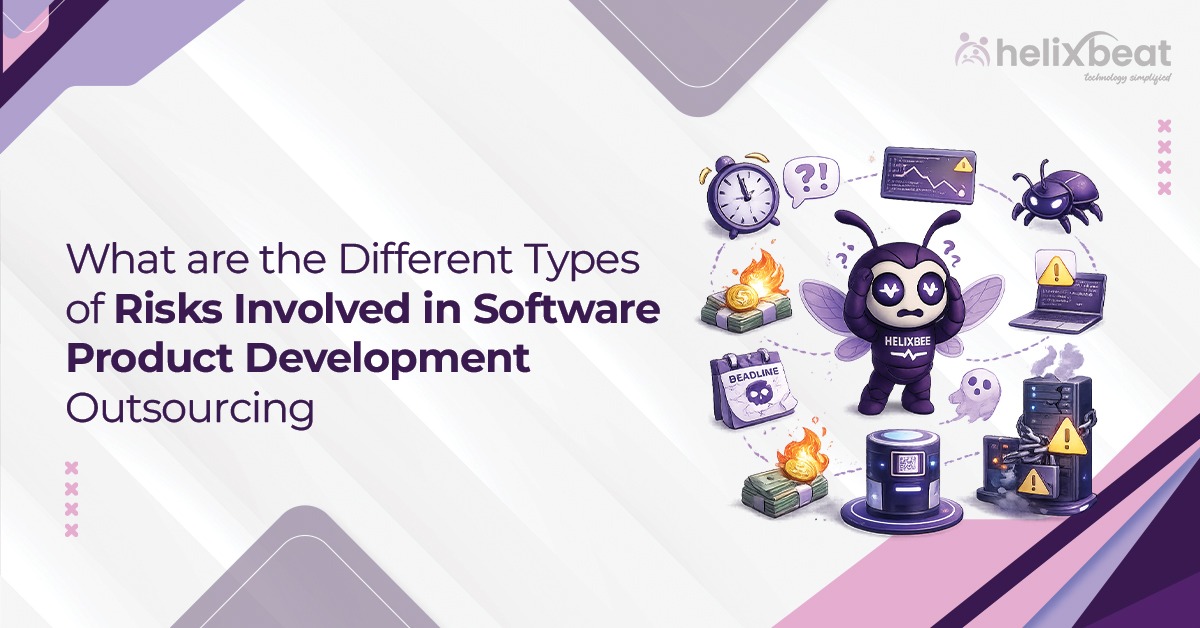
5 Key Risks Involved in Software Product Development Outsourcing
Understanding the risks involved in software product development outsourcing is the first step to ensuring your project succeeds without unexpected setbacks. While outsourcing offers speed, expertise, and flexibility, being aware of potential pitfalls helps you make informed decisions.
1. Operational Risks
Even the most experienced product development outsourcing companies can face misalignment in workflows or processes. For example, imagine you outsource software product development for a mobile app, but your internal team expects weekly updates while the outsourced team follows a different sprint schedule.
This mismatch can lead to delays and frustration. Clear project management, shared timelines, and defined workflows help reduce operational risks.
2. Communication & Cultural Risks
Working with outsourced product development companies across different time zones or cultures can create misunderstandings. For instance, a US startup outsourcing development to a team in Southeast Asia might experience delayed responses or misinterpreted requirements.
Regular check-ins, collaboration tools, and a shared project glossary can bridge communication gaps effectively.
3. Quality Risks
Not all outsourced work meets expected standards. For example, if you outsource software product development for an e-commerce platform, the delivered code might function but lack performance optimization or proper testing, causing slow load times or glitches.
Conducting code reviews, setting quality benchmarks, and starting with a pilot project can ensure higher quality outcomes.
4. Security & Compliance Risks
Sharing sensitive business data with product development outsourcing companies introduces potential security and compliance risks. For example, an outsourced healthcare app must comply with HIPAA regulations; any oversight could lead to legal or financial consequences.
Working with experienced outsourced product development companies that prioritize data security and compliance is crucial.
5. Vendor Dependency Risks
Relying heavily on a single product development outsourcing company can create bottlenecks if they face staffing issues, financial instability, or miss deadlines. For example, if your outsourced team suddenly becomes unavailable, your project could stall.
Having contingency plans or diversifying vendors ensures continuity and reduces dependency risks.
Being aware of these risks and planning ahead allows you to confidently work with product development outsourcing companies, ensuring that outsourcing your software projects is not just efficient but also secure, reliable, and successful.
Tips to Choose the Best Software Product Development Outsourcing That Fits You?
Choosing the right partner for your software project can make all the difference between a smooth launch and a stressful experience. Here are 5 practical tips to help you select the best outsourced product development company:
- Check expertise and past work to ensure they have handled projects similar to yours.
- Evaluate communication and collaboration practices to avoid delays and misunderstandings.
- Verify security and compliance measures before you share sensitive or regulated data.
- Start with a pilot project to test reliability, quality, and workflow alignment before committing long-term.
- Consider scalability and flexibility to handle changes in project size, timeline, or technology.
Following these tips will help you confidently choose a partner who aligns with your goals, minimizes risks, and ensures your software project succeeds.
How Software Product Development Outsourcing Leverages AI in the Workflow
AI is transforming how outsourced product development companies work, making projects faster, smarter, and more reliable. For example, AI-powered project management tools help teams track progress, allocate tasks efficiently, and predict potential bottlenecks before they become problems.
One real example is a fintech startup that outsourced software product development for its mobile app – AI-driven testing tools automatically detected bugs before release, cutting the QA phase by 40% and preventing costly delays.
Beyond efficiency, AI enables better decision-making. By analyzing past project data, software product development outsourcing teams can identify patterns, estimate timelines more accurately, and even suggest improvements to optimize performance. This combination of human expertise and AI-driven insights allows businesses to stay agile and save time.
Why Choose Us?
At Helixbeat, we turn complex ideas into software solutions that actually work for your business. By understanding your workflows and pain points, we build applications that save time, reduce errors, and let your team focus on what truly matters: growing your business and serving your customers better.
Choosing Helixbeat means gaining a partner who ensures your software adapts as your business evolves. This matters because a product that grows with your goals keeps you ahead of the competition, prevents costly rework, and maximizes every opportunity for innovation. Book a free consultation now.
FAQ
1. How do I know if my project is suitable for software product development outsourcing?
If your project requires specialized skills, tight deadlines, or flexible scaling of resources, outsourcing is ideal. It works best for projects where in-house teams lack expertise or capacity.
2. Will I lose control over my project if I outsource software development?
Not if you choose the right partner. Clear communication, regular updates, and shared project management tools ensure you stay involved at every stage without micromanaging.
3. Can outsourcing help with integrating or customizing existing application software packages?
Yes. Experienced teams can modify, integrate, or extend application software packages to fit your workflows, helping you get more value from the software without starting from scratch.