

The healthcare sector is currently reinventing itself. Shifting from fee-for-service models to value-based care demands better coordination, more accurate data, and actionable insights. At the heart of this transformation lies Fast Healthcare Interoperability Resources (FHIR), a standard that allows seamless exchange of electronic health information. By providing structured, standardized data formats, FHIR plays a critical role in improving patient outcomes, reducing costs, and supporting evidence-based care.
In value-based care, providers are rewarded for delivering high-quality care rather than the volume of services. Achieving these outcomes requires interoperable systems that can share clinical and administrative data across hospitals, clinics, labs, and insurers. FHIR simplifies this process, offering a flexible and scalable approach for healthcare organizations to access, analyze, and act on relevant information in real-time.
Table of Contents
Understanding FHIR: Fast Healthcare Interoperability Resources
Fast Healthcare Interoperability Resources (FHIR) is a modern standard developed by HL7 (Health Level Seven International) for exchanging healthcare information electronically. Unlike older standards such as HL7 v2 or CDA, FHIR is designed for the internet era, using modern web technologies like RESTful APIs, JSON, and XML. This enables rapid deployment of interoperable solutions, giving real-time access to patient data without compromising privacy or security.
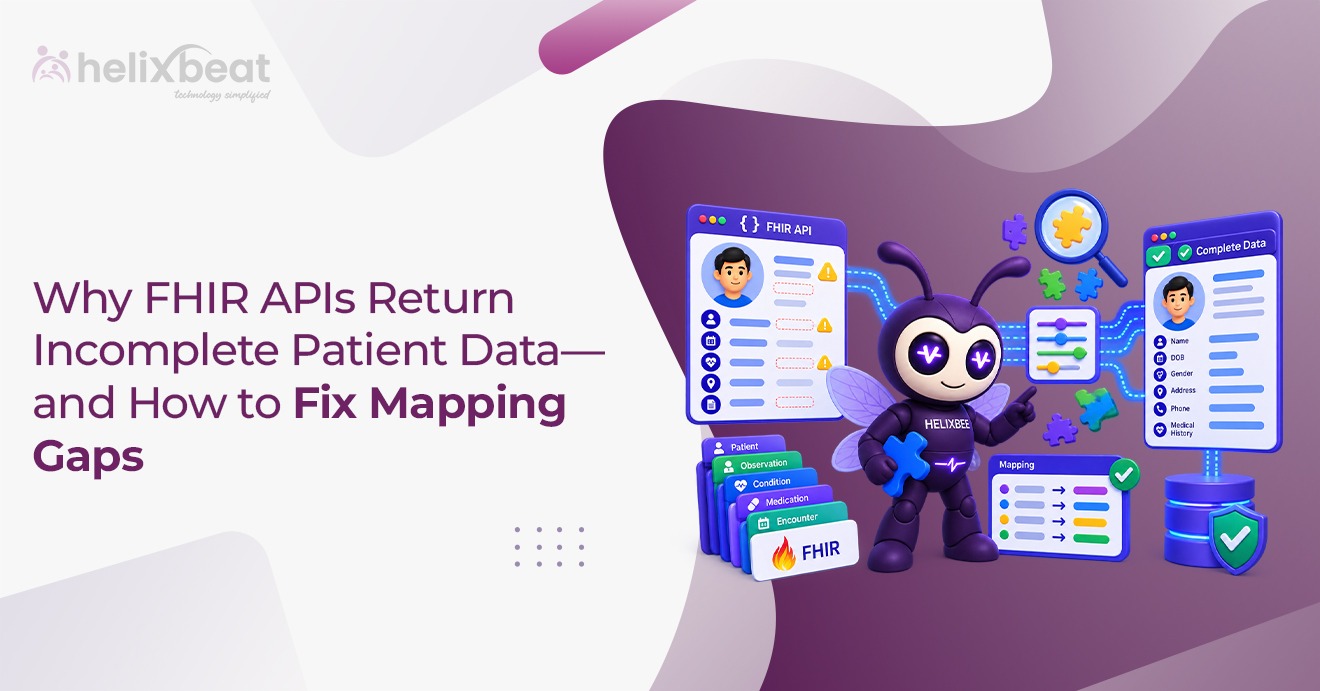
FHIR organizes data into modular “resources,” each representing specific clinical or administrative elements, such as patients, medications, lab results, or encounters. These resources can be combined or extended to meet diverse clinical requirements, providing a unified framework that supports both point-of-care decisions and population health initiatives.
The Role of FHIR in Value-Based Care
Value-based care emphasizes outcomes rather than volume. Providers are incentivized to improve patient health, reduce hospital readmissions, and minimize unnecessary procedures. Fast Healthcare Interoperability Resources contributes to this approach in several ways:
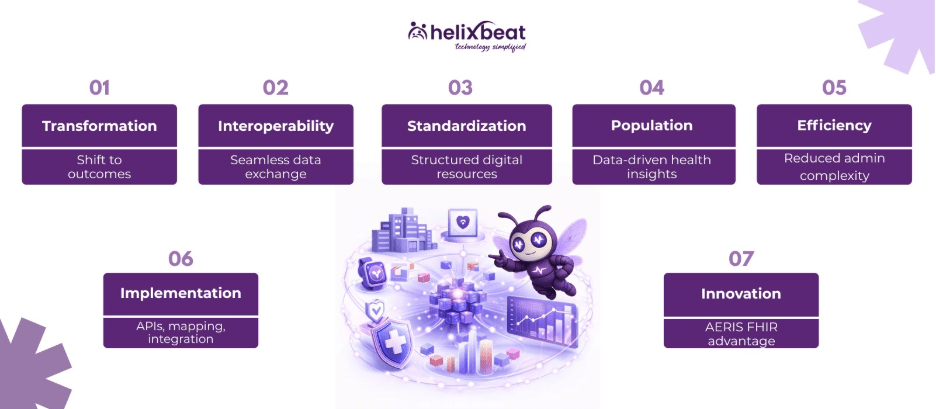
1. Data Interoperability Across Systems
FHIR allows data to flow seamlessly between electronic health records (EHRs), health information exchanges (HIEs), and other digital tools. As a result, providers reduce redundant testing and improve care coordination with real-time access to complete patient histories.
2. Supporting Population Health Management
Aggregating standardized data across multiple patients enables healthcare organizations to identify trends, high-risk populations, and preventive care opportunities. By standardizing data structure, FHIR empowers analytics platforms to identify hidden patterns and gaps in preventive screening across entire populations.
3. Facilitating Clinical Decision Support
With accurate, real-time data, clinical decision support systems can provide actionable insights at the point of care. By embedding guidelines and predictive analytics directly into clinical workflows, FHIR resources empower providers to intervene earlier and prevent adverse events.
4. Reducing Administrative Burden
FHIR reduces the complexity of extracting and standardizing data from multiple sources. Automated data exchange allows administrative staff to focus on patient care, while insurers and providers can process claims more efficiently.
Implementing FHIR in Healthcare Organizations
While FHIR offers powerful advantages, successful implementation requires strategic planning and collaboration across IT, clinical, and administrative teams. Key steps include:
1. Assessment of Existing Systems
Evaluate current EHRs, HIEs, and analytics platforms to identify integration opportunities and data gaps.
2. Mapping Data to FHIR Resources
Align existing data structures with FHIR resources to create a standardized format. This may involve transforming legacy HL7 messages or CDA documents into FHIR-compatible JSON or XML formats.
3. Integration and API Development
Use FHIR APIs to connect disparate systems. APIs allow secure, real-time access to data while maintaining compliance with HIPAA and other privacy regulations.
4. Staff Training and Change Management
Clinicians and administrators must understand how to access, interpret, and act on FHIR-enabled data. Training programs promote adoption and maximize clinical impact.
5. Continuous Monitoring and Analytics
Deploy analytics tools to monitor care outcomes, resource utilization, and patient satisfaction. Standardized FHIR data provides a foundation for actionable insights and quality improvement initiatives.
Value-Based Care in 2026: The AERIS-FHIR Advantage
Imagine a world where your healthcare organization thrives with seamless, secure, and real-time data exchange. That’s the power of AERIS by Helixbeat, a game-changing platform designed to transform how you connect, collaborate, and care. Built for healthcare providers, clinics, hospitals, and cross-industry partners like pharmacies and insurers, AERIS harnesses FHIR APIs to break down data silos, streamline operations, and put patient care first.
Ready to cut delays by 50%, double your ROI, and empower your team with instant access to critical data? Let’s dive into why AERIS is the solution you’ve been waiting for.
Why AERIS is Your Key to Healthcare Innovation?
At Helixbeat, we know your challenges: fragmented systems, delayed data, and rising costs. AERIS is here to change that, offering a personalized, scalable, and secure platform that fits your unique needs. Whether you’re a small clinic or a sprawling hospital network, AERIS delivers measurable results that elevate patient outcomes and boost your bottom line.
- 20+ Years of Expertise: Our team brings decades of healthcare IT experience to ensure AERIS works for you.
- 50+ IT Professionals: A dedicated crew powers AERIS, delivering unmatched support and innovation.
- 1,000+ Customers: Join a thriving community of healthcare leaders already transforming with AERIS.
- 10,000+ Projects Completed: Proven success across countless integrations and workflows.
- 95% Returning Customers: Our clients trust AERIS to deliver, time and time again.
Providers adopting AERIS report faster diagnoses, lower costs, and improved outcomes, positioning it as the go-to tool for future-proof HIE.
Your Benefits, Amplified
- 50% Fewer Delays: Real-time data means critical information is always at your fingertips, turning hours into seconds.
- 100% Faster ROI: Plug-and-play integration maximizes your investment without expensive system replacements.
- 30% Cost Savings, 90% Fewer Errors: Automation eliminates waste, saving resources and ensuring accuracy.
Final Thoughts
Fast Healthcare Interoperability Resources (FHIR) is redefining value-based care by providing a standardized framework for seamless data exchange. From improving patient outcomes and enhancing care coordination to reducing administrative burden and supporting population health initiatives, FHIR equips healthcare organizations with the tools they need to thrive in an outcomes-driven environment.
For healthcare organizations ready to take the next step, AERIS leverages FHIR APIs to unify systems, streamline workflows, and put patient care at the forefront. Whether it’s real-time access or cross-system collaboration, AERIS delivers measurable results that improve both outcomes and operational efficiency.
FAQs
1. What is the primary purpose of FHIR in healthcare?
FHIR provides a standardized method for exchanging electronic health information, promoting interoperability and data-driven clinical decisions.
2. How does FHIR support value-based care?
FHIR enables real-time access to comprehensive patient data, facilitating coordinated care, risk stratification, and outcome tracking.
3. Can FHIR integrate with existing legacy EHR systems?
Yes, through APIs and middleware solutions, FHIR can transform legacy data formats into interoperable standards.
4. What are the main challenges in adopting FHIR?
Challenges include legacy system compatibility, data standardization, privacy concerns, and change management among clinicians.
5. How does FHIR improve patient outcomes?
By providing standardized, real-time data, FHIR supports preventive care, reduces errors, and enables timely interventions.
6. Is FHIR suitable for population health management?
Absolutely. FHIR structures patient-level data for analysis, helping identify high-risk populations and optimize care interventions.