

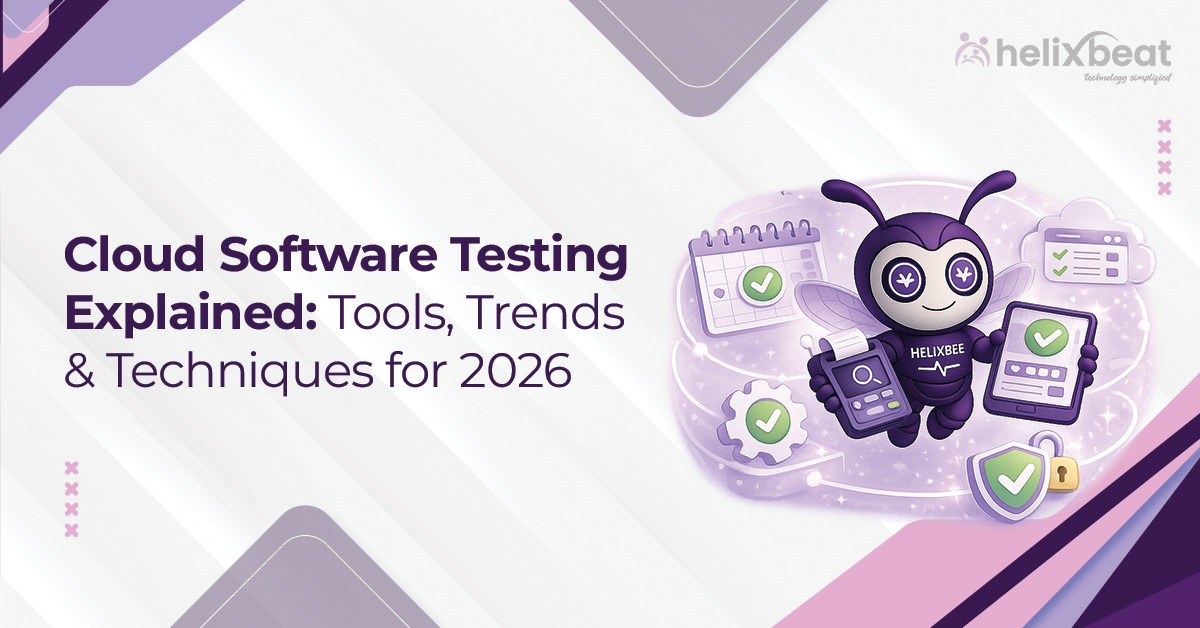
Ever wondered why some SaaS applications crash or slow down right after an update? The truth is, many businesses still rely on traditional testing methods that can’t handle the complexity of cloud environments. This leads to frustrated users, security risks, and delayed releases. Cloud software testing solves this by providing a smarter, scalable way to test applications directly in the cloud before they go live.
For example, imagine a SaaS billing app used by thousands of customers across different regions. Without proper cloud based testing software, a simple update could cause downtime or errors in certain regions. By using specialized cloud QA testing tools and techniques, you can identify and fix these issues early, make sures smooth performance and faster releases.
Table of Contents
Understanding Cloud Software Testing in SaaS Applications
Cloud software testing is the process of checking a SaaS application in a cloud environment to make sure it works correctly, performs well, and stays secure. Unlike local server testing, cloud-based SaaS testing allows teams to simulate real-world conditions across locations, devices, and user loads, ensuring updates do not disrupt the customer experience.
For example, imagine an online project management app used by teams worldwide. A new feature might work perfectly in one region but cause slowdowns elsewhere. Using cloud QA testing, teams can identify these issues early and fix them before users are affected, ensuring smooth performance and reliable service for all customers.
Best Tools for Cloud Software Testing in 2026
Choosing the right tools is key to effective cloud software testing and smooth releases. Here are five top tools that make testing SaaS applications easier and more reliable:
- Selenium – A popular cloud based testing software for automating web applications, helping teams quickly test features across browsers and devices.
- JMeter – Perfect for performance testing, JMeter helps simulate heavy user traffic during cloud QA testing to ensure your SaaS app can handle peak loads.
- BrowserStack – A cloud based software testing platform that allows testing SaaS applications on real devices and browsers without managing your own infrastructure.
- TestComplete – Enables automation for desktop, mobile, and web apps, making testing SaaS applications faster and more consistent.
- Sauce Labs – Provides a complete cloud based testing software environment for automated and manual testing in parallel, reducing release delays.
Using the right tools for cloud QA testing ensures faster, safer, and more reliable updates for your SaaS applications.
Cloud Testing Trends Redefining QA Strategies in 2026
Cloud testing is evolving fast, and staying updated with the latest trends is key to keeping your SaaS applications reliable. Here are five major trends shaping QA strategies in 2026:
1. AI‑Powered and Autonomous Testing
Smart automation is becoming standard. AI-driven tools can generate and optimize test cases automatically, adapt to application changes, and spot risks early. Companies using AI testing report up to 40–60% faster test creation and better bug detection before release, improving efficiency in cloud QA testing.
2. Continuous and Integrated QAOps
QA is now embedded directly into development pipelines with CI/CD workflows. About 89% of companies use CI/CD, and 78% are exploring AI/ML integration in testing, helping teams catch issues earlier and speed up releases while testing SaaS applications more effectively.
3. Cloud Testing and Elastic Infrastructure
Cloud based software testing platforms offer scalable, on-demand environments for running tests in parallel and simulating global user loads. This flexibility improves performance and reliability when testing SaaS applications across regions.
4. Security-First Cloud Testing
With more apps in the cloud, security testing is now a top priority. Vulnerability scanning, access control checks, and data isolation tests are integrated into cloud based testing software. Businesses using proactive security tests report fewer post-release incidents and stronger compliance.
5. Observability and Monitoring-Driven QA
Modern QA focuses on real-time monitoring and analytics. Observability tools track app performance, errors, and user behavior during testing, allowing teams to identify hidden issues early. This trend makes loud QA testing more precise and actionable, especially for large-scale SaaS deployments.
Keeping up with these trends ensures faster releases, better quality, and happier users.
How to Perform Cloud Software Testing in SaaS Application
To get the most reliable results from cloud software testing, you need a structured approach tailored for SaaS applications. Here’s how you can do it effectively in five practical steps:
1. Set Up a Realistic Cloud Test Environment
Don’t just spin up a server – replicate your actual production setup. Use cloud based testing software to simulate multiple regions, different user devices, and network conditions.
For example, if your SaaS app serves clients in Asia and Europe, test under both low-latency and high-latency conditions to uncover hidden performance issues.
2. Define Critical Workflows and High-Risk Areas
Focus your testing SaaS applications efforts where errors have the biggest impact. Identify core workflows like payment processing, user onboarding, or reporting dashboards, and integrate security, compliance, and performance checkpoints.
This ensures you catch critical failures before your customers do.
3. Automate Smartly, Not Blindly
Automation is essential for cloud QA testing, but not every test needs it. Prioritize regression tests, repetitive workflows, and cross-browser checks.
Combine automated testing with occasional manual exploratory testing to catch unexpected edge-case issues that automation alone might miss.
4. Test Performance, Security, and Scalability
Your SaaS app must handle real-world demands. Use cloud based software testing to simulate thousands of simultaneous users, test failover mechanisms, and validate data security across tenants.
For example, a small performance issue in a multi-tenant environment can cascade, slowing down all users – testing at scale prevents this.
5. Analyze Results, Optimize, and Integrate Feedback
After testing, analyze logs, reports, and performance metrics carefully. Share findings with your development team and prioritize fixes by impact.
Continuous monitoring and iteration ensure your SaaS application is ready for high-traffic periods and frequent updates, keeping users happy and reducing downtime.
By following these steps, you can confidently improve your SaaS application’s reliability and performance while mastering cloud software testing.
Important Techniques Used in Cloud Software Testing
To make cloud software testing truly effective, you need techniques that reflect real-world usage. For example, imagine a SaaS invoicing platform used by small businesses worldwide. Functional testing ensures features like invoice creation, tax calculations, and payment integration work correctly.
Regression testing catches any new issues introduced during updates, such as a bug in the report generation feature after adding a new tax module. Using cloud based software testing tools, you can run these tests simultaneously across different regions, browsers, and devices, ensuring all users get a seamless experience when testing SaaS applications.
Performance and security are equally critical. For instance, a sudden spike in users during month-end billing could crash the platform. Load and performance testing simulates thousands of simultaneous users to identify bottlenecks. At the same time, cloud QA testing can check that sensitive customer data is isolated correctly across tenants, preventing security leaks.
Combining automated tests with exploratory manual testing ensures even unusual user scenarios are covered, giving you confidence that your SaaS application runs reliably for all users.
Why Helixbeat is the Right Choice for Cloud Software Testing
When it comes to cloud software testing, choosing the right partner can make the difference between smooth releases and frustrated users. At Helixbeat, we specialize in testing SaaS applications with precision, speed, and security.
Our team uses advanced cloud QA testing techniques and cloud-based software testing tools to simulate real-world conditions, identify hidden issues, and optimize performance, so you can deliver high-performing applications every time. Book a free consultation and see the difference.
FAQ
1. What types of SaaS applications benefit most from cloud software testing?
Any SaaS application with multiple users, frequent updates, or global access benefits from cloud QA testing, including CRM, billing, project management, and collaboration tools.
2. How is cloud software testing different from traditional testing?
Unlike traditional testing on local servers, cloud based software testing allows you to simulate real-world conditions across multiple regions, devices, and browsers, providing more accurate results for SaaS applications.
3. Can cloud QA testing improve app performance during peak usage?
Yes. By simulating high user loads and running load and performance tests in the cloud, you can identify bottlenecks and optimize your application before real users encounter issues.
4. How secure is cloud-based testing for sensitive data?
Modern cloud based testing software follows strict security protocols, including data isolation, encryption, and compliance checks, ensuring your sensitive information is protected during tests.
5. Do I need specialized tools for testing SaaS applications in the cloud?
Yes. Using dedicated cloud QA testing tools makes it easier to automate, scale, and monitor tests effectively, reducing errors and speeding up release cycles.