

Table of Contents
Introduction: Security Is No Longer a Support Function
In 2026, security is no longer limited to IT teams or compliance checklists. It has become a core business function—one that directly impacts revenue, operations, and brand trust.
Across India, businesses are expanding faster than ever. Hybrid work models, digital transformation, third-party integrations, and distributed teams have created new opportunities. But they have also expanded the attack surface in ways most organizations are not fully prepared for.
This is where the importance of security becomes critical.
A single breach today is not just a technical failure. It is a business failure. It affects customer trust, disrupts operations, triggers regulatory scrutiny, and creates long-term financial damage.
Yet many organizations still treat security as a secondary investment—something to be addressed after growth, not alongside it.
That approach no longer works.
This blog explores the top security threats businesses should prepare for in 2026, why the importance of security is rising rapidly, and what organizations must do to stay protected in an increasingly unpredictable environment.
Why Security Failures Are Becoming More Expensive
Before understanding threats, it’s important to understand the scale of impact.
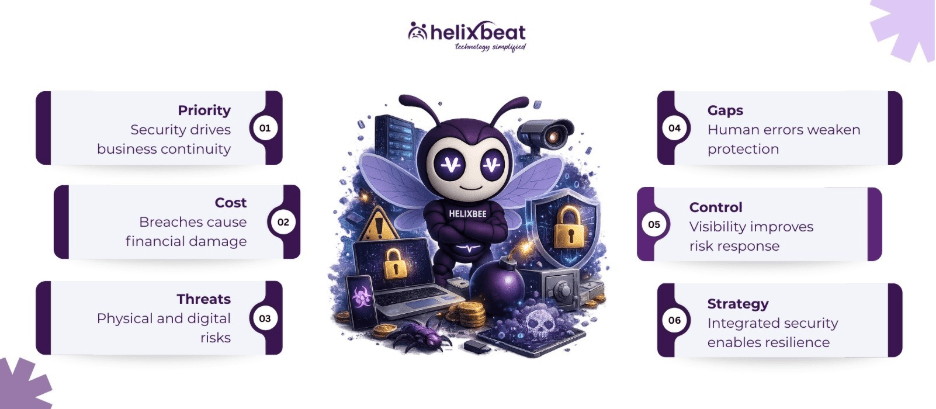
The business security importance in 2026 is driven by three major cost factors:
1. Financial Losses
The average cost of a data breach continues to rise globally, with Indian enterprises facing increasing recovery costs due to system downtime, legal action, and customer compensation.
2. Regulatory Pressure
With stricter frameworks around data protection and privacy, organizations are now accountable for how they collect, store, and process user data. Non-compliance is no longer a warning—it leads to penalties.
3. Operational Disruption
Security incidents don’t just leak data. They stop operations. Systems go offline. Employees lose access. Customers face delays. The ripple effect impacts every department.
This is why the importance of security is no longer theoretical. It is measurable, visible, and directly tied to business continuity.
If you’re looking to align your security processes with modern workplace demands, VISTA helps you simplify access control, reduce risks, and build a more secure business environment.
Key Security Threats Every Business Must Prepare for in 2026
1. Blurred Lines Between Physical and Digital Access
The biggest shift in recent years is the overlap between physical access and digital systems.
An unauthorized individual entering your office can:
- Access unattended systems
- View confidential information
- Connect devices to internal networks
This highlights why cybersecurity for businesses is no longer just about firewalls and software. Physical entry points are now part of the digital risk ecosystem.
Fix:
- Implement controlled access at entry points
- Monitor visitor movement within premises
- Integrate physical security with digital systems
This is one of the most overlooked areas when discussing the importance of security.
2. Rise of Social Engineering Attacks
Attackers are no longer just hacking systems. They are manipulating people.
In India’s fast-paced work environments, employees often trust urgency:
- “I need access urgently”
- “I’m from the vendor team”
- “This is approved by management”
Without verification, these interactions lead to unauthorized access.
This is why understanding the business security importance at a human level is critical.
Fix:
- Train employees to verify identity every time
- Standardize access approval processes
- Remove decision-making ambiguity from front-line staff
3. Weak Visitor and Vendor Management
Many organizations still rely on manual logs or informal processes for visitors and vendors.
This creates:
- No reliable entry records
- No tracking of movement
- No accountability
This is a direct risk in terms of data protection and privacy, especially in industries handling sensitive information.
Fix:
- Digitize visitor tracking
- Maintain real-time logs
- Restrict access based on purpose
When discussing the importance of security, entry-point control is one of the first layers.
4. Increased Dependency on Third-Party Vendors
Businesses today depend heavily on external vendors—IT teams, consultants, delivery agents, maintenance staff.
Each vendor introduces a new risk layer.
The challenge is not just access—it is uncontrolled access.
This is one of the major emerging security risks for small and medium businesses, where vendor management processes are often informal.
Fix:
- Pre-approve vendors
- Assign time-bound access
- Track every interaction within the premises
This is where enterprise security strategies must extend beyond internal teams.
5. Data Exposure Through Everyday Operations
Security risks are not always dramatic. Many come from daily operational gaps:
- Unlocked screens
- Visible documents
- Shared credentials
- Open access drives
These small lapses lead to large breaches over time.
The growing focus on data protection and privacy makes these risks even more serious.
Fix:
- Enforce clean desk policies
- Automate screen locks
- Limit access based on roles
Understanding the importance of security means addressing both major threats and minor leaks.
6. Lack of Real-Time Visibility
Many businesses do not know:
- Who is inside their office right now
- Which vendor is accessing which area
- Whether a visitor has exited
This lack of visibility delays response during incidents.
It also weakens audit readiness.
This is a major gap in enterprise security strategies.
Fix:
- Enable real-time monitoring systems
- Maintain digital logs of all entries and exits
- Use dashboards for instant visibility
7. Inadequate Emergency Preparedness
Security is not just prevention—it is response.
In emergency situations:
- Fire
- Medical incidents
- Unauthorized access
Organizations often struggle to:
- Account for people
- Communicate quickly
- Execute protocols
This highlights the operational side of workplace security solutions.
Fix:
- Create structured emergency plans
- Conduct drills regularly
- Maintain real-time occupant data
8. Human Error as the Biggest Risk Factor
Studies consistently show that human error contributes to the majority of security incidents.
Employees:
- Skip processes under pressure
- Share access unknowingly
- Ignore protocols for convenience
This reinforces why the importance of security must be embedded into culture—not just systems.
Fix:
- Continuous training programs
- Clear escalation protocols
- Reduce dependency on manual decisions
9. Rapid Growth Without Security Scaling
Startups and growing businesses in India often prioritize speed over structure.
As teams grow:
- Access controls remain outdated
- Security policies don’t evolve
- Systems become inconsistent
This is one of the most common digital security trends—growth outpacing protection.
Fix:
- Scale security alongside operations
- Standardize processes early
- Review systems periodically
10. Lack of Integrated Security Approach
Most organizations still treat security as separate functions:
- IT security
- Physical security
- HR policies
But modern risks do not operate in silos.
This is why the importance of security today lies in integration.
Fix:
- Align IT, HR, and facility teams
- Build unified security protocols
- Use centralized systems for monitoring
Upgrade your workplace security with VISTA. Automate visitor management, improve compliance, and gain real-time visibility into who is inside your premises at any moment.
The Technology Layer: What Modern Security Looks Like
Technology plays a critical role in addressing these challenges.
Modern workplace security solutions are designed to:
- Automate entry processes
- Track movement in real time
- Reduce human dependency
- Ensure compliance with data protection and privacy regulations
This is also where digital security trends are evolving—towards automation, integration, and real-time intelligence.
Understanding why cybersecurity is important for businesses in 2026 requires looking beyond software and including operational systems that control access and visibility.
The Human Layer: Where Security Actually Succeeds or Fails
Even the best systems fail without the right people and processes.
Organizations that understand the business security importance invest in:
- Staff training
- Cross-team collaboration
- Regular audits
- Continuous improvement
Security is not a one-time setup. It is an ongoing discipline.
If you are evaluating how to protect your business from cyber threats in 2026, the answer lies in combining:
- Technology
- Training
- Process discipline
Conclusion: Security Is a Business Strategy, Not a Cost Center
The importance of security in 2026 goes far beyond preventing incidents.
It defines:
- How your business operates
- How customers trust you
- How resilient you are during disruptions
The threats are evolving. The risks are increasing. And the cost of inaction is higher than ever.
The best security practices for modern businesses in 2026 are not reactive. They are proactive, structured, and integrated into everyday operations.
Strengthen your front desk and eliminate security gaps with VISTA. Bring structure, visibility, and control to every visitor interaction—without slowing down operations.
FAQs
1. Why is the importance of security increasing for businesses in 2026?
The importance of security is rising due to hybrid work, digital expansion, and increasing cyber threats. Businesses must protect data, systems, and physical spaces to avoid financial and operational risks.
2. What are the top security threats businesses should prepare for in 2026?
The top security threats businesses should prepare for in 2026 include social engineering, unauthorized access, vendor risks, and data leaks, making cybersecurity for businesses a critical priority.
3. Why is cybersecurity for businesses essential in modern workplaces?
Cybersecurity for businesses is essential to protect sensitive data, prevent breaches, and ensure business continuity. It also supports compliance with data protection and privacy regulations.
4. What are the best security practices for modern businesses in 2026?
The best security practices for modern businesses in 2026 include implementing workplace security solutions, training employees, using real-time monitoring, and adopting strong enterprise security strategies.