

Sending a bill and waiting for insurance reimbursement is currently not the only way for many healthcare providers to get paid. The financial responsibility of patients has increased significantly, and traditional billing workflows are struggling to keep up. In 2026, private practices are realizing that payment systems must evolve alongside patient expectations and economic realities.
According to a 2025 Gallup survey, 12% of U.S. adults, approximately 31 million Americans, borrowed an estimated $74 billion in the past year to cover healthcare costs. Meanwhile, a majority of Americans (58%) are concerned that a major health event could result in personal medical debt. This financial anxiety impacts how and whether patients pay their bills.
For private practice leaders, 2026 will demand a new approach—one that treats billing as a strategic function rather than a back-office task. The practices that succeed will reduce payment friction, offer flexible payment methods, and adopt automation that frees staff from time-consuming administrative work. At the center of this transformation is online patient payment, a digital solution that helps practices collect faster while improving patient convenience.
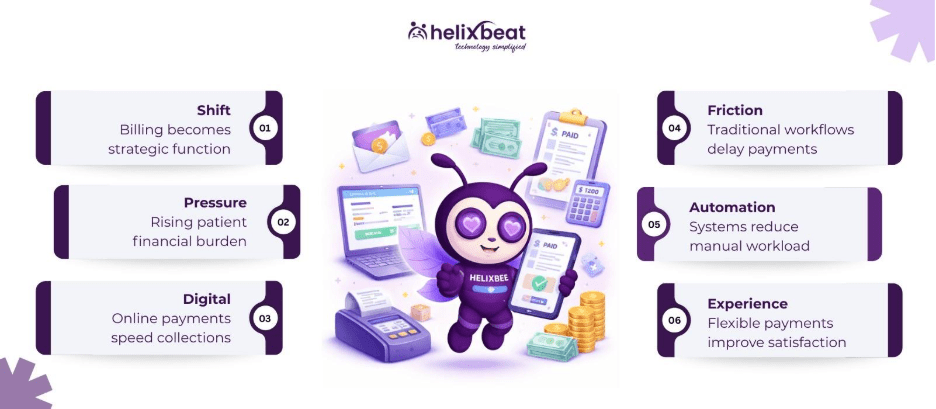
Table of Contents
The Growing Importance of Online Patient Payment in Healthcare
Healthcare payments have changed dramatically over the past decade. High-deductible health plans, rising out-of-pocket costs, and complex billing systems have shifted more financial responsibility to patients.
When patients are responsible for larger portions of their medical bills, providers must collect payments directly from them rather than relying solely on insurance reimbursements. This change makes online patient payment systems essential for private practices that want to maintain healthy cash flow.
Traditional payment processes—such as paper statements, manual billing, and in-office payments—often lead to delays. Patients may forget to pay, misunderstand their bills, or postpone payment due to financial uncertainty. Digital payment tools remove these barriers and make it easier for patients to complete payments quickly.
Many modern healthcare providers are now integrating online patient payment capabilities directly into their billing systems. These tools allow patients to view their bills, understand their charges, and complete transactions from any device.
By offering simple, secure online patient payment options, private practices can reduce administrative burden while giving patients a payment experience similar to other digital services they use daily.
Why Traditional Billing Workflows Slow Down Payments
Despite advances in healthcare technology, many private practices still rely on outdated billing methods. These processes often involve manual claim submissions, printed statements, and follow-up phone calls from billing staff.
This approach creates several problems.
First, it delays payments. Insurance claims can take weeks to process, and once the patient balance is determined, another bill must be generated and mailed.
Second, it increases administrative workload. Staff must manually track payments, reconcile accounts, and contact patients about outstanding balances.
Third, it creates confusion for patients. Medical bills often contain complex information about deductibles, co-pays, and insurance adjustments.
An online patient payment portal helps solve these issues by centralizing billing and payment processes in one place. Patients can log in, view itemized statements, and pay their balances without needing to contact the provider’s office.
This transparency improves trust and reduces disputes over billing details.
Patient Expectations Are Changing
Patients today compare their healthcare payment experiences with those offered by banks, online retailers, and subscription services. They expect simple, digital transactions that can be completed instantly.
Unfortunately, many healthcare organizations still rely on processes that require patients to mail checks or call the billing office during business hours.
This mismatch between expectations and reality often results in delayed payments.
A modern healthcare payment portal bridges this gap by providing patients with convenient payment tools. These platforms allow patients to complete online patient payment transactions at any time, from anywhere.
For example, patients can:
- Pay bills through mobile devices
- Set up automatic payments
- Manage installment plans
- View payment history
When patients have access to a convenient online patient payment portal, they are more likely to complete their payments quickly.
The Role of Automated Billing in Faster Collections
Automation plays a critical role in improving healthcare billing workflows. Automated billing systems eliminate many of the manual tasks that slow down payment collection.
Instead of relying on staff to send reminders or track unpaid balances, automated systems handle these processes automatically.
For example, automated billing platforms can:
- Send digital invoices immediately after insurance processing
- Deliver email or text reminders about unpaid balances
- Post payments automatically to the patient account
- Generate real-time billing reports
These capabilities allow private practices to streamline financial operations while ensuring that no payment opportunity is missed.
Automation also improves accuracy. Manual billing processes often lead to errors, such as incorrect balances or duplicate charges. Automated billing reduces these mistakes and ensures that patients receive clear, accurate invoices.
By combining automation with online patient payment, private practices can dramatically shorten the time it takes to collect patient balances.
How Online Patient Payment Improves the Patient Experience
Payment convenience has become an important part of the patient experience. Confusing bills and limited payment options can frustrate patients and damage their relationship with healthcare providers.
Offering online patient payment options helps practices create a smoother, more transparent financial experience.
For example, a well-designed healthcare payment portal allows patients to see exactly what they owe and why. Itemized statements explain insurance adjustments, deductibles, and patient responsibilities.
When patients understand their bills, they are more likely to complete their online patient payment quickly.
Digital payment systems also support multiple payment methods, including credit cards, debit cards, bank transfers, and digital wallets. These options make it easier for patients to pay in the way that works best for them.
Another important feature is patient portal payment, which allows patients to manage their healthcare expenses through a single online account. Within this portal, patients can review past visits, check outstanding balances, and complete secure payments.
This streamlined experience encourages faster payment completion and improves patient satisfaction.
Flexible Payment Options Reduce Financial Stress
Healthcare costs can be unpredictable, and many patients struggle to pay large medical bills all at once.
To address this challenge, private practices are introducing flexible payment solutions that work alongside online patient payment systems.
Common options include:
Payment plans – Patients can divide large balances into smaller monthly payments.
Recurring payments – Automated billing allows patients to schedule regular payments without manual effort.
Digital financing options – Some platforms allow patients to access financing programs with low or zero interest.
These options help patients manage their healthcare expenses while ensuring that providers receive payments over time.
Many modern billing platforms combine these features with an online patient payment portal, allowing patients to select payment plans directly from their billing dashboard.
This approach improves affordability and increases the likelihood that patients will complete their payments.
The Core Components of an Effective Private Practice Billing Workflow
Building an efficient billing workflow in 2026 requires more than simply sending invoices and waiting for payments. Private practices must manage the entire patient payment journey—from financial transparency before the visit to streamlined collections after care is delivered.
Modern billing systems combine automation, clear communication, and digital payment technologies to improve the patient experience and accelerate revenue cycles. When these elements work together, practices benefit from faster online patient payment, fewer billing disputes, and reduced administrative workload.
Below are the key components that define an effective private practice billing workflow.
1. Pre-Visit Financial Transparency
Billing transparency should begin before the patient arrives for their appointment. Unexpected medical bills often lead to confusion and delayed payments. When patients understand their financial responsibility ahead of time, they are more likely to complete online patient payment quickly.
Providing cost estimates before treatment helps patients prepare financially and builds trust between the provider and patient. Many healthcare organizations now integrate billing systems with insurance verification tools to generate accurate estimates and allow patients to complete online patient payment transactions even before their visit.
This proactive approach improves patient confidence while accelerating collections.
2. Clear and Patient-Friendly Billing Statements
Once a bill is generated, clarity becomes critical. Healthcare invoices often include complex information such as deductibles, insurance adjustments, and co-payments. If the statement is confusing, patients may delay paying.
A well-designed statement highlights the total balance clearly and includes simple payment instructions. Digital billing systems also allow patients to access an online patient payment portal, where they can review itemized charges and complete payments immediately.
Many practices now include QR codes on mailed bills, allowing patients to scan and access the healthcare payment portal directly from their smartphones. This simple step encourages faster patient portal payment completion and reduces billing inquiries.
3. Flexible Multi-Channel Payment Options
Patients expect the same payment convenience in healthcare that they experience in other industries. Offering multiple payment methods helps practices meet diverse patient preferences.
These options may include card payments, bank transfers, mobile wallets, or in-office transactions. A secure online patient payment portal allows patients to complete payments anytime using their preferred device.
Additionally, many providers now integrate healthcare financial services pay online capabilities that allow patients to manage healthcare expenses through digital financial tools. When patients have flexible options, they are far more likely to complete online patient payment promptly.
4. Automated Payment Reminders
Even when billing statements are clear, patients may forget to pay. Automated reminders help solve this challenge.
Modern billing systems send scheduled email or SMS reminders that guide patients directly to the healthcare payment portal. These notifications prompt patients to review their bills and complete their patient portal payment without requiring staff follow-up calls.
Automation ensures consistent communication and prevents accounts from being overlooked.
5. Data-Driven Billing Performance
Tracking financial metrics helps practices improve collection performance. Important indicators include accounts receivable aging, payment cycle time, and digital payment adoption.
Monitoring how many patients complete online patient payment transactions through the online patient payment portal allows practices to measure digital adoption and identify areas for improvement.
Modern platforms like PayNova combine automation, reporting tools, and secure healthcare financial services pay online capabilities within a centralized healthcare payment portal. These systems streamline billing operations while delivering a convenient patient portal payment experience.
In an environment where patient financial responsibility continues to grow, efficient billing workflows and reliable online patient payment systems are essential for helping private practices get paid faster.
How PayNova Supports Online Patient Payment and Automated Billing
As healthcare billing becomes more complex, private practices need technology that simplifies financial operations while improving the patient experience. PayNova is designed specifically for this purpose.
PayNova provides a modern platform that combines automated billing with secure online patient payment capabilities. This system helps healthcare providers streamline payment processes and collect revenue more efficiently.
One of PayNova’s core features is its online patient payment portal, which allows patients to review and pay their medical bills from any device. This digital experience eliminates the need for mailed statements and manual payment processing.
PayNova also functions as a comprehensive healthcare payment portal, integrating directly with Electronic Health Records (EHR) and practice management systems. This integration ensures that billing information remains accurate and up to date.
Another important feature is support for patient portal payment, enabling patients to manage payments within their existing patient portal environment. This integration simplifies financial interactions and encourages timely payments.
In addition, PayNova supports organizations that offer healthcare financial services pay online, allowing patients to settle balances through secure digital channels without visiting the provider’s office.
Through automation, PayNova also helps practices send reminders, track outstanding balances, and generate financial reports in real time.
The result is a billing workflow that reduces administrative workload while improving revenue collection.
Conclusion
In 2026, healthcare providers can no longer treat billing as a secondary task. Payment workflows must be efficient, transparent, and patient-friendly.
Adopting modern online patient payment systems allows private practices to collect payments faster while reducing administrative complexity.
Solutions like PayNova help private practices transform their billing processes by integrating automated workflows, secure online patient payment portal functionality, and comprehensive healthcare payment portal capabilities.
Ready to see how PayNova can help your practice get paid faster in 2026?
FAQs
1. What is an online patient payment system?
A system that lets patients pay medical bills digitally through secure portals.
2. How does an online patient payment portal benefit private practices?
It speeds up payments, reduces manual work, and offers patients convenient digital payment options.
3. What is a healthcare payment portal?
A secure platform for patients to view bills and complete payments online.
4. How do healthcare financial services pay online solutions help patients?
They provide flexible digital payment options, like installment plans and AutoPay, making payments easier.