

If you walk into a corporate office for an important meeting.
You reach the reception… and there’s confusion.
No clear line. No updates. No idea how long you’ll wait.
You keep checking the time.
The receptionist is overwhelmed.
And within minutes — frustration kicks in.
Did you know?
- 90% of visitors avoid places with long wait times
- Businesses lose up to 70% of engagement due to poor front-desk management
- Over 65% prefer digital or virtual waiting over physical queues
Here’s the truth:
Poor queue handling doesn’t just waste time — it damages experience, security, and efficiency.
This is where a visitor management system powered by smart queueing changes everything.
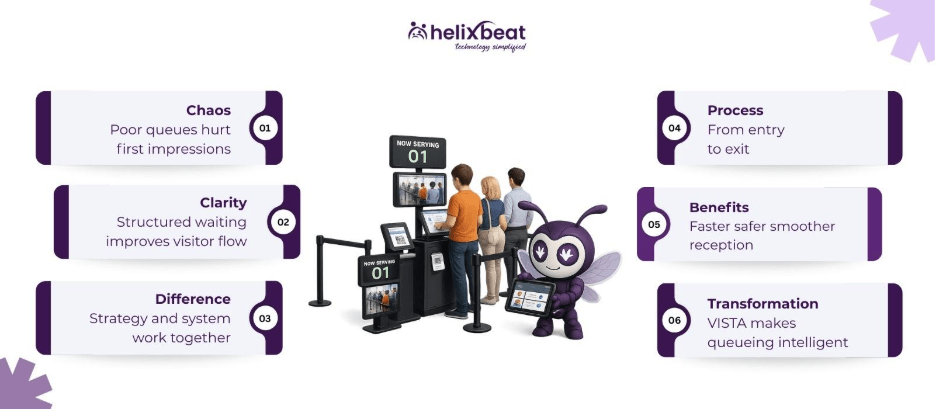
Table of Contents
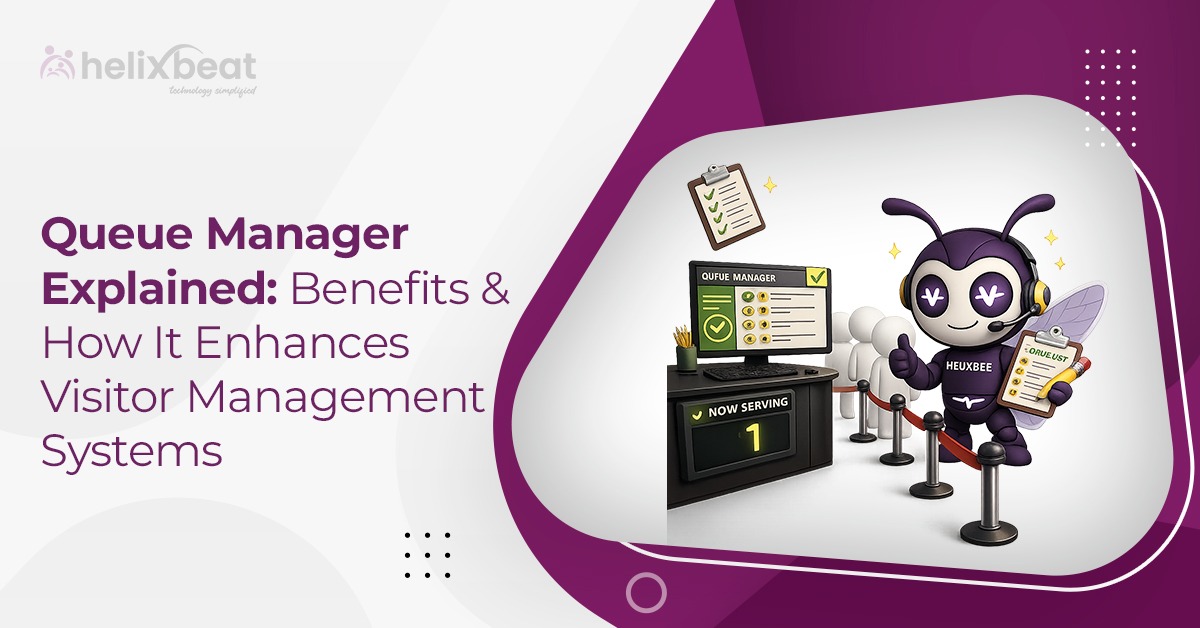
What is a Queue Manager?
A queue manager is a system or process that organizes how visitors wait, move, and get serviced within a space.
Instead of random, unmanaged lines, it ensures:
- Visitors are handled in the right order
- Wait times are structured and predictable
- Reception workload is balanced
- The entire entry experience feels smooth
In simple terms:
It replaces chaos with controlled visitor flow.
When combined with a visitor management system, queue managers become more powerful — handling not just waiting, but the entire visitor journey from entry to exit.
Queue Manager vs Queue Management System (Important Difference)
This is where most people get confused.
Queue Manager → The strategy of managing visitor flow
Queue Management System → The technology used to execute it
Think of it like this:
- Queue manager = logic
- System = execution
Example:
- Receptionist manually calling names → queue manager
- Automated token + QR check-in → queue management system
A modern visitor management system integrates both seamlessly.
Why Queue Management Matters More Than You Think?
Waiting is not just a delay — it’s an experience.
Key insights:
- 70% of visitors associate waiting with poor organization
- 1 in 4 visitors leave if waiting exceeds 10 minutes
- Most professionals prefer virtual waiting over physical lines
What this really means:
Poor queue management directly impacts business perception.
A well-designed visitor management system ensures visitors feel:
- acknowledged instantly
- guided clearly
- served efficiently
Types of Queue Management Systems
1. Single Queue System
One line, multiple service points
Best for fairness
2. Multiple Queue System
Separate lines per desk
Often leads to imbalance
3. Token-Based Queue
Number-based system with display
Common in offices and hospitals
4. Virtual Queue Management System for Workplaces
Visitors join via mobile or kiosk
No need to stand physically
Reduces perceived wait time
5. Appointment-Based Queue
Pre-scheduled visits
Best for planned meetings
6. Hybrid Queue System
Combines walk-ins + appointments + virtual queues
This is where modern visitor management system platforms are evolving.
How a Queue Manager Actually Works?
(Step-by-Step)
At a glance, queueing looks simple — people arrive, wait, and get served.
But in reality, a modern system is carefully designed to remove friction at every stage of the visitor journey.
When powered by a visitor management system, queue management becomes faster, smarter, and far more efficient. Let’s break it down step by step.
1. Entry (Walk-in / Pre-Registration)
This is where the visitor journey begins.
Visitors can:
- Walk into the reception
- Pre-register through a website or app
- Scan a QR code for instant access
The goal: eliminate confusion within the first few seconds of arrival
A well-designed visitor management system ensures visitors are instantly acknowledged. There’s no uncertainty about where to go or what to do next. In advanced setups, this step is part of a virtual queue management system for workplaces, allowing visitors to join the queue even before they arrive.
2. Registration & Check-In
Once inside, the system captures key visitor details such as:
- Name
- Purpose of visit
- Host or department
After registration, the system assigns:
- A token number
- Or a digital queue position
This replaces the chaos of “who’s next?” with a structured, trackable flow
A modern visitor management system automates this process, ensuring accuracy and speed. This is especially useful in queue management solutions for corporate offices, where multiple visitors arrive simultaneously.
3. Queue Allocation
This is where real intelligence comes into play.
Instead of placing all visitors in a single line, the system routes them based on:
- Meeting type
- Department
- Priority level
Not all visitors require the same level of attention or time
Through the integration of queue management with visitor management systems, businesses can ensure that each visitor is directed to the right place instantly. This improves efficiency and prevents unnecessary delays.
A smart visitor management system balances workload across staff, ensuring faster processing and smoother visitor flow.
4. Wait Time Tracking
Waiting is often the most frustrating part — but this is where modern systems make a difference.
Visitors receive:
- Real-time queue updates
- Estimated wait times
- Alerts when their turn is near
This transforms waiting from uncertainty into a controlled experience
With a virtual queue management system for workplaces, visitors don’t have to stand in line. They can sit comfortably or even wait remotely. This is exactly how queue systems enhance customer and visitor experience — by giving visibility and control.
5. Service Call
When it’s the visitor’s turn, the system triggers a notification via:
- Display screens
- SMS or mobile alerts
- Reception announcements
Transitions feel smooth, predictable, and professional
A smart queue management system for office reception ensures minimal idle time between visitors and eliminates confusion during service handoffs.
6. Exit & Data Logging
Once the interaction is complete:
- The visit is logged automatically
- Time spent is recorded
- Feedback may be collected
This is where queueing becomes data-driven
A visitor management system transforms this data into insights — helping businesses understand peak hours, improve staffing, and optimize operations.
In the end, queue management is not just about handling lines.
It’s about creating a seamless, efficient, and stress-free visitor journey powered by a smart visitor management system.
The Difference Between a Bad and Great Queue System
A Bad System:
- No wait time clarity
- Overcrowded reception
- Manual dependency
- Frustrated visitors
A Great System:
- Instant check-in
- Smart routing
- Real-time updates
- Seamless visitor flow
A modern visitor management system bridges this gap.
When Does a Business Need a Queue Manager?
You need one if:
- Visitors wait more than 5 minutes
- Reception gets crowded
- Walk-ins and appointments clash
- Staff feels overwhelmed
- Visitors frequently follow up
This is where queue management solutions for corporate offices become critical.
Benefits of Using Queue Managers in High-Traffic Workplaces
✓ Organized Visitor Flow
Ensures structured movement across reception
✓ Better Experience
Reduces frustration and improves satisfaction
✓ Space Optimization
Avoids crowding in one area
✓ Improved Efficiency
Speeds up processing time
✓ Enhanced Security
Tracks every visitor movement
This is how queue systems enhance customer and visitor experience in modern offices.
How Physical Queue Managers Work?
Traditional methods include:
- Barriers and stanchions
- Token systems
- Manual check-ins
While effective earlier, they come with limitations:
- require space
- no real-time tracking
- no analytics
They manage lines — not experiences
Real-World Applications of Queue Managers
Queue systems are widely used in:
- Corporate offices
- Hospitals
- Banks
- Educational institutions
In offices, a visitor management system combined with queueing ensures smooth entry for:
- employees
- clients
- vendors
Digital Queuing: A Smarter Way to Handle Visitors
Modern workplaces are shifting towards digital systems.
A virtual queue management system for workplaces allows visitors to:
- check in remotely
- wait comfortably
- receive alerts
This reduces physical congestion completely
Benefits of Using Digital Queuing System
✓ Real-Time Updates
Visitors always know their status
✓ Self Check-In
No manual dependency
✓ Data Insights
Track peak hours and wait times
✓ Scalability
Handles high traffic easily
✓ Contactless Experience
Safer and faster
This is the foundation of a smart queue management system for office reception.
Integration of Queue Management with Visitor Management Systems
This is where the real transformation happens.
The integration of queue management with visitor management systems enables:
- seamless check-in to service flow
- automated visitor routing
- real-time visibility for admins
- improved security tracking
It’s no longer just about managing queues —
it’s about managing the entire visitor journey.
A powerful visitor management system ensures both:
- flow efficiency
- experience excellence
How VISTA Enhances Visitor Flow with Smart Queueing
VISTA is designed to go beyond basic queue handling.
It combines:
- visitor registration
- access control
- intelligent queue routing
Key capabilities include:
✓ Virtual Queueing
Visitors join remotely without waiting physically
✓ Smart Routing
Assigns visitors based on purpose and priority
✓ Real-Time Notifications
Alerts both visitor and host instantly
✓ Self Check-In
QR-based or kiosk-based entry
✓ Analytics Dashboard
Tracks visitor flow and peak hours
This makes VISTA a complete visitor management system with advanced queue intelligence.
Final Thoughts
Queue managers may seem simple — but they directly impact experience, efficiency, and perception.
They don’t just manage waiting lines.
They manage:
- time
- expectations
- first impressions
With a modern visitor management system, queueing becomes seamless, intelligent, and invisible.
Ready to transform your reception experience?
Turn waiting into a smooth, structured journey with VISTA.
Frequently Asked Questions (FAQ)
1. What is a queue manager?
A queue manager organizes how visitors wait and get serviced efficiently.
2. How does a digital queue improve efficiency?
It reduces manual work, provides real-time updates, and speeds up visitor flow.
3. Can queue systems be integrated with visitor management?
Yes, the integration of queue management with visitor management systems enhances both efficiency and experience.
4. What industries benefit from queue management?
Corporate offices, hospitals, banks, and institutions benefit the most.