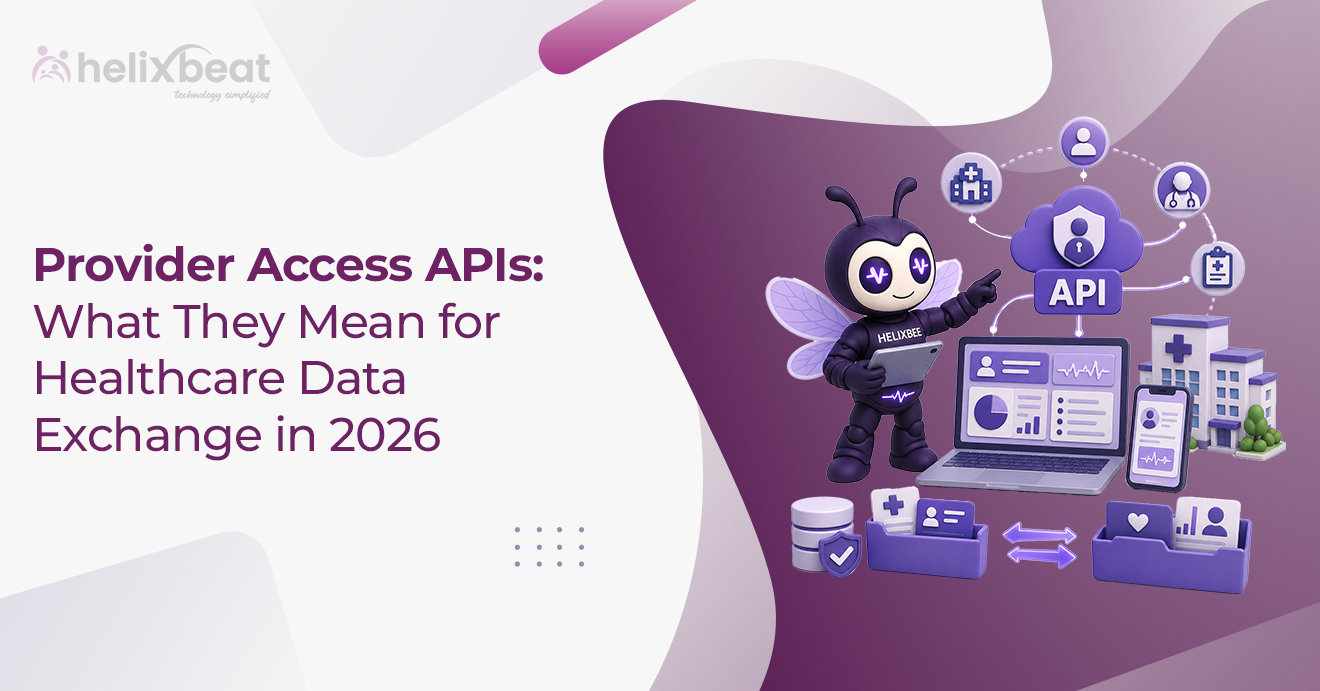


As healthcare technology keeps evolving, HL7 FHIR stands out as a key way to help data move smoothly between systems. This framework facilitates seamless exchange of health information across systems. When combined with event-driven architecture, HL7 FHIR transforms traditional healthcare systems into dynamic, responsive environments. Modern FHIR servers like FUSION play an important role in this integration. In this blog, we’ll discuss how HL7 FHIR powers event-driven healthcare architecture.
Table of Contents
Understanding HL7 FHIR
HL7 FHIR, or Fast Healthcare Interoperability Resources, represents a standard developed by Health Level Seven International for electronic health information exchange. It builds on previous HL7 standards like Version 2 and Version 3, incorporating modern web technologies such as RESTful APIs, JSON, XML, and RDF for data representation. At its core, HL7 FHIR organizes data into modular “resources” – discrete units like Patient, Observation, Medication, or Encounter – that capture specific aspects of healthcare information.
As HL7 FHIR goes mainstream, it’s pairing up with AI and analytics to drive real innovation in patient care. Organizations like the Centers for Medicare & Medicaid Services (CMS) mandate HL7 FHIR for certain data exchanges, underscoring its importance in regulatory compliance.
Principles of Event-Driven Architecture in Healthcare
Event-driven architecture (EDA) shifts healthcare systems from request-response models to reactive, asynchronous paradigms. In EDA, components communicate through events – changes or occurrences like a patient admission, lab result update, or medication order. By decoupling the systems from one another, you’re free to scale and manage each one independently.
Core elements include event producers, which generate notifications; event brokers, which route messages; and event consumers, which react to them. Common patterns involve publish-subscribe (pub/sub) models, where producers publish events to topics, and subscribers receive relevant updates without direct coupling.
In healthcare, EDA enhances responsiveness. For example, when a patient’s condition changes, systems can trigger immediate alerts to clinicians or update connected devices. This contrasts with polling, where systems repeatedly check for updates. Besides, EDA promotes scalability, handling high volumes of data from wearables, EHRs, and IoT devices. By switching to EDA, teams can see what’s happening in real-time. This means less waiting for patients and a more efficient workplace for everyone.
Role of HL7 FHIR in Event-Driven Systems
HL7 FHIR is highly effective in event-driven healthcare systems through its subscription framework, which allows push-based notifications. With FHIR subscriptions, clients can register interest in specific events or changes to resources, such as updates to a Patient’s allergies or new DiagnosticReport entries. Notifications are delivered via channels like REST hooks, WebSockets, or email, providing timely updates without constant polling.
The Subscription resource defines the criteria for these notifications. In FHIR R5 and later, topic-based subscriptions using SubscriptionTopic resources enable reusable triggers and filters, making event handling more standardized and scalable.
Integrating FHIR with event-driven architectures (EDA) supports robust workflows. For example, a hospital system can subscribe to lab results so that once results are posted, both the EHR and relevant physicians are notified automatically. Since FHIR relies on RESTful design and HTTP, you get an integration that’s both efficient and reliable.
Accelerate Event-Driven Healthcare with FUSION
In an event-driven healthcare environment, seamless interoperability is a necessity. FUSION, a modern FHIR server, brings this to life by connecting disparate systems. Whether you manage hospital operations, coordinate care, or streamline payer processes, FUSION bridges the gap between legacy systems, EHRs, and emerging digital health tools.
Built on the FHIR standard, FUSION leverages RESTful APIs for plug-and-play integration, making it simple to connect lab systems, telehealth platforms, wearables, and IoT devices. By supporting push-based notifications and subscriptions, it transforms static data into actionable events. Organizations deploying FUSION in event-driven architectures report faster data sharing, reduced referral delays, and fewer redundant tests.
By combining the power of HL7 FHIR with event-driven workflows, FUSION not only meets interoperability standards but actively enhances healthcare delivery in real time.
How FUSION Ignites Data-Driven Innovation?
The true magic of healthcare FHIR lies in its potential to fuel innovation, and FUSION amplifies this like no other. As a reliable engine for standardized data flows, it powers downstream applications that were once out of reach.
Take chronic disease management, for example. By integrating real-time data from wearables and EHRs, FUSION enables continuous monitoring and proactive interventions, potentially cutting hospital readmissions and optimizing therapies. Or, imagine a telehealth consultation that’s instantly better because the doctor has the patient’s full history right there. FUSION makes that happen, giving virtual care a huge boost in quality and making patients much happier.
Certified Excellence
FUSION is officially certified by the Drummond Group for FHIR-based interoperability, validating its conformance with healthcare data exchange standards HL7, FHIR, and SMART on FHIR. This certification demonstrates that FUSION meets industry-recognized benchmarks for secure, standardized data exchange — giving you the confidence to integrate seamlessly across systems.
What This Means for You?
In a complex healthcare ecosystem, FUSION simplifies connectivity and safeguards data integrity. With enterprise-grade uptime (99.99%) and secure authentication powered by OAuth2 and encrypted endpoints, it supports trusted, real-time collaboration between hospitals, labs, and payers.
Whether you’re mapping USCDI elements for regulatory reporting or automating data flows for public-health initiatives, FUSION keeps you compliant with current interoperability frameworks and ready for future mandates.
Final Thoughts
Event-driven healthcare architecture, powered by HL7 FHIR, is changing how healthcare systems exchange and act on data. By moving away from rigid, request-based models and adopting real-time, event-driven workflows, organizations can respond faster to clinical changes, reduce system dependencies, and handle growing data volumes with greater flexibility.
When paired with modern FHIR servers like FUSION, event-driven systems become more scalable, adaptive, and easier to integrate with emerging technologies like AI, analytics, and connected medical devices. This approach supports better care coordination, faster clinical decisions, and improved operational efficiency across healthcare ecosystems.
Explore how FUSION helps you build scalable, event-driven healthcare systems with real-time data exchange and enterprise-grade performance. Talk to our team today!
FAQs
1. What is event-driven healthcare architecture?
Event-driven healthcare architecture is a system design where applications respond to real-time events, such as patient admissions or lab result updates, rather than relying on constant data polling.
2. How does HL7 FHIR support event-driven systems?
HL7 FHIR supports event-driven workflows through subscriptions that send notifications when specific healthcare resources change.
3. How is HL7 FHIR different from older HL7 standards?
HL7 FHIR uses modern web technologies like REST APIs, JSON, and XML, making it easier to integrate and faster to implement than older HL7 versions.
4. What are SubscriptionTopic resources in FHIR R5?
SubscriptionTopic resources define reusable event triggers and filters, helping standardize and scale event-driven workflows.
5. Can event-driven architecture scale with healthcare data growth?
Yes, event-driven systems are designed to handle high volumes of data from EHRs, wearables, and IoT devices without performance bottlenecks.