

Did you know that over 60% of clinics and diagnostic centers in India report inefficiencies due to outdated software systems? Managing patient records, lab reports, and appointments across multiple platforms often leads to delays, errors, and frustrated staff. Add to that the increasing pressure of regulatory compliance, and it’s no wonder healthcare professionals feel overwhelmed by administrative tasks rather than focusing on patient care.
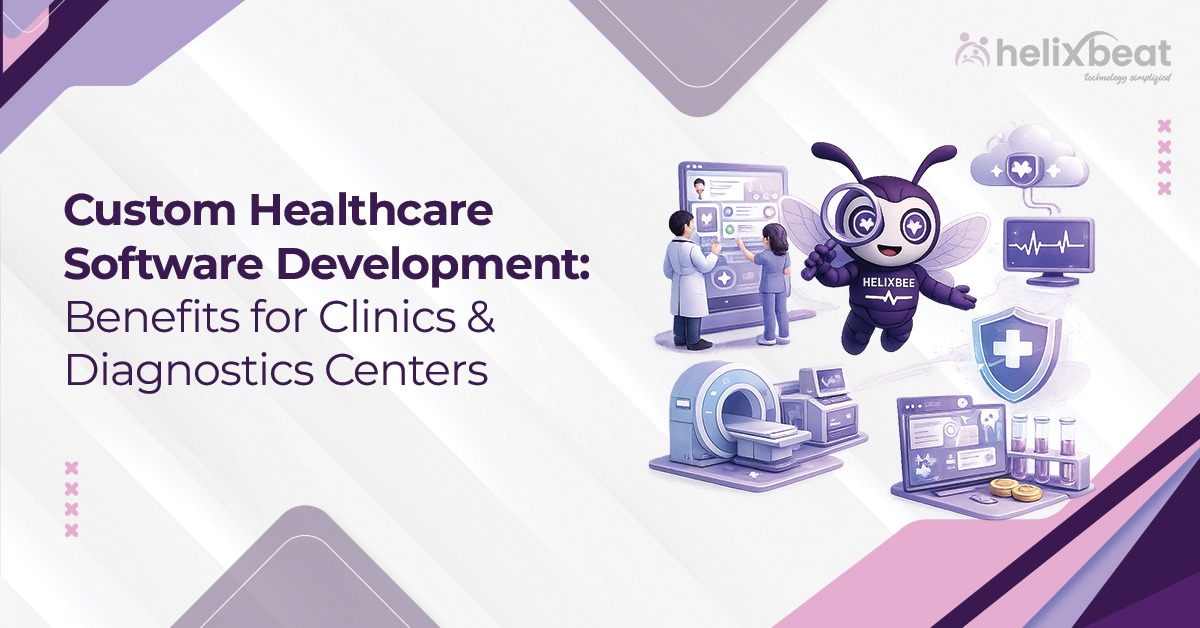
This is where custom healthcare software development comes in. Unlike generic off-the-shelf software, a tailored solution is designed specifically for your clinic’s workflows, patient management needs, and diagnostics processes.
By adopting custom software development for healthcare, clinics can streamline operations, reduce manual errors, and deliver a smoother, more efficient patient experience – all while staying compliant and secure. In short, it transforms administrative headaches into seamless digital operations.
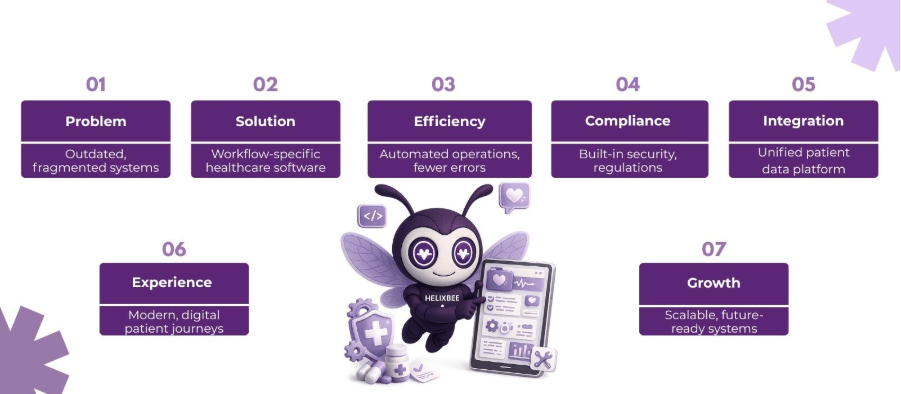
Table of Contents
Overview on Custom Healthcare Software Development
Custom healthcare software development refers to creating digital solutions specifically designed for the unique needs of clinics, hospitals, and diagnostic centers.
Unlike generic systems, these custom healthcare software solutions are customised to streamline patient management, automate lab workflows, integrate billing and insurance processes, and ensure compliance with healthcare regulations.
By focusing on your clinic’s specific challenges, custom medical software development services help improve efficiency, reduce errors, and enhance both staff productivity and patient experience – all while providing the flexibility to scale as your healthcare facility grows.
What are the main Challenges Faced by Clinics & Diagnostic Centers in 2026
Here are five real, trending challenges that clinics and diagnostic centers are facing in 2026:
- Workforce Shortages & Staff Burnout – Clinics struggle with staffing gaps and burnout as administrative burdens grow, making it harder to provide timely patient care and retain skilled professionals.
- Rising Operational Costs & Margin Pressure – Increased costs for labor, supplies, rent, and compliance strain budgets, especially for smaller clinics and diagnostic centers operating on fixed reimbursement rates.
- Regulatory Compliance & Data Privacy – Evolving data protection standards, telehealth rules, and AI oversight require systems that can securely manage patient data and meet strict legal requirements.
- Fragmented Data & Interoperability Gaps – Difficulty in integrating patient records, lab results, imaging, and third‑party systems leads to inefficiencies, duplicate work, and slower clinical workflows.
- Patient Expectations for Digital Experience – Patients now expect seamless digital interactions, such as online bookings, virtual care options, and faster results – challenging traditional clinics to modernize quickly.
These trends highlight why many healthcare providers are turning to custom healthcare software development to address operational challenges and deliver better service.
How Custom Healthcare Software Solves These Challenges
Clinics and diagnostic centers don’t struggle because they lack expertise, they struggle because their systems don’t support the way they actually work. This is exactly where custom healthcare software development makes a real difference.
1. Reducing staff workload and burnout
Instead of juggling spreadsheets, calls, and multiple tools, teams can rely on one system built around their daily tasks. With custom software development for healthcare, appointment scheduling, test coordination, report sharing, and follow-ups happen automatically. This reduces repetitive admin work and gives staff more time to focus on patients.
2. Controlling rising operational costs
When processes are manual or disconnected, costs silently pile up. Custom healthcare software solutions help clinics track billing, inventory, diagnostics throughput, and resource usage in real time.
This visibility makes it easier to spot inefficiencies and make smarter decisions that protect margins.
3. Staying compliant without constant stress
Healthcare regulations are only getting stricter. Through custom medical software development services, compliance and data security are built into the system itself—secure access controls, audit trails, encrypted patient data, and regulation-ready workflows. Clinics don’t have to worry about keeping up; the software already does.
4. Bringing all patient data into one place
Fragmented systems slow everything down. Custom solutions connect patient records, lab results, imaging, and third-party integrations into a single, unified platform. This reduces errors, avoids duplication, and helps clinicians make faster, more informed decisions.
5. Meeting modern patient expectations
Patients now expect quick bookings, digital reports, and clear communication. With custom healthcare software development, clinics can offer patient portals, real-time updates, and teleconsultation features that feel simple and intuitive – improving trust, satisfaction, and retention.
In short, custom healthcare software doesn’t just fix technical problems; it removes daily frustrations, improves care delivery, and helps clinics operate with confidence in a fast-changing healthcare environment.
Custom Software vs Off-the-Shelf Software: A Quick Comparison
| Aspect | Custom Software | Off-the-Shelf Software |
| Fit for Your Business Needs | Built specifically for the way we work, matching our workflows, goals, and long-term plans without forcing adjustments. | Designed for general use, so we often need to change our processes to fit the software. |
| Flexibility & Scalability | Can grow and change as our business grows – new features, users, and integrations can be added anytime. | Limited flexibility; scaling usually means upgrading plans or switching to a new tool altogether. |
| User Experience | Designed around our team’s daily tasks, making it easier to use and faster to adopt. | Comes with features we may never use, which can make the system feel cluttered or confusing. |
| Integration with Existing Systems | Easily integrates with our current tools, databases, and third-party platforms without workarounds. | Integration options are limited and often require plugins or additional costs. |
| Cost Over Time | Higher upfront investment, but lower long-term costs since we pay only for what we actually need. | Lower initial cost, but recurring licenses, add-ons, and upgrades can become expensive over time. |
Why Helixbeat is the Best Choice for Custom Healthcare Software Development
Custom software solutions from Helixbeat are built around your unique business goals – not one‑size‑fits‑all templates. These solutions help simplify workflows, improve efficiency, and support long‑term growth by matching the software directly to how your business works.
Why choose Helixbeat’s Custom Software Solutions:
- Customised to your needs – Designed specifically for your business goals and workflows.
- Agile development – Flexible and iterative build process that adapts as your business grows.
- Seamless integration – Works smoothly with your existing systems and tools.
Scalable architecture – Software that can grow with increasing users, features, and data.
- Focused on efficiency – Helps streamline operations, reduce costs, and improve decision‑making.
Using an agile development process and seamless system integration, Helixbeat ensures your software adapts as your business evolves and stays reliable in day‑to‑day use.
FAQ
1. Can custom healthcare software help reduce errors in patient records?
Absolutely. Custom software is designed around your hospital or clinic workflows, ensuring patient data is captured accurately, updated in real time, and easily accessible. This minimizes mistakes caused by manual entry or incompatible systems.
2. How does custom software improve hospital staff efficiency?
It automates repetitive tasks like appointment scheduling, billing, inventory tracking, and reporting. Staff spend less time on paperwork and more time on patient care, improving overall productivity.
3. Can this software support telemedicine and remote consultations?
Yes. Custom healthcare software can include telemedicine modules, secure video consultations, online prescriptions, and patient portals, helping you serve patients even from a distance.
4. How do we ensure patient data stays secure in custom software?
Custom software comes with built-in security measures like role-based access, encryption, and audit logs. Since it’s built for your system, it reduces vulnerabilities that generic software may have.
5. Will the software adapt as our hospital grows or adds new departments?
Definitely. Custom healthcare software is scalable, meaning you can add new modules, users, or integrations as your hospital expands — without disrupting existing operations.