

If you’re managing a medical payment portal , staying HIPAA-compliant can feel like trying to hit a moving target. With new privacy proposals, enhanced security expectations, and increased regulatory oversight in 2026, healthcare payment systems face more scrutiny than ever.
HIPAA compliance is no longer just about ticking boxes — it’s about protecting patient data, streamlining workflows, and maintaining trust. This updated guide walks you through what’s changing, what it means for your portal, and how you can stay ahead.
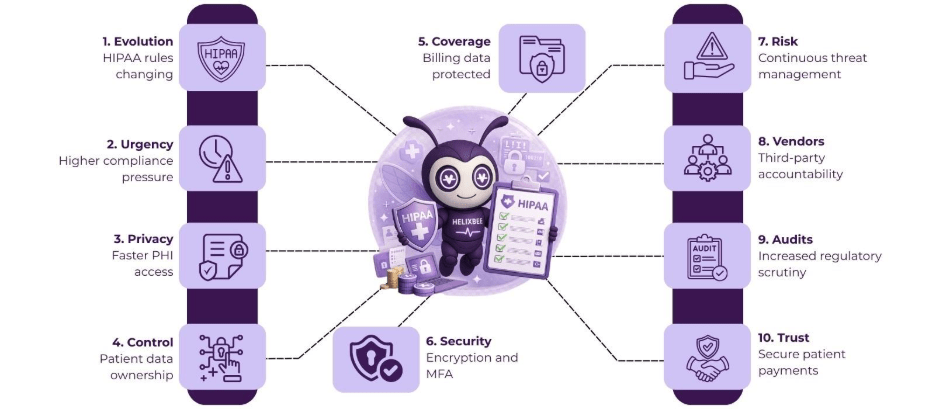
Table of Contents
Why HIPAA Updates Matter in 2026
HIPAA, the Health Insurance Portability and Accountability Act, has been around for more than 25 years. Its Privacy and Security Rules were designed to protect patient health information (PHI), control how it’s shared, and ensure electronic PHI (ePHI) is secured.
However, technology has advanced, and cyber threats have evolved. The U.S. Department of Health and Human Services (HHS) and its Office for Civil Rights (OCR) are updating HIPAA to reflect today’s healthcare ecosystem — including medical payment portals that handle sensitive financial and health data.
Key reasons these updates matter now:
- Patients expect higher privacy and security standards
- Ransomware and cyberattacks are increasing
- Medical payment portals are often the first line of contact for PHI
- Enforcement actions and audits are becoming more frequent (hipaajournal.com)
HIPAA in Brief: A Quick History
Over the years, HIPAA has evolved in small but meaningful ways:
- 2009 HITECH Act: Introduced breach notification requirements
- 2013 Omnibus Rule: Expanded liability to business associates
- 2024 Part 2 Alignment: Substance use disorder records brought closer to HIPAA standards
Now, in 2026, we’re seeing potentially the most significant changes in years, with updates to the Privacy Rule, Security Rule, and stricter audit requirements.
For medical payment portals, these updates could directly affect how billing data, payment histories, and patient identifiers are stored and shared.
Privacy Rule Updates You Need to Know
The proposed updates to HIPAA’s Privacy Rule aim to give patients more control over their health information. While not yet finalized, these changes are expected to roll out in 2026.
Faster Access to PHI
Patients may be able to access their health information within 15 days instead of the current 30. For your medical payment portal, this means:
- Providing quick, downloadable transaction histories
- Supporting secure electronic requests
- Streamlining processes for PHI access requests (hipaajournal.com)
Enhanced Patient Control
Patients could have the right to take photos or notes of their data, or transfer it to a personal health application. If your portal integrates with EHRs or other systems, it must support these requests while maintaining compliance.
Expanded Definitions
Billing records, including payment histories, may now be explicitly recognized as part of an EHR. That means your medical payment portal must treat payment data with the same protection as clinical data.
Security Rule Enhancements: Stronger Protection Required
OCR is also updating the HIPAA Security Rule to reflect modern cybersecurity threats. Proposed changes may become mandatory in 2026.
Encryption and Authentication
- All ePHI must be encrypted in transit and at rest
- Multi-factor authentication (MFA) is no longer optional
- Systems must undergo regular vulnerability scans and penetration tests
For a medical payment portal , these requirements mean security features cannot be “add-ons” — they must be built-in and enforceable.
Risk Management
- Conduct documented risk assessments annually
- Maintain incident response plans with defined timelines
- Track and log every PHI access attempt
Vendor and Workforce Controls
- Restrict access based on roles
- Terminate access immediately when staff leave
- Ensure business associates meet HIPAA standards
For your portal, this means internal compliance and third-party vendor compliance go hand in hand.
Part 2 Records: Special Handling for Sensitive Data
Substance use disorder (SUD) records have unique protections under Part 2. In 2026, these rules are fully aligned with HIPAA, meaning your portal must:
- Support single-consent workflows for future uses
- Treat SUD billing data as highly sensitive
- Comply with breach notification rules for any accidental disclosure
HIPAA Audits Are Back
OCR restarted audits in 2025 and is expanding scope in 2026. Expect:
- Randomized checks on both covered entities and business associates
- In-depth evaluation of risk assessments and policies
- Penalties for non-compliance
A medical payment portal provider like PayNova must be audit-ready at all times — including logs, encryption reports, and access records.
Training and Workforce Awareness
Training remains a critical compliance requirement:
- Onboard employees during hiring
- Train whenever policies or rules change
- Conduct annual refresher courses
With 2026 updates, staff must understand new access timelines, patient rights, and security protocols.
Your 2026 HIPAA Compliance Checklist for Medical Payment Portals
To stay ahead, make sure your portal addresses the following:
✔️ Data Encryption
Encrypt all PHI at rest and during transmission.
✔️ Multi-Factor Authentication
MFA should be mandatory for all user logins.
✔️ Role-Based Access Controls
Limit access to PHI based on user roles.
✔️ Incident Response Plans
Maintain documented procedures for breaches and recovery.
✔️ Regular Risk Assessments
Conduct frequent risk analyses and document findings.
✔️ Integration Compliance
Ensure EHR and third-party integrations meet HIPAA standards.
✔️ Audit Logging
Maintain logs to withstand regulatory scrutiny.
✔️ Patient PHI Access
Provide fast, secure access to patient data.
✔️ Consent Management for Sensitive Data
Handle Part 2 and other sensitive records with proper consent workflows.
✔️ Staff Training
Update internal policies and provide ongoing HIPAA training.
Conclusion
HIPAA compliance in 2026 is about more than just avoiding fines. For medical payment portals like PayNova, it’s about:
- Strengthening patient trust
- Protecting sensitive financial and health data
- Preparing for audits and regulatory scrutiny
- Integrating with modern EHR systems securely
By proactively following this checklist, your portal can stay compliant, secure, and patient-friendly — even as HIPAA continues to evolve.
Ready to make your medical payment portal HIPAA-compliant for 2026? Start by reviewing your systems, updating your policies, and ensuring your portal meets every requirement.
FAQs
1. What is a medical payment portal?
A medical payment portal is a secure online platform that allows patients to pay bills, view statements, and access health-related financial information.
2. Why is HIPAA compliance important for medical payment portals?
HIPAA compliance protects sensitive patient data, reduces security risks, and ensures your portal meets federal privacy and security standards.
3. What are the key HIPAA updates for 2026?
Key updates include faster patient access to PHI, stricter security rules, enhanced encryption requirements, and updated audit and breach notification standards.
4. How can I make my medical payment portal HIPAA-compliant?
Ensure encryption, multi-factor authentication, role-based access, consent management, staff training, and regular risk assessments in line with HIPAA guidelines.