

Healthcare payments in the U.S. are not just complicated—they’re expensive. Between insurance delays, rising patient responsibility, and administrative overhead, providers are constantly under pressure to maintain healthy cash flow.
And yet, one of the most overlooked cost drivers is right in front of you: your healthcare merchant services provider.
If you’re running a clinic, hospital, or specialty practice, you’re already paying transaction fees, processing charges, and hidden costs. The question is—are you paying more than you should?
This guide breaks down how to negotiate better rates, what to look for, and how platforms like PayNova can help you optimize your entire payment ecosystem—not just reduce fees.
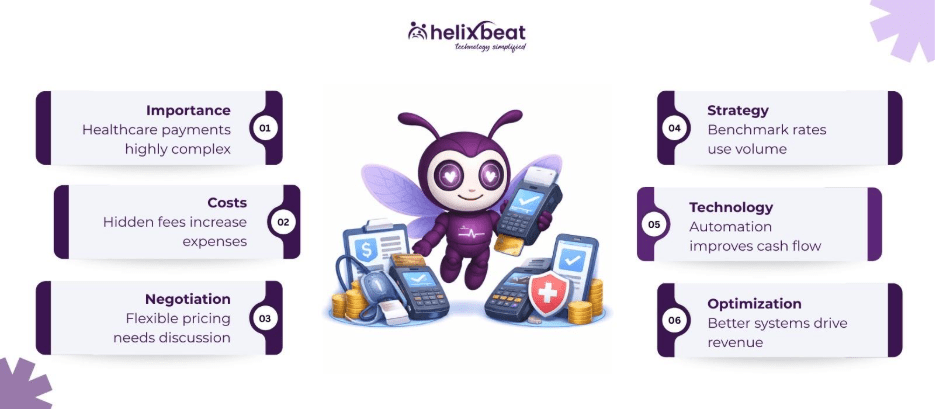
Table of Contents
Why Healthcare Merchant Services Matter More Than You Think
Let’s start with the basics.
Healthcare merchant services are the systems that allow providers to accept payments from patients—credit cards, debit cards, ACH transfers, and digital wallets.
But in healthcare, it’s not just about swiping a card.
You’re dealing with:
- Co-pays and deductibles
- Split payments (insurance + patient)
- Recurring billing plans
- Compliance (HIPAA + PCI-DSS)
According to the American Medical Association, administrative costs account for nearly 25–30% of total healthcare spending in the U.S. A significant portion of this comes from billing and payment inefficiencies.
That’s why choosing the right healthcare merchant services provider—and negotiating the right rates—is critical.
The Hidden Costs You’re Probably Paying
Most providers assume their fees are “standard.” They’re not.
Here’s what often goes unnoticed:
1. Transaction Fees
Typically 2%–3.5% per transaction, depending on card type and volume.
2. Monthly Fees
- Gateway fees
- Statement fees
- Compliance fees
3. Chargebacks & Penalties
Healthcare has higher dispute rates due to unclear billing.
4. Integration Costs
If your system doesn’t connect with EHR or PMS, you’re paying in inefficiency.
A report from Medical Group Management Association found that over 60% of medical practices experience delayed patient payments, often due to poor billing systems.
This is where strong healthcare merchant services can reduce both cost and friction.
Why Negotiation is Not Optional
If you’re not negotiating, you’re overpaying. Simple as that.
Unlike fixed insurance reimbursements, healthcare merchant services pricing is flexible. Providers often offer:
- Tiered pricing
- Interchange-plus pricing
- Volume-based discounts
But they won’t offer the best rates unless you ask.
Step-by-Step: How to Negotiate Better Rates
Let’s make this practical.
Step 1: Understand Your Current Pricing Model
Before negotiating, know what you’re paying.
Ask your provider:
- What is my effective rate?
- Are there hidden fees?
- Am I on tiered or interchange pricing?
Many merchant services for medical offices still operate on outdated tiered pricing, which is often more expensive.
Step 2: Benchmark Against Industry Rates
Here’s a rough benchmark:
- Small practices: 2.9% – 3.5%
- Mid-sized providers: 2.2% – 2.9%
- High-volume providers: 1.5% – 2.2%
If you’re above this, you have room to negotiate.
Step 3: Use Volume as Leverage
The more transactions you process, the more negotiating power you have.
Example:
A multi-specialty clinic processing $500,000/month reduced their rate from 2.9% to 2.1%, saving over $48,000 annually.
That’s the power of optimized healthcare merchant services.
Step 4: Demand Healthcare-Specific Features
Not all providers understand healthcare.
You need:
- Insurance + patient split payments
- Recurring billing
- EHR integration
- HIPAA compliance
Generic providers may be cheaper upfront but cost more in inefficiency.
That’s why specialized medical merchant services are critical.
Step 5: Negotiate Beyond Just Fees
Smart providers don’t just negotiate rates—they negotiate value.
Ask for:
- Free integration with EHR/PMS
- No setup fees
- Lower chargeback fees
- Built-in reporting tools
The right healthcare merchant account should support your operations—not just process payments.
Real-World Example
Let’s look at a realistic scenario.
Problem
A dermatology clinic in Texas was facing:
- High transaction fees (3.2%)
- Delayed patient payments
- Manual billing errors
Solution
They switched to a healthcare-focused payment platform and renegotiated their healthcare merchant services contract.
Results
- Reduced fees to 2.3%
- Increased patient collections by 28%
- Saved 15+ hours/week in admin work
This is the difference between a generic provider and optimized merchant services for medical offices.
The Role of Technology in Negotiation
Here’s where most providers miss the bigger picture.
Negotiation isn’t just about lowering rates—it’s about improving your entire payment system.
Modern platforms like PayNova combine:
- Payment processing
- Claim validation
- Automation
- Patient engagement
According to Healthcare Financial Management Association, automated payment systems can reduce billing costs by up to 30%.
That’s far more impactful than shaving 0.5% off transaction fees.
Common Mistakes to Avoid
Let’s save you from costly errors.
1. Choosing the Lowest Rate
Low fees often come with hidden costs or poor support.
2. Ignoring Integration
If your system doesn’t integrate, your staff pays the price.
3. Overlooking Patient Experience
Confusing billing = delayed payments
4. Not Reviewing Contracts Regularly
Rates change. Your contract should too.
Even the best healthcare merchant account needs periodic optimization.
How PayNova Changes the Game
Now let’s talk about what actually works.
PayNova is not just another payment processor. It’s a complete healthcare payment automation platform designed for U.S. providers.
Here’s how it helps:
1. Smarter Payment Processing
PayNova optimizes healthcare merchant services by:
- Reducing transaction friction
- Supporting multiple payment methods
- Automating collections
2. Built for Healthcare Complexity
Unlike generic medical merchant services, PayNova handles:
- Insurance + patient split billing
- Co-pays and deductibles
- Recurring payment plans
3. Faster Cash Flow
With automation and real-time processing:
- Claims move faster
- Patients pay quicker
- Revenue cycles improve
4. Full Compliance
PayNova ensures:
- HIPAA compliance
- PCI-DSS security
So your healthcare merchant account is secure and audit-ready.
5. Better Patient Experience
Patients get:
- Clear, itemized bills
- Digital payment options
- Flexible plans
And that directly impacts collections.
The Bigger Picture: It’s Not Just About Fees
Negotiating better rates is important—but it’s only one piece of the puzzle.
The real goal is:
- Faster payments
- Lower admin costs
- Better patient experience
- Higher revenue
That’s what modern healthcare merchant services should deliver.
Final Thoughts
Healthcare providers are under more financial pressure than ever. Rising costs, delayed reimbursements, and increasing patient responsibility make efficient payment systems non-negotiable.
Negotiating your healthcare merchant services contract is one of the fastest ways to improve your bottom line—but only if you do it strategically.
Don’t just look for cheaper rates.
Look for smarter systems.
Because in today’s healthcare landscape, the providers who win aren’t the ones who process payments…
They’re the ones who optimize them.
FAQs
1. What are healthcare merchant services?
Healthcare merchant services are payment processing solutions designed specifically for medical providers to handle patient payments, insurance balances, and recurring billing securely.
2. How can I reduce fees on my healthcare merchant account?
You can reduce fees by negotiating rates, switching to interchange pricing, increasing transaction volume, and choosing healthcare-specific providers.
3. Why are merchant services for medical offices different?
They must handle complex billing structures, ensure HIPAA compliance, and integrate with healthcare systems like EHR and PMS.
4. Are medical merchant services worth the investment?
Yes. They reduce administrative workload, improve payment speed, and enhance patient experience—leading to better revenue outcomes.
5. How does PayNova improve healthcare payments?
PayNova automates billing, accelerates collections, ensures compliance, and provides a seamless payment experience for both providers and patients.