

Table of Contents
The Real Cost of Healthcare Payment Processing Errors (And How to Prevent Them)
The U.S. healthcare system processes billions of claims annually, yet industry data shows that 5–15% of medical claims are denied on first submission. The average cost to rework a denied claim exceeds $25 per claim, and nearly 65% of denied claims are never resubmitted, leading to permanent revenue loss. Meanwhile, hospitals operate on margins that often fall below 3–5%, making even minor inefficiencies financially significant.
At the center of this issue lies one critical function: healthcare payment processing.
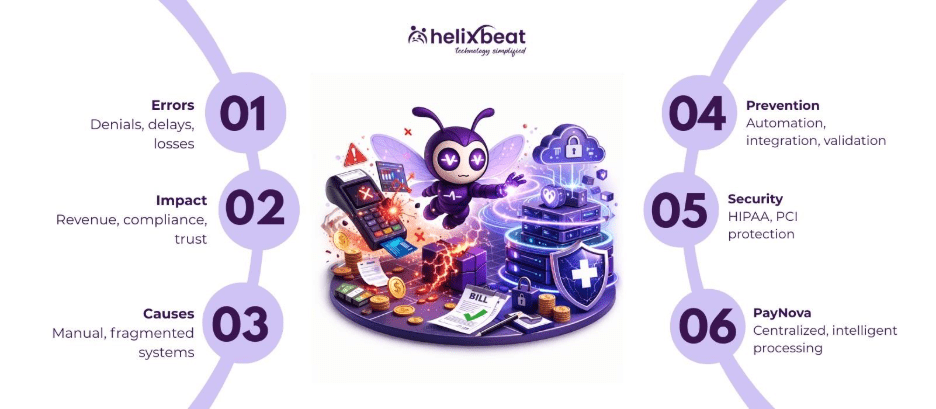
When healthcare payment processing systems fail—due to coding mistakes, eligibility errors, manual data entry issues, or disconnected systems—the consequences ripple across revenue cycles, compliance frameworks, and patient experience.
For healthcare providers seeking long-term financial stability, preventing payment errors is no longer optional. It is strategic.
What Are Payment Errors in Healthcare?
Payment errors in healthcare refer to inaccuracies, delays, or system breakdowns that interfere with proper reimbursement for medical services rendered.
These errors commonly occur during:
- Patient registration
- Insurance eligibility verification
- Coding (ICD-10, CPT, HCPCS)
- Claim submission
- Payment posting
- Reconciliation and refund handling
Inadequate healthcare payment processing systems allow small mistakes to escalate into claim denials, delayed reimbursements, compliance risks, and patient disputes.
The True Cost of Healthcare Payment Processing Errors
1. Revenue Leakage from Claim Denials
Denied claims represent one of the most expensive consequences of flawed healthcare payment processing. When insurers reject claims due to incomplete documentation, incorrect codes, or lack of prior authorization, providers must allocate additional time and staff to resubmit.
Each denial extends accounts receivable (A/R) days and strains cash flow. For mid-sized practices, recurring denial patterns can mean hundreds of thousands in lost annual revenue.
2. Administrative Overhead
Manual corrections increase operational costs. Staff must:
- Investigate denials
- Contact insurers
- Communicate with patients
- Track appeals
- Process refunds
Inefficient healthcare payment processing transforms billing teams into recovery units rather than revenue optimizers.
3. Cash Flow Instability
Healthcare providers depend on predictable reimbursement cycles. Errors delay insurance payments and increase patient outstanding balances.
When healthcare payment processing lacks automation and real-time validation, providers experience inconsistent cash flow—impacting payroll, investments, and growth initiatives.
4. Compliance and Security Risks
Healthcare payment data involves both protected health information (PHI) and financial details. HIPAA and PCI-DSS regulations mandate strict data protection standards.
Errors or vulnerabilities in healthcare payment processing systems increase exposure to:
- Data breaches
- Regulatory fines
- Legal liabilities
- Reputational damage
Compliance failures can cost far more than the original payment error.
5. Patient Experience Damage
Patients today expect transparency and digital convenience. Confusing bills, incorrect charges, and unclear balances create frustration.
Poor healthcare payment processing leads to:
- Delayed payments
- Disputes
- Negative reviews
- Reduced trust
In competitive healthcare markets, patient financial experience directly impacts retention.
Root Causes of Healthcare Payment Processing Errors
Understanding systemic causes enables prevention.
Manual Data Entry
Human errors during registration or coding introduce inaccuracies into claims. Without automation, healthcare payment processing becomes vulnerable at multiple touchpoints.
Complex Multi-Payer Structures
Providers must manage:
- Private insurers
- Medicare
- Medicaid
- Secondary insurance
- Self-pay patients
Each payer has unique policies. Without intelligent validation tools, healthcare payment processing becomes fragmented and error-prone.
Disconnected Systems
When EHRs, billing platforms, and payment systems do not integrate seamlessly, staff manually transfer information. Data mismatches increase denial rates and reconciliation errors.
Limited Payment Flexibility
Rigid payment methods discourage timely patient payments. Modern healthcare payment processing must accommodate digital wallets, ACH, recurring billing, and online portals.
How to Prevent Healthcare Payment Processing Errors
Prevention requires structured systems, automation, and healthcare-specific expertise.
1. Automate Billing and Validation
Automation reduces manual coding mistakes and incomplete claims. Intelligent healthcare payment processing systems can:
- Flag missing documentation
- Validate codes before submission
- Automate recurring payments
- Reduce duplicate billing
Automation shifts billing from reactive correction to proactive accuracy.
2. Enable Real-Time Insurance Verification
Pre-service eligibility checks significantly reduce denials. Integrated healthcare payment processing platforms verify coverage instantly, preventing surprises for both provider and patient.
3. Integrate Clinical and Financial Systems
When EHR, Practice Management Systems (PMS), and payment gateways operate in sync, data accuracy improves dramatically.
Seamless integration strengthens healthcare payment processing workflows and reduces duplication.
4. Strengthen Compliance Safeguards
Encryption, tokenization, and fraud detection mechanisms protect patient data. Healthcare-specific payment platforms ensure HIPAA and PCI-DSS compliance is embedded into every transaction.
Secure healthcare payment processing is both a financial and ethical necessity.
5. Offer Flexible, Transparent Patient Payment Options
Clear, itemized billing combined with flexible payment plans improves collection rates.
Modern healthcare payment processing should include:
- Online portals
- Digital payments
- Recurring billing
- Automated reminders
Patient-friendly systems reduce confusion and accelerate revenue realization.
How PayNova Prevents Healthcare Payment Processing Errors
PayNova is designed specifically to address the structural weaknesses in traditional healthcare payment processing systems.
Unlike generic payment gateways, PayNova is healthcare-native, meaning it understands the complexities of multi-payer billing, insurance reimbursements, and regulatory compliance.
Here’s how PayNova reduces costly errors:
1. Centralized Payment Management
PayNova consolidates insurance payments, patient self-pay, and third-party reimbursements into one streamlined platform. This eliminates fragmented reconciliation and strengthens healthcare payment processing accuracy.
2. Real-Time Insurance Verification
PayNova verifies eligibility and coverage instantly, minimizing claim denials due to outdated or incorrect insurance information.
3. Seamless EHR and PMS Integration
By integrating directly with Electronic Health Records and Practice Management Systems, PayNova eliminates redundant data entry and reduces coding inconsistencies.
This creates a connected healthcare payment processing environment.
4. HIPAA and PCI-DSS Compliance Built In
PayNova uses advanced encryption and tokenization technologies to secure transactions. Compliance is embedded into the infrastructure, reducing regulatory risk.
Secure healthcare payment processing protects both provider and patient trust.
5. Automated Payment Plans and Recurring Billing
For patients with high deductibles or out-of-network balances, PayNova enables automated payment plans. This reduces defaults and improves overall collection performance.
6. Advanced Reporting and Analytics
PayNova provides real-time dashboards that track:
- Denial patterns
- Payment timelines
- Outstanding balances
- Revenue cycle performance
Data-driven insights improve healthcare payment processing decision-making at an executive level.
7. Telehealth Payment Enablement
As virtual care expands, PayNova integrates with telehealth platforms to support secure online payments for remote consultations and digital services.
The Strategic Shift: From Error Management to Error Prevention
Healthcare organizations often allocate resources toward correcting payment errors after they occur. However, prevention delivers significantly higher returns.
Optimized healthcare payment processing:
- Reduces denial rates
- Improves cash flow predictability
- Lowers administrative overhead
- Enhances compliance confidence
- Strengthens patient satisfaction
PayNova enables this shift by transforming payment operations into an integrated, secure, and automated ecosystem.
Conclusion: Accuracy Is a Financial Strategy
The cost of healthcare payment processing errors extends beyond reworked claims. It impacts operational efficiency, regulatory standing, and patient trust.
As healthcare reimbursement models grow more complex, providers cannot afford fragmented or manual systems. Intelligent, healthcare-focused solutions like PayNova provide the structure, automation, and compliance safeguards necessary to prevent costly breakdowns.
In today’s healthcare environment, strong healthcare payment processing is not just about transactions—it is about protecting revenue, ensuring compliance, and delivering a seamless financial experience for patients.
Prevention is no longer a billing function. It is a leadership decision.
FAQs
1. What is healthcare payment processing?
Healthcare payment processing refers to the system that manages insurance reimbursements, patient payments, claims submission, and transaction security within healthcare organizations.
2. Why do errors occur in healthcare payment processing?
Errors in healthcare payment processing often result from manual data entry, incorrect coding, insurance verification failures, or disconnected billing systems.
3. How do healthcare payment processing errors affect revenue?
Healthcare payment processing errors can lead to claim denials, delayed reimbursements, increased administrative costs, and long-term revenue loss.
4. How can automation improve healthcare payment processing?
Automation improves healthcare payment processing by validating claims, reducing manual errors, enabling real-time insurance checks, and accelerating payment collection.
5. How does PayNova optimize healthcare payment processing?
PayNova optimizes healthcare payment processing by integrating with EHR systems, automating insurance verification, ensuring compliance, and streamlining patient payments.