

Let’s be honest.
When we hear the word “risk” in the corporate world, we usually think about money. Losses. Compliance. Audits.
But risk is much bigger than that.
It’s about people.
It’s about access.
It’s about information.
As businesses grow in India — whether in Mumbai, Bengaluru, Delhi, or a fast-growing tier-2 city — operations become more complex. More employees. More vendors. More visitors.
And with that?
More gaps.
One of the most ignored gaps?
Table of Contents
Visitor management.
It may look like a small front-desk task. Just signing a register. Issuing a badge. Making a call.
But when you connect visitor management to corporate risk strategy, it becomes one of your strongest defense layers.
Let’s break this down.
What Is Corporate Risk Strategy — Really?
Corporate risk strategy is simply a plan.
A plan to spot risks early.
A plan to reduce damage.
A plan to protect people, property, and reputation.
Risks can come from anywhere:
- Cyberattacks
- Supply chain breakdowns
- Workplace accidents
- Unauthorized access
- Data leaks
Now imagine this.
A large IT company in Bengaluru. Vendors walk in daily. Candidates come for interviews. Delivery partners move in and out. Consultants visit meeting rooms.
But there’s no structured way to track who enters or leaves.
Sounds risky, right?
Because it is.
Without proper visitor management, you’re not just risking physical security. You’re risking legal trouble. Data exposure. Reputation damage.
And here’s something serious — studies show that unmonitored access contributes to nearly 43% of physical security breaches worldwide.
That’s not a small number.
That’s a warning sign.
When Visitor Management Fails, Risk Wins
Let’s make this real.
Scenario 1: The Paper Register Problem
Picture a tech park in Hyderabad. Visitors sign a paper log at reception. No ID scan. No photo. No digital tracking.
A visitor arrives for a meeting. But instead of waiting, they casually walk into a restricted zone.
Inside? Prototype devices. Confidential data.
No one noticed.
No alert triggered.
No movement tracked.
That one gap in visitor management can lead to intellectual property theft.
And that’s not just a mistake.
That’s a corporate disaster.
Scenario 2: Fire Alarm Chaos
It’s Friday evening. Fire alarm rings. Everyone rushes out.
Later, security realizes — 25 visitors were inside the building.
But their details are incomplete.
Some names are unreadable.
Some entries are missing exit times.
Now what?
In an emergency, you need accurate data. Not guesswork.
Without a proper visitor management system, companies expose themselves to legal risks and safety failures.
So What Exactly Is Visitor Management?
Let’s simplify it.
Visitor management is the system that tracks and manages every non-employee who enters your premises.
Clients.
Vendors.
Interview candidates.
Contractors.
Delivery agents.
Guests.
It’s not just about signing a book.
Modern visitor management includes:
- Pre-registration before arrival
- Digital check-in
- Instant badge printing
- Photo capture
- ID verification
- Access control integration
- Host alerts
- Digital logs
In today’s world, paper registers just don’t work anymore. They’re slow. Easy to manipulate. Impossible to audit properly.
Digital visitor management brings structure. Accuracy. Accountability.
Why Visitor Management Is a Risk Strategy — Not Just a Process
Here’s the big shift.
Visitor management is no longer a front-desk task.
It’s a security strategy.
Let’s see how.
1. You Always Know Who’s Inside
If you don’t know who is in your building, you don’t control your building.
Simple.
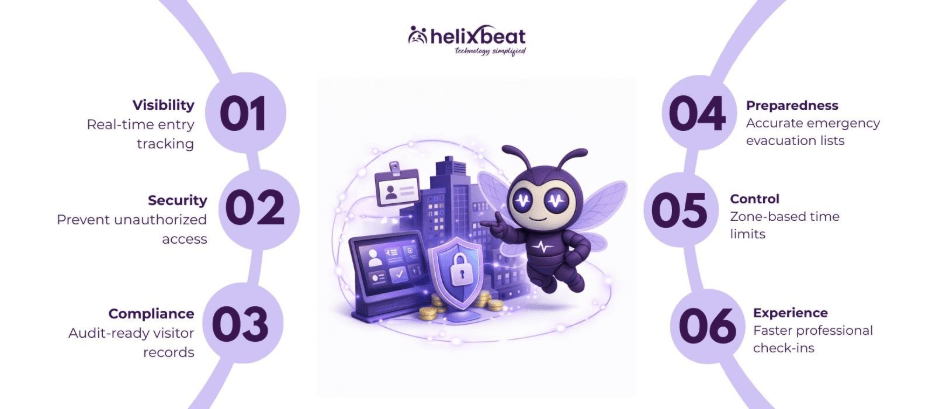
A strong visitor management system gives real-time visibility. You can see:
- Who checked in
- Who they’re meeting
- When they arrived
- Whether they’ve checked out
This becomes extremely useful during audits, investigations, or compliance checks.
2. Unauthorized Access Drops Dramatically
Pre-approval. ID scans. Temporary digital badges.
All of this reduces random movement inside your premises.
In R&D units. Manufacturing plants. Server rooms. Data centers.
You can restrict access by zone and time.
That’s controlled security. Not blind trust.
3. Emergency Preparedness Improves
During fire, earthquake, or lockdown situations, one question matters most:
Who is still inside?
A digital visitor management system gives instant evacuation lists.
No confusion.
No missing entries.
No chaos.
And that can literally save lives.
4. Even Cybersecurity Gets Stronger
Most people don’t connect visitor management with cybersecurity. But they should.
A visitor connecting to open Wi-Fi without proper tracking?
That’s a digital risk.
Modern visitor management systems can enforce guest network policies and authentication.
Physical entry often leads to digital access.
Control one. Protect the other.
Best Practices to Strengthen Visitor Management
Want to turn visitor management into a true risk shield? Start here:
✔ Automate Pre-Registration
Let employees register visitors in advance.
Less waiting.
More control.
Better security screening.
✔ Capture Photo and ID
Always verify identity.
In India, this could be Aadhaar, PAN, passport, or driving license.
Digital storage means better accountability.
✔ Issue Time-Limited Digital Passes
Temporary access.
Auto-expiry.
Zone-based movement.
No overstay. No wandering.
✔ Send Instant Host Alerts
When a visitor arrives, the host should know immediately.
SMS. Email. App notification.
That improves both experience and responsibility.
✔ Maintain Digital Logs
Paper logs fade. Tear. Get misplaced.
Digital records stay organized. Searchable. Audit-ready.
And that matters during investigations.
The Real Benefits of Visitor Management
Let’s talk impact.
1. Stronger Security
Companies using digital visitor management report up to 60% fewer unauthorized entry incidents.
That’s a huge drop in risk.
2. Better Compliance
During audits, you can instantly show visitor records.
Who entered.
When.
Why.
No scrambling for paper books.
3. Better Visitor Experience
No long queues.
No messy handwriting.
No awkward waiting.
Just smooth check-ins. Quick badges. Professional impression.
4. Higher Efficiency
Reception teams spend less time writing and filing.
Some companies report up to 50% reduction in front-desk workload after automating visitor management.
That’s time saved. Daily.
5. Useful Data Insights
You can analyze:
- Peak visitor days
- Frequent vendors
- Department-wise traffic
- Contractor visits
Data removes guesswork.
And improves planning.
Visitor Management Is No Longer Optional
In India, businesses are expanding rapidly. From corporate offices in metro cities to industrial parks in emerging hubs.
Security challenges are everywhere.
We talk a lot about cyber threats and fraud. But physical access risk is just as serious.
Here’s what industry surveys show:
63% of businesses say unmonitored visitor access is a major concern.
93% of security professionals believe digital visitor management strengthens corporate security.
That says it all.
Final Thoughts
Visitor management is not just about checking people in and out anymore.
It’s about control.
It’s about visibility.
It’s about prevention.
Whether you run a startup with 10 weekly visitors or a large enterprise with hundreds every day, the principle stays the same:
If you control entry, you reduce risk.
A strong visitor management system:
- Tracks every visitor
- Prevents unauthorized access
- Supports compliance
- Improves emergency response
- Enhances guest experience
At the end of the day, risk doesn’t wait.
And your security strategy shouldn’t either.
FAQs
1. Why is visitor management important in corporate risk strategy?
Visitor management helps organizations track, verify, and control who enters their premises. This reduces security threats, data breaches, and compliance risks.
2. How does visitor management improve workplace security?
A digital visitor management system verifies identity, issues time-based access passes, and keeps real-time logs, preventing unauthorized access.
3. Can visitor management help during emergencies?
Yes. Modern visitor management systems provide real-time visitor data, helping teams quickly account for everyone during fire drills or evacuations.
4. Is digital visitor management better than paper registers?
Absolutely. Digital visitor management ensures accurate records, faster check-ins, audit-ready logs, and stronger security compared to manual registers.
5. Who should use a visitor management system in India?
Corporate offices, manufacturing units, hospitals, educational institutions, IT parks, and co-working spaces can all benefit from visitor management solutions.