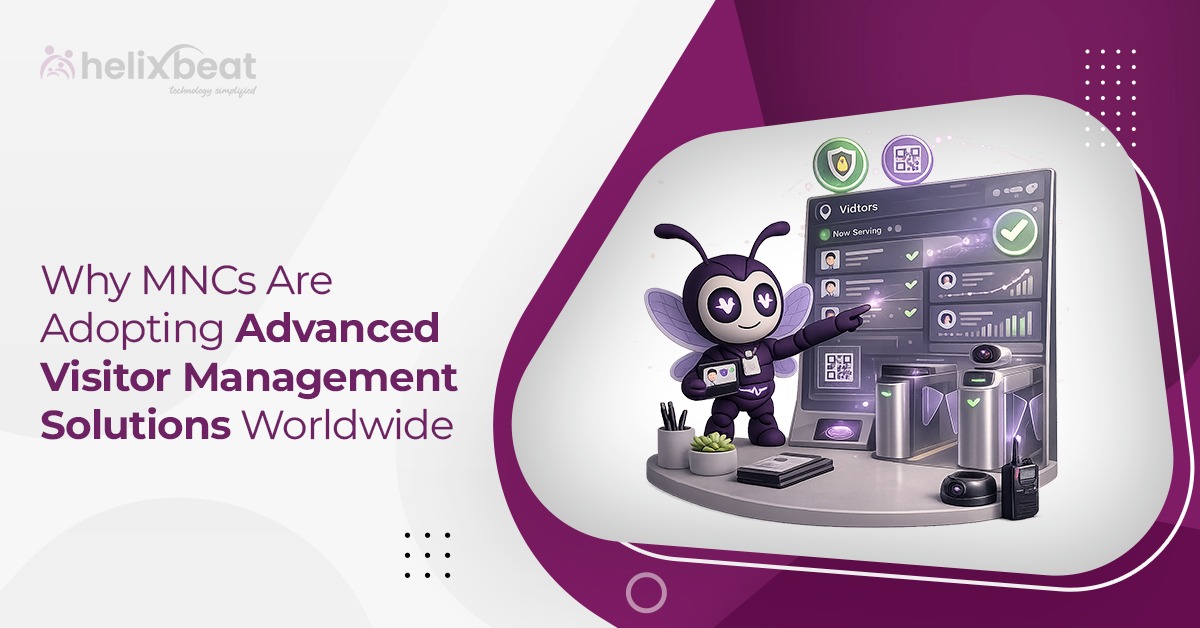


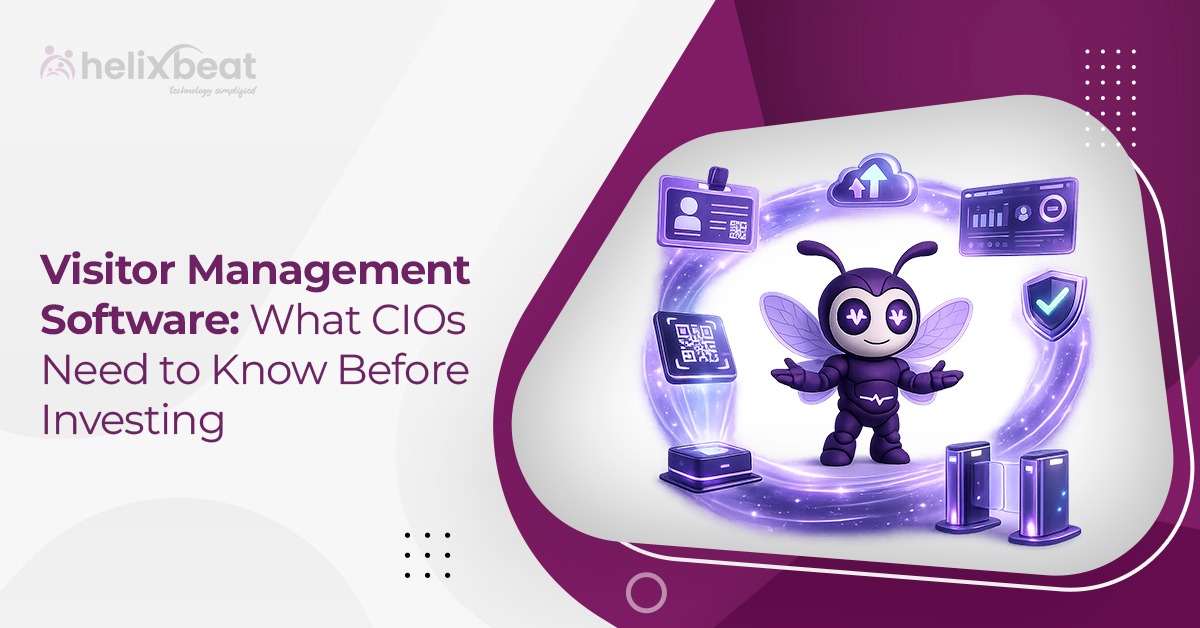
For CIOs and IT leaders across the United States, investing in visitor management system software is not anymore about modernizing a reception desk. It is all about strengthening enterprise security, matching with U.S. compliance regulations, supporting hybrid workplace models, and protecting organizational reputation.
In condition where data privacy laws like CCPA are enforced, healthcare organizations must comply with HIPAA, and physical security threats are increasingly sophisticated, the front door has become part of your broader risk management strategy.
This is where VISTA by Helixbeat enters the conversation — not as a simple check-in tool, but as enterprise-grade visitor management system software designed for modern U.S. organizations.
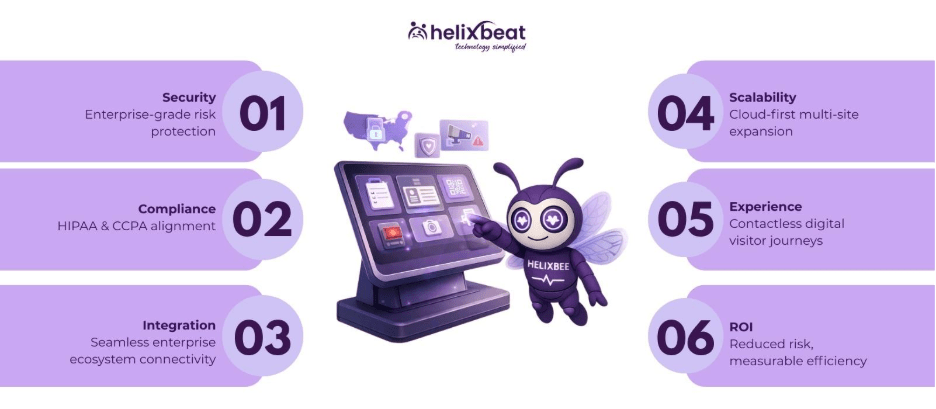
Table of Contents
Why U.S. CIOs Are Reassessing Visitor Infrastructure
The American workplace has changed dramatically in the past five years. Hybrid work models, multi-site operations, stricter compliance enforcement, and heightened physical security concerns have reshaped how enterprises manage visitors.
According to industry research, more than 60% of U.S. organizations have moved away from paper logbooks to digital systems. Meanwhile, the global visitor management market is projected to grow at double-digit rates through 2030, driven largely by North American adoption.
For CIOs, this shift isn’t cosmetic. It’s strategic.
Modern visitor management system software must now:
- Integrate with enterprise IT ecosystems
- Support regulatory compliance
- Scale across multiple U.S. locations
- Protect visitor data under American privacy standards
- Deliver measurable ROI
VISTA was built with these enterprise expectations in mind.
What Does a CIO Do in Visitor Management?
When it comes to a visitor management system, the CIO focuses on:
- Security
- Is visitor data encrypted?
- Can it prevent unauthorized access?
- Does it support watchlist screening?
- Compliance
- Does it meet U.S. regulations like HIPAA or CCPA?
- Are digital logs audit-ready?
- Is data stored securely?
- Integration
- Can it connect with access control systems?
- Does it integrate with Microsoft Active Directory or Okta?
- Can it sync with Outlook or Google Calendar?
- Scalability
- Can it support multiple office locations?
- Is it cloud-based?
- Will it work as the company grows?
- ROI & Cost
- Will it reduce receptionist workload?
- Does it lower security risk?
- What is the total cost of ownership?
Simple Example
Receptionist → Uses the visitor management system daily
Security Team → Monitors visitors
IT Team → Maintains integrations
CIO → Approves the investment and ensures it aligns with company strategy
Security and Compliance: The First Evaluation Layer
In the United States, regulatory exposure can be financially devastating. Whether you operate in healthcare, finance, manufacturing, education, or corporate enterprise environments, compliance obligations are real.
A robust visitor management system software must support:
- Encryption of data in transit and at rest
- Role-based access control
- Automated data retention policies
- Audit-ready digital logs
VISTA aligns with U.S. compliance requirements by ensuring visitor information is securely captured, stored, and managed. For healthcare organizations navigating HIPAA obligations, or enterprises operating in states enforcing CCPA, this level of data governance is critical.
Emergency preparedness is another area where CIOs cannot compromise. In the event of an evacuation, natural disaster, or security incident, organizations must instantly know who is inside their facilities. VISTA provides real-time occupancy visibility, enabling rapid response coordination across U.S. office locations.
Additionally, the ability to digitally capture NDAs, safety waivers, and compliance acknowledgments reduces legal exposure and eliminates paper-based vulnerabilities.
Integration: No Silos in Enterprise IT
American enterprises operate complex technology stacks. Introducing disconnected systems creates operational inefficiencies and security blind spots.
That is why integration capability is a defining factor when selecting visitor management system software.
VISTA integrates with:
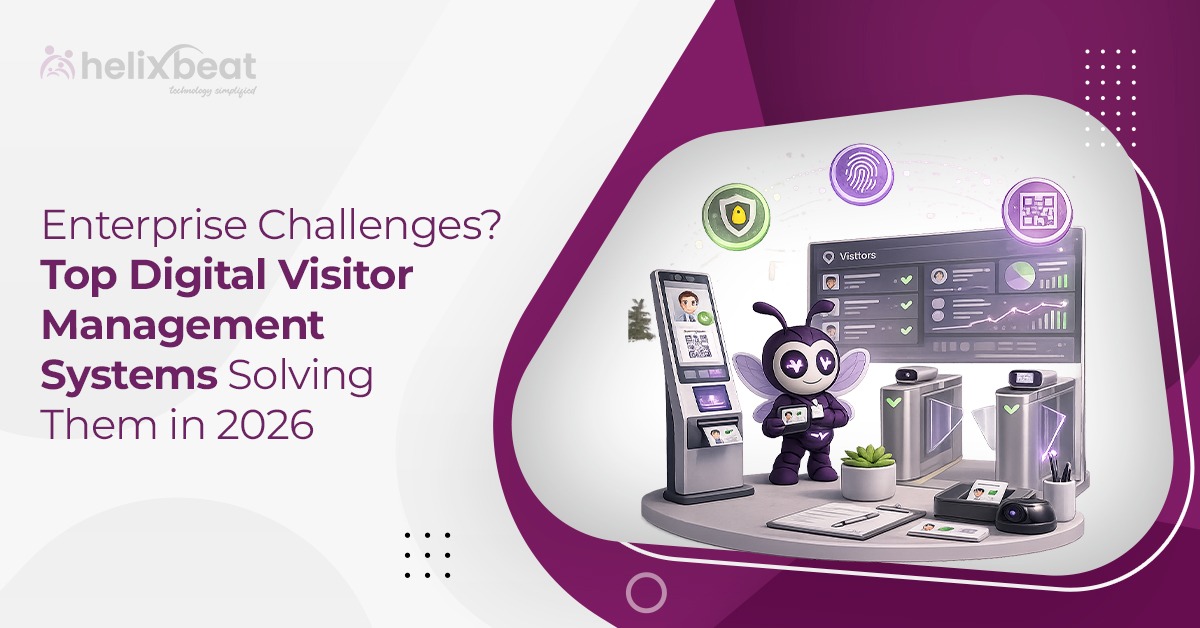
- Access control systems to automate badge issuance and restrict zone access
- Identity providers such as Microsoft Active Directory and Okta
- Outlook and Google Calendar for seamless visitor scheduling
- Lobby hardware including tablets, badge printers, and QR scanners
For CIOs managing distributed U.S. campuses or multi-state operations, integration ensures consistency across facilities. When a visitor checks in at a New York office or a Texas manufacturing plant, policies remain uniform.
This eliminates fragmentation and strengthens centralized oversight.
Cloud Architecture and Multi-Site Scalability
In the U.S. market, cloud-first strategies dominate enterprise IT roadmaps. Cloud-native visitor management system software reduces maintenance burden, simplifies updates, and supports multi-location expansion.
VISTA’s cloud architecture allows CIOs to:
- Manage multiple sites from a centralized dashboard
- Standardize workflows across state lines
- Deploy updates instantly
- Maintain uptime reliability through enterprise-grade infrastructure
For organizations expanding through mergers, acquisitions, or new branch openings, scalability matters. Your visitor infrastructure should grow with your footprint — not require reinvention each time.
High-volume environments such as hospitals, corporate headquarters, government buildings, and industrial facilities require high-throughput performance. VISTA supports rapid QR-based check-ins and self-service kiosks, preventing lobby bottlenecks even during peak visitor traffic.
User Experience in the American Workplace
In the U.S., visitor experience reflects brand perception. Long lines, manual sign-ins, and delayed host notifications create friction that modern organizations can no longer afford.
Today’s workforce expects contactless, digital-first processes.
VISTA enhances the visitor journey through:
- Mobile QR code check-in
- Self-service kiosks
- Instant host notifications via email or SMS
- Automated badge printing
For CIOs, improved experience is not just about convenience. It reduces receptionist workload, minimizes human error, and increases compliance adherence.
Modern visitor management system software must balance security with usability — and VISTA is designed to achieve both.
Financial Impact and ROI for U.S. Enterprises
CIOs must justify technology investments with measurable outcomes.
When evaluating visitor management system software, total cost of ownership includes subscription fees, hardware, integrations, support, and deployment.
However, the return on investment often includes:
- 30–50% reduction in front-desk administrative workload
- Faster compliance reporting
- Reduced risk of unauthorized access
- Lower exposure to regulatory penalties
- Standardized security governance across locations
Considering that the average cost of a data breach in the United States exceeds $4 million, preventative infrastructure investments become strategically sound.
VISTA supports not just operational efficiency but enterprise risk reduction — a core responsibility of U.S. CIOs.
Strategic Questions Before Choosing a Vendor
Before finalizing any visitor management system software, CIOs should confirm:
Is the solution compliant with U.S. data privacy laws?
Does it offer a pilot or proof of concept?
Where is data hosted, and does it meet residency requirements?
What service-level agreements guarantee uptime?
Can workflows be customized for contractors, vendors, and clients?
Is it hardware-agnostic to prevent vendor lock-in?
Will it scale across multiple states and facilities?
VISTA is structured to meet these enterprise-level considerations, making it suitable for American organizations seeking secure, scalable visitor infrastructure.
Final Perspective for U.S. CIOs
Physical access is now part of your cybersecurity framework.
The decision to invest in visitor management system software is no longer operational — it is strategic. It affects compliance, enterprise security, hybrid workplace enablement, and risk management.
For U.S. enterprises navigating evolving regulations, distributed teams, and heightened security expectations, VISTA by Helixbeat provides cloud-native, integration-ready, and compliance-aligned visitor management system software built for modern CIO priorities.
The front door is your first security checkpoint.
Make sure it is powered by infrastructure designed for the enterprise era.
FAQs
1. What is visitor management system software?
A digital platform that registers, tracks, and manages visitors, replacing paper logs with secure, automated processes.
2. Why should U.S. CIOs invest in it?
It strengthens security, ensures compliance with HIPAA/CCPA, integrates with IT systems, and improves operational efficiency.
3. Is it compliant with U.S. regulations?
Yes. Enterprise-grade solutions like VISTA use encryption, audit logs, and automated policies to meet U.S. privacy standards.
4. How does it integrate with existing IT infrastructure?
It connects with access control, identity providers (AD/Okta), calendars (Outlook/Google), and lobby hardware for seamless operations.
5. What ROI can organizations expect?
Reduced front-desk workload, faster compliance reporting, improved security, and measurable cost and risk savings