

In an era where safety, efficiency, and experience matter more than ever, tracking people as they navigate public and private spaces has become essential. According to recent industry data, the visitor management system market is projected to grow from USD 1.63 billion in 2023 to nearly USD 3.98 billion by 2030 — driven largely by demand in North America, particularly the United States. North America currently leads global adoption, with organizations across sectors prioritizing automated systems to secure entry points, manage visitor flows, and maintain compliance with safety standards.
Within high‑traffic environments such as hospitals, airports, university campuses, and corporate headquarters, a robust visitor tracking system is no longer a luxury — it’s a strategic imperative. Facilities are embracing digital solutions that replace manual logs and spreadsheets with real‑time monitoring, automated alerts, and advanced analytics designed to optimize safety, throughput, and overall experience.
In this blog, we’ll explore the core methodologies behind visitor tracking systems, how they work in high‑traffic settings, and the best practices for maximizing their effectiveness.
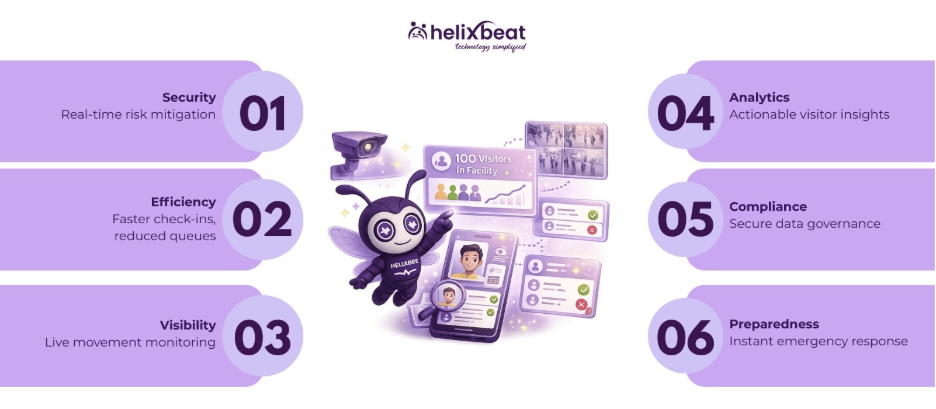
Table of Contents
What Is a Visitor Tracking System?
A visitor tracking system is a digital platform that captures, monitors, and manages information about individuals as they enter, move through, and exit a physical location. It fundamentally replaces traditional paper logs or badge books with automated solutions that provide accurate real‑time data.
Unlike basic sign‑in sheets, modern visitor tracking systems collect information such as personal identification, visit purpose, entry/exit timestamps, and movement patterns — all while integrating with access control, security cameras, and facility management tools.
At its core, the system enhances:
- Security and risk mitigation
- Operational efficiency
- Regulatory compliance
- Visitor experience
- Emergency readiness
Because of these benefits, the adoption of visitor tracking systems in high‑traffic environments across the U.S. is rapidly expanding.
Why High‑Traffic Facilities Need Visitor Tracking
The challenges that high‑traffic facilities face are unique and complex. Managing thousands of visitors daily requires more than just a sign‑in desk — it requires a system capable of:
Ensuring Safety and Security
High footfall means a heightened risk of unauthorized access. With a visitor tracking system, facility administrators can screen individuals before they enter restricted areas, flag suspicious behavior, and store records securely for audits or investigations. In regulated industries such as healthcare or government, maintaining such records is often a compliance requirement.
Managing Crowd Flow
In environments like stadiums or transit hubs, understanding flow patterns can prevent bottlenecks, reduce wait times, and improve wayfinding. Visitor tracking data can reveal peak entry times, congested zones, and average duration of stay — crucial insights for optimizing layouts and staffing.
Boosting Operational Efficiency
A visitor tracking system automates tedious tasks such as manual entry logging and badge printing, freeing staff to focus on higher‑value activities. This digital automation leads to faster check‑ins, reduced queues, and smoother visitor throughput.
Emergency Preparedness
In emergencies like evacuations or security threats, knowing exactly who is on site and where they are located is essential. A visitor tracking system provides real‑time lists of active visitors and their last known locations, enabling quicker and more accurate emergency responses.
Core Methodologies Behind Visitor Tracking Systems
A modern visitor tracking system can employ several technologies to accurately monitor and analyze visitor movements. Below are the most common and effective methodologies used today.
1. Digital Check‑In & Identity Capture
The first step in visitor tracking is capturing accurate visitor information. Digital check‑in portals — whether kiosk‑based or mobile‑enabled — allow visitors to enter their details, scan IDs, and capture photos. Many systems can pre‑register visitors via online forms or QR codes sent prior to an arrival.
This digital data entry eliminates errors associated with manual logs and creates verifiable records that can be stored securely.
2. Badge Printing & Access Permissions
Once a visitor is verified, visitor tracking systems can generate badges with QR codes or RFID tags that contain identity and permission levels. These badges serve dual functions:
- Acting as visual identifiers for security personnel
- Triggering automated tracking when scanned at checkpoints or entry points
With RFID or barcode scanning, badge reads can log movement between zones — giving administrators a real‑time view of visitor distribution.
3. Real‑Time Location Tracking (RTLS)
Some high‑end visitor tracking systems use Real‑Time Locating Systems (RTLS) to track the physical location of visitors within a facility using wireless tags and sensors. These systems can provide room‑level accuracy and are particularly useful in complex environments like large campuses or healthcare facilities.
RTLS often utilizes technologies such as:
- Bluetooth Low Energy (BLE) beacons
- Infrared or RFID sensors
- Wi‑Fi tracking
Such systems provide continuous updates as visitors move, enabling staff to anticipate crowding or manage high‑profile traffic.
4. Integration with Access Control Systems
A visitor tracking system often integrates with access control technologies (like turnstiles or door locks). When a visitor’s credentials are validated, the system ensures they only access authorized areas — enhancing security while minimizing manual supervision.
This integration is particularly critical in environments such as data centers, R&D labs, or hospital wards.
5. Data Analytics and Reporting
Data collected through visitor tracking systems is incredibly valuable beyond just security. Analytics dashboards can provide insights such as:
- Peak visitation hours
- Average visitor dwell times
- Frequency of repeat visits
- High‑traffic zones requiring additional resources
These insights empower facility managers to make informed decisions about staffing, layout adjustments, event planning, and more — transforming operational data into strategic advantage.
Best Practices for Implementing a Visitor Tracking System
To get the most out of a visitor tracking system in high‑traffic environments, facilities should follow these proven best practices:
1. Centralize All Visitor Data
Ensure that all visitor data — from check‑in to movement and exit — is consolidated in a unified platform. This unified approach eliminates data silos, improves accuracy, and allows real‑time visibility across departments.
2. Leverage Touchless Entry & Self‑Check‑In
Touchless workflows — such as QR code check‑ins or pre‑registration portals — reduce physical contact and speed up queue times. In post‑pandemic facility management, minimizing touchpoints is also vital for hygiene and visitor comfort.
3. Configure Automated Alerts
A visitor tracking system should automatically notify hosts when guests arrive, security when thresholds are exceeded, and facility managers about anomalies or unauthorized movements. These notifications reduce manual oversight and enable quicker responses.
4. Use Analytics to Inform Decisions
Reviewing visitor data regularly can uncover patterns or issues that routine operations may overlook. Use these insights to optimize schedules, adjust capacity planning, and improve visitor experiences.
5. Prioritize Data Security & Privacy
Handling visitor data comes with responsibility. Ensure your system adheres to U.S. privacy regulations and follows best practices for encryption and secure storage. Maintaining visitor trust means protecting their data at every stage.
6. Establish Emergency Protocol Integration
Your visitor tracking system should connect with emergency management tools so that, in cases of fire, threat, or evacuation, decision‑makers have accurate headcounts and location details instantly.
Conclusion
As high‑traffic facilities across the United States evolve, the role of technology becomes increasingly central to operations. A visitor tracking system is no longer an optional add‑on — it’s a core foundation of safety, efficiency, and exceptional customer experience.
From airports and hospitals to corporate campuses and stadiums, the ability to monitor and manage visitor movement empowers facilities to reduce risk, optimize operations, and elevate the overall experience for visitors and staff alike.
By understanding the methodologies and best practices behind visitor tracking systems — and by selecting solutions that are flexible, secure, and scalable — facilities can prepare for both current challenges and future growth.
Investing in the right visitor tracking system today means safer, smarter, and more efficient high‑traffic facilities tomorrow.
FAQs
- What is a visitor tracking system?
A digital platform that monitors visitor check-ins, movements, and exits to enhance security and efficiency.
- Why do high-traffic facilities need visitor tracking?
It ensures safety, manages crowds, reduces wait times, and provides real-time visitor data.
- What technologies do visitor tracking systems use?
They use QR codes, RFID badges, facial recognition, RTLS, and integration with access control systems.
- Can visitor tracking systems help in emergencies?
Yes, they provide real-time lists of all visitors and their locations for faster evacuation or response.
- How do visitor tracking systems improve operations?
They automate check-ins, reduce manual logs, analyze visitor flow, and optimize staffing and layout decisions.