

Healthcare providers today are navigating a financial landscape that’s more complex than ever. Rising operational costs, increasing patient responsibility, and tighter compliance requirements have turned payments into a critical part of the care experience. That’s why healthcare credit card processing is no longer just a back-office function—it’s a strategic decision that directly impacts revenue, compliance, and patient trust.
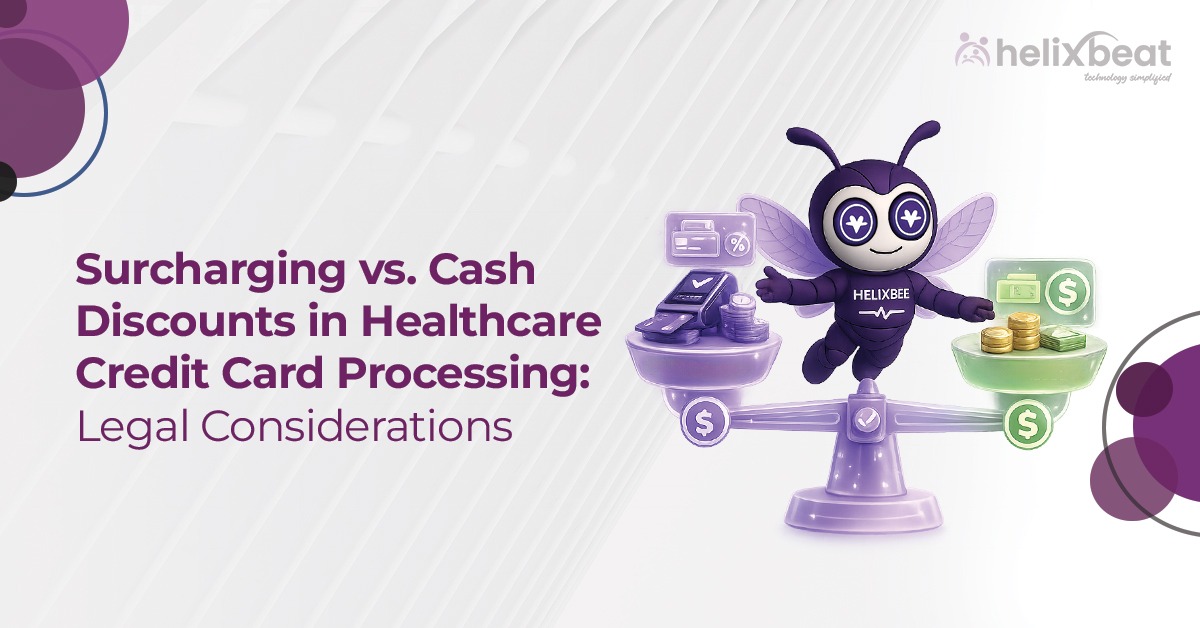
As providers look for ways to manage transaction fees and improve collections, two approaches often come into focus: credit card surcharging and cash discounts. While both aim to reduce processing costs, they are very different in how they affect legality, patient perception, and operational efficiency. Let’s explore these models in detail and understand how modern solutions like PayNova help healthcare organizations make the right choice.
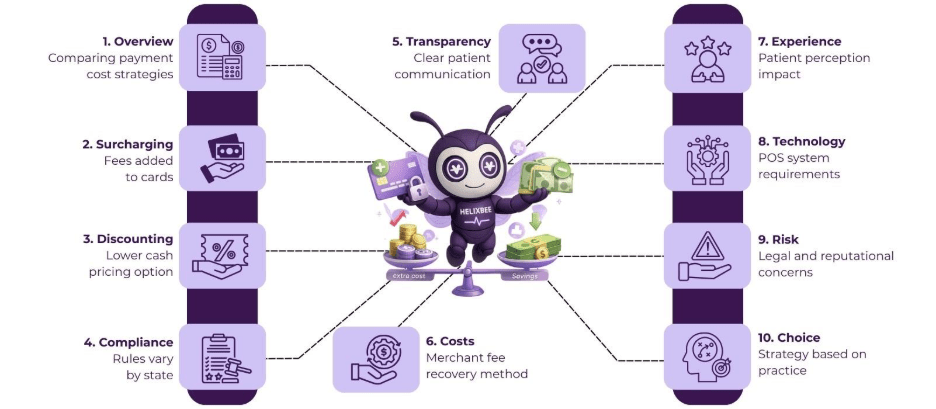
Table of Contents
Why Healthcare Payments Need a Different Approach
Unlike retail or eCommerce, healthcare payments involve multiple layers—insurance reimbursements, patient co-pays, deductibles, and post-visit billing. Patients often receive bills weeks after care, which makes transparency and clarity essential.
In this environment, healthcare credit card processing must balance three priorities:
- Legal and regulatory compliance
- A smooth, respectful patient experience
- Predictable and healthy cash flow for providers
Any payment strategy that compromises one of these can quickly become a liability.
Understanding Credit Card Surcharging in Healthcare
Credit card surcharging involves adding an extra fee to a patient’s bill when they choose to pay with a credit card. The intention is simple: pass the processing cost from the provider to the patient.
While surcharging is common in some industries, it becomes tricky in healthcare credit card processing for several reasons. First, healthcare is a trust-based service. Patients don’t expect to be penalized for using a standard payment method, especially when they’re already dealing with high medical expenses.
Second, surcharging is heavily regulated. Rules vary by state, and providers must follow strict disclosure requirements. Failure to comply can lead to fines, disputes, or reputational damage.
Legal Considerations of Surcharging
From a legal standpoint, surcharging is allowed at the federal level in the U.S., but state laws may restrict or prohibit it. Even where it’s allowed, providers must:
- Clearly disclose the surcharge before payment
- Ensure the surcharge does not exceed allowed limits
- Apply it consistently and transparently
In healthcare credit card processing, missing even one of these steps can result in compliance issues. For providers already managing HIPAA, insurance regulations, and billing rules, this adds yet another layer of complexity.
What Are Cash Discounts?
Cash discounts take a different approach. Instead of adding a fee for card payments, providers offer a lower price to patients who pay using cash, debit, ACH, or other non-credit methods. The standard price includes processing costs, and eligible patients receive a discount for alternative payment methods.
In healthcare credit card processing, cash discounts are often viewed as more patient-friendly and legally straightforward. Patients perceive them as a benefit rather than a penalty, which can significantly improve payment satisfaction.
Legal Simplicity of Cash Discounts
One of the biggest advantages of cash discounts is their broader acceptance across states. When implemented correctly, cash discounts are generally permitted and easier to explain to patients.
For healthcare providers, this means fewer compliance headaches and less risk. In the context of healthcare credit card processing, simplicity often translates directly into cost savings—both financial and administrative.
Patient Experience: Why It Matters So Much
Healthcare billing is already confusing for many patients. Adding unexpected fees at checkout can increase frustration and lead to delayed or missed payments.
Surcharging can feel punitive, while cash discounts feel optional and empowering. This difference matters. A positive payment experience improves trust and increases the likelihood that patients will pay promptly.
Modern healthcare credit card processing strategies focus on clarity, transparency, and choice—qualities that align more naturally with cash discount models.
Operational Impact on Healthcare Providers
From an operational perspective, surcharging requires careful setup, ongoing monitoring, and constant regulatory awareness. Staff must be trained to explain fees, signage must be accurate, and systems must be updated to remain compliant.
Cash discounts, when supported by the right platform, are easier to manage. Automated pricing adjustments and clear billing statements reduce manual work and staff confusion. In healthcare credit card processing, automation is no longer optional—it’s essential.
The Role of Technology in Payment Compliance
This is where specialized healthcare payment platforms come in. Generic payment processors aren’t built to handle the nuances of medical billing, insurance workflows, and compliance requirements.
PayNova was designed specifically for healthcare credit card processing, with compliance, flexibility, and patient experience at its core. Instead of forcing providers to choose between surcharging and cash discounts blindly, PayNova supports compliant pricing strategies that fit real healthcare workflows.
How PayNova Simplifies Legal Compliance
PayNova helps healthcare organizations stay compliant by:
- Automating disclosures and pricing rules
- Supporting HIPAA- and PCI-DSS-compliant transactions
- Adapting to state-specific regulations
With PayNova, healthcare credit card processing becomes safer and more predictable, reducing the risk of penalties or patient disputes.
Transparency That Builds Trust
One of the biggest challenges in healthcare payments is lack of transparency. Patients want to know what they owe and why.
PayNova enables clear, itemized billing through patient portals, making healthcare credit card processing more understandable and less stressful. When patients understand their bills, they’re more likely to pay on time.
Cash Flow Benefits for Providers
Payment delays are a common pain point in healthcare. Insurance reimbursements take time, and patient balances can linger for months.
By modernizing healthcare credit card processing, PayNova helps providers:
- Collect payments faster
- Offer flexible payment plans
- Reduce manual follow-ups
Whether using cash discounts or other compliant models, faster collections lead to healthier cash flow.
Supporting In-Person and Digital Care
As telehealth and digital care continue to grow, payment systems must evolve. Patients expect the same convenience online as they do at the front desk.
PayNova supports healthcare credit card processing across in-person visits, telehealth consultations, and remote services—ensuring consistent, secure payment experiences everywhere.
Choosing the Right Model: Surcharge or Cash Discount?
There’s no one-size-fits-all answer, but in healthcare, patient trust and compliance should always come first. While surcharging may seem attractive on paper, its legal complexity and patient perception risks make it less appealing for many providers.
Cash discounts, supported by a compliant platform, often offer a better balance of cost recovery and patient satisfaction within healthcare credit card processing frameworks.
Why PayNova Is Built for Healthcare
Unlike generic payment gateways, PayNova understands the realities of healthcare billing. It’s built to handle:
- Co-pays and deductibles
- Insurance and patient split payments
- Recurring payment plans
- High-volume clinical environments
All while keeping healthcare credit card processing simple, transparent, and compliant.
Scenario:
A multi-specialty clinic charges a patient $200 for a consultation.
- The clinic applies a 3% credit card surcharge
- Patient pays using a credit card
How it looks to the patient:
- Base bill: $200
- Credit card surcharge (3%): $6
- Total charged: $206
Key considerations:
- The clinic must clearly disclose the surcharge before payment
- Surcharging must be legal in the provider’s state
- Patients may feel penalized for using a credit card
In healthcare credit card processing, this approach often leads to patient confusion and disputes, especially when combined with insurance explanations and EOBs.
Final Thoughts
Payments are no longer just a financial function—they’re part of the patient experience. In healthcare, every interaction matters, including how patients pay.
Understanding the legal and operational differences between surcharging and cash discounts is critical for modern providers. With the right strategy and the right technology, healthcare credit card processing can become a strength rather than a struggle.
PayNova empowers healthcare organizations to simplify payments, stay compliant, and build trust—so they can focus on delivering care while getting paid with confidence.
Frequently Asked Questions (FAQs)
1. Is credit card surcharging legal in healthcare payments?
Yes, credit card surcharging is legal at the federal level, but some U.S. states restrict or regulate it. Healthcare providers must follow strict disclosure rules to remain compliant.
2. What is the difference between surcharging and cash discounts in healthcare?
Surcharging adds a fee for credit card payments, while cash discounts offer lower prices for non-credit payment methods. Cash discounts are generally more patient-friendly and simpler to implement.
3. Why are cash discounts preferred in healthcare credit card processing?
Cash discounts are easier to explain, widely accepted across states, and reduce patient frustration. They align better with transparent, compliant healthcare credit card processing practices.
4. How does PayNova help with compliant healthcare credit card processing?
PayNova automates disclosures, supports compliant pricing models, and ensures HIPAA and PCI-DSS compliance—reducing legal risk and administrative burden for providers.
5. Can PayNova support payment plans along with cash discounts?
Yes. PayNova supports flexible payment plans, recurring payments, and patient portals, making healthcare credit card processing smoother for both patients and providers.