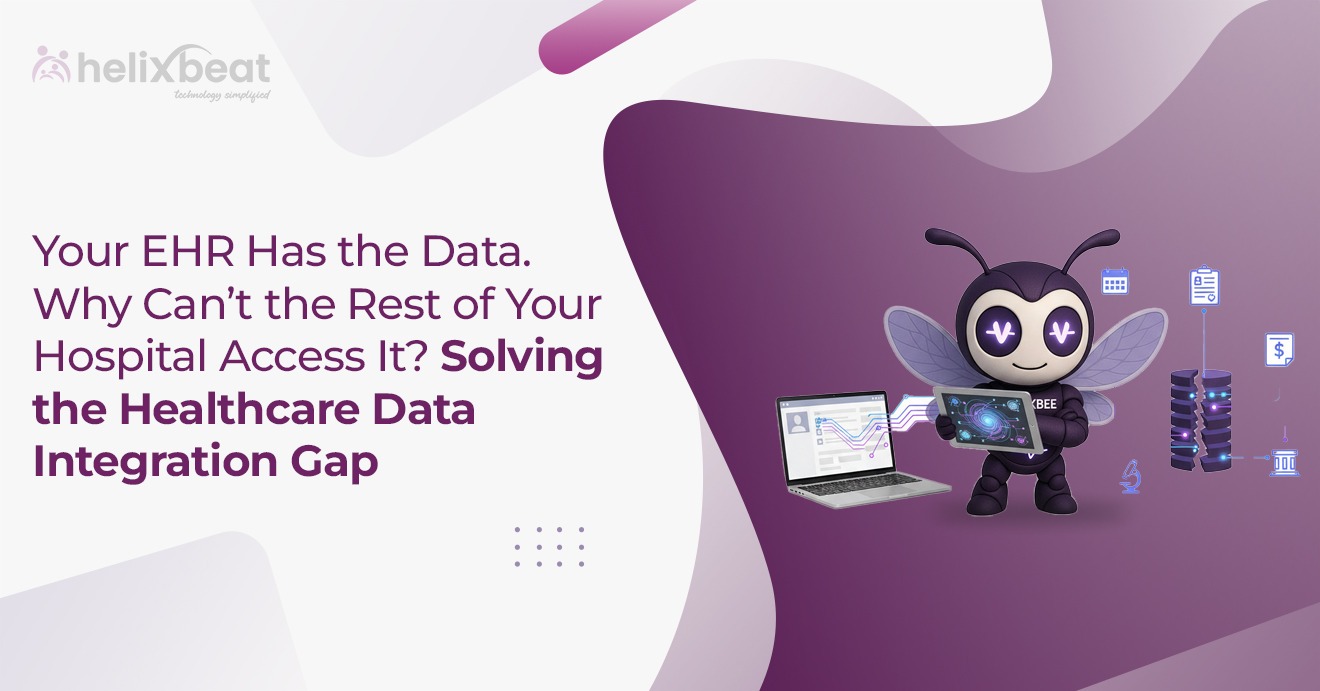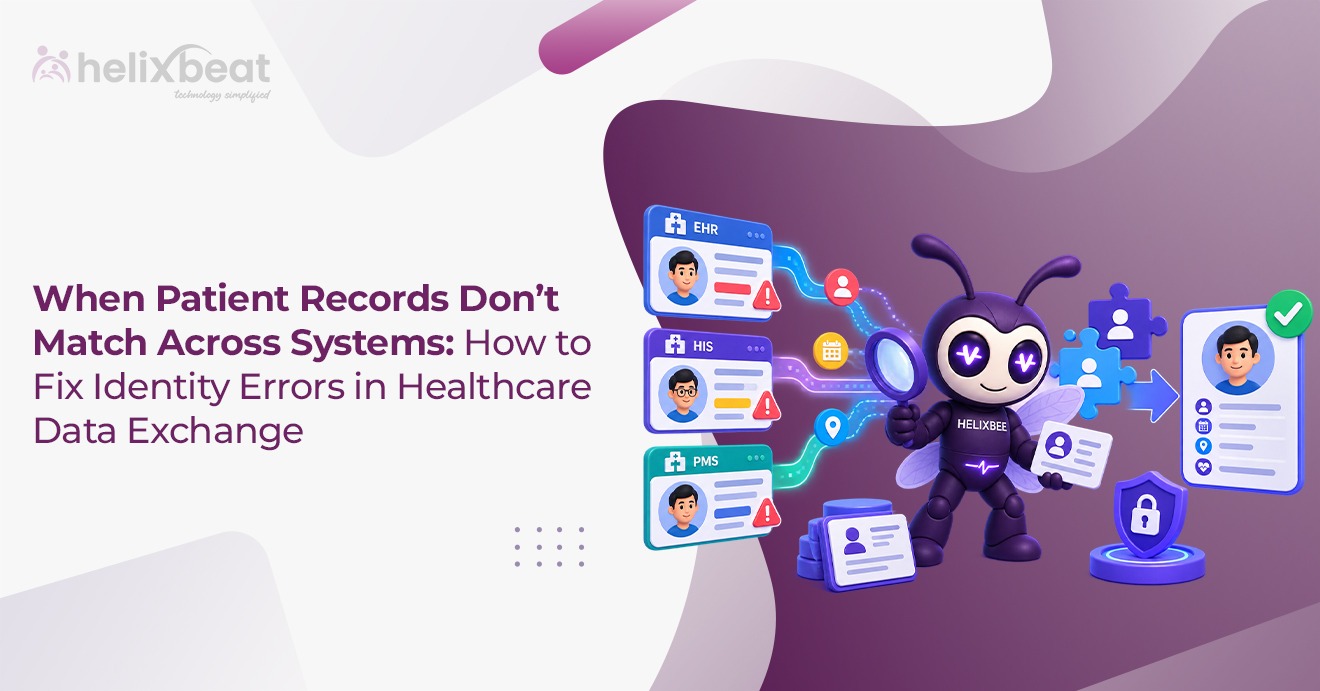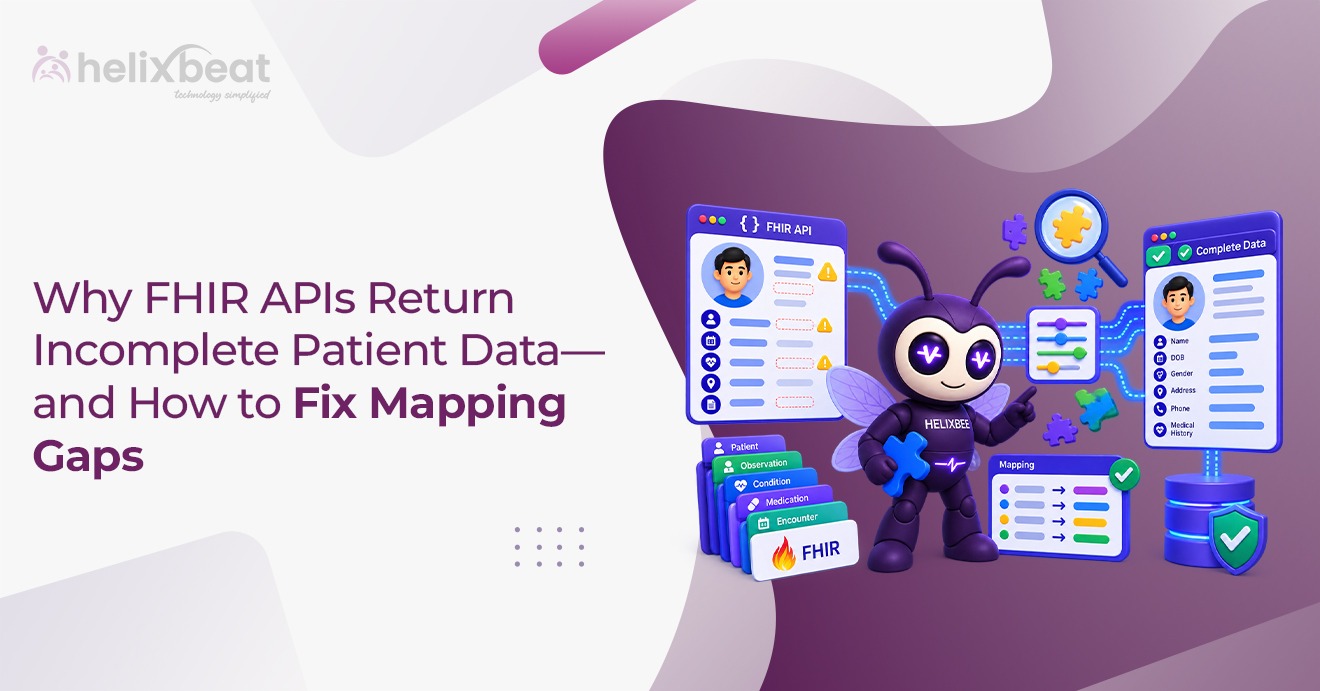


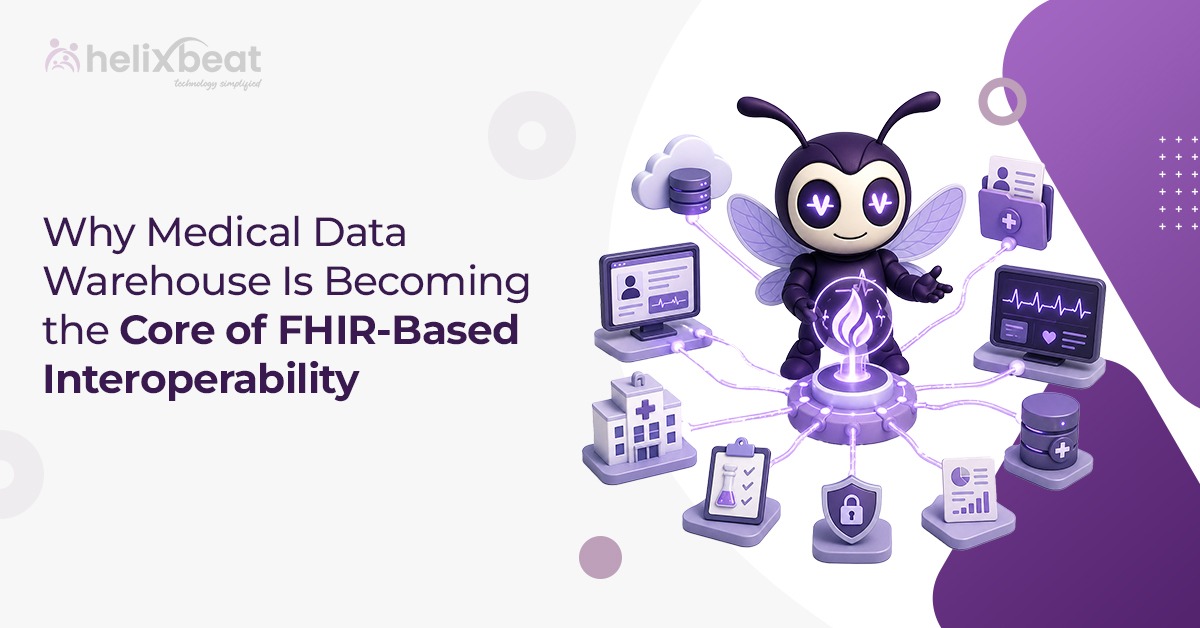
That vision is becoming real through the rise of medical data warehouse in modern healthcare ecosystems. With Helixbeat DWaaS accelerating FHIR-based interoperability, healthcare organizations are unifying fragmented records into a powerful medical data warehouse built for scale and intelligence.
This transformation is redefining healthcare data warehousing, enabling real-time clinical insights, streamlined insurance workflows, and standardized data exchange across systems. As interoperability demands grow, the medical data warehouse is emerging as the backbone of modern healthcare data integration strategies.
Providers adopting this approach are improving data accuracy, operational speed, and regulatory compliance across FHIR-enabled healthcare systems at scale today.
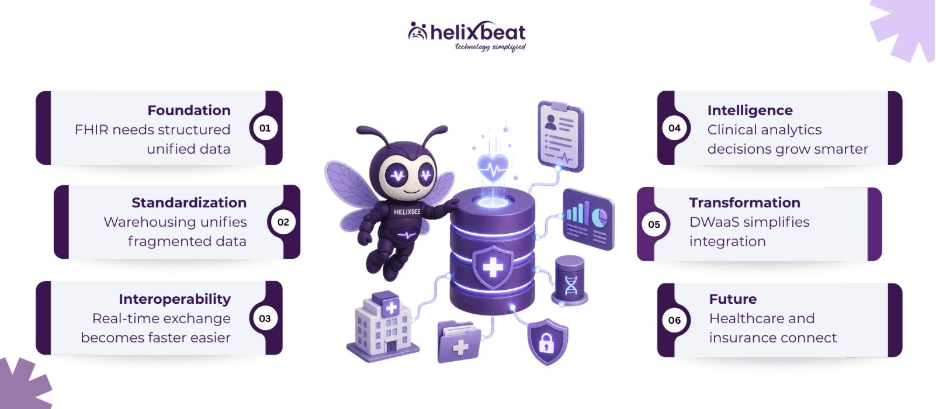
Table of Contents
Medical Data Warehouse is Becoming the Core of FHIR Interoperability – Here’s Why
FHIR (Fast Healthcare Interoperability Resources) requires structured, unified data to work effectively. A medical data warehouse provides this foundation by organizing fragmented clinical data into standardized, accessible formats.
Standardizing fragmented healthcare data
Modern healthcare systems generate data from EHRs, labs, imaging systems, pharmacies, and insurers. Without a medical data warehouse, this data remains siloed and inconsistent.
Through healthcare data warehousing, organizations can:
- Normalize different data formats
- Eliminate duplication and inconsistencies
- Enable seamless FHIR-based API integration across systems
Enabling real-time interoperability
FHIR is designed for real-time exchange, but raw hospital data is often unstructured and delayed.
A centralized medical data warehouse ensures:
- Clean, validated datasets
- Faster API responses
- Real-time data availability for clinicians and payers
Supporting clinical decision intelligence
Beyond interoperability, structured warehousing enables:
- Predictive healthcare analytics
- Patient history tracking
- AI-driven diagnostics and risk prediction
How Healthcare Data Warehousing Supports FHIR-Based Data Exchange
A strong data backbone is essential for interoperability. Healthcare data warehousing ensures consistency, scalability, and governance across systems.
Building a unified data model for FHIR APIs
FHIR relies on standardized “resources” for patient data. A well-designed healthcare data warehouse:
- Maps clinical datasets into unified schemas
- Ensures compatibility across hospital systems
- Simplifies API-based data exchange
Improving speed of clinical data access
Instead of querying multiple disconnected systems, clinicians access a single source of truth.
Benefits include:
- Lower latency in data retrieval
- Faster emergency response decisions
- Improved clinical efficiency
Enhancing compliance and governance
Regulatory frameworks like HIPAA and global data protection standards require traceability.
A medical data warehouse enables:
- Audit-ready data pipelines
- Secure data lineage tracking
- Standardized governance frameworks
Powering analytics-driven ecosystems
Warehousing transforms raw data into actionable insights for:
- Population health analysis
- Predictive care models
- Hospital performance optimization
Role of Healthcare Data Warehouse Vendors in Interoperability
Healthcare data warehouse vendors play a critical role in enabling digital transformation across healthcare ecosystems.
Providing scalable cloud infrastructure
Leading vendors deliver cloud-native platforms that:
- Scale across hospitals, labs, and insurers
- Maintain high performance under heavy workloads
- Support distributed healthcare ecosystems
Delivering pre-built integration frameworks
Modern healthcare data warehouse vendors provide ready connectors for:
- EHR systems
- Lab information systems
- Insurance and billing platforms
This significantly reduces FHIR deployment time.
Enabling insurance interoperability
A modern insurance data warehouse supports seamless exchange between providers and payers.
Key benefits:
- Faster claims processing
- Reduced fraud risks
- Better financial transparency
Supporting multi-domain healthcare architecture
Vendors now design unified systems that combine:
- Clinical data
- Operational data
- Financial data
Evolution of the insurance data warehouse model
The traditional insurance data warehouse model was siloed and batch driven. Today, it has evolved into a real-time, interoperable system that:
- Integrates patient records with claims data
- Supports instant validation workflows
- Enables predictive risk scoring for insurers
How does Helixbeat DWaaS transform FHIR-driven medical data warehouse architecture?
Helixbeat DWaaS introduces a modern approach to building interoperable healthcare ecosystems. It combines scalability, intelligence, and a FHIR-native foundation within a unified platform that strengthens the role of the medical data warehouse in digital healthcare transformation.
Cloud-native medical data warehouse foundation
Helixbeat DWaaS delivers a fully managed cloud environment where healthcare organizations can deploy a medical data warehouse without worrying about infrastructure complexity, maintenance, or scaling limitations.
This allows hospitals and providers to focus on outcomes rather than system management.
FHIR-first architecture design
Unlike traditional systems, DWaaS is built with a FHIR-first approach, ensuring that interoperability is embedded at the core.
This makes the healthcare data warehouse design naturally aligned with standardized FHIR resources, enabling seamless integration from day one.
Real-time data synchronization
Hospitals, laboratories, and insurers can exchange information instantly without batch-processing delays.
This real-time capability improves:
- Continuity of patient care
- Accuracy of clinical decision-making
- Speed of insurance processing
Reducing operational complexity
Instead of managing multiple disconnected systems, healthcare organizations operate through a single unified data layer powered by DWaaS.
This reduces dependency on fragmented infrastructure and improves system efficiency.
Supporting hybrid healthcare ecosystems
DWaaS bridges legacy hospital systems with modern cloud-native environments.
This hybrid capability ensures smoother digital transformation while optimizing cost, scalability, and interoperability.
What does the future of healthcare data warehouse design look like with insurance integration?
The future of healthcare is moving toward convergence—where clinical and financial systems function as a unified ecosystem. This shift is reshaping healthcare data warehouse design to support both care delivery and insurance intelligence.
Unified clinical and financial data models
Future systems will integrate clinical records with insurance claims into a single health insurance data warehouse model, improving transparency and operational efficiency across providers and payers.
AI-driven predictive healthcare systems
Next-generation medical data warehouse platforms will go beyond storage and enable:
- Risk prediction
- Treatment outcome forecasting
- Insurance claim behavior analysis
Expansion of insurance interoperability
A modern insurance data warehouse will support real-time claim validation, fraud detection, and automated approvals using FHIR-based APIs.
Evolution of hybrid data ecosystems
Healthcare and insurance systems will no longer operate independently. Instead, unified platforms will drive end-to-end patient lifecycle visibility—from treatment to reimbursement.
Smarter healthcare data warehouse design
Future healthcare data warehouse design will prioritize:
- AI-powered automation
- Self-healing data pipelines
- Continuous interoperability across systems
This will ensure faster decision-making and improved patient outcomes at scale.
Wrapping Up
The medical data warehouse is no longer just a storage layer—it is becoming the backbone of FHIR-driven interoperability across healthcare and insurance ecosystems.
Key takeaways
- FHIR requires structured, scalable healthcare data warehousing
- Insurance integration depends on advanced data warehouse models
- Cloud-native platforms like Helixbeat DWaaS accelerate interoperability adoption
- Modern healthcare data warehouse vendors are enabling faster digital transformation across the industry
As healthcare continues to evolve, organizations that invest early in intelligent and interoperable data architecture will lead the next phase of digital transformation.
FAQs
1. Why is a medical data warehouse important for FHIR interoperability?
It provides structured, standardized data storage that allows seamless exchange of FHIR resources across healthcare systems.
2. How does healthcare data warehousing improve insurance processes?
It integrates clinical and financial data, enabling faster claims processing and reducing errors in insurance workflows.
3. What is an insurance data warehouse model?
It is a structured framework that combines patient, claims, and billing data into a unified system for better decision-making.
4. How does Helixbeat DWaaS support healthcare interoperability?
It offers a cloud-native, FHIR-first medical data warehouse that enables real-time data exchange across healthcare ecosystems.
5. What is an insurance data warehouse?
An insurance data warehouse consolidates patient, claims, and treatment data to improve processing speed, accuracy, and fraud detection.