

Today getting paid is no longer just about collecting money—it’s about coordination, speed, transparency, and trust. Providers are juggling Electronic Health Records (EHR), Revenue Cycle Management (RCM) systems, insurance workflows, and patient payment tools, often across disconnected platforms. The result? Delays, errors, frustrated patients, and lost revenue.This is where healthcare payment processing integration becomes a strategic necessity rather than a technical upgrade.
Table of Contents
Introduction: Practical Tactics Providers Can’t Ignore
Before diving deep, let’s start with practical, proven tactics healthcare organizations are using to fix payment inefficiencies:
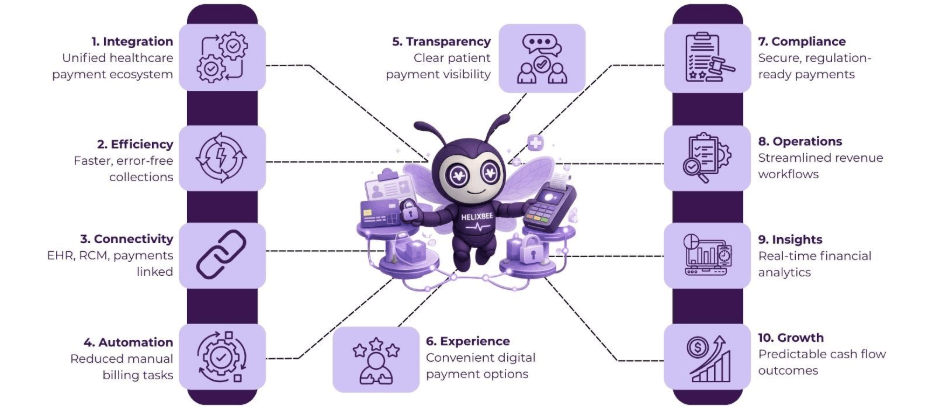
- Integrate payments directly into clinical and billing workflows instead of treating them as a separate system
- Automate eligibility checks and patient cost estimates before services are delivered
- Unify EHR, RCM, and payment data to eliminate manual reconciliation
- Offer flexible, digital-first payment options to patients
- Use real-time payment insights to improve cash flow decisions
These tactics all point to one solution: a unified healthcare payment platform that connects systems instead of adding another silo. This is exactly the problem PayNova is built to solve.
Why Healthcare Payment Integration Matters More Than Ever
Healthcare payments are uniquely complex. Unlike retail or eCommerce, providers must navigate:
- Multiple payers (insurance, employers, patients)
- Variable reimbursement models
- Regulatory compliance requirements
- Long payment cycles
- Increasing patient financial responsibility
Patients today are paying more out of pocket than ever before. At the same time, providers face rising operational costs and shrinking margins. When EHR, RCM, and payment systems operate independently, even small inefficiencies can have a significant financial impact.
Integrated healthcare payments bring clarity and control back into the system.
Understanding the Core Systems: EHR, RCM, and Payments
To appreciate the value of integration, let’s briefly look at each system’s role.
1. Electronic Health Records (EHR)
EHR systems store clinical data—patient history, diagnoses, procedures, and treatment plans. While primarily clinical, EHRs trigger billing events the moment care is delivered.
2. Revenue Cycle Management (RCM)
RCM manages the financial lifecycle of patient care—from insurance eligibility and coding to claims submission and reimbursement. It bridges clinical care and financial outcomes.
3. Healthcare Payment Systems
Payment systems handle patient payments, co-pays, deductibles, recurring billing, refunds, and reconciliation. Traditionally, these systems operate after care is delivered, often disconnected from clinical and billing data.
Integration ensures these three systems communicate seamlessly—automatically and in real time.
The Cost of Disconnected Healthcare Payments
When healthcare payments aren’t integrated, providers experience:
- Delayed or missed payments
- Manual data entry and reconciliation
- Billing errors and claim denials
- Poor patient payment experiences
- Limited visibility into financial performance
Staff spend hours tracking payments across systems, while patients struggle to understand what they owe and why. Over time, this erodes trust and impacts both revenue and patient satisfaction.
What Integrated Healthcare Payment Processing Looks Like
An integrated approach connects clinical data, billing workflows, and payment collection into a single, streamlined ecosystem.
With platforms like PayNova, integration enables:
- Automatic payment triggers based on clinical events
- Real-time synchronization between EHR, RCM, and payment systems
- Unified patient financial records
- Faster, more accurate collections
This isn’t just about technology—it’s about creating a smoother financial experience for both providers and patients.
How PayNova Simplifies Healthcare Payment Integration
PayNova is purpose-built for healthcare payments, not adapted from generic payment gateways. It understands the workflows, compliance needs, and financial realities of healthcare organizations.
1. Seamless EHR Integration
PayNova integrates directly with EHR systems, allowing payment events to align with clinical workflows. Once care is delivered, billing and payment processes are automatically triggered without manual intervention.
Result: Fewer errors, faster billing, and improved revenue accuracy.
2. RCM Alignment for Faster Revenue Cycles
By connecting with RCM platforms, PayNova supports:
- Automated eligibility verification
- Accurate patient responsibility calculation
- Real-time claim tracking
- Faster reimbursement posting
This tight integration shortens the revenue cycle and reduces claim denials caused by incomplete or inaccurate data.
3. Flexible, Patient-Centric Healthcare Payments
Modern patients expect convenience. PayNova supports multiple payment methods, including:
- Credit and debit cards
- ACH and bank transfers
- Digital wallets
- Mobile and contactless payments
- Installment plans and recurring billing
By embedding these options into patient portals, providers improve payment compliance and satisfaction.
Improving Patient Experience Through Payment Transparency
One of the biggest pain points in healthcare payments is confusion. Patients often don’t know:
- What their insurance covers
- What they owe
- When and how to pay
Integrated payment processing solves this by providing clear, itemized, and timely billing information. With PayNova, patients can view balances, make payments, and set up plans—all from a single interface.
Transparency builds trust, and trust drives timely payments.
Security and Compliance: Non-Negotiable in Healthcare Payments
Healthcare payments involve sensitive financial and patient data. PayNova is designed to meet strict regulatory standards, including:
- HIPAA compliance
- PCI-DSS security standards
- Data encryption and tokenization
- Fraud detection and audit trails
Integration doesn’t mean compromise—it means secure data flow across trusted systems.
Operational Benefits of Integrated Healthcare Payments
For providers, integration delivers tangible operational improvements:
- Reduced administrative workload
- Lower billing and collection costs
- Improved staff productivity
- Real-time financial insights
Teams spend less time chasing payments and more time focusing on patient care and strategic growth.
Financial Impact: Better Cash Flow and Predictability
Disconnected systems make cash flow unpredictable. Integrated healthcare payments provide:
- Faster patient collections
- Reduced accounts receivable days
- Better forecasting and reporting
- Fewer revenue leakages
With PayNova’s real-time dashboards and analytics, leadership teams gain clear visibility into financial performance across departments and locations.
Supporting Modern Care Models
Healthcare delivery is evolving—and so must payments.
Telehealth and Virtual Care
Integrated payments enable instant billing and payment collection during or after virtual visits.
Multi-Location Practices
Centralized payment management ensures consistency across clinics and facilities.
Value-Based Care
PayNova adapts to outcome-based reimbursement models, aligning payments with care quality and performance metrics.
Best Practices for Successful Payment Integration
To maximize results, healthcare organizations should:
- Choose a healthcare-specific payment platform
- Prioritize interoperability with existing systems
- Automate wherever possible
- Design payment workflows around patient experience
- Monitor performance using real-time analytics
PayNova is built around these best practices, making integration both practical and scalable.
The Future of Healthcare Payments Is Connected
Healthcare payments are no longer an afterthought—they are a core part of the patient journey and financial health of an organization. As systems grow more complex, integration becomes the foundation for efficiency, transparency, and sustainability.
By connecting EHR, RCM, and payment systems into a single ecosystem, providers can eliminate friction, improve patient trust, and strengthen revenue performance.
Conclusion: Why PayNova Is the Right Choice
Integrated healthcare payment processing isn’t just about technology—it’s about transforming how providers manage care and cash flow. PayNova offers a unified, secure, and healthcare-first approach that connects clinical data, billing workflows, and payments seamlessly.
For organizations looking to modernize healthcare payments, reduce complexity, and improve both patient and provider experiences, PayNova delivers clarity where it matters most.
Frequently Asked Questions (FAQs)
1. What are integrated healthcare payments?
Integrated healthcare payments connect EHR, RCM, and payment systems into one workflow, enabling faster billing, accurate collections, and better financial visibility.
2. Why is healthcare payment integration important?
It reduces billing errors, speeds up reimbursements, improves patient payment experiences, and eliminates manual reconciliation across disconnected systems.
3. How does PayNova support healthcare payment integration?
PayNova seamlessly integrates with EHR and RCM platforms to automate billing, claims, and patient payments in a secure, compliant environment.
4. Does integrated healthcare payment processing improve patient experience?
Yes. Patients get transparent bills, flexible payment options, and easy access to payment portals, which increases trust and on-time payments.
5. Is PayNova compliant with healthcare security standards?
Absolutely. PayNova follows HIPAA and PCI-DSS standards, using encryption and secure workflows to protect sensitive healthcare payment data.