

January 1, 2027 sounds far away, right? It isn’t.
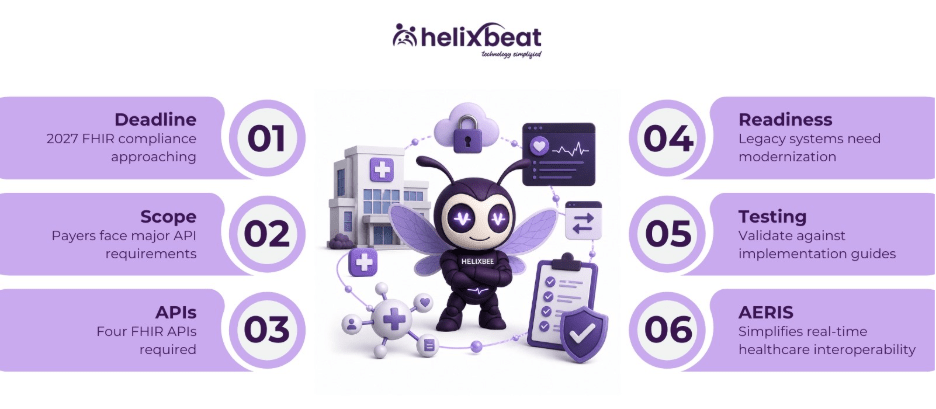
That’s the compliance date CMS has set for the core FHIR API build-out under its Interoperability and Prior Authorization Final Rule, known in regulatory shorthand as CMS-0057-F. If your organization touches Medicare Advantage, Medicaid, CHIP, or the federal exchanges, the FHIR API requirements 2027 deadline should already sit on a project plan somewhere.
These are some of the most consequential healthcare interoperability requirements payers have faced since 2020. If the deadline isn’t on your radar yet, this is the gap-closing version of that plan: specific dates, specific standards, and a realistic way to get there.
Table of Contents
What the CMS interoperability rule actually asks for?
CMS-0057-F applies to what the agency calls “impacted payers.” That’s Medicare Advantage organizations, state Medicaid and CHIP fee-for-service programs, Medicaid managed care plans, CHIP managed care entities, and qualified health plan issuers on the federally facilitated exchanges. Commercial group plans outside the exchange and self-insured employer plans sit outside this particular rule.
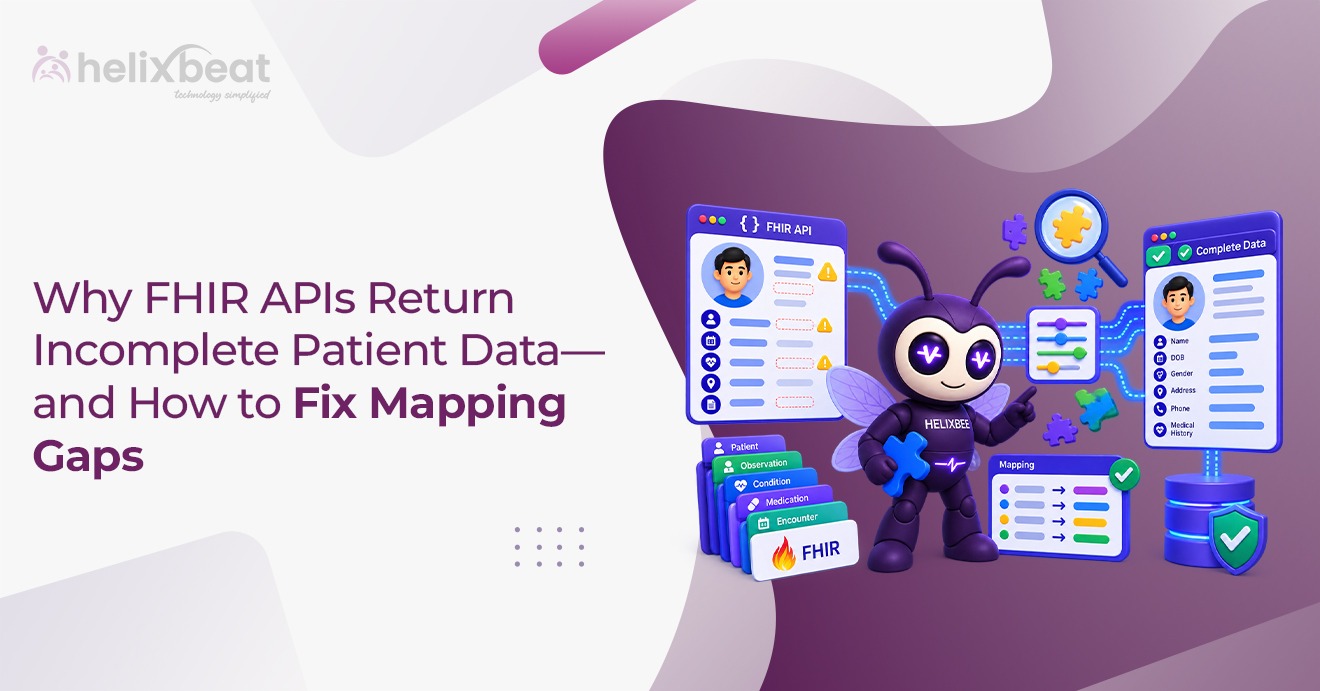
For payers inside its scope, four FHIR-based APIs need to be live by January 1, 2027:
Patient Access API – now expanded to carry prior authorization data alongside claims and clinical records.
Provider Access API – a new build, sharing claims, encounter, and USCDI data with a patient’s in-network treating providers.
Payer-to-Payer API – so a patient’s history follows them across a plan switch, covering up to five years of data.
Prior Authorization API – the full request-and-response cycle: covered services, documentation rules, and a decision with a stated reason.
Two deadlines, not one
A detail organizations often miss: 2026 and 2027 aren’t the same milestone. Several operational pieces started on January 1, 2026. Payers began reporting Patient Access API usage metrics to CMS. Likewise, every denied prior authorization needs a specific reason attached. Decision timeframes also tighten – 72 hours for urgent requests, seven calendar days for standard ones.
The 2027 FHIR API requirements are the larger build. The four APIs above need to be functional, tested against real implementation guides, and wired to production data.
Providers are pulled in too, just differently. Starting with the CY 2027 performance period, MIPS-eligible clinicians and eligible hospitals must attest that they requested at least one prior authorization electronically through a Prior Authorization API, using data from certified EHR technology.
What FHIR compliance means technically?
Meeting CMS-0057-F on paper means implementing a defined stack, not “FHIR” as a general idea:
HL7 FHIR Release 4.0.1
US Core Implementation Guide STU 3.1.1
SMART App Launch Framework 1.0.0
FHIR Bulk Data Access (Flat FHIR) v1.0.0
OpenID Connect Core 1.0
USCDI as the underlying data set
CMS also recommends several implementation guides without formally mandating them, including Da Vinci PAS for prior authorization and CARIN for consumer-directed data exchange. One clarification worth knowing: FHIR doesn’t replace HIPAA’s X12 278 transaction outright. HHS has said it won’t enforce X12 278 use against organizations running an all-FHIR prior authorization API. That means payers can build FHIR-only, X12-only, or a hybrid – whichever fits their existing infrastructure best.
Recent shifts in CMS and ONC interoperability policy explain why this flexibility matters more.
Where organizations are actually behind?
Three gaps come up again and again in readiness conversations.
Attribution and consent logic. The Provider Access API needs a working process linking patients to treating providers, plus a real opt-out path. However, the Payer-to-Payer API needs the reverse – opt-in consent before data moves at all. Neither is a database flag; both require actual workflow design.
Legacy claims systems were built long before anyone planned to expose that data as FHIR resources. Therefore, retrofitting them under deadline pressure is where budgets and timelines usually break first.
Testing against published implementation guides, rather than internal assumptions about what counts as FHIR-based. Gaps surface late when validation starts late. That’s why platforms like AERIS exist to meet CMS and ONC data requirements.
How AERIS Enhances Healthcare Data Interoperability with FHIR APIs?
Achieving true healthcare data interoperability demands real-time, standardized, and secure access to patient information. This is where AERIS by Helixbeat comes in, offering a powerful platform that combines event streaming with FHIR APIs.
AERIS enables healthcare providers, clinics, hospitals, pharmacies, and insurers to move beyond fragmented systems and adopt a connected, API-driven approach. Through FHIR APIs, the system supports real-time data exchange and provides instant access to critical patient information at the point of care.
As a result, AERIS creates a consistent, reliable data layer that simplifies integration, accelerates digital transformation, and drives meaningful improvements in healthcare data interoperability.
A realistic path to FHIR API Requirements 2027
Start with a gap assessment against each of the four APIs separately. They carry different data scopes and different consent models. Map which USCDI elements you already expose against what Provider Access and Payer-to-Payer will demand next.
Decide early whether prior authorization runs FHIR-only or hybrid with X12. That single choice shapes vendor selection and effort for the rest of the project. Then build in real testing time against the implementation guides before the deadline.
Healthcare interoperability requirements like these rarely land as a single event. CMS-0057-F builds directly on the 2020 Patient Access rule, and further prior authorization rulemaking is still expected. Therefore, organizations treating FHIR API requirements 2027 as ongoing infrastructure will handle whatever comes next with far less disruption.
Need a reliable interoperability partner? Get in touch with us!
FAQs
1. What is CMS-0057-F?
CMS-0057-F is the Interoperability and Prior Authorization Final Rule, published by CMS in January 2024. It requires certain payers to build FHIR-based APIs and speed up prior authorization decisions.
2. Who has to comply with the FHIR API requirements 2027?
Medicare Advantage organizations, state Medicaid and CHIP fee-for-service programs, Medicaid managed care plans, CHIP managed care entities, and qualified health plan issuers on the federally facilitated exchanges. Commercial plans outside the exchange and self-insured employer plans aren’t covered by this rule.
3. What’s the actual difference between the 2026 and 2027 deadlines?
2026 covers operational requirements – denial reasons, decision timeframes, and metric reporting. 2027 covers the technical build: the four FHIR APIs must be live, tested, and connected to real data.
4. Which FHIR APIs does the rule require?
Patient Access, Provider Access, Payer-to-Payer, and Prior Authorization. The existing Provider Directory API, from the earlier 2020 rule, also stays in place.
5. What FHIR version and standards apply?
HL7 FHIR Release 4.0.1, the US Core Implementation Guide STU 3.1.1, SMART App Launch 1.0.0, FHIR Bulk Data Access v1.0.0, OpenID Connect Core 1.0, and USCDI as the data foundation.