

Keeping distributed teams productive across multiple US time zones can feel like juggling clocks. Remote work has made it essential to track employee hours accurately, yet many organizations still struggle with fairness and accountability.
Employee time tracking ensures transparency, optimizes productivity, and builds trust across the workforce. With Synergy HRMS, businesses can manage complex schedules effortlessly, offer flexibility, and stay fully compliant.
Also, studies show that companies implementing automated time tracking experience up to a 42% boost in employee productivity. Beyond numbers, effective time tracking fosters a culture of transparency and adaptability that meets the diverse needs of today’s workforce.
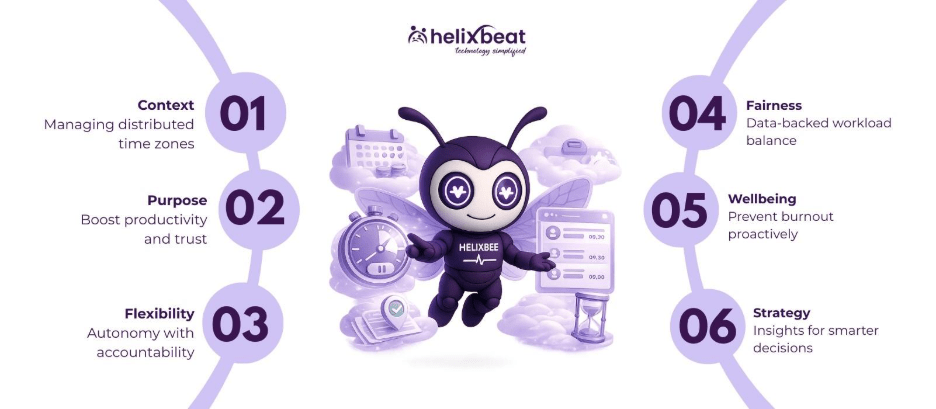
Table of Contents
The Real Challenge of Employee Time Tracking Across Time Zones
Managing teams spread across multiple states—or even countries—creates unique timing challenges. For instance, a software engineer in New York may overlap only partially with a marketing executive in California, and coordination gaps are inevitable. Furthermore, a report shows that 29% of remote workers struggle with collaboration due to time differences.
Key issues include
- Confusion about deadlines caused by overlapping schedules
- Delays in project handoffs
- Difficulty monitoring real work hours without micromanaging
Using centralized digital tools like Synergy HRMS provides a unified dashboard showing employee availability, project timelines, and logged hours, which makes it easier for managers to schedule meetings and allocate tasks fairly.
Streamline your hybrid team’s workflow—start tracking hours accurately with Synergy.
Flexible Hours Without Losing Accountability: How Employee Time Tracking Helps
Flexibility is a major perk for distributed teams, and US employees highly value flexible schedules—with over 80% stating they would switch jobs for them. However, flexibility without accountability can lead to missed deadlines or uneven workloads.
Employee time tracking allows organizations to
- Monitor actual work hours efficiently
- Maintain productivity while giving employees control over schedules
- Reduce the risk of overworking or under-reporting hours
Employee Time Tracking Benefits for Flexibility
| Feature | Benefit for Employees | Benefit for Managers |
| Automated Time Logging | Track own work hours easily | Accurate reports without manual tracking |
| Flexible Check-in/out | Adjust work hours to personal peak productivity | Ensure coverage and deadlines are met |
| Real-time Dashboard | Immediate awareness of schedule | Quick decision-making for task allocation |
| Alerts & Reminders | Prevent missed deadlines | Reduce micromanagement |
By implementing these practices, businesses can balance autonomy and accountability seamlessly.
Ensuring Fairness in Workload Distribution Using Time Tracking Data
Fairness is critical for US organizations managing remote teams. Without clear tracking, some employees may feel overburdened while others appear underutilized.
Employee time tracking provides
- Objective data to distribute tasks evenly
- Transparency for managers to justify workload assignments
- Metrics to identify bottlenecks and support teams struggling with deadlines
By leveraging Synergy HRMS, managers can generate detailed reports highlighting total hours worked, overtime, and project-specific contributions, which ensures recognition and fairness across teams.
Using Synergy HRMS for Seamless Remote Employee Time Tracking
Synergy HRMS, developed by Helixbeat, is designed specifically to meet the needs of modern distributed teams. Its mobile and desktop apps provide a comprehensive solution for US businesses looking to track, manage, and optimize employee hours.
Key Features Include
- Attendance & Time Logging: Automatically track in/out times across time zones
- Project-Based Tracking: Assign hours to specific projects for better billing and resource management
- Self-Service Portals: Employees can view logged hours, request leave, or track their progress
- Analytics & Reports: Managers gain detailed insights on productivity, overtime, and compliance
Consequently, companies using Synergy HRMS have reported up to a 35% reduction in payroll errors and a 20% improvement in overall team efficiency.
Upgrade to Synergy HRMS and see measurable improvements in productivity and accuracy.
Balancing Employee Well-being with Time Tracking
Employee time tracking isn’t just about productivity—it also directly influences employee well-being. Remote employees often work extra hours, particularly across different time zones, which increases the risk of burnout. Also, studies indicate that remote workers put in 1.4 more days per month than their office-based counterparts.
Effective employee time tracking allows businesses to
- Identify patterns of overwork and intervene early
- Offer data-driven recommendations for breaks and flexible schedules
- Ensure compliance with US labor laws regarding working hours and overtime
Consequently, a fair and transparent system builds trust, improves retention, and encourages employees to work efficiently without feeling micromanaged.
Data-Driven Insights: Turning Employee Time Tracking into a Strategic Tool
Employee time tracking provides more than just raw hours—it delivers actionable insights that guide smarter business decisions. Organizations can leverage this data to improve:
- Resource allocation across projects
- Strategic hiring and staffing decisions
- Employee training and development programs
- Project cost analysis and efficiency
How Time Tracking Data Supports Decisions
| Data Type | Strategic Use Case | Potential Impact |
| Hours Worked | Identify workload trends | Optimize staffing levels |
| Overtime | Monitor burnout risk | Adjust schedules for employee well-being |
| Project Tracking | Evaluate project efficiency | Reduce delays and improve ROI |
| Employee Availability | Plan meetings across time zones | Improve team collaboration |
With insights from Synergy HRMS, US businesses can not only monitor hours accurately but also strategically improve workforce efficiency.
Building Trust and Transparency Through Accurate Time Tracking
Moreover, employee time tracking strengthens trust in distributed teams. Employees often worry their efforts aren’t visible, while managers seek accountability. Accurate time tracking resolves both concerns effectively.
Key benefits include
- Clear visibility of contributions for both employees and managers
- Objective performance assessments without bias
- Enhanced communication regarding deadlines, deliverables, and responsibilities
By integrating employee time tracking with Synergy HRMS, US companies foster a transparent environment where employees feel valued, accountable, and fairly evaluated.
Wrapping Up
Ultimately, employee time tracking is no longer just an administrative task; it has become a strategic necessity for US businesses managing distributed teams. By implementing tools like Synergy HRMS, companies can navigate time zones effectively, provide flexible work schedules, ensure fairness, and leverage actionable data for smarter decisions. This approach enhances productivity, employee satisfaction, and overall organizational efficiency.
FAQs
1. How does Synergy HRMS handle multiple US time zones?
Synergy HRMS automatically adjusts employee hours based on their location, ensuring accurate reporting and payroll calculations across all time zones.
2. Can time tracking reduce employee burnout?
Yes. By monitoring work hours, overtime, and breaks, managers can prevent overworking and create a balanced workload for distributed teams.
3. Is employee privacy maintained with time tracking tools?
Absolutely. Synergy HRMS tracks work hours without monitoring personal activity, ensuring privacy while maintaining accountability.
4. How does time tracking improve payroll accuracy?
Automated logging and project-based tracking minimize human error, reducing payroll mistakes by up to 35% as reported by businesses using Synergy HRMS.
5. Can flexible schedules work with time tracking?
Yes. Time tracking allows employees to log hours according to flexible schedules while ensuring deadlines and project goals are met.
6. How can managers use time tracking data strategically?
Managers can analyze trends in workload, overtime, and project progress to optimize staffing, improve efficiency, and reduce delays.
7. Does time tracking support remote team engagement?
Yes. Transparent tracking builds trust, encourages accountability, and ensures employees feel recognized for their contributions regardless of location.