

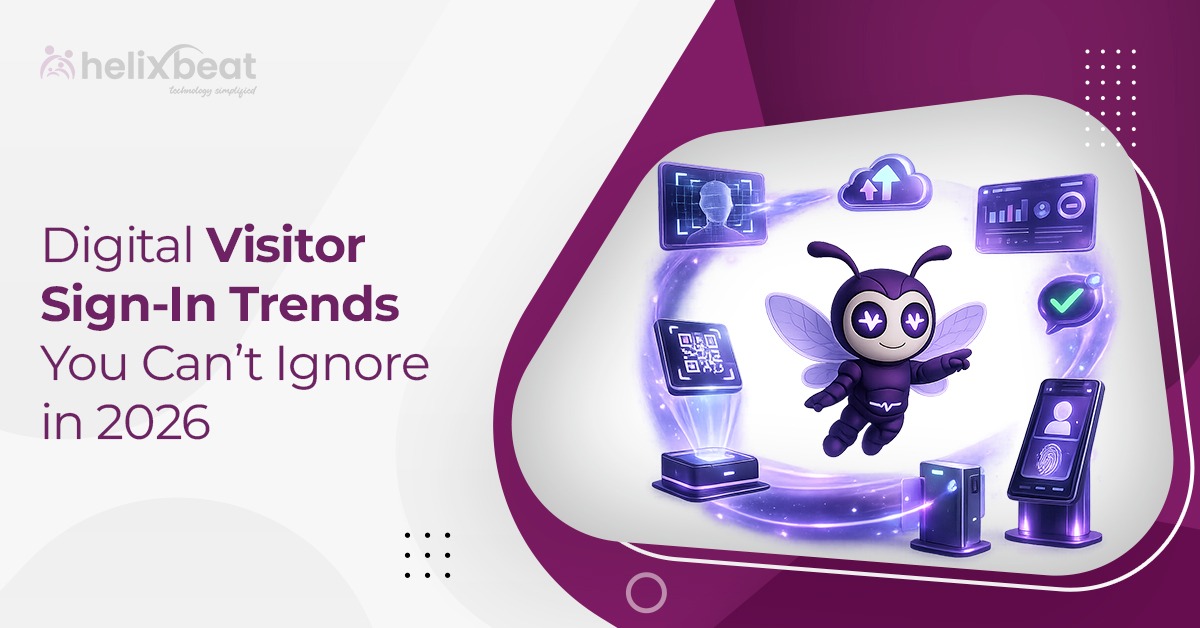
In an increasingly connected world, how organizations welcome and manage guests says a lot about their professionalism, security standards, and technological maturity. Traditional paper logbooks — long the default option — are rapidly being replaced with smarter alternatives. At the heart of this transformation is the digital visitor sign in system — a solution designed to deliver efficiency, data insights, and security like never before.
As we step into 2026, the adoption of digital visitor technologies is no longer optional; it’s foundational. Whether it’s a corporate office in Bengaluru, a healthcare facility in Chennai, or an educational campus in Delhi, organizations across India are recognizing the immense value of moving toward automated visitor management practices.
This blog explores the key trends shaping digital visitor sign‑in systems in 2026, why they matter, and what’s driving adoption — from analytics to integration with broader smart infrastructure.
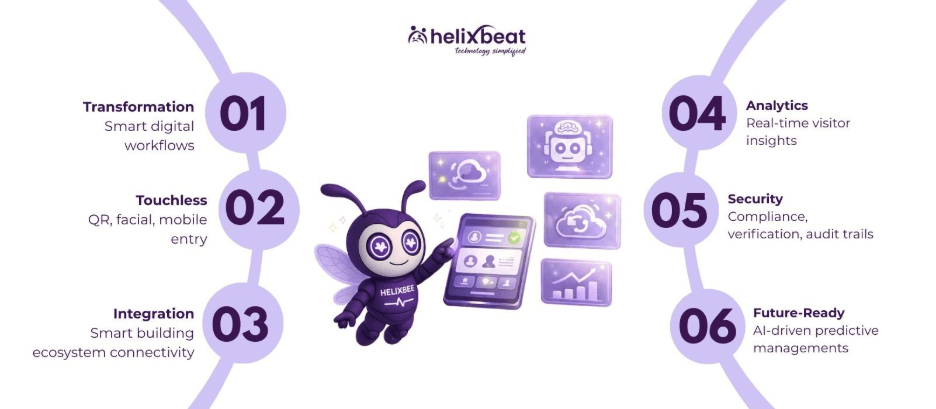
Table of Contents
1. From Paper to Digital — A Paradigm Shift
For decades, visitor logs were old‑fashioned books where guests manually wrote their details. While this method served its purpose, it posed significant challenges:
- Security risk due to easy forgery
- No audit trail
- Time‑consuming check‑ins
- No analytics or insights
Today’s digital visitor sign in system replaces these manual books with an automated, efficient method that captures visitor data accurately and instantly. In 2026, it’s no longer about digitizing forms — it’s about unlocking operational intelligence enabled by smart visitor workflows.
2. Touchless Experiences Accelerate Adoption
One of the most transformative trends in 2026 is touchless check‑in. Driven initially by pandemic‑era hygiene concerns, touchless interactions have become standard expectations in visitor management. Modern systems now support:
- QR code scanning
- Mobile‑based entry
- Facial recognition
- NFC and Bluetooth‑based check‑ins
For Indian organizations — especially high‑traffic venues such as airports, retail complexes, and corporate offices — touchless sign‑in systems not only improve safety and hygiene but create a faster and more delightful experience for visitors.
This trend ties back to the broader growth of digital interfaces in public spaces. The global digital signage market — integral to user experiences — is projected to grow from USD 28.83 billion in 2024 to USD 45.94 billion by 2030, expanding at a CAGR of 8.1% (2025–2030). The same appetite for smart, interactive displays fuels interest in digital visitor solutions across sectors.
3. Integration With Smart Building Ecosystems
In 2026, a digital visitor sign in system isn’t an isolated tool — it’s part of a wider smart ecosystem that includes:
- Access control
- Security alarms
- Employee attendance systems
- Facility management software
- IoT sensors
For example, upon successful check‑in, a visitor’s badge might automatically activate access permissions, turn on lighting in designated zones, or share real‑time notifications with relevant staff.
Indian smart offices and campuses are investing heavily in these integrated systems — particularly as hybrid work models increase footfall unpredictability and demand seamless digital coordination.
4. Real‑Time Notifications and Host Alerts
One of the most business‑impactful capabilities of a digital visitor sign in system is instant alerting. Once a visitor checks in, the system can:
- Send a host notification via email, SMS, or app
- Trigger a meeting room booking
- Initiate automated greetings
This isn’t just a convenience — it dramatically enhances responsiveness. In sectors where timing matters (e.g., healthcare, corporate sales, logistics), real‑time alerts improve operational efficiency and visitor experience.
5. Analytics: The New Competitive Advantage
Numbers tell the story of visitor interactions. Modern digital systems go beyond simple attendee logs to provide analytics on:
- Peak visit times
- Visitor frequency
- Length of stay
- Most frequented areas
With the rise of hybrid work and dynamic campus usage patterns, Indian enterprises are now using visitor analytics to optimize staffing, security deployment, and facility usage.
This analytical capability is a significant differentiator of modern digital systems — transforming raw data into strategic insights.
6. Mobile and Cloud‑First Innovations
Cloud‑based digital visitor sign in systems today enable remote management and real‑time updates across locations. The shift to cloud platforms brings critical advantages:
- No need for on‑site servers
- Centralized control across branches
- Automatic backups and updates
- Remote configuration and reporting
Mobile applications also play a critical role. Visitors can:
- Pre‑register via mobile
- Upload required documents in advance
- Receive entry passes digitally
- Access real‑time updates and instructions
This trend is particularly relevant for Indian organizations operating across multiple cities or regions — enabling centralized visitor governance without heavy infrastructure costs.
7. Enhanced Security and Compliance
Security has always been a priority, but in 2026 it’s non‑negotiable. A digital visitor sign in system offers significantly higher protection than manual logs. Features include:
- Secure identity verification
- Digital badge issuance
- Real‑time visibility of onsite visitors
- Audit trails for compliance
For industries like healthcare, finance, government offices, and manufacturing, these capabilities are essential for regulatory compliance and internal security policies.
8. Customization for Diverse Use Cases
India’s socio‑economic diversity means visitor requirements vary widely — from corporate buildings in Mumbai to IT parks in Hyderabad and educational campuses in Puducherry. A one‑size‑fits‑all approach simply doesn’t work.
Modern digital visitor systems now offer industry‑specific modules, including:
- Visitor types (guest, contractor, vendor)
- Host authorizations
- Visit purpose categorization
- Document attachments and policy acknowledgments
By providing customizable workflows, organizations can tailor visitor journeys that match their needs — boosting user satisfaction and operational clarity.
9. Branding and First Impressions Matter More Than Ever
For customer‑facing organizations, visitor experience is a brand moment. A frictionless digital visitor sign in system contributes to:
- Professional first impressions
- Enhanced brand identity
- Consistent on‑site messaging
- Personalized welcomes or instructions
This trend is especially strong for Indian retail and high‑visibility venues where the arrival experience influences customer perception. According to the Outdoor Advertising Association of America (OAAA), Q3 2025 Out‑Of‑Home (OOH) revenue in the U.S. reached $2.13B, the highest Q3 on record — with digital OOH driving much of that growth (up 11.6%). While this data is U.S.‑centric, it reflects a global momentum toward digitally enhanced physical experiences — a trend Indian marketers are fast adopting.
For teams with a marketing lens — especially in retail and public venues — digital signage and visitor engagement tools are becoming part of holistic brand strategies that connect digital and physical touchpoints.
10. Identity Verification and Safety Protocols
Security isn’t just about logging names — it’s about verifying identity. In 2026, many advanced digital visitor sign in systems employ:
- Government ID verification
- Biometric validation
- Integrated CCTV linkage
- Blacklist or watchlist alerts
These capabilities are critical in sensitive environments such as government offices, financial institutions, and tech campuses where protecting people and property is paramount.
11. Sustainability and Paperless Operations
India’s environmental commitments and corporate sustainability goals are also shaping visitor management trends. A digital visitor sign in system eliminates paper logs, reduces printing needs, and contributes to greener operations.
Organizations increasingly champion sustainability credentials — and going paperless is a visible way to support environmental responsibility.
12. Visitor Self‑Service and User Autonomy
Self‑service kiosks, mobile check‑ins, and automated paths empower visitors to manage their own sign‑in experience without extensive staff involvement. This:
- Shortens wait times
- Reduces front desk congestion
- Offers multilingual support
- Enhances autonomy and comfort
This trend aligns with broader consumer expectations shaped by retail and hospitality industries — where self‑service experiences are now standard.
13. Data Privacy and Security Regulations
With increasing digital adoption comes a focus on privacy protection. Indian organizations are proactively adapting to global and local regulations around data residency and personal data protection.
A compliant digital visitor sign in system ensures:
- Secure storage
- Controlled access rights
- Encryption of sensitive information
- Clear data retention policies
This trend reflects rising data consciousness among regulators and users alike, making privacy a core requirement — not an add‑on.
14. Scalability for Growing Organizations
As businesses expand operations in India, scalability becomes a key decision factor. A modern digital visitor sign in system is designed to grow with the organization, supporting:
- Multi‑location deployment
- Centralized administration
- API integrations with HR and security systems
Whether a company has one office or dozens, scalable solutions offer uniform visitor experiences and consolidated reporting.
15. Future Perspectives — AI and Predictive Insights
Looking beyond 2026, artificial intelligence (AI) will continue to elevate digital visitor technologies. Predictive insights can help organizations:
- Forecast visitor peaks
- Automate security alerts
- Personalize visitor journeys
- Suggest resource allocation
AI‑driven analytics enable not just reporting but proactive decision‑making — signaling a future where visitor systems become strategic assets rather than operational tools.
Conclusion
The visitor experience is no longer limited to the front desk. A modern digital visitor sign in system has evolved into a strategic platform that enhances security, strengthens brand presence, delivers insights, and drives operational efficiencies.
As Indian organizations embrace digital transformation in 2026, the trends outlined above will define how visitors are welcomed, managed, and analyzed. From touchless interactions to real‑time analytics and AI‑driven insights, these trends are reshaping the way organizations engage with their guests.
With global markets — including related digital signage and interactive experiences — growing at strong rates, the imperative to adopt digital visitor solutions has never been clearer. For organizations aiming to create seamless, secure, and smart environments, the digital visitor sign in system isn’t just a technology investment — it’s a competitive advantage.
FAQs
1. What is a digital visitor sign in system?
A digital visitor sign in system is software that automates visitor check-ins, improves security, and generates real-time visitor reports.
2. How does a touchless digital visitor system work?
Visitors use QR codes, mobile apps, or facial recognition to check in without touching kiosks, ensuring speed and hygiene.
3. Can digital visitor systems integrate with other office tools?
Yes, modern systems integrate with access control, employee attendance, meeting rooms, and security software for seamless management.
4. Is the digital visitor sign in system secure for sensitive areas?
Absolutely. It offers ID verification, biometric authentication, digital badges, and audit trails to maintain high security standards.
5. How does a digital visitor system improve visitor experience?
It reduces wait times, offers pre-registration, sends instant host notifications, and provides a professional, modern check-in process.