

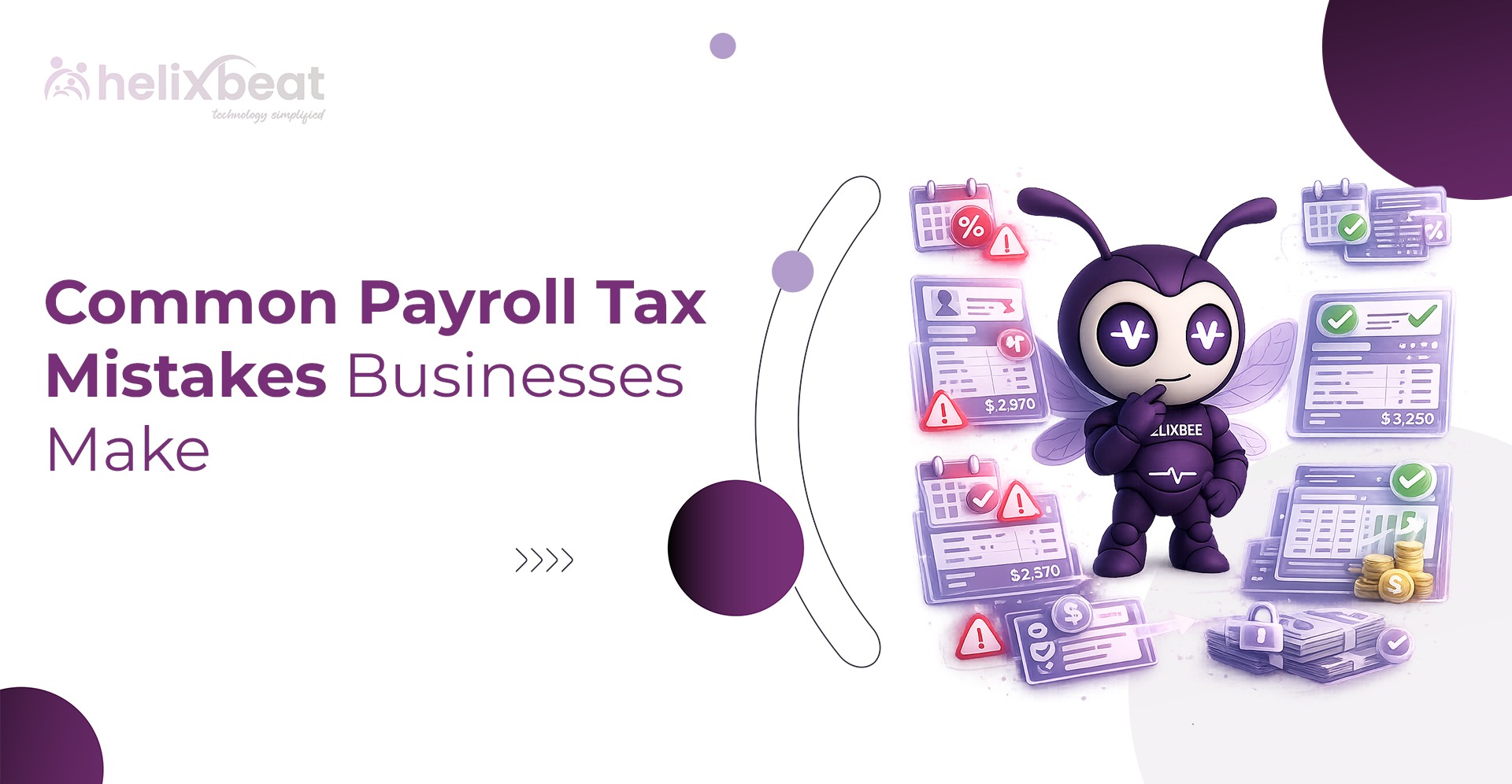
Payroll tax compliance remains one of the most critical and complex challenges for businesses today. Nearly 65% of companies make payroll tax errors, resulting in penalties, fines, and decreased employee satisfaction. Mistakes such as miscalculating tax withholdings, missing deadlines, or misclassifying employees can negatively impact both your bottom line and business reputation.
By implementing automated solutions like Synergy HRMS, businesses can significantly reduce these risks, streamline payroll processes, ensure accurate calculations, and maintain regulatory compliance.
This guide highlights common payroll tax mistakes and provides actionable strategies to proactively prevent them, safeguarding your business and workforce.
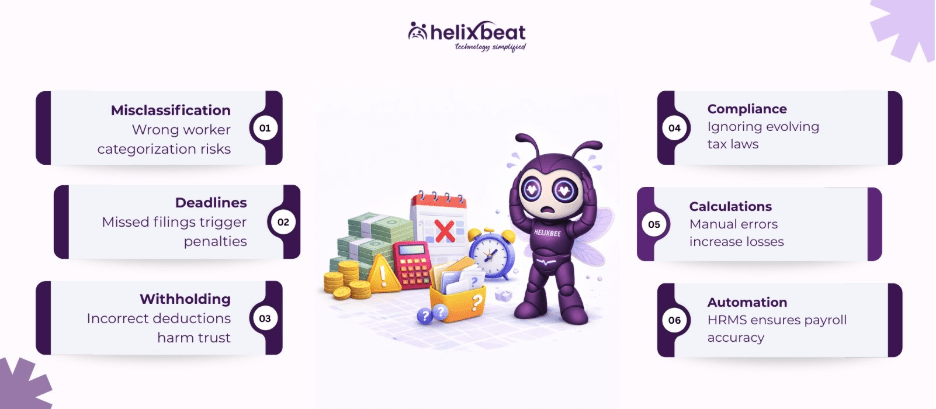
Table of Contents
Misclassifying Employees and Contractors: A Costly Error
Misclassifying workers may seem like a minor administrative task, but it can lead to significant financial and legal consequences for your business. Incorrect classification exposes companies to fines, retroactive payroll tax obligations, and potential lawsuits, while also undermining employee trust.
Understanding the difference between employees and contractors is critical to maintaining compliance and avoiding unnecessary expenses.
Why Misclassification Happens
Many businesses misclassify workers due to misunderstanding IRS guidelines or attempting to reduce costs. Often, contractors are labeled incorrectly to bypass employer tax contributions or avoid providing benefits like health insurance or retirement plans. While it may seem cost-effective initially, this approach can result in hefty penalties and back taxes once discovered. Proper classification protects both your business and your workforce, ensuring legal and financial security.
The Financial Impact
Misclassification is not just a procedural error; it carries serious financial consequences. Companies can face fines of up to $1,000 per worker, along with retroactive payroll tax liabilities. In addition to direct costs, misclassification may trigger audits, legal disputes, and reputational damage, all of which can impact your long-term business growth. Investing in accurate classification now saves substantial costs later.
Employee vs. Contractor Tax Obligations
| Feature | Employee | Contractor |
| Tax Withholding | Employer withholds federal and state taxes | Self-reported quarterly taxes |
| Benefits Eligibility | Eligible for benefits like 401(k) and health coverage | Not eligible |
| Payroll Reporting | W-2 form | 1099 form |
| Employer Tax Contribution | Social Security, Medicare, Unemployment | None |
How to Avoid It
To prevent misclassification, establish clear criteria based on IRS definitions, document contracts meticulously, and track worker status consistently. Using automated tools like Synergy HRMS allows you to monitor payroll tax obligations, benefits eligibility, and reporting requirements effortlessly, reducing the risk of costly errors.
Late Payroll Tax Filings: Deadlines Matter
Missing payroll tax deadlines can quickly escalate costs and increase the likelihood of audits. Even minor delays in submitting quarterly or annual filings can trigger penalties and compound interest, making timely compliance essential.
Consequences of Late Filings
Penalties for late payroll tax filings begin at 2% of unpaid taxes and can rise to 15% over time. Beyond monetary fines, late submissions can trigger IRS audits, interest accrual on unpaid amounts, and damage to your company’s reputation. Maintaining consistent filing schedules is crucial for financial and operational stability.
Prevention Strategies
Automating payroll tax scheduling and reminders is a proven method to prevent missed deadlines. With Synergy HRMS, businesses can set up automatic alerts for upcoming tax due dates, ensuring all federal, state, and local filings are completed promptly and accurately.
Don’t risk penalties – automate your payroll tax filings today with Synergy HRMS!
Incorrect Tax Withholdings: Employee Dissatisfaction and Risk
Even small errors in tax withholding can upset employees and attract regulatory scrutiny. Accurate deductions are essential not only for compliance but also for maintaining employee satisfaction and trust.
Common Withholding Mistakes
Several errors commonly occur in payroll tax withholding, including:
- Miscalculating federal, state, or local taxes
- Ignoring employee exemptions or deductions
- Failing to update tax tables annually
These mistakes may seem minor individually, but their cumulative impact can be substantial over time.
Business Impact
A miscalculation as small as 1% can cost a medium-sized company thousands of dollars annually, in addition to potential IRS penalties. Conducting regular audits and leveraging automated payroll systems like Synergy HRMS ensures that withholding calculations remain accurate and compliant with current regulations.
Failing to Keep Updated with Changing Tax Laws
Payroll compliance requires keeping pace with constantly evolving regulations. Federal, state, and local tax laws change frequently, and failing to adjust systems accordingly can lead to unintentional violations.
Frequent Changes That Affect Payroll
Businesses must stay informed about:
- Federal tax rate updates
- State-specific payroll taxes
- New deductions or credits
Ignoring these changes increases the risk of payroll tax errors and exposes companies to fines.
How Automation Helps
Nearly one-third of businesses fail to update payroll systems on time, resulting in costly mistakes. Automation through Synergy HRMS ensures that tax tables, deduction rules, and reporting requirements are updated automatically. This reduces errors, streamlines compliance, and allows HR teams to focus on strategic initiatives rather than manual calculations.
Payroll Calculation Errors: The Hidden Loss
Manual payroll calculations often hide small mistakes that accumulates into significant financial loss. Even minor miscalculations in overtime, deductions, bonuses, or tax rates can escalate into unexpected expenses, penalties, and employee dissatisfaction. Identifying these errors and implementing automated solutions is crucial to maintaining accurate payroll and avoiding costly payroll tax mistakes.
Common Payroll Errors
Payroll errors typically occur in the following areas:
- Overtime miscalculations: Paying employees incorrectly for extra hours can increase wages and payroll tax obligations unnecessarily.
- Deduction mismanagement: Missing employee contributions for retirement, insurance, or benefits leads to compliance issues.
- Bonus and commission errors: Incorrect payouts can trigger audits and reduce employee satisfaction.
- Incorrect tax rates: Applying outdated federal, state, or local payroll tax rates can result in fines and penalties.
Payroll Calculation Errors & Their Impact
| Error Type | Impact | Frequency |
| Overtime miscalculation | Overpaid wages, extra tax liability | High |
| Deduction mismanagement | Missing employee contributions | Medium |
| Bonus/commission errors | Employee dissatisfaction, audits | Medium |
| Incorrect tax rates | Fines & penalties | High |
Reducing Errors
The best way to prevent payroll errors is to leverage automation. Software like Synergy HRMS calculates salaries accurately, accounting for overtime, deductions, bonuses, and applicable payroll taxes. By minimizing human error, businesses not only save money but also strengthen compliance and employee trust.
Stop costly payroll errors today – automate with Synergy HRMS!
How Synergy HRMS Helps Eliminate Payroll Tax Mistakes
Leveraging technology is the easiest way to avoid human errors in payroll management. By integrating automated tools, you can ensure that payroll tax calculations, filings, and reporting are consistently accurate, reducing both financial risk and administrative stress.
Key Features of Synergy HRMS
- Automated tax calculations: Ensures every payroll tax is computed correctly based on federal and state regulations.
- Timely payroll tax filing reminders: Alerts help prevent late submissions and penalties.
- Employee classification tracking: Correctly identifies employees vs. contractors, avoiding retroactive payroll tax liabilities.
- Compliance with federal and state regulations: Keeps your business aligned with constantly changing payroll tax laws.
Measurable Benefits
Businesses that use Synergy HRMS see a measurable reduction in payroll tax errors, often up to 50% within the first year. This not only saves time and money but also reduces stress on HR teams and enhances confidence among employees.
Not Conducting Regular Payroll Audits: Risky Oversight
Skipping regular payroll audits is like leaving mistakes unchecked—they will compound over time. Without audits, errors in payroll tax, deductions, or employee classification can go unnoticed, creating both financial and legal risks.
Why Payroll Audits Are Critical
Regular audits allow businesses to identify:
- Inaccurate calculations: Correct salary payments and payroll tax deductions.
- Misreported taxes: Prevent errors that could trigger fines or interest charges.
- Non-compliance issues: Ensure adherence to evolving federal and state regulations.
Best Practices
To maintain accuracy, schedule quarterly payroll audits and leverage Synergy HRMS reporting features. Real-time insights help identify discrepancies immediately, track compliance, and support corrective actions efficiently.
Wrapping Up
Payroll tax mistakes can drain resources, damage compliance, and erode employee trust. By understanding common payroll pitfalls, conducting regular audits, and leveraging automated solutions like Synergy HRMS, your business can reduce errors, streamline payroll, and ensure regulatory compliance—safeguarding both finances and employee confidence.
Streamline your payroll and eliminate payroll tax errors – start using Synergy HRMS now!
FAQs
1. What is the most common payroll tax mistake businesses make?
Misclassifying employees or contractors and incorrect tax withholdings are the top errors.
2. How can Synergy HRMS prevent payroll tax mistakes?
It automates calculations, tracks deadlines, and keeps tax rates updated across jurisdictions.
3. What penalties can occur due to payroll tax errors?
Penalties range from 2% to 15% of unpaid taxes, depending on error type and timing.
4. How often should payroll audits be conducted?
Quarterly audits are recommended to identify discrepancies early.
5. Can incorrect employee classification affect taxes?
Yes, misclassification can lead to fines, missed contributions, and compliance issues.
6. Do payroll tax errors impact employees directly?
Yes, errors in withholding or deductions can cause frustration, underpayment, or overpayment.
7. Is automation better than manual payroll management?
Automation, like Synergy HRMS, reduces human error, ensures compliance, and saves time.